Your Facebook Ads Manager shows 150 conversions this month. Google Analytics says 120. Your CRM records 95 actual sales. Which number is real? More importantly, which campaigns actually drove those sales?
If you've ever stared at three different dashboards showing three different versions of reality, you're experiencing the core problem that unified marketing measurement solves. Every platform wants to take credit. Every report tells a different story. And somewhere in that chaos, you're trying to decide where to spend tomorrow's budget.
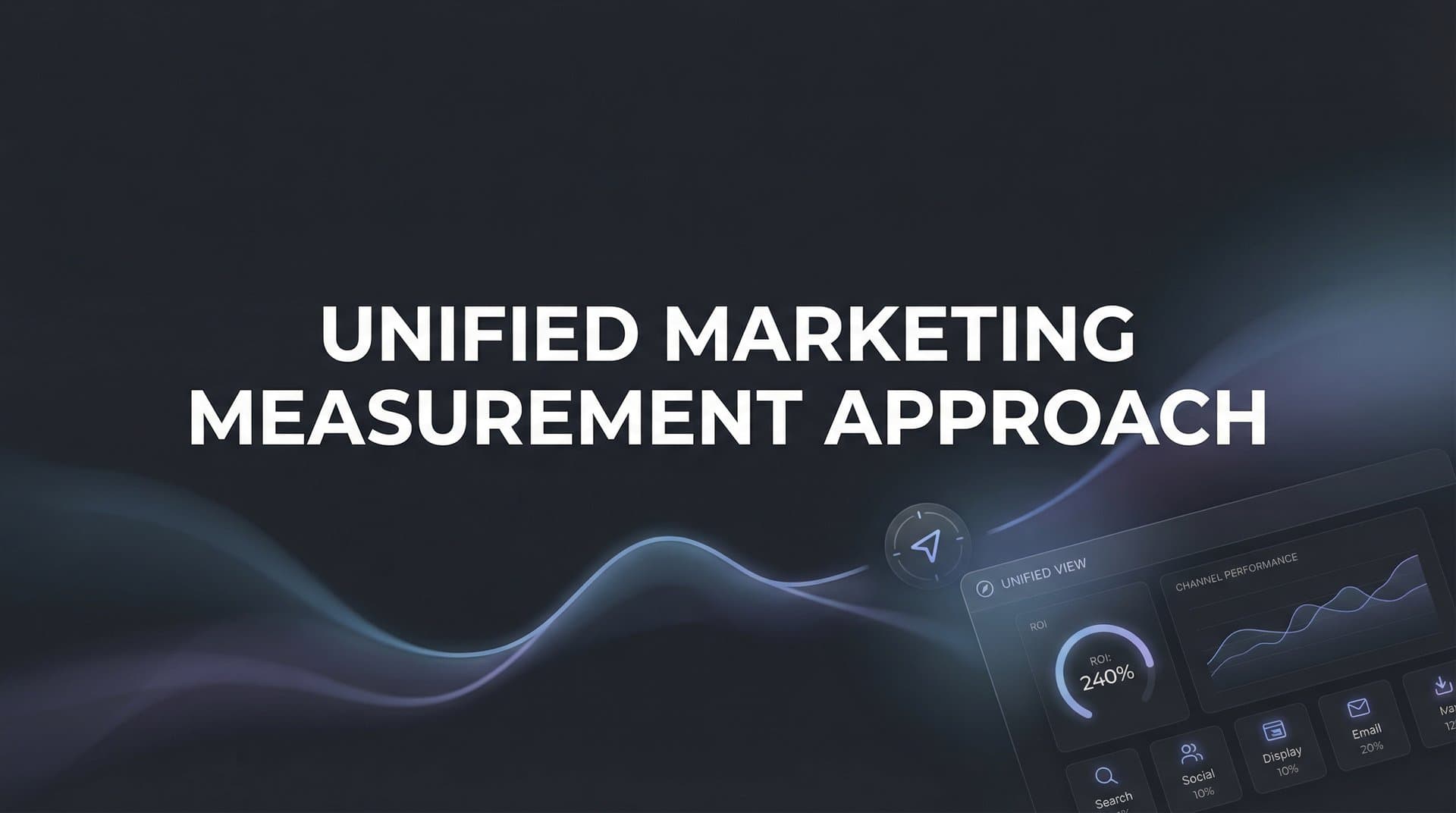
A unified marketing measurement approach connects all your marketing touchpoints—ad platforms, website analytics, CRM data—into a single, coherent view of the customer journey. Instead of piecing together fragments from different sources, you see exactly how prospects move from first click to final conversion, with accurate attribution that shows what's really driving revenue.
Why Traditional Marketing Measurement Falls Short
The fundamental flaw in traditional marketing measurement isn't the tools themselves. It's that each platform operates in isolation, measuring success through its own narrow lens.
Facebook takes credit for every conversion that happens within its attribution window, even if the customer clicked five other ads first. Google does the same. So does LinkedIn. When you add up the conversions each platform claims, you'll often find they total 200-300% of your actual sales. Everyone's a winner, except the marketer trying to figure out what's actually working.
This happens because platform-specific attribution models are designed to make that platform look good. Facebook's default attribution gives credit to any click within 7 days or view within 1 day. Google Ads uses last-click attribution by default, claiming full credit for the final touchpoint. Your email platform attributes based on opens and clicks. Each system operates as if it exists in a vacuum.
The result? Inflated performance metrics that make every channel appear profitable while your overall marketing ROI remains unclear. You might see a 5X ROAS in Facebook Ads and a 4X ROAS in Google Ads, but when you calculate actual revenue against total ad spend, you're barely breaking even. Understanding the difference between marketing attribution software vs traditional analytics helps clarify why these discrepancies occur.
But the real cost isn't the confusion—it's the bad decisions that follow. When you can't see the complete customer journey, you make budget allocation choices based on incomplete information. You might kill a prospecting campaign that's actually generating awareness for bottom-funnel conversions. Or you might pour money into a retargeting campaign that's only capturing demand created elsewhere.
Consider what happens when a customer sees your Facebook ad, clicks through to your site, leaves without converting, searches your brand name on Google a week later, clicks that ad, and then converts. Facebook claims the conversion because the click happened within its window. Google claims it because it was the last click. Your brand search campaign gets credit, even though Facebook created the initial awareness. Without unified measurement, you're flying blind.
The hidden cost compounds over time. Teams develop mistrust in their data. Meetings devolve into arguments about whose numbers are right. Marketing leaders make gut-feel decisions because the data is too contradictory to trust. And meanwhile, competitors who've solved this problem are scaling with confidence.
The Core Components of Unified Measurement
Building a unified marketing measurement approach requires three foundational elements working together: cross-platform tracking, server-side data collection, and CRM integration. Each component addresses a specific gap in traditional measurement.
Cross-platform tracking captures every touchpoint in the customer journey, regardless of where it happens. When a prospect clicks your Facebook ad, visits from organic search, receives an email, and finally converts through a Google ad, unified tracking records all four interactions and connects them to a single customer profile. This creates a complete journey map instead of disconnected events. Implementing cross channel marketing attribution software makes this level of tracking possible.
The technical implementation uses consistent tracking identifiers across all channels. When someone clicks your ad, the system assigns or recognizes a unique identifier that persists across sessions and devices. As that person interacts with your marketing across different platforms, each touchpoint gets logged and associated with the same identifier.
But browser-based tracking alone isn't enough anymore. iOS privacy changes have significantly reduced the accuracy of pixel-based tracking. Safari blocks third-party cookies by default. Firefox does the same. Chrome is phasing them out. This is where server-side data collection becomes critical.
Server-side tracking sends conversion data directly from your server to ad platforms and analytics tools, bypassing browser limitations entirely. When a conversion happens on your website, your server fires the event to Facebook, Google, and your analytics platform simultaneously. This approach captures conversions that browser-based pixels miss—often recovering 20-30% of conversion data that would otherwise be lost.
The accuracy improvement is substantial. Browser-based tracking might show 70 conversions while server-side tracking captures 95. That 25-conversion gap represents real customers whose journey you weren't seeing. More importantly, when you send this complete data back to ad platforms, their algorithms optimize based on reality rather than a partial picture.
CRM integration completes the unified measurement framework by connecting marketing activity to actual revenue outcomes. This is where marketing measurement transforms from tracking clicks and conversions to understanding business impact. Platforms focused on marketing revenue attribution excel at making these connections.
When your CRM is integrated with your marketing measurement system, you can track what happens after the initial conversion. Did that lead become a customer? What was the deal value? How long was the sales cycle? Which marketing touchpoints influenced closed revenue versus leads that never converted?
This creates a feedback loop that fundamentally changes how you evaluate marketing performance. Instead of optimizing for cost per lead, you optimize for cost per customer or revenue per dollar spent. You discover that some channels generate high lead volumes but low conversion rates, while others produce fewer leads that convert at much higher rates and values.
The power of unified measurement emerges when these three components work together. Cross-platform tracking captures the journey. Server-side collection ensures accuracy. CRM integration connects everything to revenue. The result is a single source of truth that shows exactly how marketing drives business outcomes.
Multi-Touch Attribution Within a Unified Framework
Once you have complete journey data flowing through a unified system, multi-touch attribution becomes genuinely meaningful. Without that foundation, attribution models are just sophisticated ways of guessing based on incomplete information.
Multi-touch attribution distributes conversion credit across all the touchpoints that influenced a customer's decision. Instead of giving 100% credit to the first click or last click, you recognize that most B2B buyers interact with your brand 7-13 times before converting, and each interaction plays a role.
The most common attribution models each tell a different story about your marketing performance. First-touch attribution gives all credit to the initial interaction—useful for understanding what generates awareness but ignores everything that happens afterward. Last-touch attribution credits the final touchpoint before conversion—great for identifying what closes deals but misses the journey that got prospects there.
Linear attribution distributes credit equally across all touchpoints. If a customer had five interactions before converting, each gets 20% credit. This approach recognizes that the entire journey matters, but it treats a brief retargeting ad impression the same as a 30-minute product demo, which doesn't reflect reality.
Time-decay attribution gives more credit to touchpoints closer to the conversion, based on the logic that recent interactions have more influence. U-shaped (or position-based) attribution emphasizes the first and last touchpoints while giving some credit to middle interactions, recognizing that awareness and closing moments are particularly important. A comprehensive guide to digital marketing attribution measurement can help you choose the right model for your business.
Here's the critical insight: the right attribution model depends on your business model and sales cycle. E-commerce brands with short purchase cycles might find last-touch attribution perfectly adequate. B2B companies with 6-month sales cycles need models that recognize the long nurturing process. The key is having complete data so you can compare models and see which one aligns with your actual customer behavior.
Unified measurement takes attribution beyond the channel level to campaign and ad-level insights. Instead of knowing that "Facebook drives conversions," you discover that your carousel ads featuring customer testimonials drive 3X more revenue than single-image product ads, and that specific audience segments convert at dramatically different rates.
This granular attribution reveals optimization opportunities that channel-level data obscures. You might find that your prospecting campaigns on Google generate low immediate ROAS but create awareness that leads to high-value conversions through other channels later. Without multi-touch attribution across your unified data, you'd only see the poor immediate performance and might cut a campaign that's actually a crucial part of your funnel.
The transition from channel-level to ad-level attribution represents a fundamental shift in how you optimize campaigns. You stop asking "Should we spend more on Facebook or Google?" and start asking "Which specific ads, audiences, and creative combinations drive the highest lifetime value customers?" That's the question that actually scales revenue.
Building Your Unified Measurement Stack
Implementing unified marketing measurement requires connecting multiple systems into a coherent data flow. The architecture might sound complex, but the logic is straightforward: capture every touchpoint, centralize the data, and feed insights back to where they're needed.
Start with your ad platform integrations. Every channel where you run paid campaigns needs to be connected: Facebook, Instagram, Google Ads, LinkedIn, TikTok, YouTube, and any other platforms in your mix. These integrations serve two purposes—they pull performance data into your unified system, and they receive enriched conversion data back from your server-side tracking.
The bidirectional data flow is crucial. When someone clicks your Facebook ad and later converts on your website, your server-side tracking captures that conversion and sends it back to Facebook with additional context: the conversion value, the customer's lifecycle stage, and any CRM data that enriches the event. Facebook's algorithm uses this enriched data to find more customers like the ones who actually drove revenue, not just the ones who converted. Proper Facebook marketing measurement depends on this feedback loop.
Your website analytics integration captures on-site behavior that ad platforms can't see. Google Analytics or similar tools track how visitors navigate your site, which pages they view, how long they engage, and where they drop off. This behavioral data adds context to the conversion events—you learn not just that someone converted, but what path they took to get there.
CRM integration is where marketing measurement connects to business outcomes. Whether you use Salesforce, HubSpot, Pipedrive, or another system, connecting your CRM allows you to track what happens after the initial conversion. You see which leads become customers, track deal values, monitor sales cycle length, and ultimately calculate the true ROI of each marketing channel and campaign. Unified dashboards for marketing and sales attribution bring all this data together in one view.
The data flow architecture operates in real-time, creating a continuous loop of measurement and optimization. When a prospect clicks an ad, the interaction is logged immediately. When they visit your site, their behavior is tracked and associated with their marketing journey. When they convert, the event fires server-side to all relevant platforms within seconds. When they become a customer, that revenue data flows back to inform your marketing attribution.
This real-time architecture enables rapid decision-making. Instead of waiting for end-of-month reports to understand campaign performance, you see results as they happen. You can identify a winning ad combination within days instead of weeks, and scale it immediately. You can spot underperforming campaigns early and adjust before wasting significant budget.
The feedback loop to ad platforms deserves special attention because it creates compounding returns. When you send accurate, enriched conversion data back to Facebook, Google, and other platforms, their machine learning algorithms optimize more effectively. They learn which audiences actually convert at high values, not just which audiences click or complete low-quality conversions. Over time, this improves your targeting, reduces wasted spend, and increases the efficiency of every dollar you invest.
Think of it this way: ad platforms are making thousands of micro-decisions every day about who to show your ads to. The quality of those decisions depends entirely on the quality of the conversion data you provide. Unified measurement with server-side tracking ensures they're optimizing toward revenue, not just activity.
Turning Unified Data Into Scaling Decisions
Having complete marketing data means nothing if you can't translate it into clear action. The real value of unified measurement emerges when you use it to make confident scaling decisions that drive revenue growth.
The first step is distinguishing true high-performers from vanity metrics. A campaign might generate impressive click-through rates and low cost-per-click, but if those clicks don't convert to revenue, the metrics are meaningless. Unified measurement shows you the campaigns and ads that drive actual business outcomes, not just engagement. Learning how to evaluate marketing performance metrics properly is essential for this analysis.
Look beyond surface-level metrics to revenue attribution. A prospecting campaign might show a 2X ROAS when measured in isolation, but when you analyze its role in the complete customer journey through multi-touch attribution, you discover it's actually generating awareness that leads to 5X ROAS conversions through other channels. That's a high-performer worth scaling, even though its direct metrics look mediocre.
The inverse is equally important. You might have a retargeting campaign showing 8X ROAS that looks like your best performer. But unified measurement reveals it's only capturing demand created by other channels—it's harvesting low-hanging fruit rather than generating new opportunities. When you try to scale it, performance collapses because there's no incremental demand to capture.
AI-powered analysis accelerates the insight discovery process. When you're running dozens of campaigns across multiple platforms with hundreds of ad variations, manually analyzing performance becomes impossible. AI can surface patterns across large datasets that human analysis would miss—identifying audience segments that convert at exceptional rates, creative combinations that resonate with specific demographics, or time-of-day patterns that affect conversion likelihood. The best AI-powered marketing attribution tools automate much of this analysis.
These AI-generated insights often reveal non-obvious optimization opportunities. You might discover that customers who interact with your brand on both Facebook and Google convert at 3X higher rates than single-channel prospects, suggesting a multi-channel strategy creates synergy. Or you might find that prospects who view your product demo page convert within 48 hours or not at all, indicating when to intensify retargeting efforts.
Budget reallocation becomes straightforward when you have accurate revenue attribution. Instead of spreading budget evenly across channels or making incremental adjustments based on gut feel, you can confidently shift resources toward campaigns and ads that drive the highest return.
The key is understanding the relationship between spend and performance at different scales. A campaign might perform exceptionally at $1,000 per day but hit diminishing returns at $3,000 per day. Unified measurement helps you identify these inflection points so you can scale each campaign to its optimal level rather than pushing everything until performance degrades.
Revenue-based optimization fundamentally changes your marketing strategy. You stop chasing cheap clicks and start pursuing valuable customers. You recognize that a $50 cost-per-acquisition might be terrible if customer lifetime value is $75, but exceptional if it's $500. You make decisions based on profit margins, not arbitrary CPA targets.
This shift requires buy-in across your marketing team. When everyone understands that the goal is revenue growth rather than metric optimization, decisions become clearer. You're willing to accept higher CPAs if they come with higher customer values. You're comfortable with campaigns that show modest direct ROAS if they play a crucial role in the broader customer journey.
Putting Your Unified Measurement Strategy Into Action
Moving from fragmented analytics to unified measurement doesn't happen overnight, but you can create meaningful progress quickly with a structured approach.
Start with a data audit that identifies current gaps and integration needs. Map out every marketing channel you're running, every analytics tool you're using, and your CRM system. Then document what data flows between these systems today and what's missing. Most teams discover they have solid tracking for some channels but significant blind spots in others.
Common gaps include: missing server-side tracking for key conversion events, ad platforms that aren't sending data to your analytics, CRM systems that aren't connected to marketing data, and cross-device tracking that fails to connect mobile and desktop sessions to the same user. Each gap represents incomplete journey data that's skewing your attribution and limiting optimization. Reliable marketing campaign tracking software helps eliminate these blind spots.
Prioritize quick wins—integrations that immediately improve data clarity and decision-making. Server-side tracking for your primary conversion events often delivers the fastest impact, recovering lost conversion data and improving ad platform optimization within days. CRM integration is another high-value early win, connecting marketing activity to actual revenue outcomes.
Don't try to integrate everything simultaneously. Start with your highest-spend channels and most important conversion events. Get those flowing through unified measurement, validate the data accuracy, and then expand to additional channels and touchpoints. This iterative approach builds confidence in the system and allows you to learn as you go.
Technical implementation typically requires coordination between marketing, analytics, and development teams. Marketing defines what needs to be tracked and why. Analytics designs the measurement framework and attribution models. Development implements server-side tracking and ensures data flows correctly. Clear communication across these teams prevents implementation delays and ensures the system meets actual business needs.
Building a data-driven culture is as important as the technical implementation. Unified measurement only drives results if your team actually uses the insights to make decisions. This requires training on how to interpret the data, establishing regular review processes, and creating accountability for acting on what the data reveals. Exploring top strategies for effective marketing measurement can guide your team through this cultural shift.
Set up weekly or bi-weekly performance reviews where the team examines unified attribution data, identifies trends, and makes optimization decisions. Make these sessions focused and action-oriented—the goal is to leave each meeting with clear next steps for improving performance based on what the data shows.
Establish clear decision-making frameworks based on your unified data. Define what metrics indicate a campaign is worth scaling, when to pause underperformers, and how to evaluate new channel opportunities. When everyone operates from the same data and uses consistent criteria for decisions, your marketing becomes more coherent and effective.
The Competitive Edge of Complete Visibility
Unified marketing measurement transforms how teams make decisions by eliminating the guesswork and data conflicts that plague traditional analytics. When you see the complete customer journey—from first touchpoint to final conversion to revenue outcome—you stop debating which platform's numbers are right and start focusing on what actually drives growth.
The competitive advantage is substantial. While others are making budget decisions based on inflated platform metrics and incomplete data, you're optimizing toward actual revenue with confidence. You identify winning campaigns faster, scale them more aggressively, and cut underperformers before wasting significant budget. Over time, these better decisions compound into meaningfully better marketing ROI.
The shift from fragmented to unified measurement isn't just a technical upgrade—it's a fundamental change in how marketing teams operate. You move from gut-feel optimization to data-driven scaling. From channel-level guesses to ad-level precision. From hoping your marketing works to knowing exactly what drives results.
Consider where your measurement setup stands today. Are you confident in the attribution data guiding your budget decisions? Can you track the complete customer journey across all your marketing touchpoints? Do you know which specific ads and campaigns drive the highest lifetime value customers?
If any of those questions reveal gaps, you're leaving revenue on the table. The good news is that unified measurement is more accessible than ever. Modern platforms handle the complex technical implementation while giving you clear, actionable insights that drive immediate improvements.
Ready to elevate your marketing game with precision and confidence? Discover how Cometly's AI-driven recommendations can transform your ad strategy—Get your free demo today and start capturing every touchpoint to maximize your conversions.