Picture this: you've just pulled your monthly campaign report. The UTM data looks clean, the traffic numbers are solid, and your top-performing channels are clearly labeled. But then you open your CRM and the revenue numbers tell a completely different story. Deals are closing from sources that barely register in your analytics. Channels you've been scaling aggressively show almost no pipeline influence. Something isn't adding up.
This disconnect is more common than most marketing teams realize, and UTM parameters are often at the center of it.
UTM parameters (short for Urchin Tracking Module, named after the analytics company Google acquired in 2005) are snippets of text appended to URLs that pass campaign data into analytics platforms like GA4. You've seen them: those strings of utm_source=linkedin&utm_medium=paid&utm_campaign=q2-trial that follow a URL. They're free, widely supported, and easy to implement. For surface-level campaign reporting, they do the job.
But here's the thing: UTMs were designed to answer a narrow question. They tell you where a visitor came from when they clicked a specific link. That's it. They were never built to track multi-session journeys, stitch together cross-device behavior, connect to CRM revenue data, or survive the modern privacy landscape.
For B2B SaaS marketing teams running complex, multi-touch campaigns across paid, organic, email, and events, relying on UTMs alone is like navigating a city with only the first page of a map. You can see where you started, but everything that happens after the first turn is invisible.
This article breaks down the specific UTM parameter limitations that create blind spots in your attribution data, explains why B2B SaaS funnels are particularly exposed, and outlines what a complete attribution stack actually looks like when you need to connect ad spend to closed-won revenue.
How UTM Parameters Actually Work (And Where They Stop)
To understand the limitations, you first need a clear picture of the mechanics. UTM parameters are query string values added to the end of a URL. The five standard parameters are:
utm_source: Identifies where the traffic originated, such as Google, LinkedIn, or a newsletter.
utm_medium: Describes the marketing channel type, such as paid social, email, or organic search.
utm_campaign: Names the specific campaign driving the traffic.
utm_term: Captures the keyword or audience segment, most commonly used in paid search.
utm_content: Differentiates between ads or links within the same campaign, useful for A/B testing creative.
When a user clicks a tagged URL, those parameter values are read by your analytics platform and associated with the session. GA4, for example, captures the UTM values on entry and attributes the session to that source and medium. From that point forward, any events or conversions that happen within that session get credited to the originating UTM data.
This works reasonably well for simple, single-session journeys. Someone clicks a Google ad, lands on your pricing page, and signs up for a trial in the same sitting. The UTM data flows cleanly, and Google Ads gets credited. Clean, simple, accurate.
But the capture point is also the stopping point. UTMs only record the entry into a session. Once the user leaves your site, the UTM data doesn't follow them. If they come back three days later through a different channel, that new session creates a new entry point with new attribution data, and the original UTM is either overwritten or lost depending on your analytics configuration.
The data itself lives in browser cookies and first-party session storage. This is a critical architectural detail because it means UTM attribution is entirely dependent on the browser environment being intact, consistent, and uninterrupted across every visit. In an era of aggressive privacy controls, that's a significant assumption.
UTMs also have no awareness of what happens outside the browser. They don't know if a visitor later called your sales team, attended a webinar, or was nurtured through a sequence of emails before converting. The moment a touchpoint moves off a tagged URL click, UTMs go dark.
The Cookie Dependency Problem
UTM data doesn't live in the URL forever. Once a user lands on your site, those parameter values are extracted and stored in browser cookies or session storage so they can be associated with any subsequent events during that visit. That storage mechanism is where things start to break down.
The most straightforward failure mode is user behavior. When someone clears their browser history and cookies, all stored UTM data is erased. If that same person returns to your site the next day and converts, there's no record of what originally brought them there. The conversion gets attributed to "direct" or whatever channel drove that final session, not the campaign that actually started the journey.
But the more systemic problem is the privacy infrastructure that browsers have built specifically to limit cookie-based tracking. Safari's Intelligent Tracking Prevention (ITP) aggressively caps the lifespan of first-party cookies set via JavaScript, in some cases limiting them to as little as one day. Firefox's Enhanced Tracking Protection (ETP) takes a similar approach. These are not edge cases. Safari and Firefox together account for a substantial portion of web traffic, which means a significant share of your UTM data is being shortened or erased by design.
Ad blockers add another layer of friction. Many ad blockers don't just block ads; they also interfere with analytics scripts and tracking pixels. If your analytics tag doesn't fire because a user has an ad blocker installed, the UTM parameters in the URL never get captured at all. The session happens, but it's invisible to your reporting.
For B2B SaaS companies, this creates a particularly painful problem. B2B buying cycles are long. A prospect might first encounter your brand through a LinkedIn ad in January, return via a Google search in February, attend a webinar in March, and finally request a demo in April. That's a four-month journey across multiple sessions.
Each of those sessions depends on a cookie environment that may have changed between visits. ITP may have expired the cookie from the first LinkedIn click. The user may have switched from their work laptop to their home computer. By the time they convert, the UTM trail from that original LinkedIn ad may be completely gone, and the demo request gets attributed to whatever channel drove the last session before conversion.
The result is that your paid social campaigns look underperforming, your direct traffic looks inflated, and your budget allocation decisions are being made on data that doesn't reflect what actually happened. This is one of the most consequential UTM parameter limitations for teams running long-cycle, multi-touch campaigns.
Cross-Device and Multi-Touch Blind Spots
Here's a scenario that plays out constantly in B2B SaaS. A buyer sees your LinkedIn ad on their phone during their morning commute. They don't click, but the brand registers. Later that day, they search for your product on their work laptop and click a Google ad. They read your pricing page, don't convert, and close the tab. Two weeks later, they type your domain directly into their browser and sign up for a trial.
What does your UTM data say drove that conversion? Direct. The LinkedIn ad gets zero credit. The Google ad gets zero credit. The entire awareness and consideration phase is invisible.
This is the cross-device attribution problem, and it's a fundamental architectural limitation of UTMs, not a configuration issue you can fix with better tagging. UTMs create anonymous sessions tied to a specific browser on a specific device. There is no mechanism within the UTM framework to link sessions across devices unless the user is authenticated and your analytics platform has a way to resolve that identity.
Most anonymous visitors in a B2B funnel are not authenticated. They browse your site, read your content, and evaluate your product without ever logging in. Each device they use creates a completely separate session with no shared identity thread. UTMs see three separate visitors when it's actually one person moving through a buying journey.
The multi-touch problem compounds this. Even within a single device and browser, UTMs typically record the most recent entry point into a session. If a user originally arrived via a LinkedIn ad but returns via a branded Google search three days later, the LinkedIn UTM is often overwritten. The channel that drove initial awareness gets erased from the record entirely.
This distorts attribution models in a predictable direction: last-touch channels get over-credited, and upper-funnel channels get under-credited. Branded search, which tends to capture demand that was generated elsewhere, looks like a high-performing acquisition channel. LinkedIn, which may have planted the original seed, looks like it's not working.
Marketing teams respond to this data by cutting upper-funnel spend and doubling down on bottom-funnel channels. This can feel logical in the short term, but it gradually erodes the pipeline because the demand generation that feeds those bottom-funnel conversions is being defunded based on incomplete data.
Accurate multi-touch attribution requires a system that can stitch together touchpoints across sessions, devices, and channels using identity resolution, not just cookie-based session tracking. UTMs alone cannot do that.
Manual Errors, Inconsistent Tagging, and Data Fragmentation
Beyond the structural and technical limitations, UTM tracking has a human problem. The entire system depends on consistent, disciplined manual tagging across every piece of marketing content your team produces. And in practice, that consistency is very hard to maintain.
Consider how a single traffic source gets fragmented through inconsistent naming. One team member tags a LinkedIn ad as utm_source=linkedin. Another uses utm_source=LinkedIn. A third uses utm_source=li. A fourth forgets the UTM entirely. In GA4, these become four separate traffic sources. When you try to aggregate LinkedIn performance, you're looking at a fragmented dataset that systematically understates the channel's true contribution.
Capitalization differences, typos, spacing errors, and inconsistent campaign naming conventions all create the same problem. The data looks populated, but it's fractured in ways that make accurate analysis difficult. Teams often don't discover these inconsistencies until they're deep into a reporting cycle and the numbers don't reconcile.
Then there are the touchpoints that UTMs simply cannot track at all, regardless of how disciplined your tagging is.
Phone calls and direct sales outreach: If a prospect calls your sales team after seeing an ad, there's no URL click to tag. That touchpoint is invisible to UTM-based attribution.
Offline events and conferences: Conversations at industry events, booth visits, and in-person demos don't generate tagged URL clicks. They don't appear in your UTM data at all.
CRM stage progressions: When a lead moves from MQL to SQL to opportunity to closed-won, those transitions happen inside your CRM. UTMs have no visibility into any of it.
Email opens and engagement signals: While email clicks can be UTM-tagged, the broader engagement signals (open rates, reply rates, time spent reading) don't flow through UTM parameters.
The most critical gap for B2B SaaS teams is the inability to connect UTM data to downstream revenue. UTMs can tell you that a campaign drove traffic and even that it drove a form submission. But they cannot tell you whether that lead became a paying customer, what they paid, or how that revenue compares to your ad spend. The bridge between marketing activity and business outcomes simply doesn't exist within the UTM framework.
Why B2B SaaS Funnels Are Hit Hardest
Every marketing team that uses UTMs encounters these limitations to some degree. But B2B SaaS companies face a compounding set of circumstances that makes UTM-only attribution particularly unreliable.
Start with the buying cycle length. B2B SaaS purchases often involve evaluation periods that span weeks or months. During that time, a single prospect may interact with your brand dozens of times across paid ads, organic content, email nurture sequences, sales outreach, and product trials. Each of those interactions is a potential attribution touchpoint, and UTMs can only capture a fraction of them.
The multi-stakeholder nature of B2B buying makes this worse. A single deal might involve a champion who first discovered your product, a technical evaluator who researched integrations, a finance lead who reviewed pricing, and an executive who approved the purchase. Each of these people is browsing from different devices, clicking different links, and generating separate anonymous sessions. UTMs see multiple independent visitors when the reality is a coordinated buying committee evaluating one purchase.
Free trial and product-led growth motions add another layer of complexity. A prospect might click a paid ad, start a free trial, go dormant for three weeks, return after a sales follow-up, and then convert to a paid plan. The UTM from the original ad click is almost certainly gone by the time the paid conversion happens. The revenue gets attributed to whatever the last session looked like, which may be a direct visit or a branded search after a sales email.
Demo request flows have a similar problem. A prospect who requests a demo after multiple touchpoints may have been influenced by a LinkedIn campaign, a piece of organic content, a retargeting ad, and a referral from a colleague. UTMs might capture one of those touchpoints. The rest are invisible.
Pipeline and revenue attribution are where the gap becomes most costly. B2B SaaS companies need to know which campaigns are driving qualified pipeline, which channels produce customers with the highest lifetime value, and where to allocate budget to hit revenue targets. Answering those questions requires connecting marketing data to CRM data and billing data. UTMs cannot make that connection on their own.
Moving Beyond UTMs: What a Complete Attribution Stack Looks Like
UTMs aren't going away, and they shouldn't. They're a useful layer of campaign labeling that provides context at the click level. The goal isn't to replace them; it's to build a stack around them that fills in everything they miss.
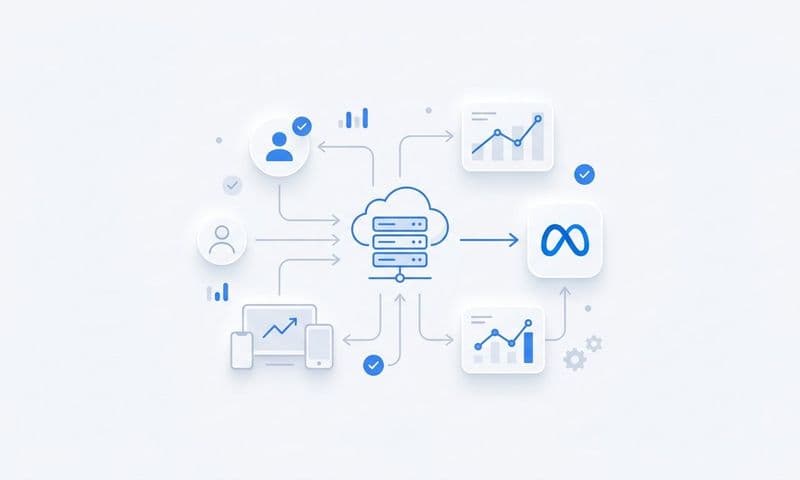
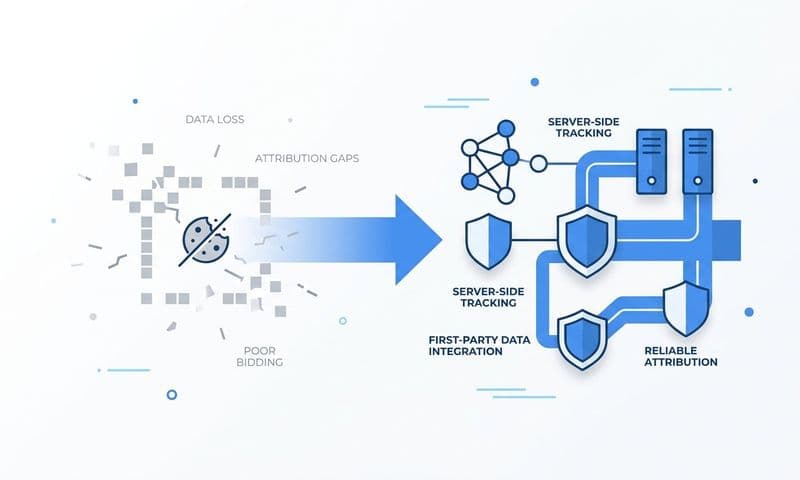
The first layer to add is server-side tracking. Traditional client-side tracking fires analytics tags from the user's browser, which means it's subject to all the limitations of the browser environment: ad blockers, ITP, ETP, and cookie restrictions. Server-side tracking moves the data collection to your own server, where it's not affected by browser privacy controls. UTM parameters can still be captured, but the data pipeline is more durable and less susceptible to being blocked or truncated.
First-party data collection is the complementary foundation. Rather than relying on third-party cookies or browser sessions to maintain attribution across visits, first-party data collection uses your own authenticated touchpoints (email sign-ups, trial registrations, CRM records) to build a persistent identity that can tie multiple sessions together. When a prospect authenticates at any point in their journey, you gain the ability to stitch together touchpoints that would otherwise be anonymous and disconnected.
Conversion APIs take this a step further. Meta's Conversion API (CAPI) and Google's Enhanced Conversions allow you to send enriched event data directly from your server to the ad platform, bypassing the browser entirely. Instead of relying on a pixel that might get blocked, you're sending conversion signals server-to-server with customer data that helps the platform's AI optimize toward your actual business outcomes. This also feeds better data back into the ad platform's targeting algorithms, improving campaign performance over time.
Multi-touch attribution models provide the analytical framework for valuing all of these touchpoints fairly. Rather than defaulting to last-click attribution (which systematically over-credits bottom-funnel channels), models like linear, time-decay, or data-driven attribution distribute credit across the full journey. This gives upper-funnel channels like LinkedIn and display advertising the credit they deserve for generating awareness that eventually converts.
CRM integration is the final piece that closes the loop between marketing activity and revenue outcomes. When your attribution platform can pull deal stage, contract value, and closed-won data from your CRM and connect it back to the original marketing touchpoints, you can finally answer the questions that matter: which campaigns are driving revenue, not just leads.
This is where Cometly comes in. Cometly is built specifically for B2B SaaS companies that need to connect ad clicks to closed-won revenue across the full customer journey. It captures every touchpoint from the first ad interaction through CRM events and revenue data, unifying UTM signals, server-side conversion data, and CRM records into a single source of truth. With 70+ native integrations, including Stripe for revenue data and direct connections to Meta and Google for Conversion API events, Cometly gives your team the complete attribution picture that UTMs alone can never provide. The AI layer surfaces which campaigns and channels are actually driving pipeline and revenue, so you can scale what works with confidence.
Putting It All Together
UTM parameters are a valuable tool. They're free, easy to implement, and they provide useful campaign context at the click level. But they were never designed to be a complete attribution solution, and treating them as one creates blind spots that lead directly to poor budget decisions.
The limitations are structural. Cookie dependency means data gets lost across long buying cycles. Cross-device gaps mean multi-stakeholder journeys are fragmented into disconnected anonymous sessions. Single-session capture means upper-funnel touchpoints get erased when users return through different channels. Manual tagging creates inconsistent data that's difficult to aggregate accurately. And the fundamental inability to connect UTM data to CRM and revenue records leaves a critical gap between marketing activity and business outcomes.
For B2B SaaS companies, where buying cycles are long, buying committees are large, and revenue attribution is essential for growth decisions, these limitations are not minor inconveniences. They're the reason your campaign data and your revenue data tell different stories.
The answer is a complete attribution stack that uses UTMs as one input among many, backed by server-side tracking, first-party data collection, Conversion API integrations, and CRM connectivity. That's the infrastructure that gives you accurate, end-to-end attribution you can actually make decisions from.
Ready to elevate your marketing game with precision and confidence? Discover how Cometly's AI-driven recommendations can transform your ad strategy. Get your free demo today and start capturing every touchpoint to maximize your conversions.