You're tracking clicks. You're monitoring impressions. You're watching conversion rates tick up and down. Your dashboards are full of numbers, your spreadsheets overflow with metrics, and your ad platforms are generating reports by the hour. Yet when your CEO asks which campaigns are actually driving revenue, you hesitate. When it's time to decide where to allocate next quarter's budget, you're making educated guesses rather than confident decisions.
This is the paradox of modern marketing: we're drowning in data but starving for insights.
Marketing data is everywhere—from the moment someone clicks your ad to the instant they complete a purchase. Every email open, every page view, every form submission generates a data point. But here's the uncomfortable truth: most marketing teams are collecting massive amounts of data without understanding what it means or how to use it. They're tracking everything while connecting nothing, measuring activity without linking it to revenue outcomes.
This guide cuts through the noise. We'll demystify what marketing data actually is, identify which types matter most for driving revenue, and show you how to transform raw numbers into confident scaling decisions. Whether you're running campaigns across Meta, Google, TikTok, or all three simultaneously, you'll learn how to collect the right data, analyze it effectively, and use it to outperform your competition.
The Building Blocks: Types of Marketing Data That Actually Matter
Not all marketing data is created equal. Some metrics tell you what happened. Others reveal why it happened. The smartest marketers know the difference.
Let's start with the most fundamental distinction: first-party versus third-party data. First-party data is information you collect directly from your customers and prospects—website behavior, CRM records, purchase history, email engagement, form submissions. This is your data, owned and controlled by you. Third-party data comes from external sources who aggregate information from multiple sites and sell it to advertisers.
Here's why this matters more than ever: privacy regulations and platform changes have made first-party data tracking increasingly valuable while limiting third-party tracking capabilities. When Apple introduced App Tracking Transparency in 2021, it fundamentally changed how marketers can track user behavior. Companies that invested in robust first-party data collection systems maintained their competitive edge. Those that relied heavily on third-party cookies and pixels suddenly found themselves flying blind.
Beyond ownership, marketing data splits into quantitative and qualitative categories. Quantitative data gives you the numbers: 5,847 ad clicks, 312 conversions, $47,892 in revenue. It's measurable, trackable, and perfect for dashboards. Qualitative data provides the context: customer feedback explaining why they chose your product, survey responses revealing pain points, sentiment analysis showing how people feel about your brand.
Think of quantitative data as the "what" and qualitative data as the "why." You need both. Knowing that your conversion rate dropped 15% last month is useful. Understanding that customers found your checkout process confusing—that's actionable.
Now let's break down the four core categories of marketing data that drive revenue decisions:
Customer Data: This encompasses everything about who your customers are and how they behave. Demographics, firmographics for B2B, browsing patterns, purchase history, lifetime value, engagement frequency. This data helps you understand your audience deeply enough to target effectively and personalize meaningfully.
Campaign Performance Data: The metrics that show how your marketing efforts are performing. Click-through rates, conversion rates, cost per acquisition, return on ad spend, engagement rates. This is where most marketers live—tracking campaign-level performance to optimize what's working and kill what's not.
Channel Data: Information about how different marketing channels contribute to your goals. Which platforms drive the most traffic? Where do your highest-value customers come from? How do channels work together throughout the customer journey? This data reveals the big picture of your marketing ecosystem.
Financial and ROI Data: The ultimate scorecard. Revenue attributed to specific campaigns, customer acquisition costs, lifetime value calculations, profit margins by channel. This is the data that connects marketing activity to business outcomes—the numbers that matter in board meetings.
Where Marketing Data Lives: Sources and Collection Methods
Your marketing data doesn't exist in one convenient location. It's scattered across platforms, tools, and systems—each speaking its own language, using its own metrics, and telling its own version of the story.
Start with ad platforms: Meta Ads Manager, Google Ads, TikTok Ads, LinkedIn Campaign Manager. These platforms provide rich performance data—impressions, clicks, conversions, audience demographics, placement performance. They'll tell you exactly how your campaigns performed within their ecosystem. But here's the catch: each platform only sees its own touchpoints. Meta knows someone clicked your ad, but it doesn't know they also saw your Google search ad yesterday or that they've been reading your blog for three months.
Even more challenging, these platforms face significant tracking limitations. iOS privacy changes mean that pixel-based tracking often misses conversions. When someone clicks your Meta ad on their iPhone, browses your site, then converts later on their laptop, traditional tracking struggles to connect those dots. The ad platform reports lower conversions than actually occurred, leading you to undervalue campaigns that are genuinely driving revenue.
This is where server-side tracking becomes crucial. Instead of relying solely on browser pixels that can be blocked or limited, server-side tracking captures events directly from your server. When someone completes a purchase, your server logs that event and sends it to your analytics platform—no cookies required, no iOS limitations, no ad blockers interfering. This approach captures touchpoints that pixel-based tracking misses, giving you a more complete and accurate picture of campaign performance.
Your website generates its own rich data stream. Page views, time on site, scroll depth, form interactions, button clicks. Tools like Google Analytics track this behavior, revealing how visitors navigate your site and where they drop off. But website analytics alone don't tell you which marketing touchpoint brought them there or whether they eventually converted into paying customers.
Then there's your CRM and sales data—arguably the most valuable marketing data source because it connects everything to revenue. Your CRM knows which leads came from which sources, how they progressed through your funnel, and ultimately whether they became customers. It tracks deal sizes, sales cycles, and customer lifetime value. When you connect CRM data back to your marketing campaigns, you move beyond tracking clicks and start measuring actual revenue impact.
The challenge? These data sources rarely talk to each other naturally. Your ad platform data lives in one dashboard. Your website analytics sit in another. Your CRM operates independently. Your email platform has its own metrics. Each tool provides valuable insights, but none of them show you the complete customer journey from first touchpoint to final purchase.
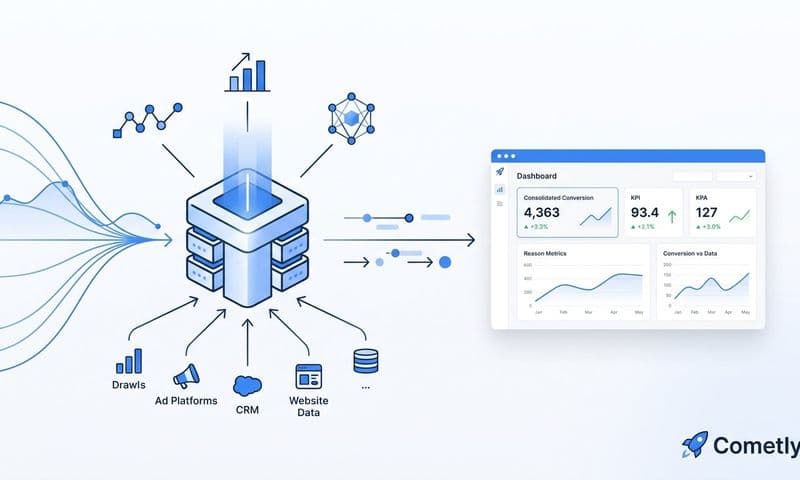
Modern marketers solve this through data integration—connecting these disparate sources into a unified view. When your ad platforms, website tracking, and CRM all feed into a centralized attribution system, you finally see the whole story. You discover that the customer who converted today actually clicked a Facebook ad three weeks ago, visited from a Google search last week, and finally purchased after receiving your email campaign. Understanding the need for marketing data integration is essential for accurate attribution.
From Raw Numbers to Revenue Insights: Analyzing Your Marketing Data
Collecting data is step one. Making sense of it—that's where most marketing teams struggle. You can have perfect data from every source and still make terrible decisions if you don't analyze it correctly.
Let's talk about attribution models, because this is where data analysis gets real. Attribution is how you assign credit for conversions across the multiple touchpoints in a customer's journey. Think about it: someone might see your Facebook ad, click a Google search result, read a blog post, receive an email, and then finally purchase. Which touchpoint "caused" the conversion?
Last-click attribution gives all credit to the final touchpoint before conversion. It's simple and easy to track, but it ignores everything that happened earlier in the journey. If you optimize based solely on last-click data, you'll undervalue awareness campaigns and overinvest in bottom-funnel tactics. First-click attribution does the opposite—crediting the initial touchpoint while ignoring everything that nurtured the lead afterward.
Multi-touch attribution distributes credit across the customer journey. Linear attribution gives equal credit to every touchpoint. Time-decay attribution weighs recent interactions more heavily. Position-based attribution emphasizes the first and last touches while still acknowledging middle interactions. Each model tells a different story about what's working. For a deeper dive, explore our marketing attribution model guide.
Here's what matters: understanding which attribution model fits your business reality. If you're running high-consideration products with long sales cycles, multi-touch attribution reveals how awareness campaigns contribute to eventual conversions. If you're in e-commerce with shorter purchase decisions, you might weight recent touchpoints more heavily. The goal isn't finding the "right" model—it's choosing one that helps you make better budget allocation decisions.
Now let's address metrics. Too many marketers track vanity metrics that feel good but don't drive revenue. Impressions are up! Engagement is increasing! Page views are climbing! But are you making more money?
Revenue-focused analysis starts with these questions: Which campaigns generate profitable customer acquisition? What's the true cost per acquisition when you account for the entire customer journey? Which channels deliver customers with the highest lifetime value? How long does it take for different campaigns to pay back their investment?
This means connecting marketing metrics to business outcomes. Don't just track conversion rate—track revenue per conversion. Don't just measure cost per click—measure customer acquisition cost including all touchpoints. Don't just celebrate growing traffic—analyze whether that traffic converts at profitable rates.
The real insight comes from unified data analysis. When you connect ad platform performance to website behavior to CRM outcomes, patterns emerge that individual data sources never reveal. You might discover that customers who engage with your content before clicking ads convert at three times the rate of cold traffic. You might find that certain ad creatives attract high-intent prospects who close faster and spend more. You might learn that campaigns you considered "low performing" based on platform metrics actually drive your most valuable long-term customers.
This is the difference between data and insights. Data tells you what happened. Insights explain why it matters and what to do next. When you analyze marketing data with a revenue lens, you stop optimizing for clicks and start optimizing for profit. Learning how to use data analytics in marketing effectively transforms your decision-making process.
Turning Data Into Action: Practical Applications for Marketers
Data analysis without action is just expensive reporting. The point of collecting and analyzing marketing data is making better decisions that drive revenue growth. Let's get practical.
Start with budget optimization. When you understand which campaigns actually drive conversions—not just which ones generate clicks—you can reallocate spend with confidence. Imagine discovering that your Facebook prospecting campaigns generate more revenue per dollar spent than your Google search ads, even though the search campaigns show higher conversion rates in platform reporting. That's the kind of insight that changes quarterly budgets.
But it goes deeper than channel-level decisions. With granular data, you identify high-performing ads within campaigns, winning audience segments within targeting groups, and effective placements within platforms. You might find that video ads outperform image ads for cold audiences but underperform for retargeting. You could discover that certain geographic regions deliver customers at half the acquisition cost of others. These insights let you scale what works and cut what doesn't—not based on hunches, but on revenue data.
Audience insights transform how you target and personalize. When you track which customer segments convert best, you build lookalike audiences based on actual buyers rather than website visitors. When you understand the content journey that leads to purchases, you create nurture sequences that match proven paths. When you identify the characteristics of high-lifetime-value customers, you optimize campaigns to attract more of them.
This is where first-party data becomes powerful. You're not just targeting "women aged 25-45 interested in fitness." You're targeting people whose behavior patterns match your best existing customers—people who engaged with specific content types, spent certain amounts of time on key pages, and demonstrated purchase intent through their actions. Implementing data-driven marketing strategies helps you leverage these insights effectively.
Here's an application many marketers overlook: feeding better data back to ad platforms. Facebook, Google, and other platforms use machine learning to optimize ad delivery. But they can only optimize based on the conversion data you send them. If your tracking is incomplete or inaccurate, their algorithms optimize toward the wrong signals.
When you use server-side tracking and enriched conversion data, you send more complete information back to ad platforms. Instead of just telling Facebook that someone converted, you tell them the conversion value, the customer's lifecycle stage, and whether it was a high-quality lead. This helps the platform's algorithm find more people likely to generate similar valuable conversions. You're essentially training the AI with better data, which improves targeting, optimization, and ultimately your return on ad spend.
The practical application that ties everything together? Confident scaling decisions. When you know with certainty which campaigns drive profitable growth, you can increase budgets without the anxiety of wasting money. When you understand your true customer acquisition costs across the full journey, you set realistic growth targets. When you identify the leading indicators that predict revenue outcomes, you spot opportunities and problems before they show up in your bottom line.
Common Marketing Data Challenges (And How to Solve Them)
Even with the right data strategy, you'll face obstacles. Let's address the challenges that trip up marketing teams and how to overcome them.
Data fragmentation is the most common problem. Your ad performance lives in Meta Ads Manager. Your website analytics sit in Google Analytics. Your sales data exists in HubSpot or Salesforce. Your email metrics are in Mailchimp. Each platform provides valuable insights, but none of them talk to each other. You're forced to manually export data, combine it in spreadsheets, and hope your formulas are correct. This marketing data silos problem plagues teams of all sizes.
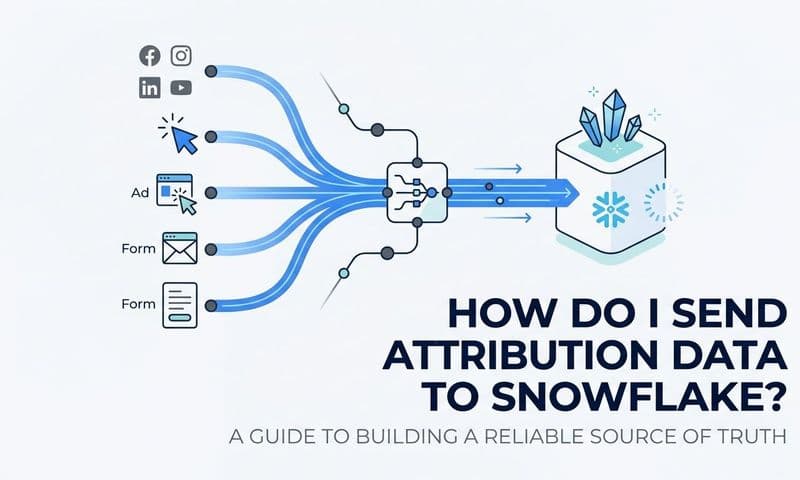
The solution? Data integration through attribution platforms that connect your marketing stack. When your ad platforms, website tracking, CRM, and other tools feed into a unified system, you get a single source of truth. You see the complete customer journey without manual data wrangling. You analyze cross-channel performance without switching between ten different dashboards. You make decisions based on comprehensive data rather than fragmented snapshots.
Tracking limitations present another major challenge. iOS privacy changes mean that pixel-based tracking often misses conversions. Cookie deprecation is making third-party tracking increasingly unreliable. Cross-device attribution remains difficult when someone researches on mobile but purchases on desktop. Ad blockers prevent your tracking scripts from firing. The result? Incomplete data that underreports your actual performance.
Server-side tracking addresses many of these limitations by capturing events directly from your server rather than relying on browser pixels. First-party data collection through forms, account creation, and CRM integration provides reliable tracking that doesn't depend on cookies. Identity resolution techniques help connect user behavior across devices and sessions. None of these solutions are perfect, but together they create a more complete and accurate picture than pixel tracking alone. Implementing marketing data accuracy improvement methods ensures your decisions are based on reliable information.
Then there's analysis paralysis—the overwhelming feeling that comes from having too much data and not knowing what to focus on. When you can track hundreds of metrics, which ones actually matter? When you have access to granular data on every campaign, ad, audience, and placement, where do you start?
The antidote is ruthless prioritization. Focus on metrics that directly connect to revenue outcomes. Start with high-level questions: Which channels drive profitable customer acquisition? What's our true cost per acquisition? Which campaigns generate customers with the highest lifetime value? Once you answer these fundamental questions, you can drill down into more granular analysis.
Create a hierarchy of metrics. At the top: revenue, profit, customer lifetime value. Second tier: conversion rates, customer acquisition costs, return on ad spend. Third tier: engagement metrics, traffic sources, audience demographics. Review top-tier metrics daily or weekly. Second-tier metrics weekly or monthly. Third-tier metrics only when investigating specific questions or optimizing particular campaigns.
Another challenge? Data quality issues. Duplicate records in your CRM, misconfigured tracking pixels, attribution windows that don't match your sales cycle, test purchases that skew your data. Poor data quality leads to poor decisions, no matter how sophisticated your analysis.
Solve this through regular data audits and validation. Test your tracking implementation monthly. Review your CRM for duplicate records and data hygiene issues. Verify that your attribution windows match your actual customer journey length. Exclude internal traffic and test transactions from your reporting. Clean data might be less impressive in volume, but it's infinitely more valuable for decision-making. Following best practices for using data in marketing decisions helps maintain data integrity.
Putting It All Together: From Data to Revenue Growth
Marketing data is only valuable when it connects to revenue outcomes. You can have the most sophisticated tracking setup, the most advanced analytics platform, and the most detailed dashboards—but if that data doesn't help you make better budget decisions, improve targeting, and scale profitable campaigns, it's just expensive noise.
The journey from data to revenue starts with understanding what types of data actually matter. First-party data you own and control. Quantitative metrics that measure performance. Qualitative insights that explain behavior. Customer data, campaign data, channel data, and financial data working together to tell a complete story.
It continues with collecting that data accurately from all the sources that matter—ad platforms, website tracking, CRM systems, and more. Server-side tracking captures what pixels miss. Data integration connects fragmented sources into unified insights. Proper implementation ensures you're measuring what matters rather than just what's easy to track.
The transformation happens in analysis. Multi-touch attribution reveals which touchpoints drive conversions across the customer journey. Revenue-focused metrics cut through vanity numbers to show what's actually profitable. Unified data analysis uncovers patterns that individual platforms never reveal. Understanding what is attribution in marketing provides the foundation for this analytical approach.
But the real value comes from action. Using data to optimize budgets toward high-performing campaigns. Leveraging insights to improve targeting and personalization. Feeding enriched conversion data back to ad platforms to improve their optimization. Making confident scaling decisions based on complete, accurate information rather than platform-limited reporting.
The marketers who master their data will outperform those who don't. Not because they track more metrics or have fancier dashboards, but because they transform raw numbers into data-driven marketing insights. They know exactly which ads and channels drive leads and revenue. They make budget decisions based on comprehensive attribution rather than last-click guesswork. They scale with confidence because their data shows them what's truly working.
The goal isn't more data—it's clearer data. Data that shows the complete customer journey from first touchpoint to final purchase. Data that connects marketing activity to revenue outcomes. Data that empowers you to make decisions that drive profitable growth.
Modern attribution platforms make this possible by connecting your ad platforms, CRM, and website to track the entire customer journey in real time. They capture every touchpoint, analyze performance across attribution models, and show you which sources actually convert. They feed better data back to ad platforms to improve algorithm optimization. They transform fragmented data into unified insights that drive confident decisions.
Ready to elevate your marketing game with precision and confidence? Discover how Cometly's AI-driven recommendations can transform your ad strategy—Get your free demo today and start capturing every touchpoint to maximize your conversions.