Attribution platforms and tag managers are two of the most commonly conflated tools in a marketer's tech stack, and the confusion is understandable. Both involve tracking, data, and code. But they solve fundamentally different problems.
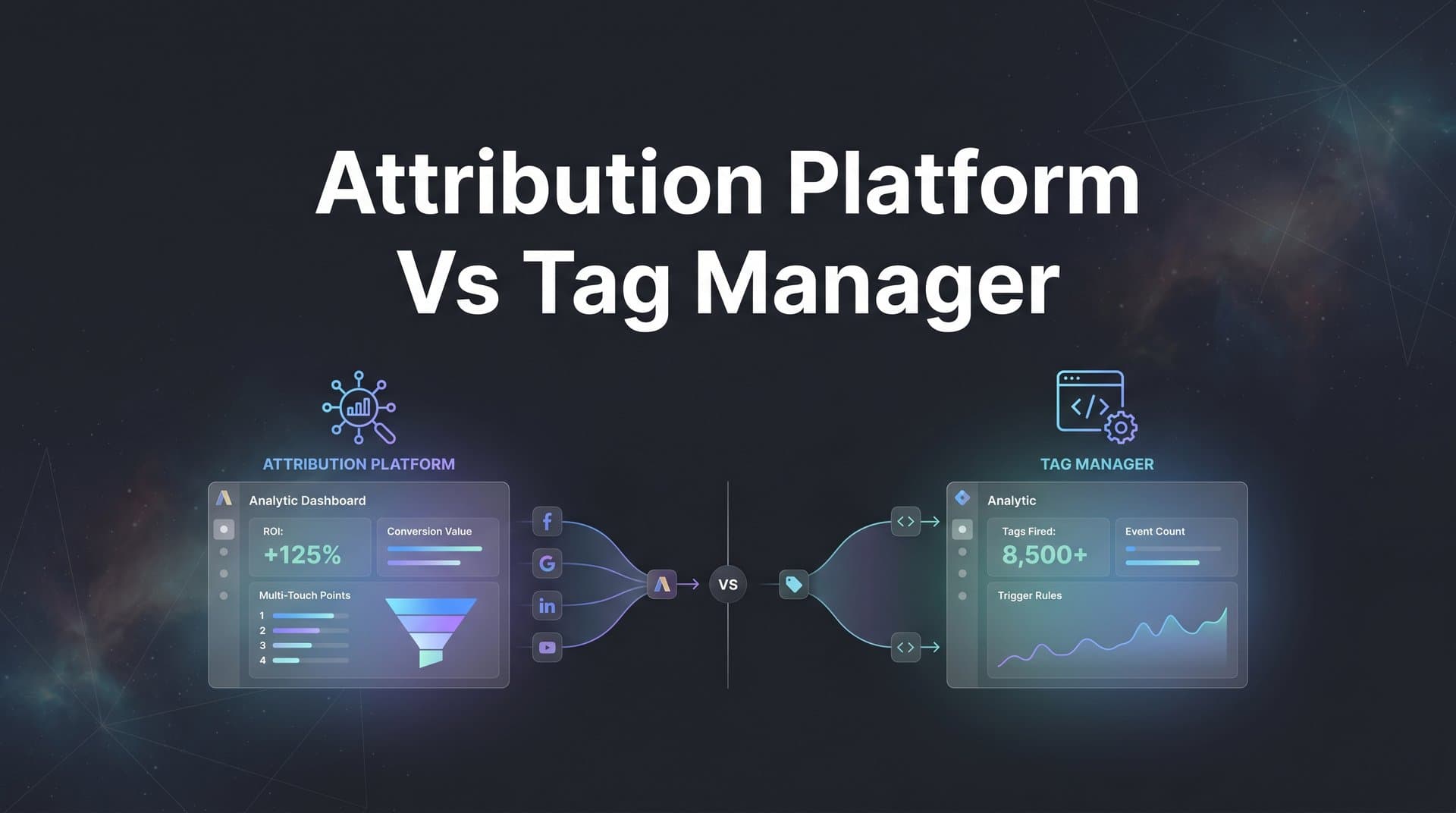
An attribution platform answers the question: which ads, channels, and campaigns are actually driving revenue? A tag manager answers a different question: how do I deploy and organize all my tracking scripts without touching the site's source code? One is about insight, the other is about infrastructure.
Here's the thing: many teams need both. A tag manager helps you collect and route data. An attribution platform helps you make sense of it and connect it to revenue. Understanding which tools belong in which category, and which ones are worth your investment, is exactly what this guide covers.
The tools below were selected based on tracking accuracy, ease of use, integration depth, and value for paid advertising teams. The list includes the best attribution platforms and the best tag management solutions, so you can build a stack that actually tells you what's working.
1. Cometly
Best for: Paid advertising teams that need accurate, AI-powered attribution tied directly to revenue.
Cometly is an AI-powered marketing attribution platform that tracks the full customer journey and syncs enriched conversion data back to ad platforms for smarter optimization.
 8 Best Attribution Platforms and Tag Managers for Smarter Marketing in 2026
Where This Tool Shines
Cometly stands out because it doesn't just tell you which channel gets credit. It connects every touchpoint from the first ad click to the final conversion, giving you a complete picture of how your campaigns actually perform. For teams running paid media across multiple platforms, that visibility is the difference between scaling confidently and guessing.
The server-side tracking component is particularly valuable in today's privacy-first environment. Browser-based tracking misses a significant portion of conversions due to ad blockers, iOS restrictions, and cookie limitations. Cometly's server-side approach captures what client-side tracking misses, which means your attribution data reflects reality rather than a filtered version of it.
Key Features
Multi-Touch Attribution: Tracks every touchpoint across all ad platforms and channels, giving you flexible attribution models that reflect your actual customer journey.
Server-Side Tracking: Collects conversion data at the server level to bypass browser limitations and deliver more accurate, complete measurement.
Conversion Sync: Feeds enriched conversion events back to Meta, Google, TikTok, and other ad platforms so their algorithms can optimize toward your best customers.
AI-Powered Recommendations: Identifies top-performing ads and campaigns across every channel and surfaces actionable scaling recommendations.
Real-Time Analytics Dashboard: Connects ad spend to actual revenue in real time, so you can make budget decisions based on current performance, not yesterday's data.
Best For
Cometly is built for digital marketers, growth teams, and agencies running paid campaigns across multiple channels who need accurate attribution beyond what ad platforms self-report. It's especially useful for teams that have felt the impact of iOS tracking limitations or unreliable pixel data.
Pricing
Custom pricing based on ad spend. A demo is available on request at cometly.com, which is the best starting point for understanding which plan fits your scale.
2. Triple Whale
Best for: Shopify ecommerce brands that want unified attribution and creative performance analytics.
Triple Whale is an attribution and analytics platform built specifically for Shopify brands, combining revenue attribution with creative-level ad performance data.
 7 Best Funnel.io Alternatives for Marketing Data Analytics in 2026
Where This Tool Shines
Triple Whale's deep Shopify integration makes it a natural fit for DTC brands that live and breathe ecommerce. It pulls revenue data directly from Shopify and matches it against ad spend from Meta, Google, TikTok, and other platforms to give you a unified view of what's actually profitable.
The creative analytics layer is a genuine differentiator. Rather than just knowing which campaign performed, Triple Whale helps you understand which specific ad creative is driving purchases, which matters a lot when you're iterating on content and testing new angles.
Key Features
Shopify Revenue Attribution: Connects directly to Shopify for real-time revenue data matched against your paid media spend.
Creative Analytics: Breaks down performance by individual ad creative so you can identify what content converts and what doesn't.
First-Party Pixel: Triple Whale's proprietary pixel improves tracking accuracy by collecting first-party data directly from your storefront.
Summary Dashboard: Unifies data from multiple ad platforms into a single view, reducing the time spent jumping between platform dashboards.
Best For
Shopify-based DTC brands running paid social and search campaigns who want a single source of truth for ad performance and creative testing. Less suited for non-Shopify businesses or complex B2B sales cycles.
Pricing
Plans start around $100 per month and scale based on revenue. Pricing tiers are available on their website.
3. Northbeam
Best for: High-spend DTC and ecommerce brands that need sophisticated multi-touch modeling and media mix insights.
Northbeam is a machine learning-based attribution platform focused on multi-touch modeling and media mix analysis for brands with significant ad budgets.
 9 Best Attribution Tools for Facebook Advertisers in 2026
Where This Tool Shines
Northbeam is built for scale. Its machine learning models are designed to improve over time as they ingest more of your data, which means the longer you use it, the more accurate and nuanced its attribution becomes. For brands running complex, multi-channel campaigns, that depth of modeling is hard to replicate with simpler tools.
The media mix modeling component helps marketers think beyond last-click and understand how budget allocation across channels affects overall performance. That's particularly useful when you're trying to justify spend on upper-funnel channels that don't show clean conversion paths.
Key Features
Customizable Attribution Models: Offers flexible multi-touch attribution with adjustable lookback windows to match your sales cycle.
Media Mix Modeling: Provides budget allocation insights by analyzing how different channel investments interact and contribute to overall results.
Cross-Channel Reporting: Covers both paid and organic performance across channels in a unified view.
Self-Improving ML Models: Machine learning models that get sharper with more data over time, increasing accuracy as your campaigns scale.
Best For
DTC and ecommerce brands spending significant monthly budgets on paid media who need more than platform-reported attribution. Typically best suited for brands spending $50,000 or more per month on ads.
Pricing
Custom pricing. Northbeam is positioned as an enterprise-level solution, so pricing is discussed directly with their team.
4. Hyros
Best for: High-ticket offers, info products, and businesses with long or complex sales cycles.
Hyros is an AI-powered ad tracking platform designed to follow leads through long funnels that include calls, emails, and multiple touchpoints before a sale closes.
 7 Best Northbeam Alternatives for Small Business in 2026
Where This Tool Shines
Most attribution tools are optimized for ecommerce, where the journey from click to purchase is relatively short. Hyros is built for a different reality: businesses where someone might click an ad, join an email list, attend a webinar, book a call, and then convert weeks later. Hyros tracks that entire chain.
The CRM and call tracking integrations are what make this work. By connecting ad data to phone calls and email interactions, Hyros can attribute revenue to the original ad source even when the conversion happens offline or through a sales team.
Key Features
Long-Funnel Attribution: Tracks conversions across calls, emails, and web interactions throughout extended sales cycles.
AI Optimization Recommendations: Surfaces insights about which ad sources are driving the highest-quality leads and closed revenue.
CRM and Call Tracking Integration: Connects with CRMs and call tracking systems to bridge the gap between online ads and offline conversions.
Print Tracking: Offers direct mail attribution for businesses that use offline marketing alongside digital campaigns.
Best For
Coaches, course creators, agencies, and high-ticket service businesses where the sales cycle is long and conversions don't happen immediately after an ad click.
Pricing
Plans start around $99 per month and scale based on tracked revenue. Pricing details are available on the Hyros website.
5. Google Tag Manager
Best for: Any marketing team that needs a free, reliable way to deploy and manage tracking tags without developer dependency.
Google Tag Manager is a free tag management system that lets marketers deploy tracking scripts, pixels, and code snippets directly from a web interface without modifying site code.
 9 Best Server Side Tracking Solutions for Accurate Marketing Data in 2026
Where This Tool Shines
Google Tag Manager is the most widely used tag management solution in the world, and for good reason. It removes the bottleneck of relying on developers every time you need to add a new tracking pixel or update an existing one. You can deploy, test, and manage tags through a clean visual interface.
The preview and debug mode is one of its most underrated features. Before you publish any change, you can test exactly how tags fire in real browser conditions, which prevents the kind of silent tracking failures that corrupt your data without anyone noticing.
Key Features
Free with No Usage Limits: GTM's web containers are completely free with no caps on tags, triggers, or pageviews.
Template Gallery: A large library of built-in and community-contributed templates for popular tools, reducing setup time significantly.
Version Control: Every published container version is saved, so you can roll back to a previous state if something breaks.
Server-Side Tagging: GTM supports server containers that allow you to move tag execution to a server environment for better data control and privacy compliance.
Universal Compatibility: Works with virtually every analytics, advertising, and marketing tool that requires a tracking snippet.
Best For
Marketing teams of any size that need flexible, cost-effective tag management. It's particularly valuable for teams without dedicated developer resources who still need to move quickly on tracking implementations.
Pricing
Free for web containers. Server-side containers require hosting on Google Cloud, which incurs separate infrastructure costs depending on traffic volume.
6. Tealium iQ Tag Management
Best for: Enterprise organizations that need robust data governance alongside tag management.
Tealium iQ is an enterprise tag management platform that pairs with Tealium's AudienceStream CDP for unified data collection, governance, and audience activation.
 8 Best Attribution Platforms and Tag Managers for Smarter Marketing in 2026
Where This Tool Shines
Tealium is built for organizations where data governance isn't optional. It gives enterprise teams fine-grained control over what data is collected, how it's structured, and where it's sent. That level of control matters when you're managing dozens of tags across multiple properties and need consistent data quality across all of them.
The integration with AudienceStream, Tealium's CDP, is what separates it from simpler tag managers. You're not just deploying tags. You're building a data layer that feeds into audience segmentation and activation across your entire marketing stack.
Key Features
Enterprise Governance Controls: Role-based access, audit logs, and approval workflows for managing tags at scale across large teams.
AudienceStream CDP Integration: Connects tag management directly to Tealium's customer data platform for real-time audience building and activation.
1,300+ Turnkey Integrations: Pre-built connectors for a wide range of marketing, analytics, and data tools.
Data Quality Tools: Includes data layer enrichment and validation to enforce schema consistency and catch bad data before it propagates downstream.
Best For
Large enterprises with complex data infrastructure needs, multiple digital properties, and strict requirements around data quality and governance. Not the right fit for small teams or those with limited technical resources.
Pricing
Custom enterprise pricing. Contact Tealium directly for a quote based on your organization's needs and data volume.
7. Segment (by Twilio)
Best for: Product and marketing teams that want a single data collection layer that feeds dozens of downstream tools.
Segment is a customer data infrastructure platform that collects event data from websites and apps and routes it to hundreds of analytics, marketing, and data warehouse destinations.
 8 Best Attribution-Focused Platforms vs Segment: Which Approach Fits Your Marketing Stack in 2026
Where This Tool Shines
Segment occupies an interesting position in the market: it's part tag manager, part CDP, and part data pipeline. The core value is simple. You instrument your site or app once using Segment's API, and then you can route that data to any of 400+ integrations without writing additional code. Add a new analytics tool? Flip a switch. Remove one? Same process.
The Protocols feature is particularly powerful for teams that have struggled with inconsistent event naming and data quality issues. It enforces a schema across all your tracking, which means the data flowing into your warehouse and marketing tools is clean and consistent from the start.
Key Features
Single Collection API: One unified tracking implementation that feeds all your downstream tools simultaneously.
400+ Integrations: Pre-built connections to analytics platforms, ad tools, data warehouses, and marketing automation systems.
Protocols: Enforces data quality standards and schema consistency across all event tracking.
Unify: Identity resolution feature that stitches together user behavior across devices and sessions into a single profile.
Best For
Growth-stage and enterprise companies that want a scalable data infrastructure layer. Particularly valuable for product-led growth teams, SaaS companies, and organizations that rely heavily on event-level data for personalization and analytics.
Pricing
A free tier is available for smaller implementations. The Team plan starts at $120 per month, and the Business plan is custom-priced based on data volume and feature requirements.
8. Adobe Experience Platform Tags
Best for: Enterprise teams already invested in the Adobe Experience Cloud ecosystem.
Adobe Experience Platform Tags is an enterprise tag management system, formerly known as Adobe Launch, tightly integrated with Adobe Analytics, Adobe Target, and the broader Adobe Experience Cloud suite.
Where This Tool Shines
If your organization runs Adobe Analytics and Adobe Target, Adobe Experience Platform Tags is the natural choice for tag management. The native integration means you're not stitching together tools from different vendors. Everything is designed to work together, which reduces implementation complexity and keeps your data flowing cleanly between products.
The event forwarding capability is a strong addition for teams moving toward server-side data collection. It allows you to route data from the client to a server environment and then forward it to third-party tools, which improves performance and gives you more control over what data leaves the browser.
Key Features
Adobe Experience Cloud Integration: Native, seamless connection with Adobe Analytics, Target, and other Experience Cloud products.
Rule-Based Tag Firing: Visual interface for defining conditions and triggers that control when and how tags fire.
Extension Marketplace: A catalog of extensions for integrating third-party tools alongside Adobe's native products.
Event Forwarding: Server-side data routing that sends events directly from the edge to downstream tools without additional client-side code.
Best For
Enterprise organizations that have standardized on Adobe Experience Cloud and need a tag management solution that integrates natively with their existing analytics and personalization infrastructure.
Pricing
Included as part of Adobe Experience Cloud subscriptions. It is not available as a standalone purchase, so the effective cost is tied to your broader Adobe licensing.
Building the Right Stack for Your Team
The tools in this list serve two distinct but complementary roles. Attribution platforms like Cometly, Triple Whale, Northbeam, and Hyros help you answer the most important question in paid marketing: which campaigns, channels, and ads are actually driving revenue? Tag managers like Google Tag Manager, Tealium iQ, Segment, and Adobe Experience Platform Tags help you collect, organize, and route the data that makes that analysis possible.
For most paid advertising teams, the right move is to use both. A tag manager gives you a clean, reliable data collection layer. An attribution platform turns that data into decisions.
Here's a quick way to think about which tools fit your situation:
If you're a DTC or Shopify brand: Triple Whale or Northbeam for attribution, Google Tag Manager for tag management. Cometly is worth evaluating if you want AI-driven recommendations and stronger cross-platform attribution.
If you run high-ticket offers or long sales cycles: Hyros is built for your reality. Pair it with Google Tag Manager or Segment depending on your data infrastructure needs.
If you're an enterprise team: Tealium iQ or Adobe Experience Platform Tags for tag management, with Cometly or Northbeam for attribution depending on your channel mix.
If you're building a scalable data infrastructure: Segment is the most flexible foundation. It routes data anywhere, which makes it a strong complement to any attribution platform you choose.
Cometly is worth highlighting as a starting point for any paid advertising team. Its server-side tracking addresses the real-world limitations of browser-based measurement, its Conversion Sync feeds better data back to Meta, Google, and TikTok so their algorithms optimize more effectively, and its AI layer surfaces the insights that would otherwise take hours of manual analysis. It's designed for the way modern paid media actually works.
The best stack isn't the most complex one. It's the one that gives you accurate data and clear answers. Start with attribution as your foundation, because if you don't know what's driving revenue, every other optimization is just guesswork. Get your free demo and see how Cometly connects every touchpoint to the revenue outcomes that matter.