

You check your ad accounts first thing Monday morning and notice something frustrating: your Facebook campaign crushed it over the weekend while your Google Ads budget sat mostly idle. By the time you shift money around, the Facebook momentum has cooled off. Sound familiar?
This is the reality for most marketers managing budgets across multiple platforms. You're constantly playing catch-up, reacting to yesterday's performance while today's opportunities slip away. You might spend hours each week analyzing spreadsheets, comparing metrics across platforms, and manually adjusting budgets based on gut feel as much as data.
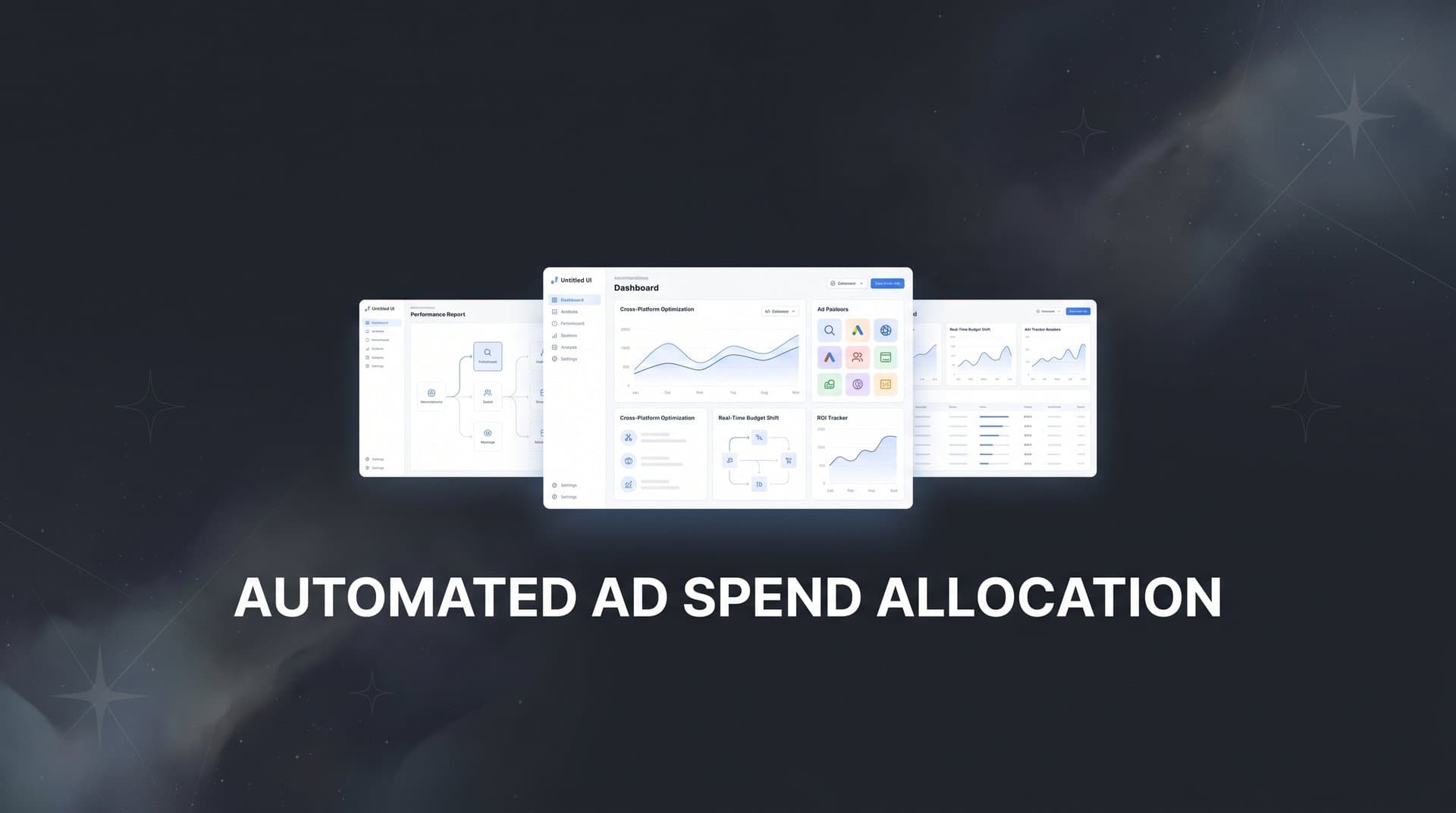
Automated ad spend allocation changes this entirely. Instead of you hunting for performance patterns and making manual adjustments, intelligent systems analyze real-time signals across all your channels and redistribute budgets to where they're actually driving results. It's the difference between steering a ship by checking your position every few hours versus having GPS that constantly adjusts your course.
The Mechanics Behind Smart Budget Distribution
At its core, automated allocation works by continuously monitoring performance signals across every campaign and channel you're running. The system tracks metrics like click-through rates, cost per acquisition, return on ad spend, and conversion rates in real time.
But here's where it gets interesting: these systems don't just look at current performance. Machine learning algorithms analyze patterns to predict which campaigns are likely to perform best in the coming hours or days. Think of it like weather forecasting for your ad spend.
The algorithm might notice that your TikTok campaigns consistently perform better on weekend evenings, while your Google Search ads convert more efficiently during business hours. It learns these patterns and proactively shifts budgets before peak performance windows, not after. Understanding spend by day of week patterns becomes crucial for this type of optimization.
There are two main approaches to how this optimization happens. Real-time optimization makes continuous micro-adjustments throughout the day, responding immediately to performance changes. Scheduled optimization runs at set intervals, making larger budget shifts based on accumulated data from the previous period.
Real-time works best when you have high traffic volumes and fast conversion cycles. If you're running e-commerce campaigns with hundreds of daily conversions, real-time adjustments can capture momentum as it builds. Scheduled optimization makes more sense for longer sales cycles or lower-volume campaigns where you need more data to identify meaningful trends.
The key is that both approaches use the same fundamental logic: identify what's working right now, predict what will work next, and move money accordingly. The system essentially asks, "If I have an extra dollar to spend in the next hour, which campaign will generate the best return?" Then it answers that question hundreds of times per day.
Most sophisticated systems also consider budget pacing. They don't just optimize for immediate returns but ensure you're not burning through your entire monthly budget in the first week. The algorithms balance short-term performance with strategic spending goals.
Why Manual Budget Management Falls Short at Scale
Let's be honest about what manual budget management really looks like. You're juggling Meta Ads Manager, Google Ads, TikTok Ads, maybe LinkedIn or Pinterest. Each platform has its own dashboard, its own metrics, its own way of reporting performance.
You might check performance twice a day if you're diligent. But in those 12 hours between checks, a lot can happen. A campaign might start crushing it at 2 PM, but you don't notice until your evening review. By then, you've missed six hours of scaling opportunity.
Or worse: a campaign starts hemorrhaging money at an unsustainable cost per acquisition. You discover it the next morning after it's already blown through a significant chunk of budget. This is what marketers call the "morning after" problem, and it's expensive. These ad spend allocation inefficiencies compound quickly across multiple campaigns.
The cognitive load alone is staggering. Try holding all your campaign performance data in your head simultaneously across four or five platforms. Which Facebook ad set has the best ROAS right now? How does that compare to your top Google Shopping campaign? Should you pull budget from LinkedIn to fund that high-performing TikTok creative?
Even the most data-savvy marketers can only process so much information at once. Research in cognitive psychology consistently shows that humans struggle with tracking more than a handful of variables simultaneously. Yet you're expected to monitor dozens of campaigns across multiple platforms, each with multiple metrics that matter.
There's also the opportunity cost. Every hour you spend in spreadsheets comparing performance metrics is an hour you're not spending on strategy, creative development, or testing new channels. You hired smart marketers to think strategically, but they're stuck doing data entry and basic math.
Manual management also introduces human biases. Maybe you have a favorite platform or campaign type. Maybe you're overly optimistic about a new channel because you invested time learning it. These biases subtly influence budget decisions in ways that don't always align with pure performance data.
The Data Foundation That Powers Accurate Allocation
Here's the thing about automated allocation: it's only as good as the data feeding it. Garbage in, garbage out isn't just a saying—it's the fundamental challenge of marketing automation.
If your attribution data is incomplete or inaccurate, your allocation system will optimize toward the wrong signals. Imagine telling an algorithm to maximize revenue, but your tracking only captures 60% of actual conversions. The system will confidently shift budgets based on partial information, potentially starving campaigns that are actually performing well.
This is why the foundation of any automated allocation strategy is accurate, comprehensive tracking across the entire customer journey. You need to see every touchpoint from initial ad click through final conversion, and you need to connect those dots reliably. Many marketers struggle with ad spend tracking issues that undermine their optimization efforts.
The challenge is that modern customer journeys are messy. Someone might click your Facebook ad on their phone during lunch, research on their laptop that evening, and convert three days later after clicking a Google retargeting ad. If your tracking can't connect those dots, you're missing crucial context about what actually drives conversions.
This is where unified tracking becomes critical. You need a system that connects your ad platforms, CRM, and website data into a single source of truth. When all your conversion data flows through one attribution system, your allocation algorithms can see the complete picture.
Server-side tracking has become increasingly important in building this foundation. Browser-based tracking faces growing limitations from privacy changes, ad blockers, and iOS updates that restrict pixel functionality. When significant portions of your conversion data go untracked, automated systems make decisions based on incomplete information.
Server-side tracking captures conversion events directly from your server to the attribution platform, bypassing browser limitations. This means more complete data, which means smarter allocation decisions. The difference can be substantial—many marketers see 20-30% more tracked conversions when implementing server-side tracking properly.
The data foundation also needs to be real-time or near-real-time. If there's a six-hour delay between when conversions happen and when they appear in your attribution system, your allocation algorithms are always working with stale information. They're optimizing for yesterday's reality, not today's opportunities.
Building Your Automated Allocation Strategy
Setting up automated allocation isn't about flipping a switch and letting algorithms run wild. The most effective implementations combine automation with strategic guardrails that keep everything aligned with your business goals.
Start by defining your optimization goal clearly. Are you optimizing for revenue, lead volume, return on ad spend, or cost per acquisition? This might seem obvious, but the distinction matters enormously. Optimizing for revenue might push budgets toward high-ticket products even if the volume is lower. Optimizing for ROAS might starve top-of-funnel campaigns that don't convert immediately but feed your pipeline.
Many marketers use different optimization goals for different campaign types. Brand awareness campaigns might optimize for reach and engagement, while bottom-funnel retargeting optimizes for ROAS. Your allocation system needs to respect these different objectives rather than applying one-size-fits-all logic. Following marketing budget allocation best practices helps ensure you're setting the right objectives from the start.
Next, establish budget floors and ceilings for each campaign or channel. A floor ensures that strategic campaigns maintain minimum visibility even if their immediate performance dips. A ceiling prevents any single campaign from consuming your entire budget during a temporary spike.
Think of these guardrails like setting boundaries for a self-driving car. You're defining the lanes it can operate within, but letting the algorithm handle the steering and acceleration. This gives you the benefits of automation while maintaining strategic control.
Creating feedback loops between your allocation system and ad platform algorithms is another crucial element. When you shift budget to a high-performing Facebook campaign, that campaign's algorithm gets more data to optimize with. This creates a virtuous cycle where allocation improvements feed back into platform-level optimization.
The key is feeding enriched conversion data back to ad platforms. When Meta or Google's algorithms know which clicks led to actual revenue, they can optimize targeting and bidding more effectively. This is where conversion sync capabilities become valuable—sending server-side conversion data back to ad platforms so their AI works with the same accurate information your allocation system uses.
Don't forget to build in review cycles. Even with automation running, you should regularly review allocation decisions to ensure they align with broader strategy. Maybe the algorithm is correctly optimizing for ROAS, but it's neglecting a new market you're trying to break into. Human oversight catches these strategic misalignments.
Common Pitfalls and How to Avoid Them
The biggest mistake marketers make with automated allocation is over-automation—giving algorithms complete control without strategic oversight. Yes, the system can optimize better than humans at the tactical level. But it can't understand strategic priorities like entering a new market or testing a new product line.
Maintain human oversight on strategic decisions. Use automation for tactical budget distribution within campaigns, but keep humans in charge of which campaigns exist, what their objectives are, and how they fit into broader marketing strategy.
The learning period trap catches many marketers off guard. They implement automated allocation, expect immediate improvements, and panic when results don't materialize in the first week. Here's the reality: algorithms need data to learn from.
If you're running campaigns with low conversion volumes, the learning period can take weeks. The system needs to see enough conversions across different budget levels to understand what actually drives performance. Pulling the plug after a few days means you never get past the learning phase.
Give new automated systems at least two to four weeks of learning time before judging results, longer if you have lower conversion volumes. During this period, monitor for obvious problems but resist the urge to constantly adjust settings. Let the algorithm learn.
Cross-platform attribution conflicts create another common challenge. Facebook's reporting might show certain conversions that Google claims credit for. When your allocation system sees conflicting data, it struggles to make accurate decisions. This often leads to wasting ad spend on wrong channels because the system can't determine true performance.
This is why unified tracking matters so much. When one attribution system acts as the source of truth across all platforms, you eliminate conflicting signals. The allocation algorithm works from consistent data rather than trying to reconcile different platforms' self-reported performance.
Watch out for the "local maximum" problem too. Sometimes algorithms optimize toward a performance plateau that's good but not optimal. They might keep feeding a campaign that's performing well while missing opportunities to test new approaches that could perform even better.
Build in structured testing budgets that sit outside your main allocation logic. Reserve a portion of spend for testing new campaigns, creatives, or channels. This ensures you're not just optimizing existing campaigns but continuously expanding what's possible.
Putting It All Together: Your Path to Smarter Spend
Implementing automated ad spend allocation successfully comes down to three core elements working together. First, you need accurate, comprehensive attribution data that captures the complete customer journey. Without this foundation, you're optimizing based on partial information.
Second, you need clear strategic guardrails that align automation with business objectives. Define your optimization goals, set budget boundaries, and maintain human oversight on strategic decisions. Automation handles tactics brilliantly, but strategy still requires human judgment. Learning how to optimize ad spend allocation effectively means balancing both elements.
Third, you need patience during the learning period and commitment to continuous improvement. Give algorithms time to learn, monitor results systematically, and refine your approach based on what you discover.
The marketers seeing the best results from automated allocation share a common trait: they view it as an ongoing optimization process, not a one-time setup. They continuously refine their guardrails, test new approaches, and ensure their data foundation stays accurate as their marketing evolves. Using automated budget allocation tools effectively requires this iterative mindset.
When these elements come together, automated allocation transforms how you manage ad spend. Instead of reactive budget shuffling based on yesterday's data, you get proactive optimization that captures opportunities as they emerge. Instead of hours in spreadsheets, you get time back for strategy and creative development.
Making Confident Scaling Decisions With Better Data
Automated ad spend allocation represents a fundamental shift from reactive budget management to proactive optimization. When algorithms continuously analyze performance signals across all your channels and redistribute budgets in real time, you capture opportunities that manual management would miss.
But the foundation of any automated system is the data feeding it. Incomplete attribution, delayed reporting, or cross-platform conflicts undermine even the most sophisticated allocation algorithms. This is why accurate, real-time tracking across every touchpoint matters so much.
The most successful implementations combine automation with strategic oversight. Let algorithms handle the tactical work of budget distribution while you focus on the strategic decisions that actually move your business forward. Set clear guardrails, give systems time to learn, and continuously refine based on results.
Ready to elevate your marketing game with precision and confidence? Discover how Cometly's AI-driven recommendations can transform your ad strategy—Get your free demo today and start capturing every touchpoint to maximize your conversions.


