

You're running ads on Meta, Google, and TikTok. Your CRM shows closed deals. Your analytics dashboard displays website traffic. But when your CEO asks which campaign actually drove that $50,000 deal, you're piecing together data from five different platforms, cross-referencing timestamps, and making educated guesses.
Sound familiar?
Here's the reality: today's customers interact with 7-10 touchpoints before converting. They see your Facebook ad on Monday, click a Google search result on Wednesday, watch a YouTube video on Friday, and finally convert through a retargeting email the following week. Manual tracking simply can't capture this complexity accurately.
Automated marketing attribution solves this problem by connecting every ad click, website visit, and CRM event into a complete customer journey. It eliminates the guesswork, shows you exactly what's driving revenue, and does it all in real time without spreadsheets or manual data reconciliation.
This guide breaks down how automated attribution works, why it's become essential for modern marketing teams, and how to implement it effectively. Let's start with why the old way of doing things no longer works.
The Manual Attribution Problem (And Why Spreadsheets Fall Short)
Most marketing teams still rely on a patchwork of manual tracking methods. You set up UTM parameters for each campaign, export data from Google Analytics, pull reports from your ad platforms, and attempt to reconcile everything in a master spreadsheet. At the end of the month, you're left with incomplete data and attribution that defaults to last-click.
Last-click attribution gives 100% of the credit to the final touchpoint before conversion. That retargeting ad gets all the glory while the awareness campaign that started the journey gets ignored. This creates a distorted view of campaign performance and leads to budget decisions based on incomplete information.
The challenge multiplies when you're running campaigns across multiple platforms simultaneously. Meta Ads Manager shows one set of conversion numbers. Google Ads reports different results. TikTok has its own metrics. Each platform uses its own attribution window and tracking methodology, making it nearly impossible to get a unified view of performance. Understanding common attribution challenges in marketing analytics helps explain why this fragmentation persists.
Then there are the data gaps. A customer clicks your Facebook ad on their iPhone, visits your site later on their laptop, and converts on their tablet. Traditional cookie-based tracking sees these as three different users. You're missing the connections that reveal the actual customer journey.
iOS privacy changes have made this problem significantly worse. Apple's App Tracking Transparency framework and Intelligent Tracking Prevention limit how long cookies persist and what data can be collected. The result? Your pixel-based tracking is capturing an increasingly incomplete picture of user behavior.
Cookie deprecation across browsers continues this trend. Third-party cookies are disappearing, and even first-party cookies face restrictions. The tracking methods that worked five years ago are becoming less reliable every quarter.
Manual tracking also introduces human error. Someone forgets to add UTM parameters to a campaign. A team member uses inconsistent naming conventions. Data gets lost during platform migrations or CRM updates. Each mistake compounds, leaving you with attribution data you can't fully trust.
Perhaps most frustrating is the time cost. Marketing teams spend hours each week exporting data, cleaning spreadsheets, and trying to reconcile discrepancies between platforms. That's time not spent optimizing campaigns, testing new creative, or developing strategy.
This is where automation changes everything.
How Automated Attribution Actually Works
Automated marketing attribution replaces manual tracking with a technical infrastructure that captures, connects, and analyzes data automatically. The foundation is server-side tracking, which collects data directly from your server rather than relying on browser cookies or pixels.
Here's how it works in practice. When someone clicks your ad, the automated system creates a unique identifier for that user and stores it on your server. This identifier persists regardless of browser settings, cookie policies, or device switching. As the user interacts with your marketing touchpoints, each action gets logged and connected to their unique profile.
The system integrates directly with your ad platforms through APIs. Instead of relying on pixel data that can be blocked or incomplete, it receives conversion data directly from your CRM and website. When someone converts, the automated platform matches that conversion back to every ad interaction that preceded it.
This creates a complete customer journey map. You see the awareness ad they clicked three weeks ago, the search result they found five days later, the retargeting ad they engaged with yesterday, and the email that finally drove the conversion. Every touchpoint is captured and connected automatically. This comprehensive approach to attribution marketing tracking eliminates the blind spots that plague manual methods.
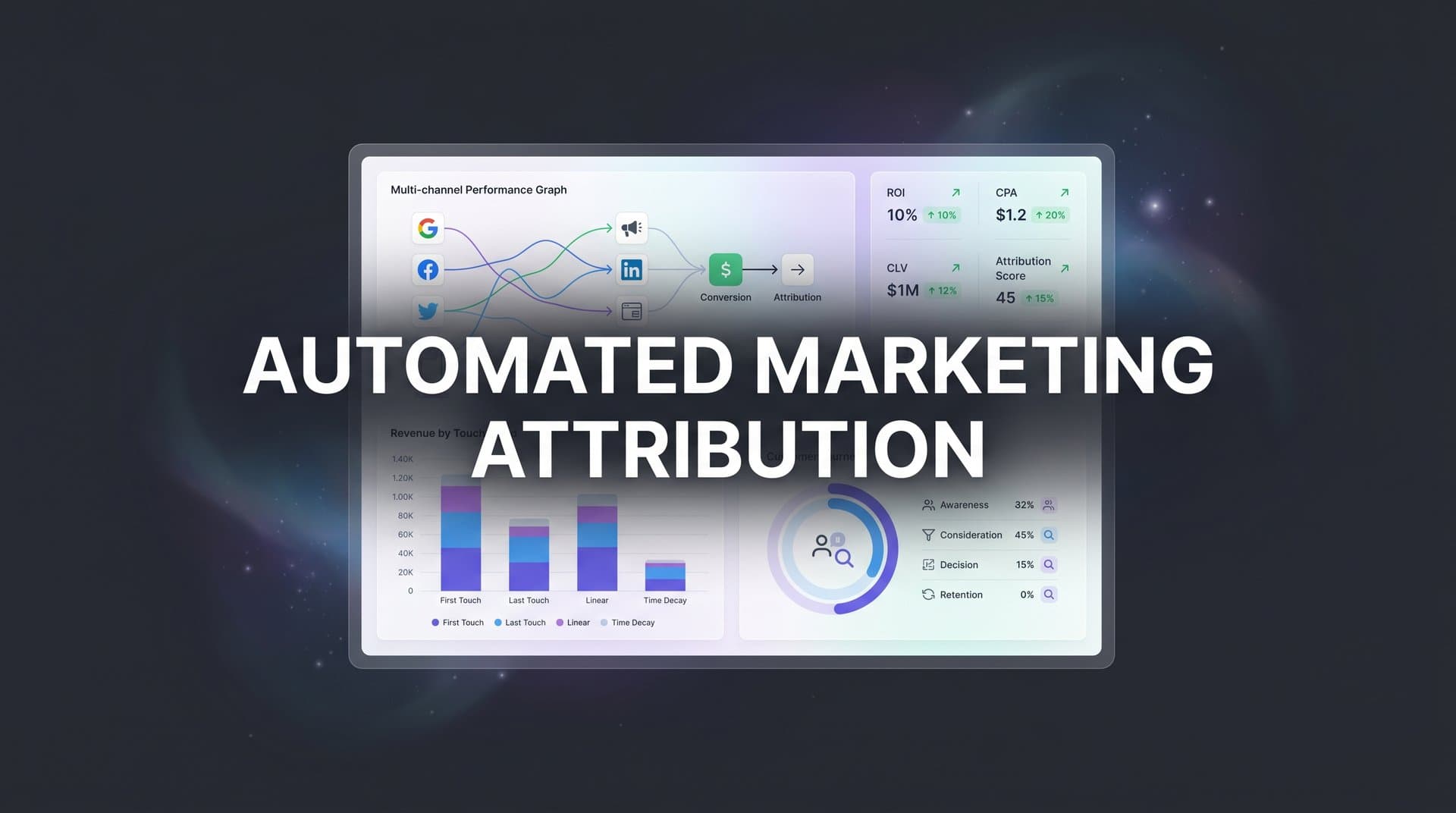
Multi-touch attribution models then distribute credit across these touchpoints based on your chosen methodology. Linear attribution splits credit evenly. Time-decay gives more weight to recent interactions. Position-based emphasizes first and last touch. The automated system applies your selected model consistently across all channels and campaigns.
The beauty of automation is consistency. Unlike manual tracking where attribution rules might be applied differently across platforms or campaigns, automated systems use the same methodology for every conversion. This gives you apples-to-apples comparisons across your entire marketing mix.
Real-time data syncing keeps everything current. Traditional reporting requires waiting until the end of the day, week, or month to compile results. Automated attribution updates continuously, showing you current performance as campaigns run. You see which ads are driving conversions right now, not which ones performed well last week.
The system also handles cross-device tracking automatically. When a user switches from phone to desktop to tablet, the automated platform maintains their identity through server-side tracking and first-party data. You see one customer journey instead of three disconnected sessions.
Data enrichment happens automatically too. The platform combines ad platform data with CRM information and website behavior. You don't just know someone clicked an ad. You know they clicked an ad, visited three product pages, downloaded a resource, and became a qualified lead worth $5,000 in potential revenue.
This enriched data flows back to your ad platforms through conversion APIs. Meta, Google, and other platforms receive detailed conversion information that helps their algorithms optimize more effectively. Your automated attribution system becomes a two-way bridge, capturing complete data and feeding better signals back to improve campaign performance.
Key Capabilities That Set Automation Apart
The shift from manual to automated attribution isn't just about saving time. It unlocks capabilities that fundamentally change how you measure and optimize marketing performance.
Real-time data processing transforms decision-making speed. With manual tracking, you might wait days or weeks to understand campaign performance. By the time you realize an ad isn't working, you've already spent thousands of dollars. Automated attribution shows performance as it happens, letting you pause underperforming campaigns and scale winners immediately.
This real-time visibility extends beyond simple conversion tracking. You see which specific ads, audiences, and creative variations drive the highest-value customers. You identify patterns in the customer journey that indicate strong purchase intent. You spot performance shifts before they significantly impact your budget.
Cross-platform tracking reaches a level of accuracy impossible with manual methods. The automated system doesn't care whether a customer started on TikTok and finished on Google. It tracks the complete journey across every platform, giving you a unified view of how channels work together rather than in isolation. Implementing marketing channel attribution software makes this cross-platform visibility possible.
This cross-platform capability reveals insights that single-platform analytics miss entirely. You might discover that LinkedIn ads rarely drive direct conversions but consistently initiate journeys that close through Google search. Without automated cross-platform tracking, you'd see LinkedIn as a poor performer and potentially cut a channel that's actually crucial to your funnel.
Conversion syncing takes this a step further by feeding enriched data back to ad platforms. Instead of relying on incomplete pixel data, platforms like Meta and Google receive server-side conversion information that includes customer value, lifecycle stage, and attribution across touchpoints. This better data helps platform algorithms optimize more effectively.
Think of it this way: when Meta's algorithm only knows that someone converted, it optimizes for conversions broadly. When it knows someone converted, became a high-value customer, and had specific characteristics, it can find more people like that. Conversion syncing gives platforms the information they need to improve targeting and bidding automatically.
Automated attribution also handles data volume that would overwhelm manual processes. When you're running dozens of campaigns across multiple platforms with hundreds of ad variations, tracking every interaction manually becomes impossible. Automated systems scale effortlessly, processing thousands of touchpoints and maintaining accuracy regardless of campaign complexity.
The consistency of automated tracking eliminates the discrepancies that plague manual methods. Every conversion uses the same attribution logic. Every channel follows the same tracking standards. Every report draws from the same unified data source. You stop arguing about which numbers are "right" and start focusing on what the data reveals.
Practical Benefits for Marketing Teams
The technical capabilities of automated attribution translate into concrete advantages for marketing teams managing real budgets and performance goals.
Faster decision-making becomes possible when you have accurate data available immediately. You don't wait for monthly reports to understand what's working. You see performance in real time and adjust accordingly. An ad that's crushing it gets more budget today. A campaign that's underperforming gets paused before it drains your budget.
This speed advantage compounds over time. Teams using automated attribution can run more tests, iterate faster, and optimize continuously. While competitors are still compiling last month's data, you're already acting on this week's insights.
Budget optimization shifts from guesswork to precision. Instead of allocating spend based on platform-reported conversions that don't match your CRM, you invest based on actual revenue contribution. You know exactly which campaigns drive customers worth keeping, not just which ones generate the most clicks or form fills. Leveraging marketing revenue attribution connects your ad spend directly to bottom-line results.
This precision helps you identify and scale your most profitable channels. You might discover that a platform you considered "expensive" actually delivers customers with 3x higher lifetime value. Or you might find that a channel driving high conversion volume produces customers who churn quickly. Automated attribution reveals the full picture so you can optimize for real business outcomes.
Time savings are substantial. Marketing teams often spend 10-15 hours per week on manual reporting and data reconciliation. Automated attribution eliminates this work entirely. Your team gets those hours back to focus on strategy, creative development, and campaign optimization.
The reduction in manual work also reduces errors. There's no risk of someone using the wrong formula in a spreadsheet or missing data during a platform export. The automated system handles data collection and calculation consistently, giving you reliable numbers you can trust.
Strategic clarity improves when you understand the complete customer journey. You see which touchpoints matter most at different stages. You identify the optimal sequence of interactions that leads to conversion. You understand how channels complement each other rather than viewing them in isolation. Implementing marketing funnel attribution tracking reveals how prospects move through each stage.
This journey-level insight helps you build more effective marketing funnels. Instead of optimizing each channel independently, you optimize the entire path to purchase. You invest in awareness channels that start high-value journeys, even if they don't drive last-click conversions. You recognize the role of nurture touchpoints in moving prospects toward purchase.
Teams using automated attribution typically report higher confidence in their marketing decisions. When you know which campaigns drive revenue, you can defend budget requests with data. When leadership asks about ROI, you have accurate attribution to back up your numbers. The guesswork disappears, replaced by clear visibility into marketing performance.
Choosing the Right Automated Attribution Solution
Not all automated attribution platforms are created equal. The right solution depends on your specific needs, but certain capabilities are essential regardless of your situation.
Integration depth determines how complete your attribution data will be. The platform should connect directly with all your ad channels, your CRM, and your website. Surface-level integrations that only capture basic data won't give you the full picture. Look for solutions that access detailed campaign data, customer information, and conversion events across your entire marketing stack.
Ask potential vendors specifically about their integration capabilities. Can they track conversions that happen in your CRM weeks after the initial ad click? Do they capture offline conversions from sales calls or in-person events? Can they connect revenue data from your payment processor or subscription platform? The more touchpoints the system can track, the more accurate your attribution becomes. Reviewing questions for marketing attribution vendors helps ensure you evaluate solutions thoroughly.
Attribution model flexibility matters because different businesses need different approaches. Some companies benefit from linear attribution that values all touchpoints equally. Others need time-decay models that emphasize recent interactions. The best platforms let you compare multiple models side-by-side and choose the one that aligns with your sales cycle and customer journey.
Server-side tracking capability is non-negotiable. Any solution still relying primarily on browser cookies or pixels will struggle with accuracy as privacy restrictions tighten. Ask vendors directly: How do you handle server-side tracking? What happens when users block cookies? How do you maintain accuracy across devices?
Privacy compliance should be a core feature, not an afterthought. The platform must handle data in accordance with GDPR, CCPA, and other privacy regulations. It should give you control over data retention, user consent management, and data deletion requests. Ask about their privacy certifications and how they help you maintain compliance.
Data accuracy and verification capabilities help you trust the numbers. Look for platforms that offer conversion verification, duplicate detection, and data quality monitoring. You want systems that flag potential issues and help you maintain clean, reliable attribution data.
Implementation timeline and complexity vary significantly between platforms. Some solutions require extensive technical setup and ongoing maintenance. Others offer streamlined onboarding with minimal engineering resources. Consider your team's technical capabilities and how quickly you need attribution running.
CRM compatibility is crucial if you're tracking lead-to-customer journeys. The platform should integrate seamlessly with Salesforce, HubSpot, or whatever CRM you use. It should capture not just the initial conversion but the entire lifecycle from lead to customer to repeat purchaser. For B2B companies with longer sales cycles, exploring attribution for B2B marketing campaigns provides specialized guidance.
Support and training resources make the difference between a tool you use effectively and one that sits underutilized. Evaluate the vendor's onboarding process, documentation quality, and ongoing support options. The most powerful attribution platform is useless if your team doesn't know how to use it properly.
Scalability considerations matter for growing teams. Can the platform handle increasing data volume as you expand campaigns? Will pricing scale reasonably with your growth? Does the system maintain performance as complexity increases?
Putting Automated Attribution Into Action
Automated marketing attribution transforms how modern teams measure and optimize their campaigns. It replaces manual tracking, spreadsheet reconciliation, and incomplete data with a comprehensive view of the customer journey from first click to closed revenue.
The shift from manual to automated attribution isn't just about efficiency. It's about gaining the visibility you need to make confident marketing decisions in an increasingly complex digital landscape. When you know exactly which campaigns drive valuable customers, you can allocate budget strategically, optimize effectively, and prove marketing's impact on business growth.
For teams running multi-channel campaigns, automated attribution has moved from nice-to-have to essential. The combination of cross-platform tracking, real-time data processing, and conversion syncing creates a competitive advantage that manual methods simply can't match.
Getting started with automated attribution begins with evaluating your current tracking setup. Identify the gaps in your manual process. Where are you losing visibility into the customer journey? Which channels are hardest to track accurately? What questions about marketing performance can't you answer with your current data?
Next, define what success looks like for your attribution solution. Do you need to track complex B2B sales cycles that span months? Are you focused on e-commerce conversions that happen quickly? Understanding your specific requirements helps you choose the right platform and implementation approach.
The technical implementation typically involves connecting your ad platforms, installing server-side tracking, and integrating your CRM. Most modern attribution platforms streamline this process, but budget time for proper setup and testing. The upfront investment in accurate implementation pays dividends in reliable data.
Once your automated attribution is running, use it to inform actual decisions. Shift budget toward campaigns driving high-value customers. Pause channels that generate conversions but not revenue. Test new platforms with clear visibility into their true performance. Let the data guide your strategy.
The marketing landscape will continue evolving. Privacy regulations will tighten. New platforms will emerge. Customer journeys will grow more complex. Automated attribution gives you the foundation to adapt confidently, knowing you can track and measure performance regardless of how the ecosystem changes.
Moving Forward With Confidence
Automated marketing attribution is no longer optional for teams running serious multi-channel campaigns. The complexity of modern customer journeys, combined with privacy changes and platform fragmentation, makes manual tracking increasingly unreliable and time-consuming.
The competitive advantage goes to teams who know exactly which marketing efforts drive revenue. When you can see the complete customer journey, attribute credit accurately across touchpoints, and optimize based on real business outcomes, you make better decisions faster than competitors still relying on incomplete data.
Cometly's attribution platform captures every touchpoint from ad click to CRM conversion, giving you the complete picture of what's driving revenue. With AI-powered insights, server-side tracking, and conversion syncing that feeds better data back to your ad platforms, you get the accuracy and automation modern marketing demands.
Ready to elevate your marketing game with precision and confidence? Discover how Cometly's AI-driven recommendations can transform your ad strategy. Get your free demo today and start capturing every touchpoint to maximize your conversions.


