B2B SaaS marketing runs on long, winding sales cycles. A prospect might click a LinkedIn ad in January, download a whitepaper in March, attend a webinar in May, and finally close in July. If your attribution platform can't stitch that journey together, you're flying blind on budget decisions that matter.
Choosing the right attribution platform is one of the highest-leverage decisions a B2B marketing team can make. The wrong choice means optimizing for metrics that look impressive in dashboards but don't connect to pipeline. The right choice means knowing exactly which channels, campaigns, and content pieces are actually driving revenue so you can scale them with confidence.
To help you cut through the noise, we evaluated the top attribution platforms available in 2026 based on five criteria: multi-touch attribution model flexibility, CRM and ad platform integration depth, data accuracy approach (including server-side tracking and offline conversion support), AI or automation capabilities, and pricing transparency. If you want to go deeper on how attribution works before diving into the list, our guides on multi-touch attribution models and marketing attribution fundamentals are solid starting points.
Here are the top B2B SaaS attribution platforms worth your attention this year.
1. Cometly
Best for: AI-powered cross-platform attribution with real-time customer journey tracking and conversion sync.
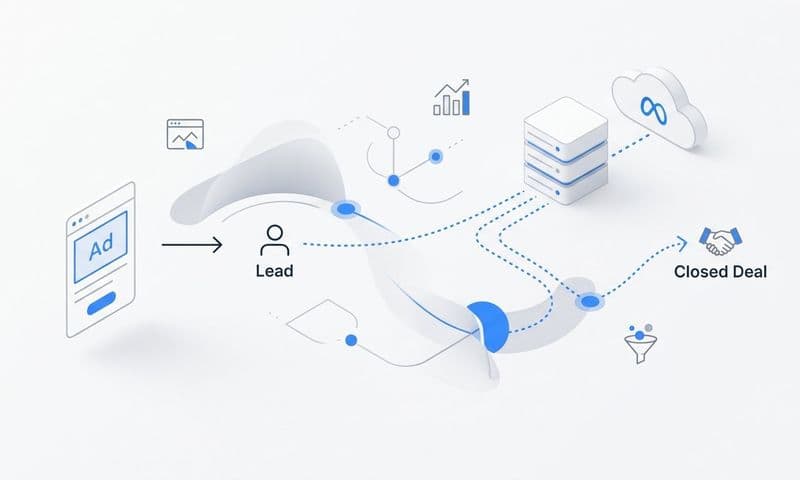
Cometly is an AI-driven marketing attribution platform that connects your ad platforms, CRM, and website to give you a complete, real-time view of every customer journey from first touch to closed deal.
 9 Best B2B SaaS Attribution Platforms Reviewed for 2026
Where This Tool Shines
What separates Cometly from most attribution tools is how it handles data quality at the source. Server-side tracking captures signals that browser-based pixels miss, which matters enormously in a post-iOS world where signal loss has made ad platform algorithms less effective. Cometly doesn't just show you attribution data; it feeds enriched conversion events back to Meta, Google, and other ad platforms so their algorithms can optimize more effectively.
The AI layer is genuinely useful here. Rather than dumping raw data into dashboards and leaving interpretation to you, Cometly surfaces optimization recommendations across your ad channels and lets you query your data in plain language through AI Chat. For teams managing spend across multiple platforms, this kind of intelligent summarization saves hours and surfaces insights that would otherwise stay buried in spreadsheets. You can also explore how server-side tracking works to understand why this matters for data accuracy.
Key Features
AI-Powered Ad Optimization: Surfaces actionable recommendations across all your ad channels, identifying high-performing campaigns and flagging underperformers in real time.
Server-Side Tracking: Captures conversion data beyond browser limitations, reducing signal loss from ad blockers, iOS restrictions, and cookie deprecation.
Conversion Sync: Sends enriched, conversion-ready events back to Meta, Google, and other ad platforms to improve targeting, optimization, and algorithmic performance.
Multi-Touch Attribution: Flexible model comparison lets you evaluate first-touch, last-touch, linear, and other attribution approaches side by side to understand the full journey.
AI Chat for Data Analysis: Ask natural-language questions about your marketing data and get instant answers without needing to build custom reports.
Best For
Cometly is a strong fit for digital marketing teams and agencies running paid campaigns across multiple platforms who need accurate attribution data and want AI-driven guidance on where to allocate budget. It's particularly valuable for teams dealing with signal loss from privacy changes who need server-side tracking to maintain data quality.
Pricing
Custom pricing based on ad spend and features. A free demo is available on request, which is a good way to see how it maps to your specific stack.
2. HubSpot Attribution Reporting
Best for: Teams already running their marketing and CRM inside HubSpot who want native attribution without adding another tool.
HubSpot includes built-in multi-touch attribution reporting within Marketing Hub that ties marketing interactions directly to deals and revenue inside the CRM.
 9 Best B2B SaaS Attribution Platforms Reviewed for 2026
Where This Tool Shines
The biggest advantage here is zero integration friction. Because HubSpot owns both the CRM and the marketing data, attribution reports are built on clean, unified data. You don't need to map fields between systems or worry about mismatched contact records. Revenue attribution connects directly to closed deals, which means marketing can show its contribution to pipeline without stitching together exports from three different tools.
For teams that live inside HubSpot, this is often the path of least resistance. The model options are solid, covering first touch, last touch, linear, U-shaped, W-shaped, and full path, giving you enough flexibility to match your reporting preferences.
Key Features
Native CRM Integration: Attribution data lives alongside contact and deal records with no external syncing required.
Multiple Attribution Models: Supports first touch, last touch, linear, U-shaped, W-shaped, and full path models with easy switching.
Revenue Attribution: Ties marketing touchpoints directly to closed deals and revenue figures inside HubSpot.
Content and Campaign Reporting: Shows which assets and campaigns are influencing pipeline at each stage of the funnel.
Best For
Teams that are deeply invested in the HubSpot ecosystem and want attribution without adding a separate tool. Less suitable for companies running Salesforce as their primary CRM or needing advanced data accuracy features like server-side tracking.
Pricing
Attribution reporting is included with Marketing Hub Professional at $800/mo and Marketing Hub Enterprise at $3,600/mo.
3. Dreamdata
Best for: Account-based B2B teams that need to map attribution across entire buying committees, not just individual leads.
Dreamdata is a B2B revenue attribution platform built specifically for account-based journeys, connecting every touchpoint across the buying committee to pipeline and revenue.
 9 Best B2B SaaS Attribution Platforms Reviewed for 2026
Where This Tool Shines
Most attribution tools are built around individual contacts. Dreamdata is built around accounts. That's a meaningful distinction in B2B SaaS, where deals often involve five to ten stakeholders across months-long sales cycles. Dreamdata visualizes the full buying journey at the account level, showing how different contacts within a target account engaged with your marketing before a deal closed.
The content attribution reporting is particularly strong. You can see which whitepapers, webinars, and blog posts are influencing pipeline, not just driving traffic, which helps content teams make the case for their work in revenue terms.
Key Features
Account-Based Attribution: Maps touchpoints across every contact in the buying committee rather than attributing to a single lead.
Customer Journey Visualization: Displays the full B2B journey from first touch to closed deal in a clear, visual timeline.
CRM and Ad Platform Integrations: Connects with Salesforce, HubSpot, and major ad platforms for unified data.
Content Attribution: Shows which assets influence pipeline and at which stage of the buying journey.
ROI Reporting: Breaks down return on investment by channel, campaign, and content piece.
Best For
B2B SaaS companies running account-based marketing programs who need attribution that reflects how B2B buying actually works, with multiple stakeholders and long sales cycles.
Pricing
A free tier is available for getting started. Paid plans start at approximately $999/mo, scaling with data volume and features.
4. Ruler Analytics
Best for: Teams that need closed-loop attribution linking individual leads to revenue, including offline conversions from calls and forms.
Ruler Analytics is a closed-loop marketing attribution tool that tracks individual leads from first click through to revenue and sends that conversion data back to your analytics and ad platforms.
 8 Best Attribution Tools with Onboarding Support in 2026
Where This Tool Shines
Ruler's strength is in closing the loop between marketing data and sales outcomes at the individual lead level. It tracks every visitor's source, follows them through form fills and phone calls, and then matches that contact record to revenue when a deal closes in your CRM. That closed-loop data then flows back to Google Analytics, Google Ads, and Facebook so your ad platforms are optimizing on real revenue signals rather than form submissions.
The offline conversion tracking is a standout for businesses where phone calls and in-person interactions play a role in the sales process. Call tracking with source attribution is natively built in, which most standalone attribution tools don't offer.
Key Features
Closed-Loop Attribution: Links individual leads to revenue by connecting marketing source data to CRM deal outcomes.
Call and Form Tracking: Captures source attribution for phone calls and form submissions, not just digital clicks.
Ad Platform Integration: Sends conversion data back to Google Ads, Facebook, and other platforms for improved optimization.
Offline Conversion Tracking: Attributes revenue from phone calls and in-person events back to the originating marketing source.
Best For
B2B SaaS and services businesses where leads come through multiple channels including phone calls, and where connecting individual leads to closed revenue is a priority for marketing reporting.
Pricing
Plans start at approximately £199/mo, with pricing scaling based on website visitor volume and features.
5. Triple Whale
Best for: Teams that want first-party data tracking combined with creative performance analytics in a single dashboard.
Triple Whale is a data platform originally built for DTC e-commerce that has expanded its attribution capabilities, offering first-party pixel tracking, creative analytics, and AI-powered insights.
 7 Best Funnel.io Alternatives for Marketing Data Analytics in 2026
Where This Tool Shines
Triple Whale's first-party pixel approach addresses the same signal loss problem that plagues most digital advertisers. By collecting data server-side rather than relying on platform pixels, it provides a more accurate picture of which ads are driving results. The creative analytics layer is genuinely differentiated: you can see which specific ad creatives are generating revenue, not just clicks or impressions, which is valuable for teams running high-volume creative testing.
It's worth noting that Triple Whale's roots are in e-commerce, and some of its reporting logic reflects that. B2B SaaS teams with long sales cycles may find the platform better suited to shorter, transactional funnels than complex multi-stakeholder deals.
Key Features
First-Party Pixel: Server-side data collection that reduces signal loss from iOS changes and browser privacy restrictions.
Creative Analytics: Ties ad creative performance directly to revenue, helping teams identify what's actually working.
AI-Powered Insights: Anomaly detection and performance summaries surface issues and opportunities automatically.
Cross-Channel Dashboard: Consolidates ad performance data across platforms in a single view.
Best For
Growth-stage teams running significant paid social spend who want first-party tracking and creative performance data, particularly those with shorter sales cycles or transactional business models.
Pricing
Plans start at approximately $100/mo, scaling with revenue volume and feature requirements.
6. Bizible (Marketo Measure)
Best for: Enterprise B2B teams running Salesforce and Marketo who need granular touchpoint tracking at the opportunity and account level.
Bizible (now Marketo Measure) is Adobe's enterprise-grade B2B attribution solution that provides detailed touchpoint tracking integrated deeply with Salesforce and the broader Adobe Experience Cloud.
 9 Best Attribution Software for B2B Companies in 2026
Where This Tool Shines
For enterprises already invested in Salesforce and Marketo Engage, Bizible offers a level of integration depth that's hard to replicate with standalone tools. Touchpoints are tracked at the opportunity and account level inside Salesforce, meaning your sales team's existing reports and dashboards can be enriched with marketing attribution data without major workflow changes.
Custom attribution model configuration is a strength here. You can weight specific touchpoints based on your understanding of the buying journey, which is useful for enterprise teams with enough data to make those judgment calls confidently. ABM attribution support makes it a natural fit for account-based marketing programs.
Key Features
Opportunity-Level Touchpoint Tracking: Maps marketing interactions directly to Salesforce opportunities and accounts.
Custom Attribution Models: Weighted touchpoint configuration lets you build models that reflect your specific sales process.
Adobe Ecosystem Integration: Deep connections with Marketo Engage and Adobe Experience Cloud for unified data.
ABM Attribution: Tracks marketing impact at the account level for account-based marketing strategies.
Granular Channel Reporting: Detailed breakdowns by channel, campaign, and content piece tied to pipeline and revenue.
Best For
Enterprise B2B organizations running Salesforce as their CRM and Marketo Engage for marketing automation who need attribution deeply embedded in their existing technology stack.
Pricing
Enterprise pricing; typically bundled with Marketo Engage or available as an add-on. Contact Adobe directly for a quote.
7. Attribution (by Digioh)
Best for: Marketing teams that want flexible multi-touch attribution modeling without a complex, lengthy implementation.
Attribution by Digioh is a multi-touch attribution platform offering flexible modeling options and a relatively straightforward setup for teams that want clear channel-level ROI without enterprise-level complexity.
Where This Tool Shines
Attribution's appeal is in its accessibility. Many attribution tools in this space require significant technical resources to implement and maintain. Attribution by Digioh aims to reduce that barrier, offering model switching and integration with major ad platforms and CRMs without requiring a dedicated data engineering team to get value from it.
The cohort-based reporting for lifetime value analysis is a useful addition for SaaS teams trying to connect acquisition channels to long-term customer value rather than just initial conversion.
Key Features
Flexible Attribution Models: Multiple model options with easy switching, so you can compare how different models change your channel-level conclusions.
Broad Integrations: Connects with major ad platforms, CRMs, and analytics tools for consolidated reporting.
Cohort Reporting: LTV analysis by acquisition cohort helps teams understand long-term channel performance.
Cross-Device Tracking: Follows users across devices to reduce fragmentation in the customer journey.
Best For
Small to mid-sized marketing teams that need multi-touch attribution with reasonable setup complexity, and who want to analyze channel ROI without committing to enterprise pricing.
Pricing
A free tier is available for small teams. Paid plans scale with data volume; contact for current pricing details.
8. Northbeam
Best for: Performance marketing teams that want a hybrid attribution approach combining multi-touch attribution with media mix modeling.
Northbeam is an attribution and media mix modeling platform that blends MTA with MMM to provide a more complete picture of marketing impact across digital and offline channels.
Where This Tool Shines
The core insight behind Northbeam is that no single attribution methodology tells the complete story. Multi-touch attribution captures individual user journeys well but struggles with offline influence and diminishing returns. Media mix modeling captures macro-level channel effects but loses individual-level precision. Northbeam attempts to combine both approaches, calibrating machine learning models to your specific business data rather than applying a generic algorithm.
The creative analytics layer adds another dimension, breaking down performance by individual ad creatives across channels so teams can see which messaging and formats are contributing to results beyond just which platforms are generating clicks.
Key Features
Hybrid MTA and MMM: Combines multi-touch attribution with media mix modeling for a more complete measurement picture.
Machine Learning Models: Calibrated to your business data rather than applying one-size-fits-all attribution logic.
Creative Analytics: Performance breakdowns by ad creative to identify what's driving results at the content level.
Budget Optimization Recommendations: Cross-channel suggestions for reallocating spend based on measured performance.
Best For
Performance marketing teams spending significantly across multiple channels who want a sophisticated measurement approach that goes beyond standard multi-touch attribution and incorporates offline and incrementality thinking.
Pricing
Custom pricing based on ad spend. Contact Northbeam directly for a demo and pricing discussion.
9. Windsor.ai
Best for: Budget-conscious teams that need broad data source connectivity and AI-driven attribution without a large software investment.
Windsor.ai is a multi-touch attribution platform that connects a wide range of marketing data sources and uses AI-driven models to allocate credit across touchpoints, starting at a price point accessible to smaller teams.
Where This Tool Shines
Windsor.ai's standout feature is its breadth of integrations. With over 70 data source connectors, it can pull together marketing data from platforms that more specialized tools often don't support. For teams running a diverse mix of channels and tools, that connectivity alone can be a meaningful advantage over building manual data pipelines.
The pricing structure is one of the most accessible in this category, with a free plan available and paid tiers starting at a fraction of what enterprise attribution tools cost. For early-stage SaaS companies that need attribution insights but aren't ready to commit to four-figure monthly software budgets, Windsor.ai offers a reasonable starting point.
Key Features
70+ Data Connectors: Broad integration library covering ad platforms, CRMs, analytics tools, and data warehouses.
AI-Driven Attribution Modeling: Algorithmic credit allocation across touchpoints based on actual conversion data.
Customer Journey Visualization: Maps the path from first touch to conversion across channels and devices.
ROI Optimization Recommendations: Channel-level suggestions for improving return on ad spend based on attribution data.
Best For
Early-stage or budget-conscious marketing teams that need multi-touch attribution and broad data connectivity without committing to enterprise-level pricing. Also useful as a data aggregation layer for teams already using other analytics tools.
Pricing
A free plan is available. Paid plans start at approximately $19/mo, scaling with data volume and features.
Which Attribution Platform Fits Your Situation
There's no universal winner in this category. The right platform depends on your tech stack, sales cycle complexity, team size, and how much you're willing to invest in getting attribution right.
Here's a quick way to think through the decision:
For AI-powered cross-platform accuracy: Cometly is the strongest choice for teams running paid campaigns across multiple channels who need server-side tracking, conversion sync, and AI-driven optimization recommendations in one platform. The combination of data accuracy and actionable intelligence makes it particularly valuable for teams dealing with signal loss from privacy changes.
For HubSpot-native simplicity: If your marketing and CRM operations are already centralized in HubSpot, the built-in attribution reporting removes integration complexity entirely. It won't match the depth of a dedicated attribution tool, but for teams that prioritize operational simplicity, it's a strong default.
For account-based B2B journeys: Dreamdata is purpose-built for the way B2B buying actually works, with multi-stakeholder account-level attribution that individual-contact tools can't replicate. It's the natural choice for teams running ABM programs with complex buying committees.
For enterprise Adobe and Salesforce stacks: Bizible (Marketo Measure) offers integration depth that's hard to match for organizations already running Salesforce and Marketo Engage. The implementation investment is real, but so is the payoff for teams that need attribution embedded directly in their enterprise CRM.
For budget-conscious teams: Windsor.ai provides accessible entry-level attribution with broad connectivity. It won't replace a dedicated enterprise platform, but it gives smaller teams meaningful attribution data at a price point that makes sense for their stage.
One principle worth keeping in mind regardless of which platform you choose: prioritize data accuracy over feature count. A tool with server-side tracking, reliable CRM integration, and clean conversion data will outperform a feature-heavy platform built on leaky browser pixels every time. Start with a platform that connects cleanly to your existing CRM and ad platforms, and build from there.
Ready to see what accurate, AI-powered attribution looks like in practice? Get your free demo of Cometly and see exactly which channels are driving your pipeline, with the data quality and AI intelligence to act on it confidently.