Shopify makes it easy to launch and run an ecommerce store. Figuring out which ads and channels actually drive your sales is a different challenge entirely. With paid traffic coming from Meta, Google, TikTok, email, and more, last-click attribution leaves most store owners flying blind on where to invest their next dollar.
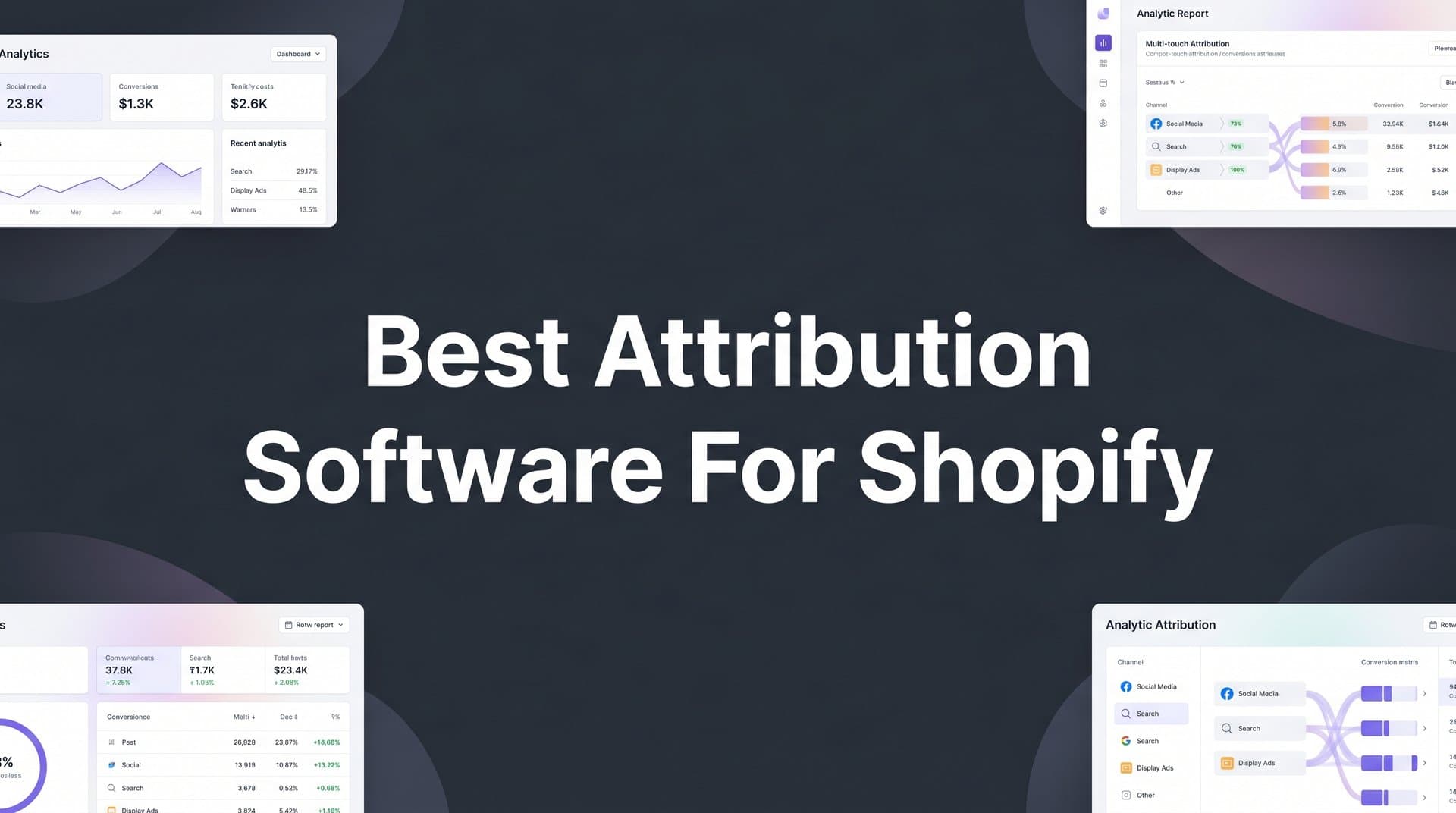
The right attribution software connects your Shopify store to every marketing touchpoint so you can see the full customer journey, not just the final click. Whether you are scaling a DTC brand, managing ads for multiple clients, or trying to make sense of iOS-era tracking gaps, the tools in this guide have been evaluated on Shopify integration depth, attribution model flexibility, ad platform coverage, and ease of use for ecommerce teams.
Here are the top attribution tools built for Shopify merchants and marketing teams in 2026.
1. Cometly
Best for: Shopify stores running paid ads across multiple platforms who need AI-powered attribution and accurate conversion tracking.
Cometly is an AI-powered marketing attribution platform built to show Shopify merchants exactly which ads and channels drive revenue across every touchpoint.
 9 Best Marketing Attribution Platforms to Compare in 2026
Where This Tool Shines
Cometly tackles the two biggest attribution headaches for Shopify stores: iOS-related tracking gaps and fragmented data across ad platforms. Its server-side tracking routes conversion events through a server rather than relying on browser pixels, which means you get accurate Shopify conversion data even when browsers or mobile operating systems block traditional tracking methods.
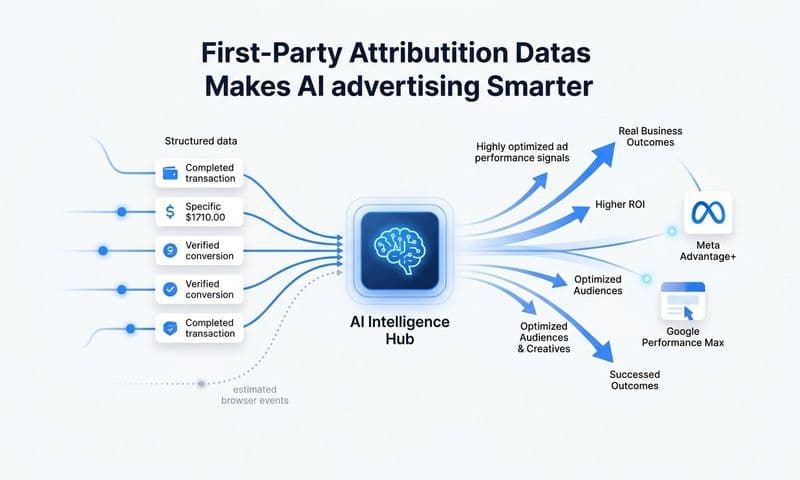
What sets Cometly apart is how it closes the loop between your data and your ad platforms. Conversion Sync sends enriched, conversion-ready events back to Meta and Google, giving their algorithms better data to optimize targeting and bidding. Pair that with the AI Ads Manager and you have a system that not only shows you what is working but actively tells you what to do next.
Key Features
Server-Side Tracking: Routes Shopify conversion events through a server to bypass browser limitations and iOS privacy restrictions, giving you more complete and accurate data.
Multi-Touch Attribution: Maps every paid and organic touchpoint across the customer journey so you can see the full path to purchase, not just the last click.
AI Ads Manager: Delivers optimization recommendations based on real performance data, helping you scale what works and cut what does not across every ad channel.
Conversion Sync: Sends enriched conversion events back to Meta and Google to improve ad algorithm targeting, bidding efficiency, and overall ad ROI.
AI Chat: Lets you query your marketing data in plain language without needing a data analyst or custom reports, making insights accessible to any team member.
Best For
Cometly is a strong fit for growth-stage Shopify brands and marketing agencies managing paid ad campaigns across Meta, Google, TikTok, and other channels. It is particularly valuable for teams that want AI-driven recommendations alongside accurate attribution, rather than just a reporting dashboard.
Pricing
Paid plans available. Visit cometly.com for current pricing details and to explore plan options.
2. Triple Whale
Best for: DTC Shopify brands that want an all-in-one analytics dashboard with creative performance and AI-assisted insights.
Triple Whale is a Shopify-native ecommerce analytics platform that combines pixel-based attribution, creative analytics, and an AI assistant in a single dashboard.
 9 Best Attribution Software for Shopify in 2026
Where This Tool Shines
Triple Whale has built a strong reputation in the Shopify DTC community because it was designed specifically for ecommerce from the ground up. Its Shopify-native pixel collects first-party data directly, and its Sonar feature adds server-side tracking to improve accuracy in a post-iOS world.
The creative analytics layer is a genuine differentiator. Instead of just knowing which campaigns perform, you can see which individual ad creatives drive the most revenue, which helps creative teams and media buyers work from the same data. The Moby AI assistant lets you ask questions about your store and ad performance in plain language.
Key Features
Shopify-Native Pixel: Collects first-party conversion data directly from your Shopify store for more reliable attribution.
Sonar Server-Side Tracking: Improves post-iOS tracking accuracy by routing events server-side to reduce data loss from browser restrictions.
Creative Analytics: Evaluates ad creative performance at the individual asset level so you can connect creative decisions to revenue outcomes.
Moby AI Assistant: Answers questions about your store and ad data in natural language, making analysis faster for non-technical users.
Blended ROAS and Cohort Reporting: Provides a unified view of return on ad spend across all channels alongside cohort-based revenue analysis.
Best For
Triple Whale is well-suited for DTC Shopify brands that are actively running paid social campaigns and want creative performance data alongside attribution. It works best for teams that want a single dashboard covering analytics, attribution, and creative insights without stitching together multiple tools.
Pricing
Tiered pricing based on store GMV. A free trial is available to explore the platform before committing to a paid plan.
3. Northbeam
Best for: High-spend Shopify advertisers running complex multi-channel campaigns who need machine learning attribution and media mix modeling.
Northbeam is a machine learning attribution platform designed for ecommerce advertisers managing large, sophisticated ad portfolios across multiple channels.
 9 Best Conversion Tracking Software Options: Pricing Comparison for 2026
Where This Tool Shines
Northbeam goes beyond standard multi-touch attribution by incorporating media mix modeling, which gives advertisers a statistical view of how budget allocation across channels affects overall revenue. This is particularly useful for brands spending heavily across Meta, Google, TikTok, and programmatic simultaneously.
The machine learning models adapt to your specific conversion patterns rather than applying a one-size-fits-all attribution rule. Combined with granular campaign and creative-level reporting, Northbeam gives high-spend teams the depth of insight needed to make confident budget decisions at scale.
Key Features
Machine Learning Attribution: Uses algorithmic and data-driven models to assign credit across touchpoints based on your actual conversion patterns.
Media Mix Modeling: Provides statistical budget planning insights across channels to support strategic spend decisions beyond day-to-day campaign management.
Granular Campaign Attribution: Reports attribution at the campaign, ad set, and creative level across all connected platforms.
Real-Time Reporting: Delivers up-to-date performance data across Meta, Google, TikTok, and additional channels in a unified view.
Custom Attribution Windows: Allows teams to configure and compare different attribution windows and models side by side.
Best For
Northbeam is built for Shopify brands with significant ad budgets who need sophisticated modeling rather than basic attribution reporting. It is best suited for in-house media teams and agencies managing high-spend accounts where marginal improvements in attribution accuracy translate to meaningful budget savings.
Pricing
Enterprise pricing based on ad spend volume. Contact Northbeam directly for a custom quote.
4. Rockerbox
Best for: Mid-market Shopify brands that want a single source of truth combining paid, organic, email, and offline channel data.
Rockerbox is a marketing data platform that unifies UTM tracking, pixel data, and modeled attribution into one consolidated reporting layer for multi-channel ecommerce brands.
 9 Best Attribution Software for Shopify in 2026
Where This Tool Shines
Rockerbox is built around the idea that attribution gaps happen when data sources are siloed. Its unified data layer pulls in paid ads, organic traffic, email, and even offline channels so you can compare performance across every source in one place without building a custom data warehouse.
The modeled fill feature is practical for teams dealing with the reality that not every conversion path is fully tracked. Rockerbox uses modeling to fill in gaps where pixel data is incomplete, giving you a more complete picture than raw tracking data alone would provide.
Key Features
Unified Data Layer: Combines paid, organic, email, and offline channel data into a single reporting environment for cross-channel comparison.
UTM and Pixel Tracking with Modeled Fill: Uses both tracking methods and fills data gaps with modeling to maintain attribution accuracy where direct tracking falls short.
Pre-Built Ad Platform Integrations: Connects directly to major ad platforms and email tools without requiring custom development work.
Customizable Attribution Models: Supports first-touch, last-touch, linear, and other model configurations to match your reporting preferences.
Channel and Campaign Dashboards: Provides clear reporting views at the channel and campaign level for performance analysis and budget decisions.
Best For
Rockerbox suits mid-market Shopify brands that run across many channels and want unified attribution without the complexity of a full data stack. It is a good fit for marketing teams that need clean, consolidated data for internal reporting and stakeholder communication.
Pricing
Custom pricing based on your business needs. Contact Rockerbox directly for a quote.
5. Elevar
Best for: Shopify stores that need accurate server-side tracking infrastructure to improve conversion event quality sent to Meta and Google.
Elevar is a Shopify-specific server-side tracking and data layer platform focused on improving the accuracy of conversion events sent to ad platforms rather than providing a full attribution dashboard.
 9 Best Conversion Tracking Tools for Ecommerce in 2026
Where This Tool Shines
Elevar occupies a distinct position in this list because it is not primarily an attribution reporting tool. Instead, it is tracking infrastructure. Its purpose is to make sure your Shopify conversion events reach Meta, Google, and other platforms with the highest possible accuracy and match quality.
For Shopify stores struggling with low Meta Event Match Quality scores or undercounted Google Ads conversions, Elevar directly addresses the root cause. It is often deployed alongside other analytics or attribution tools to improve the data quality feeding into those platforms, which in turn improves ad algorithm performance.
Key Features
Server-Side Event Tracking: Purpose-built for Shopify's checkout and product events, routing conversion data through a server to reduce data loss from browser limitations.
Meta Event Match Quality Improvement: Enhances CAPI performance by sending higher-quality, better-matched conversion events to Meta's Conversions API.
Google Ads Enhanced Conversions: Supports enhanced conversion tracking for Google Ads to improve measurement accuracy for search and shopping campaigns.
Related reading: our complete guide to track programmatic ads conversions.
Pre-Built Shopify Tracking Templates: Provides ready-to-use tracking configurations for common Shopify events including checkout steps, purchases, and product interactions.
Compatibility with Existing Tools: Works alongside GA4, attribution platforms, and other analytics tools rather than replacing them.
Best For
Elevar is ideal for Shopify merchants who have identified tracking accuracy as a specific problem and want a dedicated solution for it. It works well as a complement to an attribution platform rather than a standalone analytics solution.
Pricing
Tiered plans starting from free. Paid plans are based on your Shopify tier and the features you need.
6. Hyros
Best for: High-ticket Shopify stores with long customer journeys, email-driven conversions, and complex multi-session sales cycles.
Hyros is an AI-based ad tracking and attribution platform focused on following customers across long sales cycles, including email interactions and multi-session journeys.
 9 Best Attribution Tracking Software for Smarter Ad Spend in 2026
Where This Tool Shines
Hyros uses what it calls "print tracking" to follow customers across extended journeys that span multiple sessions, devices, and channels. This is particularly relevant for Shopify stores selling high-average-order-value products where a customer might research for days or weeks before purchasing.
The inclusion of email open and click tracking in attribution paths is a notable feature. For brands where email nurture sequences play a meaningful role in converting paid traffic, Hyros captures that contribution rather than attributing the sale entirely to the last paid click or the original ad.
Key Features
AI Print Tracking: Follows customers across long sales cycles using persistent identification to maintain attribution accuracy across sessions and devices.
Email Attribution: Includes email opens and clicks as trackable touchpoints in the full attribution path, giving email a proper credit in the conversion journey.
Cross-Device Journey Mapping: Connects customer interactions across multiple devices and sessions into a single unified attribution path.
Multi-Platform Ad Integrations: Connects with Meta, Google, YouTube, and TikTok for comprehensive paid channel coverage.
Custom Attribution Models: Supports model configurations suited to high-AOV and high-ticket products where standard attribution windows fall short.
Best For
Hyros is a strong fit for Shopify stores selling high-ticket products or running email-heavy acquisition funnels where standard attribution tools miss a significant portion of the conversion path. It is less suited for stores with short, simple purchase journeys.
Pricing
Custom pricing, typically positioned at the higher end of the market. Contact Hyros directly for a quote.
7. SegMetrics
Best for: Email-driven Shopify businesses that need attribution from first ad click through nurture sequences to purchase and lifetime value.
SegMetrics is an attribution platform built specifically for businesses where email marketing plays a central role in converting paid traffic into Shopify revenue.
Where This Tool Shines
Most attribution tools treat email as a last-touch channel or ignore it entirely in the paid attribution picture. SegMetrics is built around the opposite assumption: that email sequences are a critical part of the conversion path and deserve proper measurement. It tracks the journey from the original paid ad click through every email interaction to the final Shopify purchase.
The LTV and cohort-based revenue attribution is particularly valuable for subscription or repeat-purchase Shopify businesses. Instead of measuring success by first-order revenue alone, SegMetrics ties original traffic sources to long-term customer value, helping you understand which acquisition channels bring customers who actually stick around.
Key Features
Full-Funnel Email Attribution: Tracks the complete path from paid ad click through email sequences to Shopify purchase, giving email its proper role in attribution.
LTV and Cohort Attribution: Ties revenue attribution to customer lifetime value by cohort and source, not just first-order conversions.
Email Platform Integrations: Connects with Klaviyo, ActiveCampaign, and other major email platforms to pull in engagement data alongside Shopify order data.
Email Campaign Revenue Attribution: Assigns revenue credit to individual email campaigns and automations to measure their true contribution to sales.
Funnel-Stage Reporting: Shows where leads drop off at each stage of the funnel so you can identify and fix conversion bottlenecks.
Best For
SegMetrics is the right choice for Shopify brands that invest heavily in email marketing and want to understand how their email sequences contribute to paid ad ROI. It is especially useful for businesses with longer consideration cycles or subscription models where LTV matters more than immediate conversion.
Pricing
Tiered plans based on contacts and events. A free trial is available to test the platform with your data.
8. Polar Analytics
Best for: Smaller to mid-size Shopify DTC brands that want fast, no-code setup and clean reporting dashboards without a complex data stack.
Polar Analytics is a no-code ecommerce analytics and attribution platform that consolidates Shopify and ad platform data into actionable reporting dashboards.
Where This Tool Shines
Polar Analytics prioritizes speed to insight. Its no-code setup means you can connect your Shopify store and ad platforms and start seeing blended performance data quickly, without needing a developer or data engineer. For growing DTC brands that do not have a dedicated analytics team, this accessibility is a real advantage.
The platform consolidates blended ROAS, customer acquisition cost, and LTV metrics in a single view, which gives marketers the key numbers they need without having to toggle between Shopify admin, Meta Ads Manager, and Google Ads separately. Automated performance alerts add a layer of proactive monitoring that saves time on daily reporting tasks.
Key Features
No-Code Setup: Connects directly to Shopify and major ad platforms without requiring developer involvement or custom integrations.
Built-In Attribution Models: Includes first-click, last-click, and linear attribution models so you can compare performance across different methodologies.
Unified Performance Dashboard: Brings together blended ROAS, CAC, and LTV metrics from all connected sources into a single reporting view.
Product and SKU-Level Reporting: Shows performance data at the product and SKU level to connect ad spend to specific inventory performance.
Automated Alerts: Notifies you of significant performance changes so you can respond quickly without manually checking dashboards every day.
Best For
Polar Analytics is a good fit for Shopify brands in the early-to-mid growth stage that want clean, consolidated reporting without the overhead of an enterprise analytics tool. It suits teams that prioritize ease of use and fast setup over deep customization.
Pricing
Tiered plans based on monthly orders or GMV. A free trial is available to evaluate the platform before purchasing.
9. Google Analytics 4
Best for: Shopify stores that want a free baseline attribution layer, particularly for Google Ads and organic search traffic analysis.
Google Analytics 4 is Google's free web analytics platform that provides a foundational attribution layer for Shopify stores, with native strength in Google Ads and organic search measurement.
Where This Tool Shines
The most obvious advantage of GA4 is that it costs nothing for standard accounts. For Shopify stores that are just beginning to think about attribution, or for brands that run primarily through Google channels, GA4 provides a solid starting point without adding to the tool budget.
Its data-driven attribution model, available for Google Ads conversion paths, is more sophisticated than simple last-click and uses machine learning to distribute credit across touchpoints within the Google ecosystem. The Exploration reports allow for custom funnel and path analysis that goes beyond standard dashboard views, which gives analysts flexibility when investigating specific conversion questions.
Key Features
Free to Use: Standard GA4 accounts have no monthly cost, making it accessible for stores at any budget level.
Data-Driven Attribution: Applies machine learning to distribute conversion credit across Google Ads touchpoints based on actual contribution patterns.
Native Google Ads Integration: Connects directly with Google Ads for search and shopping attribution without additional setup complexity.
Shopify Connection: Available via the Google and YouTube channel app in Shopify, enabling order and event data to flow into GA4.
Exploration Reports: Provides flexible custom reporting for funnel analysis, path exploration, and segment comparisons beyond standard dashboards.
Best For
GA4 is best used as a complementary layer rather than a primary attribution solution for multi-channel Shopify stores. It is the right starting point for new stores or those running primarily Google-channel campaigns, but most scaling brands will need a dedicated attribution tool alongside it to cover paid social and cross-channel journeys accurately.
Pricing
Free for standard GA4 accounts. GA4 360 is available at enterprise pricing for organizations that need higher data limits and SLA guarantees.
Which Attribution Tool Is Right for Your Shopify Store
The honest answer is that the best attribution software for your Shopify store depends on where you are in your growth journey and how your customers actually buy from you.
If you are a scaling DTC brand running paid ads across Meta, Google, and TikTok and you want AI-driven recommendations alongside accurate multi-touch attribution, Cometly is the strongest all-around choice. Its server-side tracking addresses iOS-era data gaps directly, and Conversion Sync closes the loop by feeding enriched data back to ad platforms to improve their targeting algorithms. That combination of accurate measurement and actionable AI guidance makes it particularly valuable for brands where ad spend efficiency is a top priority.
For brands with a strong DTC identity and a focus on creative performance, Triple Whale brings a well-known Shopify-native experience with solid analytics depth. If you are managing a high-spend account with complex multi-channel portfolios, Northbeam's machine learning models and media mix modeling are worth the enterprise investment.
For email-heavy businesses, SegMetrics fills a gap that most tools ignore entirely. Elevar is the right choice if your primary problem is tracking infrastructure rather than reporting. And if you are just getting started or running primarily on Google channels, GA4 gives you a free foundation to build from before layering in a dedicated attribution tool.
The common thread across every tool on this list is this: accurate attribution is not a reporting luxury. It is the foundation of profitable ad spend on Shopify. When you know which channels and campaigns actually drive revenue, every budget decision becomes sharper and every optimization recommendation becomes more trustworthy.
If you are ready to move beyond last-click guesswork and see the full picture of what is driving your Shopify revenue, Get your free demo of Cometly today and start capturing every touchpoint across your customer journey.