Programmatic advertising gives you the ability to buy and serve display, video, and native ads at scale through automated bidding across ad exchanges and demand-side platforms. The automation is powerful. But that same automation makes conversion tracking genuinely difficult to get right.
Impressions fire across thousands of publisher sites simultaneously. Users interact on multiple devices. The path from ad view to conversion can stretch across days or even weeks. And when you are running campaigns across Google DV360, The Trade Desk, Amazon DSP, or any combination of platforms, each one is reporting its own version of the truth.
Without reliable conversion tracking, you are flying blind. You cannot tell which exchanges, creatives, audiences, or placements actually drive revenue versus those that simply burn through budget. You end up making optimization decisions based on incomplete or misleading data, which means your programmatic spend never reaches its full potential.
The good news is that this is a solvable problem. It requires a deliberate, layered approach rather than simply dropping a pixel on your thank-you page and hoping for the best. Modern programmatic conversion tracking involves defining the right events, implementing server-side data collection, centralizing your attribution, choosing the right model, and closing the loop by feeding accurate data back to your DSPs.
This guide walks you through each of those steps in sequence. Whether you are setting up programmatic conversion tracking for the first time or trying to fix a system that is giving you unreliable numbers, you will come away with a clear process that connects your programmatic spend to the outcomes that actually matter to your business.
These steps apply universally across programmatic platforms. The principles are the same whether you are running display, video, connected TV, or native inventory. Let's get into it.
Step 1: Define Your Conversion Events and KPIs Before Anything Else
This is the step most marketers skip or rush through, and it creates problems that follow them for the entire life of their campaigns. Before you touch a single tracking script or DSP setting, you need to know exactly what you are measuring and why.
Start by identifying which actions count as meaningful conversions for your business. For an e-commerce brand, that is likely a completed purchase. For a B2B SaaS company, it might be a demo request, a free trial signup, or a qualified lead that reaches a certain stage in the CRM. For a media company, it could be a newsletter subscription or a paid content upgrade.
Next, distinguish between macro-conversions and micro-conversions. Macro-conversions are your primary business outcomes: purchases, closed deals, paid subscriptions. Micro-conversions are the intermediate steps that indicate progress: add to cart, pricing page visit, video completion, content download. Both are worth tracking, but they should not be weighted equally. Following best practices for tracking conversions accurately from the start will save you significant headaches later.
Here is why this distinction matters for programmatic specifically. Display and video ads often influence users at the top or middle of the funnel. If you only track macro-conversions, you may not see enough conversion volume to make optimization decisions. Tracking micro-conversions gives you more signal. But if you optimize your DSP campaigns toward micro-conversions without understanding which ones actually predict revenue, you end up with a lot of cheap actions that never turn into customers.
Once you have your conversion events defined, assign KPIs to each one. What is an acceptable cost per acquisition for a purchase? What is your target cost per lead for a demo request? What return on ad spend are you working toward? These numbers anchor every optimization decision you will make later.
Document everything: Create a conversion map that lists each event, its definition, the KPI tied to it, and the priority level. Share this document with everyone who touches the campaigns, including your DSP partners if you work with a managed service. A well-structured marketing campaign tracking spreadsheet can serve as the foundation for this documentation. When every team member and every platform is working from the same definitions, your data stays clean and your conversations stay productive.
Skipping this step does not just create messy data. It creates disagreements about what success looks like, which makes it nearly impossible to make confident decisions about where to invest your programmatic budget.
Step 2: Implement Server-Side Tracking for Reliable Data Collection
Once you know what you are measuring, the next challenge is actually capturing that data accurately. And this is where traditional pixel-based tracking falls apart for programmatic campaigns.
Browser-based pixels have always had limitations, but those limitations have grown significantly. Safari and Firefox have blocked third-party cookies for years. Chrome's evolving approach to privacy has further eroded cross-domain tracking. Ad blockers prevent pixels from firing entirely for a meaningful portion of your audience. iOS tracking restrictions introduced with App Tracking Transparency have reduced the signal available from mobile users. The result is that client-side pixels routinely miss a substantial portion of the conversions that your programmatic campaigns actually influence. Understanding the digital marketing strategy that tracks users across the web helps you appreciate why server-side solutions have become essential.
Server-side tracking solves this by moving the conversion event firing from the user's browser to your server. When a user completes a conversion, your server sends that event directly to your tracking or attribution platform. Because this happens server to server, it bypasses browser-level restrictions, cookie limitations, and ad blockers entirely.
Here is how to set it up in practice.
Install a first-party tracking script: Place a lightweight first-party JavaScript tag on your website. This script is served from your own domain, which means it is not subject to the same blocking rules as third-party scripts. It captures user session data and conversion signals that you own.
Configure server-side event endpoints: Set up your server to send conversion events to your attribution platform's API endpoint when key actions occur. This typically involves connecting your backend or e-commerce platform to the tracking system so that events like purchases, signups, or form submissions trigger a server-side call.
Validate before you scale: Use real-time event logs in your attribution platform to confirm that events are firing correctly. Check that the right conversion types are being recorded, that the data includes the parameters you need (order value, product category, user identifiers), and that there are no duplicate events being sent.
Cometly's server-side tracking is built specifically for this challenge. It captures conversion data that client-side pixels miss, giving you a more complete picture of how your programmatic campaigns are actually performing. Rather than working with partial data and hoping your optimizations are pointing in the right direction, you get a reliable foundation that reflects what is actually happening across your customer journeys.
Do not skip the validation step. Moving forward with broken or incomplete tracking is worse than not tracking at all, because you will make confident decisions based on wrong data.
Step 3: Connect Your Programmatic Platforms to a Central Attribution Hub
Here is one of the most common problems in programmatic measurement: every DSP reports its own conversions independently, and each one takes full credit for every conversion it touched. Run campaigns on DV360, The Trade Desk, and Amazon DSP simultaneously, and you will likely see each platform reporting conversion numbers that add up to far more than your actual total conversions. This is the double-counting problem, and it makes it nearly impossible to understand which platform or placement is genuinely driving results.
The solution is to centralize all of your programmatic data in a single attribution platform that sits above your individual DSPs and applies consistent measurement rules across all of them. Choosing the right software for tracking marketing attribution is one of the most impactful decisions you will make in this process.
Start by integrating each of your DSPs with your central attribution hub. Most modern attribution platforms support API integrations with the major programmatic platforms, allowing impression and click data to flow in automatically. This gives you a unified view of all programmatic activity in one place rather than logging into four different dashboards and trying to reconcile conflicting numbers in a spreadsheet.
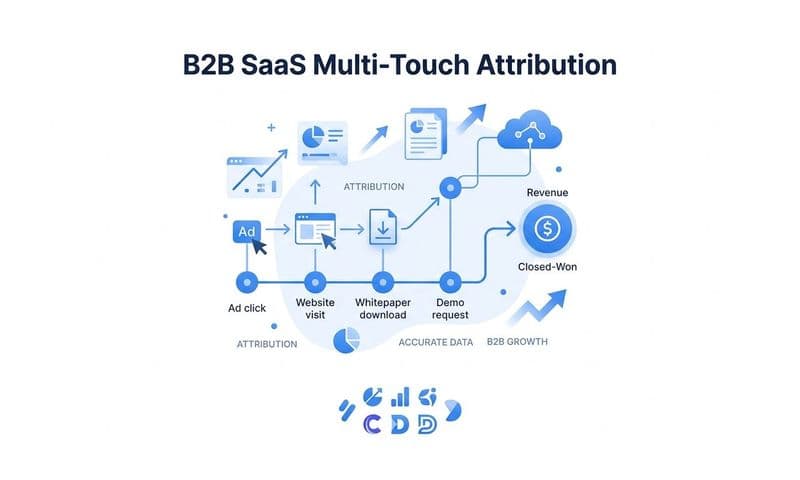
Next, connect your CRM and e-commerce platform. This is the step that transforms your attribution from tracking on-site actions to tracking actual business outcomes. When a lead generated by a programmatic campaign progresses through your sales pipeline and eventually closes, that revenue event should flow back into your attribution platform and get credited to the programmatic touchpoints that influenced it. Without this connection, you are measuring proxy metrics rather than real revenue.
Cometly connects your ad platforms, CRM, and website data to track the entire customer journey from the first programmatic impression through to a closed deal. Every touchpoint is captured and attributed consistently, so you can see the true contribution of your programmatic spend alongside your search, social, and other channels.
Verify data consistency after integration: Compare event counts across your DSP, your attribution platform, and your CRM. If the numbers are significantly different, investigate the discrepancy before moving forward. Common causes include misconfigured integrations, duplicate event firing, or differences in how each system defines a conversion event. A thorough attribution tracking setup process helps you catch these issues early and saves you from making optimization decisions based on flawed data.
Once your data is centralized, you have the foundation for accurate attribution. Now it is time to decide how to assign credit across the touchpoints you are capturing.
Step 4: Choose the Right Attribution Model for Programmatic Campaigns
Attribution modeling is where programmatic measurement gets genuinely nuanced, and where many marketers make decisions that lead them to undervalue their programmatic investment.
Last-click attribution is the default for many platforms, and it is particularly damaging for programmatic. Display and video ads typically play an upper- or mid-funnel role. They introduce your brand to new audiences, keep you top of mind during a consideration period, and nudge users toward conversion. But they rarely get the final click. That usually goes to a branded search ad or a direct visit. Under last-click attribution, programmatic gets zero credit for all of that influence, which makes it look far less valuable than it actually is. Understanding how marketing attribution platforms handle revenue tracking is essential for avoiding this trap.
Here is a quick overview of the attribution models most relevant to programmatic campaigns.
Linear attribution: Distributes credit equally across all touchpoints in the conversion path. This is a reasonable starting point because it acknowledges that every touchpoint played a role, including your programmatic impressions and clicks.
Time-decay attribution: Gives more credit to touchpoints closer to the conversion event. This can be useful if your programmatic campaigns are running retargeting or lower-funnel tactics, but it still undervalues prospecting campaigns that initiate the customer journey.
Position-based attribution: Gives the most credit to the first and last touchpoints, with the remaining credit distributed across the middle. This model tends to work well for programmatic because it rewards both the initial brand introduction (often a programmatic impression) and the final conversion trigger.
Data-driven attribution: Uses machine learning to assign credit based on the actual patterns in your conversion data. This is the most sophisticated option, but it requires sufficient conversion volume to produce reliable results.
View-through conversions deserve special attention in programmatic. A view-through conversion happens when a user sees your ad but does not click, then converts later through another channel. These conversions are real and they matter, but they require careful configuration. Set your view-through lookback window based on your typical sales cycle. A short-cycle e-commerce purchase might warrant a one-day or three-day window. A longer B2B sales process might justify a seven-day or fourteen-day window. The goal is to credit genuine influence without over-attributing conversions to impressions that had nothing to do with the decision.
Use your attribution platform to compare models side by side. When you see how credit shifts between programmatic, search, and social under different models, you can make a much more informed decision about where your budget is actually generating return. Cometly's multi-touch attribution lets you run these comparisons directly, so budget allocation decisions are based on evidence rather than platform-reported numbers.
Step 5: Sync Conversion Data Back to Your DSPs to Improve Optimization
Accurate conversion tracking is not just about measurement. It is also about improving the performance of your campaigns going forward. This is where the feedback loop becomes critical.
Programmatic DSPs use machine learning algorithms to optimize bidding decisions in real time. These algorithms are only as good as the conversion signals you feed them. If your DSP is receiving incomplete or inaccurate conversion data from a client-side pixel that misses a significant portion of events, it is making bidding decisions based on a distorted picture of reality. It may be over-bidding on audiences that look like converters but are not, or under-bidding on high-value segments because their conversions are not being captured. Leveraging AI ads optimization techniques depends entirely on the quality of the data flowing into these algorithms.
Conversion sync solves this by sending verified, enriched conversion events from your attribution platform back to your DSPs in real time. Instead of relying on the DSP's own pixel to capture conversions, you are feeding it the accurate, server-side verified data that you have already validated.
Cometly's Conversion Sync is designed for exactly this purpose. It sends enriched, conversion-ready events back to your ad platforms, improving the quality of the signals that power targeting and bidding optimization. When your DSP algorithms are working from better data, they make better decisions, which compounds over time into meaningfully improved campaign performance.
Once conversion sync is active, align your DSP bid strategies with the accurate data now flowing in. If you are running target CPA or target ROAS bidding strategies, update your targets to reflect the true conversion volume and value you are now capturing. Your previous targets were likely calibrated to incomplete pixel data, so they may need adjustment.
Monitor the feedback loop actively: Check your DSP dashboard to confirm that optimization signals are being received and acted upon. Look for changes in audience targeting, bid adjustments, and delivery patterns that indicate the algorithm is learning from the new data. This is not a set-and-forget step. The quality of your conversion sync directly affects the quality of your campaign optimization, so it is worth checking regularly, especially in the first few weeks after setup.
Step 6: Analyze, Optimize, and Scale Based on Verified Conversion Data
With reliable tracking in place, your attribution model selected, and conversion data flowing back to your DSPs, you now have what most programmatic advertisers never actually achieve: a trustworthy foundation for optimization decisions.
Build a consistent reporting cadence. Review programmatic conversion data at the campaign level on a weekly basis. Look for trends in which exchanges, placements, and creatives are generating verified conversions versus those that are driving impressions and clicks without downstream results. At the monthly level, step back and review performance at the strategic level: how is programmatic contributing to your overall customer acquisition mix, and how does its cost efficiency compare to your other channels? Using dedicated paid ads analytics ensures you are evaluating performance with the right level of granularity.
Here are the key analyses to run regularly.
Exchange and placement performance: Not all inventory is created equal. Some exchanges and publisher categories will consistently deliver audiences that convert. Others will generate cheap impressions that never lead anywhere. Use your verified conversion data to identify which placements are genuinely valuable and shift budget toward them.
Audience segment efficiency: Compare conversion rates and cost per acquisition across your different audience segments. Prospecting audiences, retargeting audiences, and lookalike audiences often perform very differently. Your data will tell you where to invest more and where to pull back.
Creative performance: Match your creative assets to conversion outcomes. A banner ad that generates high click-through rates but low conversion rates is a different problem than one that generates fewer clicks but higher-quality visits. Look at the full funnel, not just the top-of-funnel engagement metrics.
Cometly's AI-powered recommendations help you identify high-performing programmatic segments and scale toward them with confidence. Rather than manually sifting through rows of placement data, you get clear signals about where your budget is generating the strongest return and where it is being wasted. Reliable ad tracking tools can help you scale ads by giving your team the accurate data needed to make bold budget moves.
Cut waste deliberately. Pause or reduce spend on placements, audiences, or creatives that show high impression volume but consistently low verified conversions. This is where accurate tracking pays dividends: you can make these cuts confidently because you know the data is reliable.
Avoid common optimization pitfalls: Do not over-optimize on micro-conversions at the expense of macro-conversion quality. Do not ignore view-through data entirely, but do not over-weight it either. And resist the urge to make significant changes too frequently. Programmatic algorithms need time to learn from the data you are feeding them. Making major bid or targeting changes before you have statistically meaningful data leads to optimization churn rather than genuine improvement.
Putting It All Together
Tracking programmatic ad conversions accurately is not a one-time setup task. It is a system that you build deliberately and maintain consistently. Each step in this process reinforces the others.
Defining your conversion events clearly gives you the foundation. Server-side tracking gives you reliable data. Centralizing your attribution eliminates the double-counting problem. Choosing the right attribution model ensures you are crediting programmatic fairly for the role it actually plays. Syncing conversion data back to your DSPs improves the quality of algorithmic optimization. And consistent analysis ensures you are always moving budget toward what is working and away from what is not.
When this system is running well, you move from guessing about programmatic ROI to knowing it with confidence. You can defend your programmatic spend with data, scale the channels and placements that genuinely drive revenue, and have productive conversations with your team and stakeholders about what is working and why.
Cometly is built to handle this entire workflow. From capturing every touchpoint with server-side tracking, to connecting your ad platforms and CRM in a single attribution hub, to feeding better data back to your ad platforms through Conversion Sync, it gives you the infrastructure to run programmatic campaigns with the clarity and confidence that accurate attribution provides.
Ready to stop guessing and start knowing exactly what your programmatic spend is driving? Get your free demo today and start capturing every touchpoint to maximize your conversions.