YouTube advertising offers massive reach, but many marketers struggle with a critical gap: knowing which YouTube ads actually drive conversions. You might see views and clicks in your Google Ads dashboard, but connecting those interactions to real purchases, signups, or leads further down the funnel is a different challenge entirely.
Between view-through conversions, cross-device behavior, and long customer journeys, YouTube ad tracking can feel like guesswork without the right setup. A user watches your TrueView ad on their phone during a commute, forgets about it, then searches your brand name three days later on their laptop and converts. Last-click attribution gives zero credit to YouTube. That is the problem.
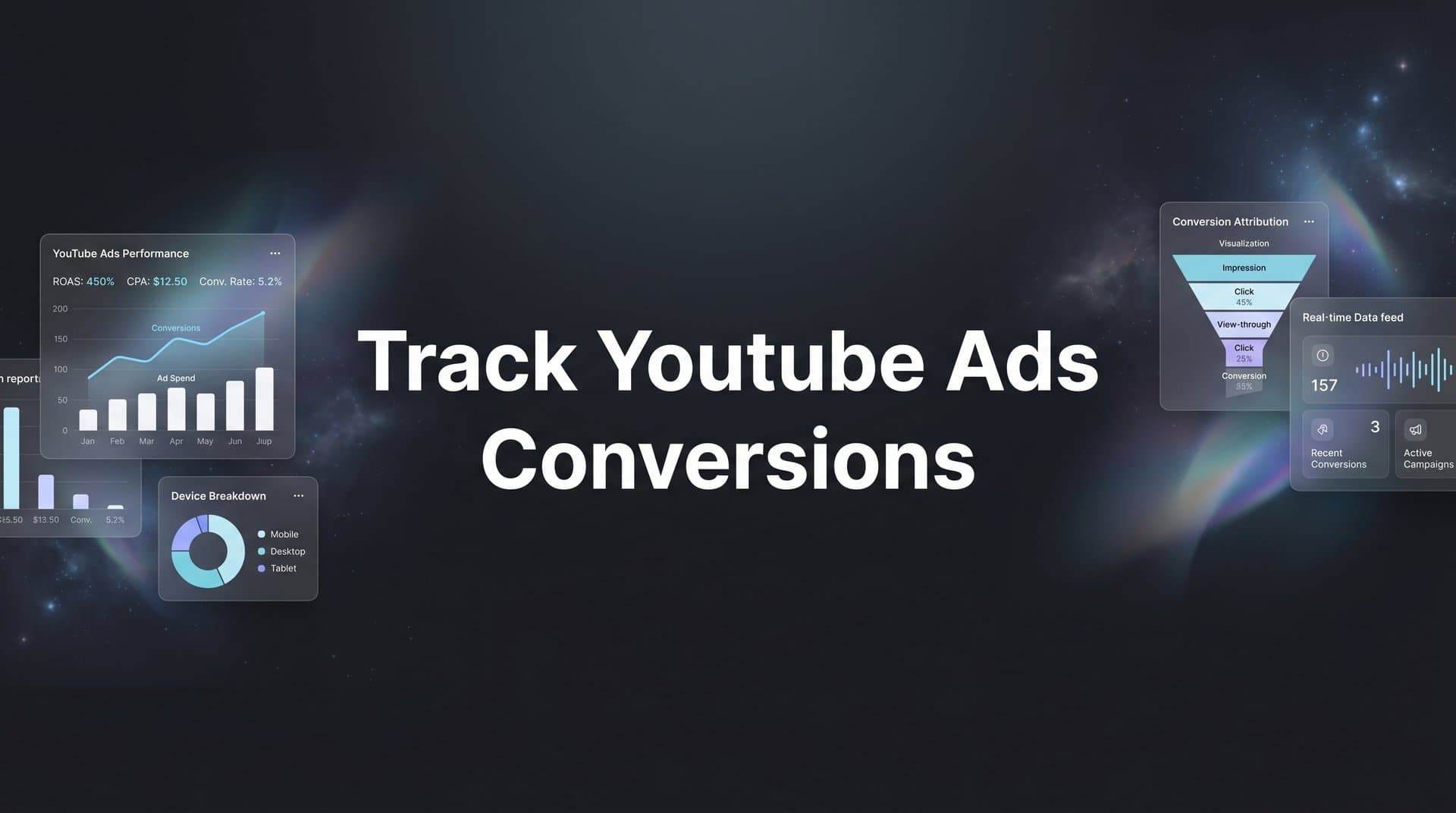
This guide walks you through the exact steps to track YouTube ads conversions accurately, from configuring Google Ads conversion actions to layering in server-side tracking and multi-touch attribution. By the end, you will have a reliable system that shows you which YouTube campaigns generate revenue, not just impressions.
Whether you are running TrueView in-stream ads, bumper ads, or YouTube Shorts campaigns, these steps apply across all YouTube ad formats. Let's get into it.
Step 1: Define Your Conversion Events Before You Touch Any Settings
Before you log into Google Ads and start clicking around, you need clarity on what a conversion actually means for your business. Skipping this step is one of the most common reasons marketers end up with messy, unreliable data.
Start by identifying your macro conversions. These are the revenue-generating actions that directly impact your bottom line: a completed purchase, a demo booking, a free trial signup, a qualified lead form submission. These should be your primary conversion actions in Google Ads, meaning they influence bidding decisions.
Next, identify your micro conversions. Think email newsletter signups, video completions, add-to-cart events, and page visits to high-intent pages. These are valuable signals, but they should be tracked as secondary conversions so they inform your analysis without distorting your bidding algorithms.
Now map out the customer journey. YouTube typically sits at the top or middle of the funnel. A user discovers your brand through a YouTube ad, visits your site, leaves, gets retargeted on Meta, and finally converts through a Google Search click. That journey might span two weeks. If your attribution window is set to three days, you will miss most of the conversions that YouTube actually influenced.
This is why setting realistic attribution windows matters. Google Ads defaults to 30 days for clicks and 3 days for engaged views, but those defaults may not match your sales cycle. If you sell a high-consideration B2B product, your sales cycle might be 60 or 90 days. Adjust your windows accordingly.
Before configuring anything in Google Ads, document your conversion events in a simple spreadsheet. Include these columns:
Event Name: What you will call the conversion in Google Ads (e.g., "Demo Booked" or "Purchase Complete").
Trigger Condition: What action fires the event (e.g., user lands on /thank-you page, clicks submit on contact form, reaches order confirmation).
Conversion Value: Static dollar amount or dynamic value pulled from the transaction.
Attribution Window: How many days after an ad interaction you want to count a conversion.
Primary or Secondary: Whether this conversion should influence bidding or just be tracked for reporting.
This document becomes your source of truth throughout the entire setup process. It prevents duplicate tracking, mismatched event names, and the confusion that comes from having ten conversion actions where only three actually matter. A well-organized marketing campaign tracking spreadsheet can serve as the foundation for this documentation.
Step 2: Set Up Google Ads Conversion Tracking with the Global Site Tag
With your conversion events documented, it is time to configure them in Google Ads and get your tracking tags live. This is the foundation everything else builds on.
In Google Ads, navigate to Goals > Conversions > Summary, then click the blue plus button to create a new conversion action. You will choose from four source types: Website, App, Phone calls, or Import. For most YouTube advertisers tracking web-based conversions, select Website.
Configure each conversion action carefully. The category you choose (Purchase, Submit lead form, Book appointment) affects how Google's algorithms interpret the data. Set your conversion value as either a static amount or a dynamic value if you can pass transaction-specific revenue. For the count setting, use "One" for lead forms (you only want to count one lead per user) and "Every" for purchases (multiple purchases from the same user all count). Set your attribution window to match the sales cycle length you identified in Step 1. For a deeper walkthrough of this process, our guide on Google Ads conversion tracking covers every configuration detail.
Once your conversion actions are created, you need to install the Google tag (gtag.js) on your website. You have two options: add it directly to the header of every page on your site, or deploy it through Google Tag Manager. Google Tag Manager is the cleaner approach for most teams because it keeps your tracking organized and lets you make changes without touching your site code.
If you are using Google Tag Manager, here is the correct setup sequence:
1. Create a Conversion Linker tag in GTM and set it to fire on All Pages. This tag reads the GCLID from the URL and stores it in a first-party cookie, which is essential for connecting ad clicks to conversions.
2. Create individual Google Ads Conversion Tracking tags for each conversion action. Each tag needs your Conversion ID and Conversion Label (both found in your Google Ads conversion action settings).
3. Set the trigger for each conversion tag to fire on the specific event that signals a conversion, such as a page view on your thank-you URL or a custom event pushed to the data layer when a form submits.
After publishing your GTM container, verify everything is working. Use the Google Tag Assistant browser extension to confirm tags are firing on the right pages. In Google Ads, navigate to the Goals section and check the tag diagnostics to see if conversions are being recorded. You can also check the real-time view in Google Analytics to see if events are coming through.
One critical setting that many marketers overlook: make sure auto-tagging is enabled in your Google Ads account. Go to Admin > Account Settings > Auto-tagging and confirm the checkbox is on. Without auto-tagging, Google Ads cannot append the GCLID parameter to your destination URLs, which breaks the connection between ad clicks and website sessions entirely. This single oversight can make your entire tracking setup useless.
Step 3: Enable Enhanced Conversions for Better Data Accuracy
Standard pixel-based tracking has a growing blind spot. Browser privacy features, cookie restrictions, and cross-device behavior all cause client-side tags to miss conversions that actually happened. For YouTube specifically, this problem is amplified because many viewers watch on mobile devices but convert later on desktop, often days after the initial ad exposure.
Enhanced Conversions addresses this gap by using hashed first-party data, such as email addresses or phone numbers, to match conversions back to Google users even when cookies are unavailable. Instead of relying solely on a cookie to identify the user, Google matches the hashed data against its signed-in user base to attribute the conversion to the correct ad interaction. Our detailed guide on enhanced conversions in Google Ads explains the full technical implementation.
To enable Enhanced Conversions, go to Goals > Conversions > Settings in Google Ads. Scroll to the Enhanced conversions section, check the box to enable it, and accept the customer data terms.
Next, choose your implementation method. You have three options:
Google Tag Manager: The most flexible option. You will configure a variable in GTM that captures the user's email (or other first-party data) from your data layer or page, then map it to the enhanced conversion fields in your Google Ads conversion tag settings.
The Google Tag (gtag.js): You pass the first-party data directly through the gtag event call using the user_data parameter. This works well if you have a developer who can add the data layer push to your confirmation pages.
Google Ads API: The most robust option for high-volume advertisers or those with custom tech stacks, but it requires developer resources.
The data fields you can send include email address, phone number, first name, last name, street address, city, and country. You do not need all of them. Even just an email address provides meaningful lift in conversion matching.
After implementation, go to the Diagnostics tab in your Google Ads conversion settings to confirm that enhanced conversion data is being received and that matches are being made. It typically takes a few days of data before the diagnostics tab shows meaningful results.
For teams that want to go even further, server-side tracking is the next layer of accuracy. Platforms like Cometly use server-side event capture to record conversions that client-side tags miss entirely, whether due to ad blockers, browser restrictions, or network issues. This is especially valuable for YouTube advertisers who need complete conversion data to make confident budget decisions.
Step 4: Link Google Analytics and Configure YouTube-Specific Reporting
Your Google Ads conversion tracking tells you whether a conversion happened after an ad interaction. Google Analytics 4 tells you the full story of how users behaved before and after that interaction. Linking the two gives you a much richer picture of how your YouTube campaigns actually perform.
To link your accounts, go to Admin > Google Ads Links in GA4 and follow the prompts to connect your Google Ads account. Once linked, make sure auto-tagging is enabled in Google Ads (you confirmed this in Step 2) and that personalized advertising signals are turned on in GA4. These settings allow GA4 to import campaign data from Google Ads and attribute sessions to the correct YouTube campaigns.
With the link active, your GA4 reports will show YouTube ad traffic broken out by campaign, ad group, and ad. You will see how users from YouTube campaigns behave on your site: which pages they visit, how long they stay, which conversion events they complete, and how their behavior compares to users from other channels.
One powerful use case is building custom audiences in GA4 based on YouTube ad traffic. You can create an audience of users who arrived via YouTube campaigns but did not convert, then use that audience for remarketing in Google Ads or Meta. Understanding the digital marketing strategy that tracks users across the web helps you maximize these retargeting opportunities.
For attribution analysis, use the Advertising snapshot and Attribution paths reports in GA4. The Attribution paths report shows you the sequence of channels users touch before converting, which is where you will start to see YouTube's true role in the customer journey. You may find that YouTube frequently appears as the first touchpoint in converting paths, even when it gets no credit in last-click reports.
One important nuance to understand: the conversion numbers you see in Google Ads and the conversion numbers you see in GA4 will often differ. This is normal. Google Ads counts conversions based on when the ad interaction happened, while GA4 counts based on when the session happened. The attribution logic and counting methods are different. Do not try to reconcile these numbers perfectly. Instead, use Google Ads data for bidding decisions and GA4 data for behavioral analysis and attribution insights.
Create custom explorations in GA4 to dig deeper. Build a free-form exploration that breaks down YouTube campaign performance by campaign name, landing page, and conversion event. This lets you identify which specific YouTube campaigns and creatives drive the most valuable users, not just the most traffic.
Step 5: Implement Offline and CRM Conversion Imports for Full-Funnel Visibility
Here is a reality many YouTube advertisers face: the conversion does not happen on a thank-you page. For B2B companies, high-consideration purchases, or any business where a sales team is involved, the actual revenue event happens in a CRM, a sales call, or a contract signing. None of that is captured by a website tag.
If you are only tracking website-based conversions, you are seeing an incomplete picture of what your YouTube ads actually generate. Our comprehensive guide on how to track offline conversions covers the full strategy for closing this attribution gap.
The mechanism that makes this work is the GCLID, or Google Click Identifier. When someone clicks a YouTube ad and lands on your website, Google appends a GCLID parameter to the URL. Your job is to capture that GCLID when the user fills out a lead form and store it in your CRM alongside the lead record.
Here is the step-by-step process:
1. Add a hidden field to your lead forms that captures the GCLID from the URL parameter and stores it with the form submission. Most form tools (HubSpot Forms, Gravity Forms, Typeform) support hidden fields that auto-populate from URL parameters.
2. Map the GCLID field to a custom field in your CRM so it is stored with every lead record that came from a Google ad click.
3. When a lead converts to a customer (signs a contract, makes a purchase, reaches a qualified stage), export that data in a format Google Ads accepts: a CSV or spreadsheet with columns for GCLID, conversion name, conversion time, and conversion value.
4. In Google Ads, create a conversion action with the source set to Import. Upload your file manually through the Conversions interface, or set up a scheduled import to automate the process.
For teams using Salesforce or HubSpot, you can connect your CRM directly to Google Ads through native integrations that automate the GCLID capture and upload process. Alternatively, platforms like Cometly handle this automatically by syncing CRM conversion events back to ad platforms in real time, eliminating the need for manual CSV uploads and ensuring your Google Ads bidding algorithms always have the most current conversion data. If you need a system to track sales leads from ad click through close, that integration is essential.
This step is particularly critical for YouTube ads because the platform often drives awareness and consideration rather than immediate action. The user who watched your YouTube ad three weeks ago and just closed as a customer represents real YouTube-driven revenue. Without offline conversion imports, that revenue is invisible to your ad platform and your bidding strategy optimizes toward the wrong signals.
Step 6: Apply Multi-Touch Attribution to See YouTube's True Impact
If you have done everything in Steps 1 through 5, you now have solid conversion data flowing into Google Ads. But how you attribute credit for those conversions determines whether you make smart budget decisions or misleading ones.
Last-click attribution, which is still the default in many accounts, gives 100% of the credit to the final touchpoint before conversion. For YouTube, this is almost always wrong. YouTube typically introduces a brand or product to someone who is not yet ready to buy. They watch your ad, continue browsing, and convert days later through a branded search or a direct visit. Last-click gives all the credit to Google Search and zero to YouTube.
Google Ads offers several attribution models you can apply to your conversion actions:
Last click: All credit to the final touchpoint. Undervalues upper-funnel channels like YouTube.
First click: All credit to the first touchpoint. Useful for understanding what drives initial awareness, but ignores everything that closes the deal.
Linear: Credit distributed equally across all touchpoints. Simple but does not reflect the varying importance of different interactions.
Time decay: More credit to touchpoints closer to the conversion. Reasonable for short sales cycles.
Position-based: 40% to first touch, 40% to last touch, 20% split across the middle. A reasonable compromise for many businesses.
Data-driven: Uses machine learning to distribute credit based on which touchpoints actually influenced conversions in your account. Google recommends this model when you have sufficient conversion volume, typically at least 300 conversions in the past 30 days for a given conversion action.
To change your attribution model, go to Goals > Conversions, select a conversion action, click Edit settings, and choose your preferred model from the Attribution model dropdown. Choosing the right software for tracking marketing attribution can make this process significantly easier across all your ad platforms.
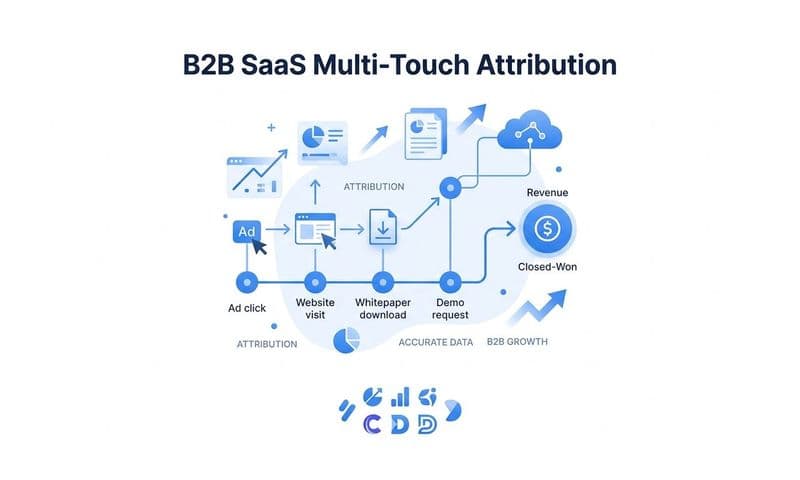
For a complete view that goes beyond what Google Ads can show you within its own ecosystem, a dedicated multi-touch attribution platform like Cometly tracks the entire customer journey across YouTube, Meta, TikTok, Google Search, email, and organic touchpoints. This gives you a single, unified view of how each channel contributes to revenue across the full path to conversion, not just within Google's walled garden.
Use this attribution data to guide budget decisions. If your multi-touch reports consistently show YouTube appearing as the first or second touchpoint in converting journeys, that is a strong signal to invest more in YouTube, even if the last-click ROAS looks low. You are seeing the real contribution, not just the final click.
One common mistake worth flagging: when you switch attribution models, your reported conversion numbers will change. This causes panic in teams that are not expecting it. The actual conversions did not change. Only how credit is distributed changed. Give yourself four to six weeks of data under the new model before drawing conclusions or making major budget shifts.
Step 7: Optimize Your Tracking Setup and Feed Better Data Back to Google
Setting up conversion tracking is not a one-time task. The setup you build today can degrade over time through website changes, tag conflicts, expired windows, and evolving business goals. A monthly tracking audit keeps your data clean and your bidding algorithms working with accurate signals.
During each monthly audit, check for these common issues:
Duplicate conversions: If the same conversion event is being tracked by both a Google tag and a GTM tag, you are double-counting. This inflates your reported conversions and misleads your bidding strategy.
Broken tags: Website updates, page restructures, and URL changes can break conversion tags silently. Use Google Tag Assistant and the Google Ads diagnostics tab to confirm all tags are still firing.
Misclassified conversion actions: Check that your primary conversion actions are the ones you actually want to optimize toward. A micro conversion accidentally set to primary will send your bidding algorithms chasing the wrong goal.
Attribution windows that no longer match your sales cycle: If your sales cycle has lengthened or shortened since you first configured your conversion actions, update the windows to reflect current reality.
Beyond auditing, use conversion value rules in Google Ads to adjust the weight of conversions based on audience segment, location, or device. If mobile users from a specific audience consistently generate higher lifetime value, you can assign a higher conversion value to those interactions so your Smart Bidding strategy prioritizes them. Review our best practices for tracking conversions accurately to ensure nothing slips through the cracks.
The most powerful optimization you can make is feeding enriched conversion data back to Google's algorithms. The more complete and accurate your conversion data, the better Google's machine learning can identify users who look like your best customers and show your YouTube ads to them. This is where enhanced conversions, offline imports, and Cometly's Conversion Sync feature work together: they ensure Google's bidding algorithms are learning from real revenue signals, not just surface-level click data.
Set up the Diagnostics and Insights tabs in Google Ads as part of your regular review. These surfaces surface warnings about tag health, conversion lag, and data freshness that you might otherwise miss until they have corrupted weeks of campaign data.
Finally, use your conversion data to inform creative and targeting decisions. Stop optimizing YouTube campaigns based on view rate or cost-per-view. Those metrics measure attention, not revenue. Optimize based on which campaigns, ad groups, and creatives actually drive conversions. Leveraging paid ads analytics across all your channels helps you identify these revenue-driving patterns faster. Set up automated alerts or a live dashboard so you catch drops in conversion volume quickly, before a tracking issue silently corrupts your data for an extended period.
Your Complete YouTube Conversion Tracking Checklist
Tracking YouTube ads conversions accurately requires deliberate setup across multiple layers. When every layer works together, you stop guessing which YouTube campaigns generate revenue and start making confident, data-backed decisions about where to invest your budget.
Use this checklist to confirm your setup is complete:
1. Conversion events defined and documented in a spreadsheet with event name, trigger condition, value, attribution window, and primary vs. secondary classification.
2. Google tag or GTM tags installed and verified using Tag Assistant and Google Ads diagnostics. Auto-tagging confirmed as enabled.
3. Enhanced conversions enabled in Google Ads settings with first-party data fields mapped and diagnostics showing successful matches.
4. Google Analytics 4 linked to Google Ads with auto-tagging and personalized advertising signals active. Attribution paths report reviewed.
5. GCLID capture configured on lead forms, stored in CRM, and offline conversion imports set up with either manual uploads, a CRM integration, or an automated sync.
6. Attribution model updated from last-click to data-driven or a multi-touch model that reflects how YouTube actually contributes to your customer journeys.
7. Monthly tracking audit scheduled with checks for duplicate conversions, broken tags, misclassified conversion actions, and outdated attribution windows.
For teams looking to unify YouTube ad tracking with every other paid channel and CRM data in one platform, Cometly provides the multi-touch attribution and conversion sync capabilities to make that a reality. You get a complete view of every touchpoint across YouTube, Meta, Google Search, and beyond, with AI-powered recommendations that tell you exactly where to put your budget next.
Ready to stop guessing and start scaling with confidence? Get your free demo today and start capturing every touchpoint to maximize your conversions.