You're running ads on Meta, Google, maybe TikTok. The campaigns are live, the budget is spending, and traffic is coming to your site. But when someone asks which campaign is actually driving results, you find yourself staring at a dashboard full of clicks and impressions with no clear answer.
This is the most common frustration for beginner marketers, and it comes down to one missing piece: conversion tracking.
Conversion tracking is the foundation of profitable advertising. It connects the dots between an ad click and a real business outcome, whether that's a purchase, a demo request, a sign-up, or a phone call. Without it, you're essentially flying blind, optimizing based on what looks good rather than what actually generates revenue.
Let's define the basics quickly. A conversion is any valuable action a visitor takes on your website or app, from completing a purchase to submitting a contact form. Conversion tracking is the process of recording those actions and attributing them back to the specific ads, campaigns, or channels that drove them.
When it's set up correctly, conversion tracking tells you exactly where your revenue comes from. It lets you double down on what's working and cut what isn't. It also feeds better signals to ad platform algorithms, which improves targeting and lowers your cost per acquisition over time.
By the end of this guide, you'll have a working conversion tracking setup that gives you real visibility into your ad performance. You'll start with the essentials: defining your conversions, installing pixels, and configuring events inside your ad platforms. Then you'll layer in the more advanced pieces: CRM integration, server-side tracking, and multi-touch attribution.
Platform-native tools like Meta's Events Manager or Google Ads conversion actions are a solid starting point. But as your advertising grows across multiple channels, many marketers find they need a centralized attribution solution to see the full picture. We'll get to that too.
Let's get into it.
Step 1: Define the Conversions That Actually Matter for Your Business
Before you install a single pixel or configure a single event, you need to decide what you're actually trying to measure. This step sounds obvious, but it's where most beginners go wrong.
There are two categories of conversions you need to understand. Macro conversions are the high-value actions directly tied to revenue: a completed purchase, a demo booking, a free trial sign-up, or a qualified lead form submission. Micro conversions are smaller actions that indicate intent and move someone closer to a macro conversion: adding a product to cart, watching a video past 50%, clicking an email link, or visiting a pricing page.
Both types have value, but they serve different purposes in your tracking setup. Macro conversions tell you what's generating revenue. Micro conversions help you understand where people drop off in the funnel and which campaigns are building momentum even if they haven't closed yet.
For your initial setup, focus on three to five key conversion events that map directly to revenue or pipeline. If you're an e-commerce business, that might be Purchase, Add to Cart, and Initiate Checkout. If you're a B2B SaaS company, it might be Demo Request, Free Trial Sign-Up, and Qualified Lead Form Submission.
Here's a practical way to prioritize your list:
Revenue-generating events first: These are your macro conversions. Every tracking setup should capture these without exception. If you only track one thing, make it the final conversion that generates money or pipeline.
Intent signals second: Pick two or three micro conversions that are strong predictors of your macro conversion. For SaaS, this might be a pricing page visit or a feature page engagement. For e-commerce, it's typically Add to Cart.
Skip the vanity metrics: Page views, session duration, and bounce rate are useful for website analytics but they make poor conversion events for ad optimization. Tracking them as conversions will confuse your ad platforms and dilute your data.
You should also think about assigning relative value to each conversion type. Even if you don't have exact dollar amounts, you can assign a rough value hierarchy. A completed purchase is worth more than an Add to Cart, which is worth more than a pricing page view. This helps your ad platforms understand which conversions to prioritize when optimizing bids. For a deeper look at how to improve your conversion rate for sales, mapping value to each event type is a critical first step.
A common beginner mistake is tracking too many events from day one. It feels thorough, but it creates noise. Start lean, measure what matters most, and add events as you understand your funnel better. Another mistake is tracking only the final purchase and ignoring lead-stage conversions entirely. If you're running a business with a longer sales cycle, you need visibility into earlier funnel stages to understand which campaigns are building pipeline.
Write your conversion list down before moving to the next step. Having clarity here makes every subsequent step faster and more intentional.
Step 2: Install Tracking Pixels and Tags on Your Website
Now that you know what you're measuring, it's time to set up the infrastructure that does the measuring. That starts with tracking pixels.
A tracking pixel is a small piece of JavaScript code that loads on your website and fires signals back to an ad platform when someone visits a page or takes an action. If you want a more thorough explanation, our guide on what a tracking pixel is and how it works covers the fundamentals in detail.
You'll need to install pixels for each platform you're advertising on. The three most common for beginners are the Meta Pixel, the Google Ads global site tag (or Google tag), and the TikTok Pixel. Each platform provides its own pixel code inside its advertising dashboard.
Here's the recommended approach for managing all of these: use Google Tag Manager.
Google Tag Manager (GTM) is a free tool from Google that acts as a container for all your tracking codes. Instead of adding separate code snippets directly to your website every time you want to track something new, you add one GTM container code to your site once. After that, you manage all your pixels and tags through the GTM interface without touching your site's source code again.
This matters because editing website code repeatedly is error-prone, often requires developer support, and slows down your ability to iterate on tracking. GTM gives marketers independence and makes managing multiple pixels far more manageable.
Here's how to get started with GTM:
1. Create a free account at tagmanager.google.com and set up a container for your website.
2. Install the GTM container snippet on every page of your site. Most website platforms (WordPress, Shopify, Webflow) have native GTM integrations or plugins that make this a one-time setup.
3. Inside GTM, create a new tag for each pixel. For Meta, use the "Custom HTML" tag type and paste your Meta Pixel base code. For Google Ads, use the built-in "Google Ads Remarketing" or "Google Ads Conversion Tracking" tag templates. For TikTok, use the Custom HTML option with your TikTok Pixel code.
4. Set each tag to fire on "All Pages" as the trigger for the base pixel code. You'll configure specific event triggers (like form submissions or purchase confirmations) in Step 3.
Once your pixels are installed, verify they're working before moving on. The fastest way to do this is with browser extensions. Install the Meta Pixel Helper (Chrome extension) and visit your website. It will show you whether the Meta Pixel is firing and whether it's detecting any events. For Google, use the Google Tag Assistant extension to confirm your Google tag is loading correctly.
If a pixel isn't firing, the most common culprits are: the GTM container not being published after you made changes (always hit "Submit" in GTM), a caching plugin on your site serving an old version of the page, or a typo in the pixel code.
One important caveat to set expectations here: even with pixels correctly installed, you won't capture every conversion. iOS privacy changes introduced with Apple's App Tracking Transparency framework mean many users on iPhones are not tracked by client-side pixels after opting out of tracking. Browser-level restrictions in Safari and Firefox further reduce pixel coverage. This is exactly why Step 5 on server-side tracking exists. For now, get your pixels live and verified, knowing you'll strengthen your data capture later.
Step 3: Configure Conversion Events Inside Each Ad Platform
Pixels installed and firing is a good start, but your ad platforms need to know which specific actions count as conversions. That's what this step is about: configuring conversion events inside Meta, Google Ads, and TikTok so the platforms know what to optimize for.
Let's walk through each platform.
Meta Events Manager: In your Meta Business Suite, navigate to Events Manager. Here you'll see the pixel you installed and any events it's already detecting. To configure specific conversion events, you can use Meta's Event Setup Tool (a visual, no-code option) or set up events manually through GTM using Meta's standard event code snippets. For a complete walkthrough of Meta's pixel setup, check out our guide on Facebook conversion tracking. Standard events like "Purchase," "Lead," "CompleteRegistration," and "AddToCart" are predefined by Meta and carry built-in optimization benefits. If your business has a unique conversion type that doesn't fit a standard event, you can create a custom event with a name of your choosing.
Google Ads Conversion Actions: In Google Ads, go to Tools and Settings, then Conversions. Click the plus button to create a new conversion action. You'll choose the conversion source (website, app, phone calls, or import). For website conversions, you'll configure the conversion name, value, count (every conversion vs. one per click), and conversion window. Google Ads also supports importing conversions from Google Analytics 4, which can be a cleaner setup if you're already using GA4. Our detailed guide on Google Ads conversion tracking walks through each of these configuration options step by step.
TikTok Events Manager: Inside TikTok Ads Manager, go to Assets and then Events. You'll set up your pixel events here, using either the TikTok Pixel Helper for web events or TikTok's Events API for server-side events. Similar to Meta, TikTok has standard events and supports custom events for unique conversion types.
A few configuration decisions deserve attention as you set these up.
Conversion windows determine how long after an ad interaction a conversion can be attributed to that ad. Meta's default is a 7-day click and 1-day view window. Google Ads defaults vary by conversion type. Longer windows capture more conversions but can attribute conversions to ads that had minimal influence. Shorter windows are more conservative. Choose windows that reflect your actual sales cycle length.
Attribution settings within each platform determine how credit is distributed across touchpoints. Google Ads defaults to data-driven attribution, which distributes credit based on the actual contribution of each touchpoint. Meta uses its own model. Understanding these settings matters because each platform will claim credit for conversions differently, and when you add up the numbers across platforms, the total will almost always exceed your actual conversions.
This is a fundamental limitation of platform-native tracking: every platform grades its own homework. Meta says it drove 50 conversions. Google says it drove 40. TikTok claims 20. But your actual sales for the week were 60. This overlap is normal, and it's exactly why cross-platform attribution matters. We'll address that in Step 6.
To confirm your setup is working, run a test conversion. Complete a purchase on your site (use a test order if your platform supports it), submit a test lead form, or trigger whatever conversion event you configured. Check the platform's event manager within 24 hours to confirm the event is being received and recorded. If it's not showing up, revisit your GTM trigger configuration and make sure the tag is firing on the correct page or action.
Step 4: Connect Your CRM and Revenue Data to Close the Loop
Pixels and platform events give you visibility into what's happening on your website. But for most businesses, especially those with a sales team or a longer consideration cycle, website events only tell part of the story.
Think about a B2B company running LinkedIn and Google Ads. Someone clicks an ad, fills out a demo request form, and the pixel fires a "Lead" event. From the ad platform's perspective, that's a successful conversion. But what actually happened next? Did that lead show up for the demo? Did they become a paying customer three months later? The pixel has no idea.
This is why connecting your CRM to your tracking setup is so important. It closes the loop between ad activity and actual revenue outcomes.
The way this works in practice is through a combination of UTM parameters and click IDs. When someone clicks your ad, the platform appends a click ID to the URL (Meta uses fbclid, Google uses gclid). If your form captures and stores that click ID along with the lead's contact information, you can later match that lead back to the specific ad that drove them, even if the sale closes months later.
UTM parameters work similarly. By adding UTM tags to your ad URLs (utm_source, utm_medium, utm_campaign, and so on), you can pass campaign-level data into your CRM alongside each lead record. Our guide on UTM tracking and how it helps your marketing explains how to structure these parameters for maximum reporting clarity. When that lead converts into a customer, you can look back at the UTM data and know exactly which campaign, ad set, and ad drove the revenue.
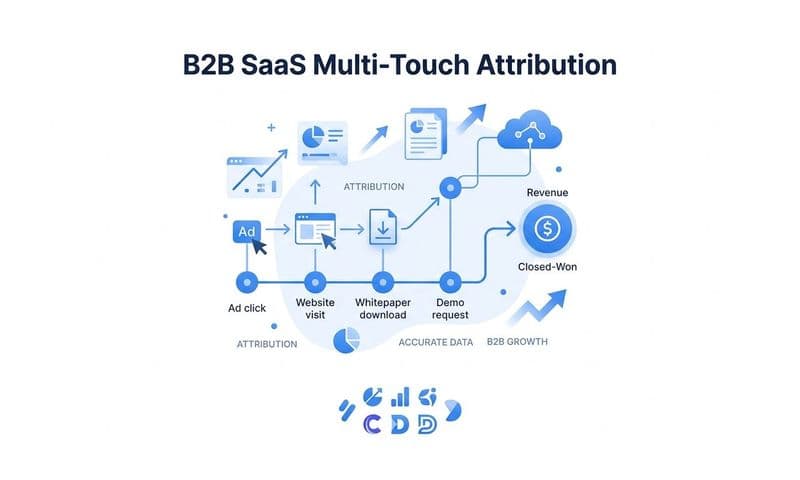
This is called closed-loop reporting: the ability to trace a path from ad click to lead to opportunity to closed revenue, all tied together in one coherent view. It's the difference between knowing "our Google Ads generated 100 leads" and knowing "our Google Ads generated 100 leads, 22 of which became customers worth an average of $4,000 each."
The most common pitfall here is not passing UTM parameters or click IDs through form submissions. This often happens when a form redirects through multiple pages before the thank-you page, stripping the URL parameters along the way. Or when a CRM integration is set up without mapping the UTM fields to contact properties. Check your form submissions manually to confirm UTM data is being captured and stored.
CRM platforms like HubSpot and Salesforce both support UTM tracking natively or through integrations. If you need help choosing the right tool for managing lead data alongside your ad campaigns, our roundup of top lead tracking software for marketers is a useful resource. Most modern landing page builders also capture UTM parameters automatically if configured correctly.
This is where a platform like Cometly becomes especially valuable. Cometly connects your ad platforms, CRM, and website data to track the entire customer journey in real time. Rather than manually stitching together UTM data across multiple tools, Cometly gives you a unified view of which ad clicks led to which closed deals, so you can see the true revenue impact of every campaign.
Step 5: Add Server-Side Tracking to Capture What Pixels Miss
You've got pixels installed, events configured, and CRM data flowing. Your tracking setup is already more sophisticated than most beginners ever build. But there's still a meaningful gap in your data, and it's getting wider every year.
Client-side pixels rely on a user's browser to fire tracking events. The problem is that browsers are increasingly hostile to this kind of tracking. Apple's App Tracking Transparency framework, introduced with iOS 14.5 and expanded since, requires apps to ask users for permission before tracking them. Many users opt out, which means the Meta Pixel and other client-side trackers never fire for a significant portion of your audience on Apple devices.
Safari and Firefox block third-party cookies by default. Ad blockers prevent pixels from loading entirely. The cumulative effect is that client-side tracking misses a meaningful share of your actual conversions, leaving your ad platforms with an incomplete picture of what's working. Understanding exactly where these gaps occur is essential, and our article on fixing conversion tracking gaps breaks down the most common causes and solutions.
Server-side tracking solves this. Instead of relying on the user's browser to send conversion data to an ad platform, server-side tracking sends that data directly from your server to the platform's API. The data travels server-to-server, bypassing browser restrictions, ad blockers, and cookie limitations entirely. For a deeper dive into why this approach produces better data, read our guide on why server-side tracking is more accurate.
Meta's Conversions API and Google's Enhanced Conversions are the two most prominent examples of server-side solutions from major platforms. When you implement these, you're sending conversion signals from your own infrastructure, which means the data is more complete, more accurate, and arrives with higher match rates (the percentage of events that can be matched to an actual user in the platform's system).
Why does match rate matter? Because ad platforms use conversion data to optimize their algorithms. When Meta receives a purchase event with a strong match to a user profile, it can learn what kind of people convert and show your ads to more people like them. When match rates are low because client-side pixels are missing events, the algorithm has less signal to work with, which typically results in higher costs and less efficient targeting.
Better server-side data means better algorithm performance, which means lower cost per acquisition over time.
Cometly's server-side tracking and Conversion Sync features are built specifically for this. Cometly sends enriched, conversion-ready events back to Meta, Google, and other ad platforms, giving their algorithms the complete signal they need to optimize effectively. For marketers who want to maximize the return on their ad spend, this is one of the highest-leverage improvements you can make to your tracking setup.
Step 6: Validate Your Data and Start Optimizing With Confidence
Your tracking setup is live. Now comes the step most beginners skip: validating that the data is actually accurate before making decisions based on it.
Inaccurate data is often worse than no data. If your conversion counts are inflated by duplicates or skewed by attribution window mismatches, you'll optimize toward the wrong campaigns and waste budget. Our deep dive into inaccurate conversion tracking explains the most common causes and how to fix them. Take the time to validate before you trust the numbers.
Here's a practical validation checklist to work through:
Compare conversion counts across sources: Pull the conversion numbers from your ad platforms (Meta, Google, TikTok) and compare them to your CRM's lead or sale count for the same time period. Also compare to your analytics tool (Google Analytics 4 or similar). Expect some variance, but large discrepancies signal a problem worth investigating.
Check for duplicate conversions: A common issue is the same conversion event firing multiple times. This can happen if your thank-you page is accessible via multiple routes, if GTM has duplicate tags, or if both your pixel and your server-side integration are firing for the same event without deduplication logic. Most platforms support event deduplication using an event ID parameter. Make sure you're using it.
Audit attribution window differences: Remember that Meta, Google, and TikTok all use different default attribution windows. A conversion that Meta counts (because it falls within a 7-day click window) might not be counted by Google (if the click happened more than 30 days ago). When comparing platforms, make sure you're using consistent attribution windows and date ranges.
Check time zone alignment: If your ad platforms are set to different time zones than your CRM or analytics tool, daily conversion counts will appear mismatched even when the underlying data is correct. Standardize time zones across all platforms.
Once your data is validated, you're ready to start making decisions. The most valuable shift you can make at this stage is moving from last-click thinking to multi-touch attribution thinking.
Last-click attribution gives all the credit for a conversion to the final touchpoint before the sale. It's simple, but it systematically undervalues the channels that introduced your brand and nurtured the prospect along the way. Multi-touch attribution models distribute credit across all the touchpoints in the customer journey, giving you a more accurate picture of what's actually working.
Common multi-touch models include linear (equal credit to all touchpoints), time-decay (more credit to touchpoints closer to conversion), and position-based or U-shaped (more credit to the first and last touchpoints, with some distributed to the middle). Each model tells a slightly different story, and comparing them helps you understand your funnel dynamics more deeply.
As you review your data weekly, look for patterns: which channels drive the most revenue, which campaigns have the best return on ad spend, and which audiences convert at the highest rate. This is where Cometly's AI-powered recommendations become particularly useful. By analyzing performance patterns across all your ad channels, Cometly helps you identify which ads and campaigns are genuinely driving results so you can scale them with confidence rather than guessing.
Your Conversion Tracking Setup: A Quick-Reference Checklist
You've covered a lot of ground. Here's a summary of everything you need to have in place for a complete, accurate conversion tracking setup:
Step 1 complete: You've defined three to five key conversion events mapped to revenue or pipeline, with a clear distinction between macro and micro conversions.
Step 2 complete: Google Tag Manager is installed on your site. The Meta Pixel, Google Ads tag, and TikTok Pixel are live and verified using browser extension tools.
Step 3 complete: Conversion events are configured inside Meta Events Manager, Google Ads, and TikTok Events Manager. Conversion windows and attribution settings are reviewed. Test conversions have been confirmed in each platform.
Step 4 complete: UTM parameters and click IDs are being captured through your forms and stored in your CRM. You have a path from ad click to closed revenue in your reporting.
Step 5 complete: Server-side tracking is implemented through Meta's Conversions API, Google's Enhanced Conversions, or a unified solution like Cometly's Conversion Sync. Event deduplication is in place.
Step 6 complete: You've validated your data by comparing counts across platforms and your CRM. You're reviewing performance weekly and using multi-touch attribution to understand the full customer journey.
Conversion tracking is not a one-time setup. It's an ongoing process that gets more accurate as you refine your events, connect more data sources, and adapt to platform changes. Start simple: get your pixels live and your key events firing. Then layer in CRM integration and server-side tracking as your advertising scales.
The marketers who consistently outperform their peers aren't necessarily the ones with the biggest budgets. They're the ones who know exactly what's working and why, because their tracking setup gives them that clarity.
If you want accurate, cross-platform attribution without stitching together multiple tools, Cometly gives you a single platform to track every touchpoint, attribute revenue to the right sources, and optimize your ad spend with AI-powered insights. Get your free demo today and start capturing every conversion that matters to your business.