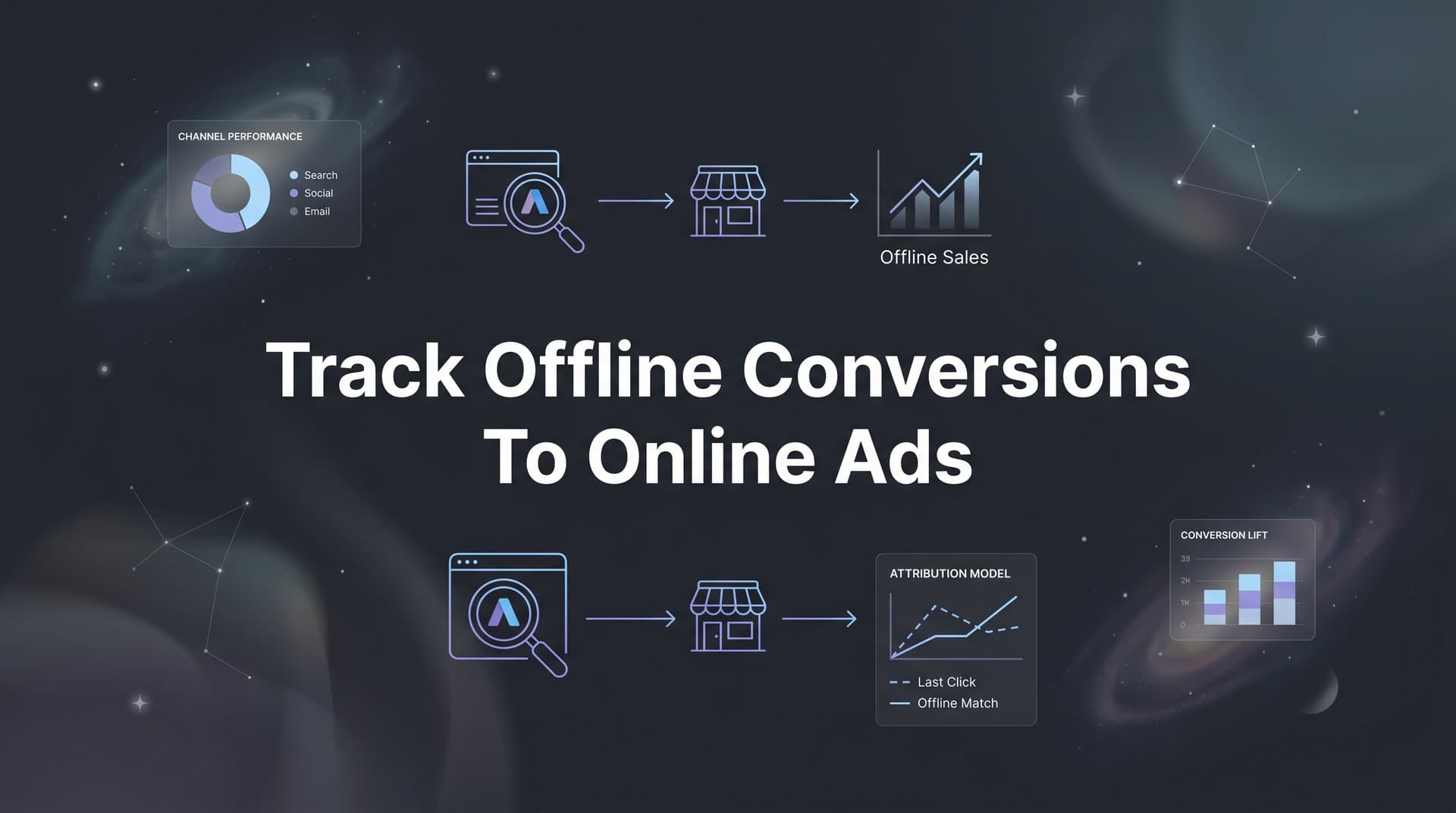
Many businesses generate leads online but close deals offline, whether through phone calls, in-store visits, or sales team follow-ups. The problem is that without a reliable way to track offline conversions to online ads, you are essentially flying blind. You might be pouring budget into campaigns that look great on paper but never actually drive revenue, while starving the ads that quietly bring in your best customers.
Bridging the gap between online ad clicks and offline sales is one of the most impactful things a marketing team can do. When you connect these two worlds, you unlock the ability to see true return on ad spend, optimize campaigns based on real revenue data, and feed better conversion signals back to ad platform algorithms so they can find more high-value customers.
This guide walks you through the entire process, from setting up the right infrastructure and capturing unique identifiers to syncing offline conversion data back to platforms like Google, Meta, and TikTok. By the end, you will have a clear, repeatable system for attributing offline revenue to the exact ads and campaigns that generated it.
Whether you are a B2B company with a long sales cycle or a local business driving foot traffic from digital campaigns, these steps apply directly to your situation. Let's get into it.
Step 1: Map Your Offline Conversion Points and Define What to Track
Before you touch a single integration or platform setting, you need clarity on what you are actually trying to measure. This step sounds obvious, but skipping it is one of the most common reasons offline conversion tracking falls apart before it even starts.
Begin by listing every offline event that signals real business value. Think about phone calls that turn into booked appointments, in-store purchases initiated by a digital ad, signed contracts following a sales demo, or a lead that progresses from form fill to closed deal in your CRM. Each of these represents a conversion point where online ad spend meets offline revenue.
Prioritize by value, not volume. Not every offline event is worth tracking with the same urgency. A signed contract worth thousands of dollars should take priority over a phone inquiry that rarely converts. Assign a tier or estimated value to each conversion type so you know where to focus your setup effort first.
Document the customer journey with handoffs in mind. Trace the path a customer takes from clicking your ad to becoming an offline conversion. Where does marketing hand off to sales? At what point does the lead enter your CRM? Understanding these transitions helps you identify where click data needs to be captured and preserved before it gets lost in the shuffle.
Define what counts as a conversion. For each event on your list, write a specific criterion. For example, a phone call only counts if it lasts more than two minutes and results in a scheduled appointment. A deal only counts when the contract is marked "Closed Won" in your CRM. Vague definitions lead to inconsistent data and unreliable reporting.
A common pitfall at this stage is trying to track everything at once. It feels comprehensive, but it creates complexity that slows down implementation and muddies your data. Start with your single highest-value conversion event and build from there once the system is working. For more guidance on measuring what matters, review these best practices for tracking conversions accurately.
Your success indicator for this step: You have a written list of one to three offline conversion events, each with a clear definition of what qualifies as a conversion and an estimated value attached to it. This document becomes the foundation for every technical step that follows.
Step 2: Capture and Preserve Unique Click Identifiers
Here is where the technical foundation gets laid. Every major ad platform appends a unique identifier to the URL when someone clicks your ad. Google uses GCLID, Meta uses FBCLID, and TikTok uses ttclid. These click IDs are the connective tissue between an online ad interaction and an offline outcome. Without them, you have no reliable way to match a closed deal back to the specific campaign or ad that started the journey.
The challenge is that these identifiers only exist in the URL for a brief moment unless you actively capture and store them. Here is how to do it properly.
Use hidden form fields on your landing pages. When a visitor arrives on your landing page from an ad click, the click ID is visible in the URL. Configure your landing page forms to include hidden fields that automatically pull the GCLID, FBCLID, or ttclid from the URL and store it alongside the lead's name, email, and phone number when they submit the form. Most major form builders and CMS platforms support this natively or through a small JavaScript snippet.
Capture UTM parameters at the same time. While you are setting up hidden fields, also capture UTM source, medium, campaign, and content. These parameters give you readable context about where the lead came from, complementing the click ID's machine-readable precision. Learn more about UTM tracking and how it helps your marketing to get this right from the start.
Store everything in your CRM immediately. The click ID and UTM data captured at form submission should flow directly into the lead record in your CRM. Every contact should carry its ad origin data from the moment it enters your system. If a deal closes six weeks later, you need that click ID to still be attached to the record.
Implement server-side tracking to protect your data. Client-side cookies are increasingly unreliable. iOS 14 and later versions, along with evolving browser privacy restrictions, have significantly degraded cookie-based tracking. In many cases, a user clicks your ad, lands on your page, and the click ID is never properly stored because a cookie was blocked or expired. Server-side tracking solves this by capturing and storing click data at the server level rather than relying on the browser. This is particularly important for preserving FBCLID data, which Meta restricts heavily in client-side environments.
A common pitfall here is relying solely on client-side cookies and assuming the data will be there when you need it. Modern privacy environments have made that assumption dangerous. If your click ID capture rate is low, your match rates downstream will also be low, and your entire offline conversion tracking effort loses accuracy.
It is also worth noting that Google's GCLID has a 90-day expiration window. If your sales cycle extends beyond that, you will need to supplement GCLID matching with enhanced conversions in Google Ads using hashed email or phone number, which we will cover in Step 5.
Your success indicator for this step: Every new lead entering your CRM carries a click ID and UTM source in dedicated fields. You can open any recent lead record and see exactly which ad platform and campaign originated that contact.
Step 3: Connect Your CRM and Ad Platforms Into a Unified Data Pipeline
You now have click IDs stored in your CRM. The next challenge is making sure that when a deal closes or a conversion event occurs, that data can travel back to your ad platforms automatically and accurately. This requires building a data pipeline that connects your CRM to the platforms where you are spending money.
Understand your integration options. There are three main approaches. The manual method involves periodically exporting CRM data as a CSV and uploading it to each ad platform's conversion import tool. It works, but it is time-consuming and prone to human error. Native integrations connect your CRM directly to platforms like Google or Meta using built-in connectors, automating the data flow but sometimes with limited flexibility. A dedicated attribution platform like Cometly handles the full pipeline, connecting your ad platforms, CRM, and website data in one place and automating the flow of conversion data back to each channel.
Map your data fields carefully. Regardless of which approach you choose, the data mapping step is critical. Your pipeline needs to correctly link the click ID in your CRM to the conversion event being reported, along with the revenue amount and the timestamp of when the conversion occurred. A mismatch between field names, a wrong date format, or a time zone discrepancy can silently break the connection between a click and a conversion, leaving you with incomplete data and no obvious error to diagnose. A well-structured attribution tracking setup helps you avoid these pitfalls from the beginning.
Define your conversion triggers in the CRM. Decide exactly which CRM action should trigger a conversion event being sent to your ad platforms. For most B2B teams, this is when a deal stage changes to "Closed Won." For e-commerce or local businesses, it might be a purchase record being created. Being specific here prevents duplicate conversions and ensures your reported data reflects real business outcomes.
Cometly simplifies this entire process by acting as the central hub that unifies ad platform data, CRM events, and website tracking. Rather than managing separate integrations for each platform, you connect once and Cometly handles the routing, ensuring that every touchpoint from ad click to CRM event is captured and attributed correctly. This is particularly valuable for teams running campaigns across multiple platforms simultaneously, where managing individual integrations becomes unwieldy.
A common pitfall at this stage is assuming the integration is working without testing it. Set up a test lead, move it through your CRM pipeline to the conversion stage, and verify that the conversion event appears in your ad platform dashboards with the correct click ID attached.
Your success indicator for this step: A test lead can flow from an ad click through your CRM to a conversion event, with all data fields intact, including click ID, revenue amount, and timestamp. You can see that event reflected in your ad platform's conversion reporting.
Step 4: Upload or Sync Offline Conversion Data Back to Ad Platforms
This is the step where your offline revenue data actually reaches the ad platforms and begins influencing how their algorithms behave. Each major platform has its own mechanism for receiving offline conversion data, and understanding how each one works helps you get the most out of the data you have collected.
Google Ads: Offline Conversion Import (OCI). Google's native tool allows you to upload a CSV file containing GCLIDs matched to conversion events, revenue values, and timestamps. You access this through the Google Ads interface under Tools and Settings. For manual uploads, you export your CRM's closed deals with their associated GCLIDs and import the file. Google then matches those GCLIDs to the original ad clicks and attributes the conversions accordingly. For a deeper walkthrough of setting up conversion events in Google, see our guide on Google Ads conversion tracking.
Meta: Conversions API and Offline Conversions. Meta offers two pathways. The Offline Conversions tool allows you to upload event sets matched via FBCLID or customer information like email and phone. The Conversions API (CAPI) is the more powerful and preferred approach, allowing server-side transmission of events directly to Meta without relying on browser-based pixels. CAPI supports both online and offline events and provides better data quality in privacy-restricted environments. If you are running significant Meta ad spend, CAPI should be your standard implementation. Understanding Facebook conversion tracking in depth will help you configure this correctly.
TikTok: Events API. TikTok's Events API functions similarly to Meta's CAPI, allowing server-side transmission of conversion events matched via ttclid or customer data. It is particularly important for TikTok given the platform's younger audience demographic, which tends to use mobile devices where cookie-based tracking is least reliable.
Choose your sync method based on your resources. Manual CSV uploads work for teams with limited technical resources and lower conversion volumes. They require discipline around upload frequency but are a valid starting point. Automated sync through a tool like Cometly's Conversion Sync is the more scalable approach. It feeds enriched, conversion-ready events back to Meta, Google, TikTok, and other platforms continuously, without requiring manual intervention. This matters because the timing of your data upload directly affects algorithm performance.
Upload frequency is not a minor detail. Ad platform algorithms learn from the conversion signals you send. When you upload conversions daily or in real time, the algorithm can adjust bidding and targeting quickly. When you upload once a month, you are essentially asking the algorithm to learn from stale data. For best results, aim for daily uploads at minimum, and real-time sync where possible.
A common pitfall is uploading conversions weeks after they happen. By that point, the algorithm's window for learning from that data has largely passed, and the optimization benefit is significantly reduced.
Your success indicator for this step: Offline conversions appear in your ad platform dashboards alongside your online conversion data. You can see conversion counts, revenue values, and attribution to specific campaigns and ad sets within each platform's reporting interface.
Step 5: Validate Your Data and Troubleshoot Gaps
Getting data flowing is one thing. Trusting that data is another. This step is about verifying that what your ad platforms are reporting actually matches what your CRM says happened, and fixing the gaps when it does not.
Run a reconciliation check. Pull your CRM's closed-deal data for a defined time period and compare it against the offline conversions reported in your ad platforms for the same period. The numbers will rarely match perfectly, but they should be reasonably close. Large discrepancies signal a problem in your data pipeline that needs to be diagnosed.
Check your match rates. Each ad platform reports a match rate when you upload offline conversions. This metric tells you what percentage of your uploaded records could be matched to a known ad click. A low match rate means a significant portion of your conversions are not being attributed to any campaign, which undermines the entire exercise. Google and Meta both provide match rate feedback in their conversion import interfaces.
Common issues and how to fix them. Expired GCLIDs are a frequent culprit. If your sales cycle regularly extends beyond 90 days, GCLIDs will have expired by the time the deal closes, making GCLID-based matching impossible. The solution is to supplement with enhanced matching using hashed customer data like email address or phone number, which both Google and Meta support as a fallback matching method.
Missing form fields are another common issue. If your hidden form fields were not properly configured, leads enter your CRM without click IDs attached. Audit your recent leads to see what percentage carry click ID data, and fix the form configuration for any landing pages showing gaps. Knowing how to properly track leads from the point of capture is essential for preventing these data losses.
CRM records without source data often result from leads that entered the system through channels other than ad clicks, such as direct sales outreach or referrals. These will never match to ad clicks, and that is expected. What you want to avoid is ad-originated leads losing their click data somewhere in the pipeline.
Using an attribution platform's analytics dashboard to cross-reference data across sources makes this reconciliation process significantly faster. Rather than manually pulling reports from each platform and comparing them in a spreadsheet, you can see discrepancies surfaced in one view.
Your success indicator for this step: Match rates are above each platform's recommended threshold, and your conversion counts in ad platforms are reasonably consistent with your CRM's closed-deal data for the same period. You have identified and resolved any significant gaps in click ID capture.
Step 6: Analyze Attribution Data and Optimize Your Ad Spend
This is where all the infrastructure work pays off. With offline conversions flowing back to your ad platforms and an attribution system in place, you can finally answer the question that matters most: which ads are actually driving revenue?
Move beyond lead volume as your primary metric. Many marketing teams optimize campaigns based on cost per lead or click-through rate because those were the only metrics they could reliably measure. Now that offline revenue data is flowing, you can evaluate campaigns based on cost per acquisition and return on ad spend calculated against actual closed deals. This often reveals a completely different picture of which campaigns are performing.
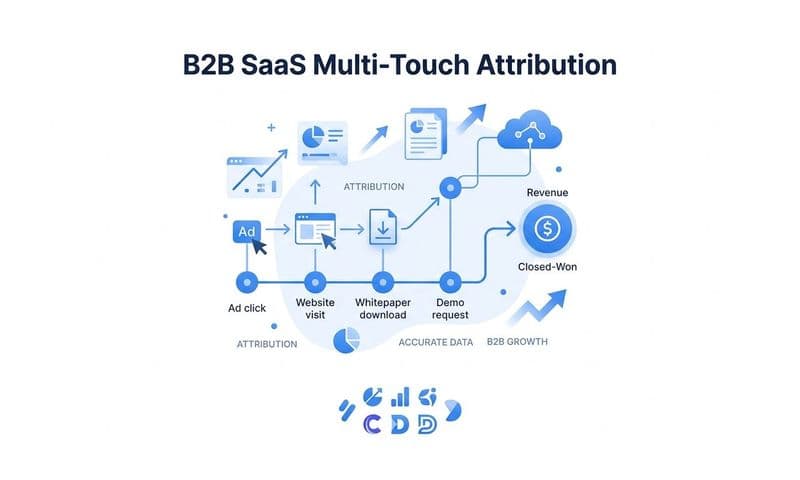
Apply multi-touch attribution for a complete view. Last-click attribution gives all the credit to the final ad a customer clicked before converting. For businesses with longer sales cycles, this is misleading. A prospect might have seen a display ad, clicked a search ad two weeks later, and then responded to a retargeting ad before finally booking a call. Multi-touch attribution distributes credit across all those touchpoints, helping you understand which channels are initiating journeys versus which are closing them. Both insights are valuable for budget allocation. Explore the top software for tracking marketing attribution to find the right tool for your needs.
Compare attribution models to understand the full picture. Running first-touch, last-touch, linear, and data-driven models side by side reveals how different channels contribute at different stages of the funnel. A channel that looks weak on last-click attribution might be responsible for introducing a large share of your highest-value customers. Seeing this clearly prevents you from cutting channels that are quietly doing important work.
Use AI-powered recommendations to act on what you find. Identifying which campaigns generate the most offline revenue is only half the battle. The other half is reallocating budget quickly and confidently. Cometly's AI Ads Manager analyzes performance across all your ad channels and surfaces recommendations for scaling high-performing campaigns and pulling back on underperformers. The AI Chat feature lets you ask direct questions about your data, such as which campaign generated the most closed revenue last month, and receive actionable answers without needing to build custom reports manually.
Build a continuous feedback loop. Offline conversion tracking is not a one-time setup project. As you optimize based on real revenue data, monitor whether your cost per acquisition improves and whether ROAS trends upward over time. Use those results to inform your next round of creative testing and budget decisions. Understanding how ad tracking tools help you scale ads with accurate data reinforces why this continuous loop matters so much. The system becomes more valuable the longer it runs because the algorithms have more signal to work with and your optimization decisions become more precise.
A common pitfall at this stage is reverting to online metrics when offline data is slow to come in. Stick with revenue as your north star, even when it requires patience during longer sales cycles.
Your success indicator for this step: You can confidently state which ad channels and campaigns generate the most offline revenue, and you have reallocated budget based on that data. Cost per acquisition and ROAS are trending in the right direction as the algorithm learns from enriched conversion signals.
Putting It All Together: Your Offline Conversion Tracking Checklist
Building a closed-loop system that connects online ad spend to offline revenue is one of the highest-leverage investments a marketing team can make. Here is a quick-reference summary of the six steps covered in this guide.
1. Map your offline conversion points and define clear criteria for what counts as a conversion, starting with your highest-value event.
2. Capture and store click IDs (GCLID, FBCLID, ttclid) in your CRM using hidden form fields and server-side tracking to protect against privacy restrictions.
3. Connect your CRM and ad platforms into a unified data pipeline, mapping fields correctly and testing the connection end to end.
4. Upload or sync offline conversion data back to Google, Meta, TikTok, and other platforms, prioritizing real-time or daily sync for maximum algorithm performance.
5. Validate your data through reconciliation checks and match rate analysis, and fix gaps in click ID capture or data mapping.
6. Analyze multi-touch attribution data, compare models, and use AI-powered recommendations to optimize budget allocation based on actual revenue.
The key to long-term success is treating this as a continuous system rather than a one-time project. Offline revenue data needs to flow back to ad platforms consistently so algorithms keep improving their targeting and your optimization decisions stay grounded in real outcomes.
Tools like Cometly make this significantly easier by unifying your ad platforms, CRM data, and website tracking in one place. Cometly's Conversion Sync automatically feeds enriched conversion events back to Meta, Google, TikTok, and more, while AI-powered features help you act on the insights that data reveals.
The biggest gap in most marketing teams' attribution is somewhere between the CRM and the ad platform. Take a hard look at your current setup and identify where click data is being lost. That is your starting point. Ready to close the loop between your ads and your offline revenue? Get your free demo and see how Cometly helps you capture every touchpoint and maximize the return on every dollar you spend.