When you're spending budget across Meta, Google, LinkedIn, and other paid channels, knowing which ads actually drive revenue is not optional. It's the difference between scaling what works and burning budget on what doesn't.
The problem is that most tracking tools either stop at the click level, struggle with cross-channel attribution, or give you data that's weeks out of date. The best tracking solution for paid ads connects your ad spend directly to pipeline and closed revenue, not just surface-level metrics like clicks or impressions.
This list covers nine tools that marketing teams, growth leaders, and B2B SaaS companies are using in 2026 to get accurate attribution data and make smarter ad decisions. Each tool is evaluated on tracking depth, attribution modeling, integrations, and how well it handles the realities of modern paid media, including server-side tracking and multi-touch journeys.
1. Cometly
Best for: B2B SaaS companies connecting paid ad spend directly to pipeline and closed revenue.
Cometly is a marketing attribution platform built specifically for B2B SaaS companies that need to trace every ad dollar from first click to closed deal.
 9 Best Attribution Platforms for Agencies in 2026
Where This Tool Shines
Most attribution tools tell you which ad got the click. Cometly tells you which ad generated the revenue. That distinction matters enormously for B2B SaaS teams with long sales cycles, where a lead from a LinkedIn campaign might not convert for 60 or 90 days. Cometly's multi-touch attribution keeps that entire journey intact, so top-of-funnel channels get the credit they actually deserve.
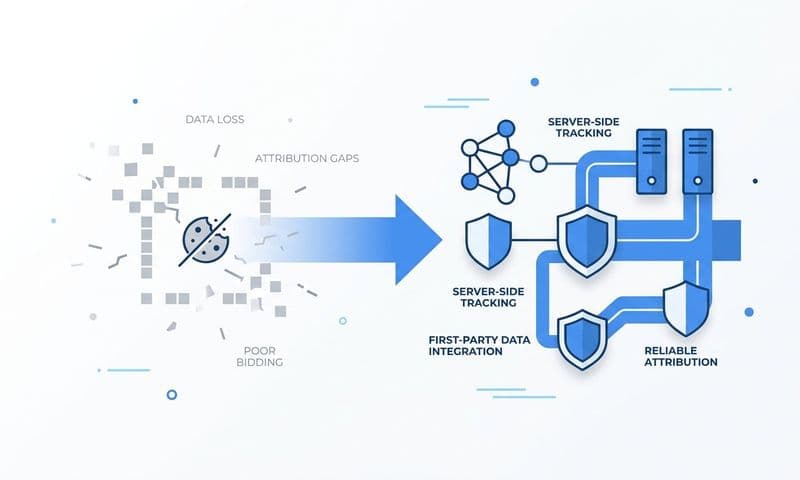
The platform's server-side tracking and Conversion API integration address one of the biggest pain points in modern paid media: signal loss. As browser privacy changes and iOS updates continue to erode pixel-based tracking, Cometly routes conversion data server-side, giving your ad platforms cleaner signals and improving algorithmic optimization across Meta, Google, and beyond.
Key Features
Multi-Touch Attribution: Tracks every paid channel touchpoint across the full customer journey, from first ad impression to closed-won opportunity.
Server-Side Tracking and Conversion API: Reduces signal loss by sending conversion events directly from your server, bypassing browser-level restrictions.
Pipeline and Revenue Attribution with Stripe Integration: Connects ad spend data to actual revenue in your CRM and Stripe, so you can see true ROI at the campaign and ad level.
AI Ads Manager: Surfaces performance recommendations across campaigns, helping you identify what to scale and what to cut based on real revenue data.
Customer Journey Analytics and 70+ Native Integrations: Visualizes the full path from ad click to conversion and connects to your existing marketing and sales stack without custom engineering.
Best For
Cometly is purpose-built for B2B SaaS marketing teams and growth leaders who need a single source of truth connecting paid ad performance to pipeline and revenue. It's especially valuable for teams running ads across multiple channels with longer sales cycles where last-click attribution consistently misrepresents what's working.
Pricing
Paid plans available. Visit cometly.com/pricing for current tiers and to find the right plan for your team's ad spend and attribution needs.
2. Northbeam
Best for: Performance-focused brands running large ad budgets across multiple paid channels.
Northbeam is a multi-touch attribution and media mix modeling platform built for brands that need both granular ad-level insights and high-level budget forecasting.
 8 Best Warehouse Attribution Solutions for E-commerce in 2026
Where This Tool Shines
Northbeam combines two capabilities that are often sold separately: multi-touch attribution for campaign-level decisions and media mix modeling for strategic budget allocation. This makes it particularly useful for performance teams that need to answer both "which ad is working today?" and "how should I distribute budget next quarter?"
Its first-party pixel approach helps reduce the signal loss that plagues platforms relying on third-party cookies. Creative analytics is another strong suit, giving teams visibility into how individual ad creatives perform across channels rather than just at the campaign level.
Key Features
Media Mix Modeling: Provides predictive spend recommendations based on historical channel performance and diminishing returns analysis.
Multi-Touch Attribution: Tracks performance across Meta, Google, TikTok, and other major paid channels with customizable attribution windows.
Creative Analytics: Breaks down performance at the individual ad level, helping teams identify which creative assets are driving results.
First-Party Pixel Tracking: Reduces reliance on third-party signals to maintain attribution accuracy in a privacy-first environment.
Model Comparisons: Lets teams compare attribution outputs across different models side by side to inform budget decisions.
Best For
Northbeam suits DTC brands and performance marketing teams managing significant ad budgets across multiple channels who need both attribution accuracy and media mix forecasting in one platform.
Pricing
Custom pricing based on ad spend. Contact Northbeam directly for a quote tailored to your budget and channel mix.
3. Triple Whale
Best for: Shopify brands centralizing ROAS tracking, creative performance, and ecommerce analytics.
Triple Whale is an ecommerce analytics platform that brings ad performance, revenue data, and creative insights together in a single dashboard designed specifically for Shopify merchants.
 9 Best Tracking Solutions for Paid Ads in 2026
Where This Tool Shines
Triple Whale's first-party pixel is the foundation of its accuracy advantage. By capturing Shopify order data directly and tying it back to ad sources, it sidesteps the attribution gaps that native ad platform reporting creates, particularly post-iOS changes. The blended ROAS view gives merchants a clear picture of overall ad efficiency without having to reconcile numbers across separate platforms.
The creative analytics layer is genuinely useful for teams running high volumes of ad creative. Fatigue detection flags when specific ads are losing efficiency, helping creative teams prioritize refreshes before performance drops significantly.
Key Features
First-Party Pixel: Captures Shopify order attribution directly, reducing reliance on platform-reported data that often overcounts or misattributes conversions.
Blended ROAS Dashboard: Provides a unified view of ad spend efficiency across all channels in a single, easy-to-read summary.
Creative Analytics with Ad Fatigue Detection: Tracks individual ad performance over time and flags creative assets that are declining in effectiveness.
Cohort Analysis and LTV Tracking: Measures customer lifetime value by acquisition source to inform long-term channel investment decisions.
AI-Powered Anomaly Detection: Surfaces unusual changes in performance metrics so teams can respond quickly to issues or opportunities.
Best For
Triple Whale is built for Shopify-based ecommerce brands, particularly those running active paid media programs across Meta, Google, and TikTok who want a centralized performance view without heavy technical setup.
Pricing
Starts at approximately $129/month for Shopify stores, with pricing that scales based on store revenue. Check Triple Whale's site for current plan details.
4. Rockerbox
Best for: Mid-market brands needing attribution across digital, offline, and TV channels in one platform.
Rockerbox is a marketing attribution platform that combines multi-touch attribution with marketing mix modeling and extends tracking beyond digital to offline and TV channels.
 9 Best Tracking Solutions for Paid Ads in 2026
Where This Tool Shines
Rockerbox's standout capability is its ability to handle attribution across channel types that most tools ignore entirely. If your media mix includes linear TV, direct mail, or out-of-home advertising alongside digital paid channels, Rockerbox is one of the few platforms that can bring all of that data together in a single attribution view.
Deduplicated conversion tracking is another meaningful differentiator. Many attribution tools count the same conversion multiple times when a customer touches several channels. Rockerbox's deduplication logic ensures each conversion is counted once, giving teams a more accurate read on what's actually driving results.
Key Features
Multi-Touch and Marketing Mix Modeling: Combines rule-based attribution with statistical modeling for both tactical and strategic decision-making.
Offline and TV Attribution: Extends tracking beyond digital to include traditional media channels alongside paid social and search.
Deduplicated Conversion Tracking: Prevents double-counting across channels to give a clean, accurate view of conversion performance.
Customizable Attribution Models: Allows teams to configure attribution logic to match their specific business and reporting needs.
BI Tool and Data Warehouse Export: Routes data to downstream tools like Snowflake, BigQuery, or Looker for teams that do custom analysis.
Best For
Rockerbox is a strong fit for mid-market brands with diverse media mixes that span both digital and traditional channels, and for teams that need attribution data to flow into existing BI infrastructure.
Pricing
Custom pricing. Contact Rockerbox for a demo and quote based on your channel mix and data volume.
5. Hyros
Best for: High-ticket businesses and complex sales cycles requiring phone call and email conversion tracking.
Hyros is an AI-based ad tracking platform designed for businesses where conversions happen through phone calls, emails, webinars, and other offline touchpoints that standard pixels miss entirely.
 9 Best Tracking Solutions for Paid Ads in 2026
Where This Tool Shines
Hyros fills a genuine gap for businesses selling high-ticket products or services where the actual conversion rarely happens on a web form. By tying phone call and email conversions back to the specific ad that sourced the lead, it gives sales-driven businesses the attribution clarity that ecommerce-focused tools simply weren't designed to provide.
Long-window attribution is particularly relevant here. When a customer clicks an ad, attends a webinar three weeks later, and books a call a week after that, Hyros maintains the thread across the entire journey. For businesses with 30-to-90-day sales cycles, this kind of attribution depth changes how you evaluate channel performance.
Key Features
AI-Driven Multi-Touch Attribution: Tracks the full customer journey across multiple touchpoints and assigns credit based on actual conversion paths.
Phone Call and Email Conversion Tracking: Attributes inbound calls and email-driven conversions back to the originating ad source.
Long-Window Attribution: Maintains attribution accuracy across extended sales cycles, capturing conversions that happen weeks or months after initial ad exposure.
Webinar and Funnel Platform Integration: Connects with platforms like Zoom, Kajabi, and ClickFunnels to track conversions that happen inside funnels.
Predictive Ad Scaling Recommendations: Uses performance data to suggest which campaigns have the most room to scale profitably.
Best For
Hyros is best suited for high-ticket coaches, consultants, agencies, and service businesses where conversions happen offline and standard pixel tracking misses most of the actual revenue picture.
Pricing
Custom pricing based on ad spend and business size. Contact Hyros directly for a quote.
6. Windsor.ai
Best for: Teams needing flexible data aggregation from 300+ sources for custom attribution modeling in BI tools.
Windsor.ai is a marketing data aggregation platform that pulls from over 300 data sources and routes unified data into BigQuery, Looker Studio, Google Sheets, or your data warehouse of choice.
 9 Best Tracking Solutions for Paid Ads in 2026
Where This Tool Shines
Windsor.ai is less of a turnkey attribution tool and more of a data infrastructure layer. If your team has the analytical capability to build custom attribution models but lacks a clean, unified data feed to work from, Windsor.ai solves that problem efficiently. It handles the tedious work of pulling, normalizing, and refreshing data from dozens of ad platforms and marketing tools so your analysts can focus on the actual modeling.
The breadth of its connector library is genuinely impressive. Most attribution platforms support 20 to 50 integrations. Windsor.ai's 300+ source connections make it viable for teams with unusual or complex marketing stacks that other tools simply don't accommodate.
Key Features
300+ Data Source Connectors: Pulls from all major ad platforms, CRMs, analytics tools, and marketing platforms into a single normalized data feed.
Flexible Export Destinations: Routes data to BigQuery, Looker Studio, Google Sheets, Snowflake, and other BI or warehouse tools.
Multi-Touch Attribution Modeling: Includes built-in attribution models for teams that want insights without building everything from scratch.
Automated Data Refresh: Schedules regular data pulls to keep downstream reports and dashboards current without manual intervention.
Custom Attribution Logic: Supports teams that need to define their own attribution rules based on unique business models or channel mixes.
Best For
Windsor.ai is ideal for data-savvy marketing teams and analysts who want maximum flexibility in how they model and visualize attribution data, particularly those already working within a BI tool or data warehouse environment.
Pricing
Starts at around $19/month for basic plans, with pricing that scales based on data volume and the number of connectors required.
7. Google Analytics 4 (GA4)
Best for: Teams needing free, flexible event-based tracking with native Google Ads attribution.
Google Analytics 4 is Google's event-based analytics platform offering data-driven attribution modeling, deep Google Ads integration, and broad compatibility across virtually every marketing stack.
Where This Tool Shines
GA4's data-driven attribution model is a meaningful upgrade over the last-click defaults that dominated web analytics for years. By using machine learning to distribute conversion credit across touchpoints, it gives teams a more realistic view of how their paid channels interact and contribute, particularly for Google-centric media mixes.
The platform's funnel exploration and path analysis reports are genuinely powerful for understanding where users drop off or convert across multi-step journeys. Combined with its free pricing and near-universal adoption, GA4 remains a foundational tool for most marketing teams even when they layer more specialized attribution platforms on top of it.
Key Features
Event-Based Tracking Model: Enables flexible, customizable conversion measurement across any user action, not just pageviews.
Data-Driven Attribution: Uses machine learning to distribute conversion credit across touchpoints based on actual user behavior patterns.
Native Google Ads and Search Console Integration: Connects paid search performance data directly within the analytics interface without additional configuration.
Funnel and Path Exploration Reports: Provides detailed visualizations of how users move through conversion flows and where they exit.
Free to Use: The standard version is available at no cost, making it accessible for teams at every budget level.
Best For
GA4 is a strong foundation for any team running paid ads, particularly those heavily invested in Google Ads. It works best as part of a broader attribution stack rather than as a standalone solution for cross-channel or revenue-level attribution.
Pricing
Free for standard use. GA4 360, the enterprise tier, is available at custom pricing for organizations needing higher data limits and SLA guarantees.
8. Segment
Best for: Engineering-supported teams building a flexible, first-party data infrastructure for ad attribution.
Segment is a customer data platform that collects, cleans, and routes event data from any source to any downstream tool, ad platform, or data warehouse through a single API.
Where This Tool Shines
Segment is the infrastructure layer that makes everything else work better. Rather than replacing your attribution tools, it feeds them cleaner, more complete data. By collecting events server-side and routing them to 400+ destinations, Segment reduces the signal loss that degrades attribution accuracy across every platform you use. Think of it as the plumbing that ensures your data arrives where it needs to go, intact and on time.
Its identity resolution capability is particularly valuable for B2B teams. When a user visits your site anonymously, clicks a paid ad, and later becomes a known contact in your CRM, Segment stitches those sessions together into a unified profile. That continuity is what makes cross-channel, multi-touch attribution actually reliable.
Key Features
Single API for Event Collection: Captures events from web, mobile, and server environments through one standardized integration layer.
400+ Destination Integrations: Routes data to ad platforms, CRMs, analytics tools, and data warehouses without custom engineering for each connection.
Identity Resolution: Unifies anonymous and known user profiles to maintain attribution continuity across the full customer journey.
Reverse ETL: Syncs enriched data from your warehouse back to ad platforms and CRMs to improve targeting and optimization.
Server-Side Event Forwarding: Sends conversion events from your server to reduce signal loss caused by browser restrictions and ad blockers.
Best For
Segment is best suited for growth teams with engineering support who want to build a scalable, flexible data infrastructure. It's less of a standalone attribution tool and more of a foundational layer that amplifies the accuracy of every other tool in your stack.
Pricing
Free tier available for low-volume use. Paid plans start at $120/month, with pricing scaling based on monthly tracked users and feature requirements.
9. CallRail
Best for: Businesses attributing inbound phone calls to specific paid ad campaigns and keywords.
CallRail is a call tracking and analytics platform that connects inbound phone calls to the exact paid campaigns, keywords, and channels that generated them.
Where This Tool Shines
For businesses where a significant share of conversions happen over the phone, standard pixel-based attribution is blind to a large portion of actual revenue. CallRail's dynamic number insertion solves this by displaying unique phone numbers based on the traffic source, tying each call directly back to its originating ad, keyword, or channel.
The AI-powered conversation analytics layer adds depth beyond simple call attribution. By analyzing call content, it can identify which calls resulted in qualified leads or sales, giving teams a more accurate signal to optimize against rather than raw call volume.
Key Features
Dynamic Number Insertion: Displays unique tracking numbers based on traffic source to attribute each inbound call to the correct ad campaign or keyword.
Keyword-Level Call Tracking: Connects individual Google Ads keywords to phone call outcomes for precise search campaign optimization.
AI-Powered Conversation Analytics: Analyzes call recordings to identify lead quality, conversion signals, and common customer questions.
Form and Chat Tracking: Extends attribution beyond calls to include form submissions and chat interactions in a unified conversion view.
CRM and Ad Platform Integrations: Connects with Google Ads, HubSpot, Salesforce, and other tools to feed call conversion data into your existing workflow.
Best For
CallRail is essential for service businesses, local businesses, and any organization where phone calls represent a meaningful share of conversions. It pairs well with broader attribution platforms to fill the offline conversion gap that digital-only tracking misses.
Pricing
Starts at $45/month. Higher tiers include additional tracking numbers, more minutes, and access to advanced conversation analytics features.
Choosing the Right Tracking Solution for Your Business
The right choice depends on your business model, tech stack, and how deep you need to go on attribution. There's no single tool that's perfect for every team, but there are clear patterns based on what you're trying to solve.
For B2B SaaS companies that need to connect paid ad spend directly to pipeline and revenue, Cometly is built for exactly that use case. Its combination of multi-touch attribution, server-side tracking, and revenue-level reporting through Stripe and CRM integrations gives marketing teams the full picture from first ad click to closed deal.
If you're running ecommerce on Shopify, Triple Whale or Northbeam are strong options with purpose-built features for ROAS tracking and creative performance. If you need raw data flexibility and have engineering support, Segment gives you the infrastructure to build your own attribution stack with clean, reliable event data flowing to every tool you use.
For teams that rely heavily on phone conversions, CallRail fills a gap that most attribution platforms miss entirely. And for organizations with complex or diverse media mixes that span digital and traditional channels, Rockerbox handles attribution at a breadth that few platforms match.
The core principle across all of them is the same: clicks and impressions are not enough. You need to know which ads are driving actual revenue. Surface-level metrics might tell you what's generating traffic, but only accurate attribution tells you what's generating business outcomes worth scaling.
If you're ready to see exactly which paid campaigns are generating pipeline and closed deals, Get your free demo and connect your ad data to real business outcomes with Cometly's attribution platform.