You're running campaigns on Meta, Google, TikTok, and maybe a few other platforms. Each dashboard tells you something different. Meta says your ROAS is 4.2x. Google claims credit for 60% of your conversions. TikTok's analytics show impressive engagement numbers. But when you look at your actual revenue, the math doesn't add up.
This is the reality for most marketers today. Data is everywhere, but clarity is nowhere.
Channel analysis changes that. It's the capability that transforms scattered platform metrics into a unified view of what's actually driving results. For analytics users, it's the difference between making decisions based on platform bias and making decisions based on complete customer journey data. When you understand what channel analysis enables you to do, you stop guessing which campaigns to scale and start knowing with confidence.
What Channel Analysis Actually Unlocks for Analytics Users
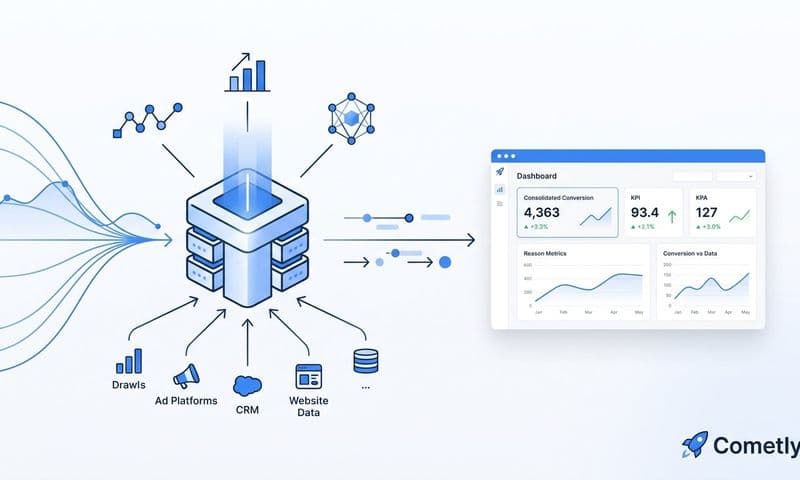
Channel analysis gives you something most marketers desperately need: a single source of truth. Instead of logging into five different platforms and trying to reconcile conflicting numbers, you see all your marketing channels side by side with consistent metrics and attribution logic.
This unified view reveals performance patterns you'd never spot looking at platforms individually. You might discover that your Google Search campaigns consistently drive higher-value customers than your Meta campaigns, even though Meta shows better cost-per-click numbers. Or you might find that your email channel contributes to more conversions than any platform gives it credit for.
Compare Performance Without Platform Bias: Every ad platform wants to take credit for conversions. Meta uses a 28-day click window. Google uses a 30-day click window. TikTok has its own attribution methodology. When you analyze channels independently, you're seeing each platform's version of reality—not the actual customer journey.
Channel analysis removes that bias. You define the attribution rules once, then apply them consistently across every channel. This means you can finally answer questions like "Which channel actually drives the most qualified leads?" or "Where should I invest my next $10,000?" with data that isn't skewed by platform self-reporting. Understanding cross channel analytics becomes essential for making these unbiased comparisons.
Identify Real Converters Versus Vanity Metric Winners: Some channels look amazing on paper but don't drive revenue. High click-through rates, impressive engagement numbers, lots of traffic—these metrics feel good until you connect them to actual conversions and customer lifetime value.
Channel analysis enables you to separate performance theater from performance reality. You can see which channels drive users who actually convert, not just users who click. You can identify which sources bring customers who stick around versus those who bounce immediately. This distinction changes everything about how you allocate budget.
Catch Budget Drains Before They Bleed You Dry: Without channel analysis, underperforming campaigns can run for weeks before you notice the damage. You're checking each platform individually, and everything looks relatively okay in isolation. But when you see all channels together with revenue as the north star metric, the underperformers become obvious.
Maybe your display campaign is generating tons of impressions but zero revenue. Maybe that influencer partnership drove traffic but no conversions. Channel analysis surfaces these issues immediately, so you can cut losses fast and redirect budget to channels that actually work. Implementing a multi channel marketing analytics dashboard makes spotting these budget drains effortless.
Following the Complete Customer Journey Across Touchpoints
Modern customers don't convert in a straight line. They see your ad on Instagram, Google your brand name later, click an email, visit your site from organic search, and finally convert after seeing a retargeting ad. Every platform wants to claim that conversion, but only one of them captures the full story.
Channel analysis enables analytics users to track the entire journey from first touch to final purchase. This complete view reveals how channels work together rather than competing for credit.
Think of it like this: You're trying to understand why certain customers convert and others don't. If you only see the last click before purchase, you miss all the touchpoints that built awareness and consideration. If you only see the first click, you miss the nurturing steps that actually closed the deal.
Connect Every Touchpoint in the Path to Purchase: Channel analysis platforms track users across sessions, devices, and platforms. When someone clicks your Meta ad on mobile, browses your site later on desktop, and converts after clicking an email link, you see all three touchpoints connected to that single customer. This is where user stitching analytics becomes invaluable for creating unified customer profiles.
This connectivity matters because it changes how you value each channel. That initial Meta ad might not get last-click credit, but it introduced the customer to your brand. The email didn't generate cold traffic, but it re-engaged someone who was already interested. Understanding these relationships helps you invest in the full funnel, not just the bottom.
Understand Channel Interactions and Synergies: Some channels perform better when combined with others. Your search campaigns might convert at higher rates when users have previously seen your social ads. Your retargeting might work better after users engage with your email content.
Channel analysis reveals these synergies by showing you common conversion paths. You can see which channel combinations most frequently lead to purchases, then intentionally structure your campaigns to create those winning sequences. This is where marketing moves from individual channel optimization to full-funnel orchestration.
Capture Cross-Device and Cross-Platform Behavior: Users switch between devices constantly. They discover brands on mobile, research on desktop, and sometimes purchase on tablet. They move between social platforms, search engines, and direct visits.
Without proper channel analysis infrastructure, these device and platform switches break your tracking. You see multiple anonymous users instead of one customer journey. With server-side tracking and proper identity resolution, channel analysis stitches these fragments together into coherent customer stories. You finally understand how people actually interact with your marketing across their entire digital life.
Making Confident Budget Allocation and Optimization Decisions
The biggest question every marketer faces: Where should I spend my next dollar? Channel analysis transforms this from a gut-feel decision into a data-driven calculation.
When you can see which channels consistently drive profitable conversions, budget allocation becomes straightforward. You're not spreading money evenly across platforms hoping something works. You're investing strategically in channels with proven ROI and testing new opportunities with calculated risk.
Shift Spend Toward Proven Revenue Drivers: Channel analysis shows you exactly which sources generate positive return on ad spend. Not just which platforms report good numbers, but which channels actually drive customers who pay you more than they cost to acquire.
This clarity enables aggressive optimization. If your Google Shopping campaigns consistently deliver 5x ROAS while your display campaigns struggle to break even, you know exactly where to move budget. If organic social drives engaged users but paid social drives converters, you can adjust your content strategy and paid strategy accordingly. Learning how to use data analytics in marketing helps you make these budget decisions with confidence.
The key is having confidence in the data. When your channel analysis connects ad spend directly to revenue with accurate attribution, you can make bold moves. You can triple down on winners without second-guessing yourself.
Test New Channels Without Flying Blind: Every marketer wants to find the next winning channel before competitors saturate it. But testing new platforms is expensive and risky without proper measurement.
Channel analysis gives you a framework for smart testing. You can launch campaigns on new platforms while tracking them with the same metrics and attribution logic you use for established channels. This means you can compare a new TikTok campaign directly against your proven Meta campaigns using consistent success criteria.
You'll know quickly whether a new channel shows promise or should be cut. No more running tests for months without clear signals. No more wondering if the platform's reported metrics actually translate to business results.
Scale Winners and Cut Losers With Conviction: The difference between good marketers and great marketers often comes down to speed of optimization. Great marketers identify what's working and scale it aggressively. They spot what's not working and cut it immediately.
Channel analysis enables this speed by removing ambiguity. You're not waiting for end-of-month reports to see if campaigns performed. You're watching channel performance in real time, seeing which sources drive conversions today, and making adjustments before you waste significant budget on underperformers.
This agility compounds over time. While competitors are still trying to figure out which channels work, you're already scaling your winners and testing the next opportunity.
Comparing Attribution Models to Understand True Channel Value
Here's where channel analysis gets really powerful: the ability to evaluate your channels under different attribution models and see how the story changes.
Attribution models are the rules you use to assign credit for conversions. Last-click attribution gives all credit to the final touchpoint before purchase. First-click gives credit to the channel that started the journey. Multi-touch models distribute credit across all touchpoints. Each model tells a different story about which channels drive results.
Channel analysis enables analytics users to compare these models side by side and choose the framework that best reflects their business reality. Diving deep into attribution data analysis reveals insights that single-model approaches miss entirely.
See How Different Models Change Channel Value: Under last-click attribution, your retargeting campaigns might look like superstars because they often get the final click before purchase. But under first-click attribution, your prospecting campaigns on social and search suddenly look much more valuable because they started the customer journey.
Neither model is wrong. They just emphasize different parts of the funnel. Channel analysis lets you see both perspectives simultaneously, so you understand the full contribution each channel makes. You might discover that your search campaigns are incredible at capturing demand but terrible at creating it. Or that your social campaigns start journeys but rarely close them.
This nuanced understanding prevents you from over-investing in channels that look good under one attribution model but don't actually drive incremental growth.
Choose the Right Model for Your Business Goals: Different businesses need different attribution approaches. If you run a high-consideration product with long sales cycles, multi-touch attribution probably reflects reality better than last-click. If you sell impulse-buy products with short consideration periods, last-click might be perfectly fine.
Channel analysis gives you the flexibility to test different models and see which one aligns with your customer behavior. You can even use different models for different purposes—last-click for day-to-day optimization, multi-touch for strategic planning, first-click for prospecting campaign evaluation. Understanding the common attribution challenges in marketing analytics helps you select the right approach for your specific situation.
The point isn't to find the "correct" attribution model. It's to use attribution as a tool for understanding channel dynamics and making better decisions.
Understand How Channels Assist Versus Convert: Some channels are closers. Others are introducers. Channel analysis with multi-touch attribution reveals which channels play which roles.
Your organic search might drive lots of last-click conversions, but channel analysis might show that most of those users were first introduced to your brand through paid social. This doesn't mean organic search isn't valuable—it means it plays a different role than you thought. Understanding these assist patterns helps you build marketing strategies where channels complement each other instead of competing.
Enriching Ad Platform Algorithms With Better Conversion Data
Channel analysis isn't just about understanding past performance. It's also about improving future performance by feeding better data back to your ad platforms.
Modern ad platforms like Meta and Google rely heavily on machine learning algorithms to optimize delivery, targeting, and bidding. But these algorithms are only as good as the conversion data you feed them. If your tracking is incomplete or inaccurate, the algorithms optimize toward the wrong signals.
Channel analysis platforms with server-side tracking and conversion sync capabilities solve this problem by sending enriched, accurate conversion events back to ad platforms.
Improve Platform Algorithms With Accurate Conversion Data: When you track conversions properly through channel analysis infrastructure, you capture events that browser-based tracking misses. Users who block cookies, switch devices, or use privacy-focused browsers still get tracked server-side.
This complete conversion data feeds back to your ad platforms, giving their algorithms a more accurate picture of what's working. Meta's algorithm learns which audiences actually convert, not just which audiences click. Google's Smart Bidding gets better signals about conversion likelihood. Your campaigns optimize toward real results instead of partial data. Exploring marketing attribution software vs traditional analytics shows why dedicated attribution tools outperform native platform reporting.
Enhance Targeting Through Enriched Audience Signals: Channel analysis platforms often capture more information about converters than ad platforms see natively. You might track lead quality scores, customer lifetime value predictions, or specific product interests.
When you sync this enriched data back to ad platforms, you enable more sophisticated targeting. You can create lookalike audiences based on high-value customers, not just all customers. You can optimize for conversion events that matter to your business, not just generic "purchase" events.
This enrichment creates a competitive advantage. While other advertisers optimize toward basic conversion events, you're optimizing toward the specific user behaviors that drive profitable growth.
Break Through iOS Tracking Limitations: Apple's iOS privacy changes significantly degraded the tracking capabilities of browser-based pixels. Many conversions from iOS users go unreported to ad platforms, which means the algorithms optimize with incomplete information.
Server-side tracking through channel analysis platforms bypasses many of these limitations. By tracking conversions on your server and syncing them to ad platforms through Conversions API integrations, you recover much of the signal loss from iOS changes. Your campaigns get better data, which leads to better optimization and better results.
Implementing Channel Analysis in Your Marketing Stack
Understanding what channel analysis enables is one thing. Actually implementing it effectively is another. The good news is that modern attribution platforms make this easier than ever.
Start With Clear Goals and Proper Tracking Infrastructure: Before you can analyze channels effectively, you need to track them properly. This means implementing tracking that captures the full customer journey across all your marketing touchpoints.
Server-side tracking has become essential for accuracy. Browser-based tracking alone misses too many conversions due to ad blockers, privacy features, and cross-device behavior. Set up tracking that captures events on your server and connects them to marketing sources reliably. Following a solid attribution analytics implementation guide ensures you capture every touchpoint accurately.
Define what success looks like for your business. Is it revenue? Lead quality? Customer lifetime value? Your channel analysis is only valuable if you're measuring what actually matters to your business outcomes.
Review Channel Performance Regularly With Consistent Frameworks: Channel analysis isn't a one-time audit. It's an ongoing practice that becomes part of your optimization rhythm.
Establish a regular cadence for reviewing channel performance. Weekly reviews might focus on immediate optimization opportunities—which campaigns to scale or pause. Monthly reviews might examine broader trends and strategic shifts. Quarterly reviews might evaluate whether you're investing in the right mix of channels for your business goals. Mastering best practices for multi channel campaign analysis helps you structure these reviews effectively.
Use consistent frameworks for these reviews. Compare channels using the same metrics, time periods, and attribution models each time. This consistency helps you spot trends and make fair comparisons across different time periods.
Leverage AI-Powered Recommendations to Accelerate Optimization: The latest channel analysis platforms don't just show you data—they tell you what to do about it. AI-powered recommendations analyze your channel performance and suggest specific optimizations.
These recommendations might identify campaigns that should receive more budget based on efficiency trends. They might spot channels that are declining in performance before you notice manually. They might suggest attribution model adjustments based on your customer journey patterns.
AI recommendations accelerate optimization by surfacing insights you might miss and suggesting actions based on patterns across thousands of similar campaigns. This doesn't replace your judgment—it augments it with data-driven suggestions that help you move faster.
From Guessing to Knowing: The Power of Complete Channel Visibility
Channel analysis fundamentally changes how analytics users approach marketing decisions. Instead of relying on gut feel, incomplete platform data, or biased self-reporting, you make choices backed by complete customer journey data.
You know which channels drive revenue, not just which ones drive clicks. You understand how channels work together to move customers through your funnel. You allocate budget with confidence because you can see exactly where your returns come from. You optimize faster because you're working from a single source of truth instead of reconciling conflicting reports.
This capability compounds over time. Every optimization you make based on accurate channel analysis improves your results. Every budget shift toward proven channels increases your efficiency. Every underperformer you cut saves money you can invest in winners.
The marketers who master channel analysis don't just run better campaigns—they build systematic advantages that competitors can't easily replicate. They know things other marketers are still guessing about.
If you're still piecing together data from multiple platforms and hoping your decisions are right, it's time to evaluate your analytics infrastructure. The tools exist today to give you complete channel visibility, accurate attribution, and AI-powered recommendations that accelerate optimization.
Ready to elevate your marketing game with precision and confidence? Discover how Cometly's AI-driven recommendations can transform your ad strategy—Get your free demo today and start capturing every touchpoint to maximize your conversions.