Coaching businesses face a unique tracking challenge. Your clients rarely buy on the first click. They might discover you through a Facebook ad, read a few blog posts, attend a free webinar, book a discovery call, and then finally enroll in your program weeks later. If you are only tracking the last click before a sale, you are flying blind on which marketing efforts actually fill your pipeline.
Conversion tracking for coaching businesses means capturing every meaningful action a prospect takes, from that initial ad click all the way through to a signed coaching agreement or course purchase. Without it, you cannot tell whether your monthly ad spend on Meta is outperforming your Google Ads, or whether that webinar funnel is worth the effort compared to direct sales page traffic.
This guide walks you through the entire process of building a reliable conversion tracking system tailored to the coaching business model. You will learn how to define the right conversion events for your specific offers, install tracking across your website and funnel pages, connect your CRM and booking tools, and ultimately use your data to make smarter budget decisions.
Whether you run a one-on-one executive coaching practice or a group program with a multi-step enrollment funnel, these steps will help you see exactly where your revenue comes from so you can scale what works and cut what does not.
Step 1: Map Your Coaching Funnel and Define Key Conversion Events
Before you install a single pixel or configure a single integration, you need to know what you are actually tracking. This step is the foundation everything else builds on, and skipping it is the most common reason coaching businesses end up with incomplete or misleading data.
Start by writing out every stage of your sales process from first contact to enrolled client. A typical coaching funnel might look like this: a prospect sees a paid ad, clicks through to a lead magnet or landing page, opts in with their email, registers for a webinar or free training, attends that event, books a discovery call, completes the call, and then enrolls in your program. Each of these stages is a trackable event, and each one tells you something different about how your marketing is performing.
The key distinction to make here is between micro-conversions and macro-conversions. Micro-conversions are the smaller steps along the way: an email opt-in, a webinar registration, a discovery call booking. Macro-conversions are the outcomes that directly generate revenue: a paid enrollment, a package purchase, a signed retainer. Both matter, but they serve different purposes in your analysis.
Micro-conversions help you diagnose funnel health. If you are getting plenty of webinar registrations but almost no call bookings, the problem lives between those two stages. Macro-conversions tell you whether your overall marketing investment is paying off. You need visibility into both to make smart decisions.
Next, assign priority tiers or estimated monetary values to each event. For example, a discovery call booking might represent a potential value of several hundred dollars if your close rate is known, while an email opt-in represents a smaller but still meaningful fraction of that. Attaching values to events allows your attribution platform to calculate ROI at every stage, not just when someone hands over a credit card. A well-designed marketing event data schema ensures every conversion event is structured consistently from the start.
Different coaching funnel types also require slightly different tracking plans. A direct sales page funnel needs you to track page views, button clicks, and checkout completions. An application funnel needs you to track application submissions and approval events. A webinar funnel adds registration and attendance as critical conversion points. A free session funnel puts discovery call bookings and completions at the center of your tracking. Map your specific model before moving on, because your event definitions will drive every configuration decision in the steps that follow.
Step 2: Install Tracking Pixels and Server-Side Tracking on Your Funnel Pages
With your conversion events defined, the next step is getting the right tracking infrastructure in place. This means installing pixels from the ad platforms you use, and then layering in server-side tracking to fill the gaps those pixels will inevitably miss.
Start with the basics. If you are running Meta ads, install the Meta Pixel on every page of your funnel including your landing pages, thank-you pages, webinar registration confirmations, and checkout pages. If you are running Google Ads, install the Google Ads conversion tag and connect it to your Google Analytics 4 property. If you are advertising on LinkedIn or YouTube, those platforms have their own tags that need to be placed as well. For a deeper walkthrough on pixel setup, check out this guide on Facebook Pixel tracking and how to configure it correctly.
The critical thing to understand in 2026 is that browser-based pixel tracking alone is no longer reliable enough to base business decisions on. iOS privacy updates have significantly reduced the amount of data that browser pixels can capture from Apple device users. Ad blockers prevent pixels from firing for a meaningful portion of web traffic. And as third-party cookies continue to be phased out across browsers, the gap between what actually happened and what your pixels reported will only grow wider.
This is why server-side tracking is more accurate and has shifted from a nice-to-have to a necessity for any coaching business running paid ads. Instead of relying solely on a script that fires in a visitor's browser, server-side tracking sends conversion data directly from your server to the ad platforms. It bypasses browser restrictions entirely, which means you capture conversions that pixel-only setups miss. The result is a more complete and accurate picture of your campaign performance.
Once your tracking is installed, verify that it is actually working before you move on. Use the Meta Pixel Helper browser extension to confirm your Meta events are firing on the correct pages. Use Google Tag Assistant for your Google tags. Check the real-time view in your analytics platform to confirm events are coming through when you manually trigger them by going through your own funnel.
If you use a page builder like ClickFunnels, Kajabi, or WordPress with a checkout plugin like WooCommerce or ThriveCart, pay close attention to where your pixels are placed. Many coaching businesses lose tracking data on upsell pages or order confirmation pages simply because the pixel was only added to the main landing page. Every step in your funnel, including any order bumps, upsells, or confirmation pages, needs tracking coverage.
Step 3: Connect Your CRM and Booking Tools to Your Tracking System
Here is where conversion tracking for coaching businesses gets more nuanced than it does for a typical e-commerce store. In coaching, the sale often does not happen on a webpage. It happens on a phone call, through a proposal, or after a follow-up email sequence. That means your tracking system needs to connect those offline conversion moments back to the original ad click that started the journey.
If you use Calendly or Acuity to let prospects book discovery calls, those booking confirmations need to fire as conversion events in your tracking system. A booked call is one of the most valuable micro-conversions in any coaching funnel, and if you are not tracking it, you cannot calculate the true cost per booked call by campaign or ad set.
The same logic applies to your CRM. Whether you use HubSpot, GoHighLevel, Salesforce, or a coaching-specific platform, you need your pipeline stages to generate conversion events that flow back to your attribution system. When a lead becomes a qualified prospect, that is a trackable event. When you send a proposal, that is trackable. When a prospect enrolls and becomes a paying client, that is your macro-conversion, and it needs to be connected to the ad campaign that first brought that person into your world. If you are a HubSpot user, this guide on HubSpot attribution tracking walks through the integration step by step.
This is the gap that causes coaching businesses to dramatically undervalue their best-performing campaigns. If your attribution system only tracks web-based events and misses the CRM-based close, it looks like your ads are generating leads that never convert. In reality, they are converting on calls that your tracking never captured.
Cometly connects your ad platforms, CRM, and website to track the entire customer journey in real time. This means you can see not just which ad drove a lead form fill, but which ad ultimately contributed to a signed client, even when the final conversion happened off your website. That complete view of the customer journey is what separates coaching businesses that scale confidently from those that guess at their marketing ROI.
Step 4: Configure Multi-Touch Attribution to See the Full Client Journey
If you have ever looked at your Facebook Ads Manager and wondered why it seems to take credit for nearly every conversion, you have experienced the problem with last-click attribution. Under a last-click model, whichever touchpoint a prospect interacted with immediately before converting gets 100% of the credit. For coaching businesses with long, relationship-driven sales cycles, this creates a deeply misleading picture.
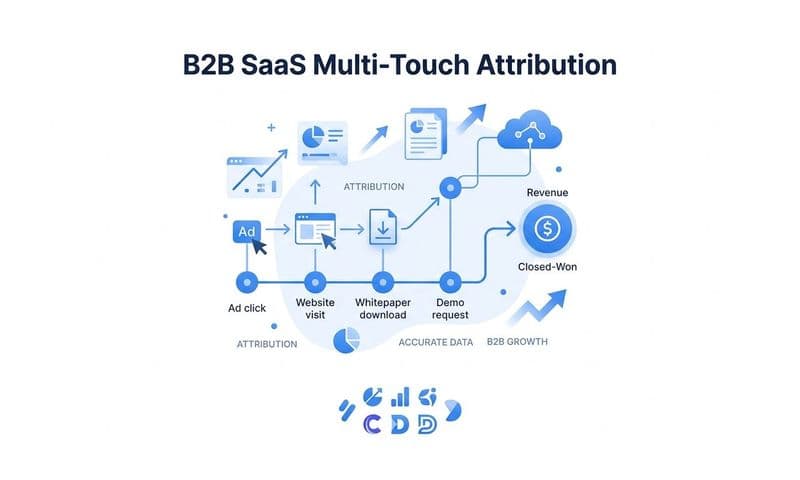
Consider a realistic scenario. A prospect discovers you through a Google search ad and visits your website. They do not opt in right away. A week later, they see a retargeting ad on Facebook and register for your webinar. They attend, book a discovery call, and enroll. Under last-click attribution, Facebook gets all the credit. Under first-touch attribution, Google gets all the credit. Neither tells the whole story. Understanding the nuances of a multi-touch marketing attribution platform is essential for coaching businesses with these complex funnels.
Multi-touch attribution distributes credit across every touchpoint in the journey, giving you a much more accurate understanding of which campaigns and channels are actually contributing to revenue. For coaching businesses, this is not just a technical preference; it is a strategic necessity.
The main attribution models worth understanding are first-touch, last-touch, linear, and data-driven. First-touch gives all credit to the initial interaction and is useful for understanding which campaigns are best at generating awareness. Last-touch gives all credit to the final interaction before conversion and is useful for understanding which campaigns close deals. Linear distributes credit equally across all touchpoints and gives a balanced view of the full funnel. Data-driven attribution uses algorithmic analysis to assign credit based on each touchpoint's actual contribution to conversions, and it tends to be the most accurate for businesses with enough data volume. For a detailed breakdown, see this comparison of attribution models for marketers.
For most coaching businesses, starting with a linear or position-based model gives a more honest view than last-click while you build up enough conversion data to move toward data-driven attribution. The goal is to understand which top-of-funnel campaigns are generating the prospects who eventually enroll, not just which campaigns are visible at the moment of conversion. That insight is what allows you to invest confidently in awareness-stage advertising rather than constantly cutting it because it does not show direct conversions.
Step 5: Sync Conversion Data Back to Your Ad Platforms for Better Optimization
Most coaching businesses think of conversion tracking as a one-way street: you collect data so you can analyze it. But there is a second, equally important direction that data needs to flow, and that is back to your ad platforms.
Meta, Google, and other ad platforms use machine learning to optimize your campaigns. They are constantly making decisions about who to show your ads to, when to show them, and how much to bid. The quality of those decisions depends entirely on the quality of the conversion data you feed them. If you are only sending back lead form fills or landing page views, the algorithm optimizes for people who fill out forms. That sounds reasonable until you realize that the people who fill out forms are not always the people who enroll in coaching programs.
When you sync your actual enrollment events back to the ad platforms, including the revenue value associated with each enrollment, the algorithm learns what your real buyers look like. It starts finding more of them. Your cost per enrolled client tends to decrease over time because the platform is no longer wasting budget on people who click and opt in but never actually buy. Learning how to properly implement Facebook conversion optimization is a critical part of making this work on Meta specifically.
This is the difference between optimizing for surface-level metrics and optimizing for downstream revenue. A campaign might have a high cost per lead but a low cost per enrolled client. Another campaign might generate cheap leads that almost never convert. Without conversion sync, you would likely cut the first campaign and scale the second, which is exactly the wrong move.
Cometly's Conversion Sync sends enriched, conversion-ready events back to Meta, Google, and other platforms so they can optimize for the outcomes that actually matter to your coaching business. By feeding the platforms better data, you are not just improving your reporting. You are actively improving the performance of your campaigns by making the ad algorithms smarter about who your ideal clients actually are.
Step 6: Build a Reporting Dashboard and Analyze Your First 30 Days of Data
With tracking installed, CRM connected, attribution configured, and conversion data syncing back to your platforms, the final step is building a reporting dashboard that makes all of this data actionable. Raw data sitting in a platform nobody checks is not an asset. A clear dashboard reviewed weekly is.
Your coaching business dashboard should show a core set of metrics at the campaign and channel level. The most important ones are cost per lead, cost per booked discovery call, cost per enrolled client, and revenue generated by ad platform and campaign. These four metrics tell you whether your funnel is healthy at each stage and whether your ad spend is producing a positive return. Knowing how to evaluate marketing performance metrics ensures you are interpreting these numbers correctly.
Beyond those top-line numbers, track your lead-to-call rate and your call-to-close rate. If your lead-to-call rate is low, your follow-up sequence or your lead magnet is not attracting the right prospects. If your call-to-close rate is low, the problem is in the sales conversation or in the quality of leads being booked. Attribution data helps you pinpoint which campaigns are sending you the kinds of leads that actually convert on calls, not just any leads.
Also track average time from first touch to enrollment. Coaching businesses with longer sales cycles need to understand this window because it affects how you evaluate campaign performance. A campaign that looks unprofitable at 14 days might look very profitable at 45 days once the prospects it generated have had time to move through your funnel. Knowing your typical sales cycle length prevents you from killing campaigns prematurely.
When reviewing your first 30 days of data, look for three things: your best-performing campaigns by cost per enrolled client, the funnel stages where prospects are dropping off, and any channels or ad sets that are consuming budget without contributing to downstream revenue. Use AI-powered recommendations to surface which campaigns deserve more budget and which should be paused or restructured. Cometly's AI analyzes performance across every ad channel and gives you specific recommendations so you are not left staring at a spreadsheet trying to figure out what the numbers are telling you.
Make dashboard review a weekly habit. Thirty days of data is enough to see patterns, but the real value compounds over time as you build a clearer picture of your funnel performance and use that knowledge to make progressively smarter budget decisions.
Your Conversion Tracking Checklist and Next Steps
Building a complete conversion tracking system for your coaching business is one of the highest-leverage investments you can make in your marketing. The longer your sales cycle and the more touchpoints your prospects move through, the more important it becomes to track every one of those interactions accurately.
Here is a quick-reference checklist to confirm you have covered every step:
Funnel mapped with conversion events defined: Every stage of your coaching sales process is documented, with micro-conversions and macro-conversions identified and assigned priority tiers or values.
Pixels and server-side tracking installed and verified: Platform pixels are live on every funnel page, server-side tracking is in place to capture what browser pixels miss, and all events have been verified as firing correctly.
CRM and booking tools connected: Calendly, Acuity, HubSpot, GoHighLevel, or whichever tools you use are integrated so that booked calls and closed deals are tracked as conversion events tied to the original ad click.
Multi-touch attribution model configured: You are distributing conversion credit across the full customer journey rather than relying on last-click, giving you an accurate view of which campaigns contribute to revenue at every funnel stage.
Conversion data syncing back to ad platforms: Enrolled client events and revenue data are flowing back to Meta, Google, and other platforms so their algorithms can optimize for your actual buyers, not just lead form fills.
Reporting dashboard live and reviewed weekly: Your key metrics are visible in one place, and you have a standing habit of reviewing performance data and acting on what you find.
Coaching businesses with relationship-driven sales cycles benefit more from accurate multi-touch conversion tracking than almost any other business model, precisely because every touchpoint matters and the journey from first impression to enrolled client is rarely a straight line.
If you want an all-in-one platform that handles attribution, server-side tracking, conversion sync, and AI-powered optimization recommendations without requiring a team of developers to set it up, explore what Cometly can do for your coaching business. Get your free demo today and start capturing every touchpoint so you can scale your coaching business with confidence.