Running paid ads without reliable analytics is like driving without a dashboard. You might be moving, but you have no idea if you are heading in the right direction or burning through budget on channels that do not convert. Digital advertising analytics platforms solve this by connecting your ad spend to real revenue outcomes, giving you a clear picture of what is working and what is not.
But not every platform is built the same. Some focus on raw data visualization, others on attribution modeling, and the best ones combine both with AI-powered recommendations that help you act on what you find. This list covers the top digital advertising analytics platforms available in 2026, selected based on attribution depth, cross-platform coverage, ease of use, and the quality of insights they surface for paid media teams.
1. Cometly
Best for: Paid media teams that need accurate multi-touch attribution and AI-driven optimization across all ad channels.
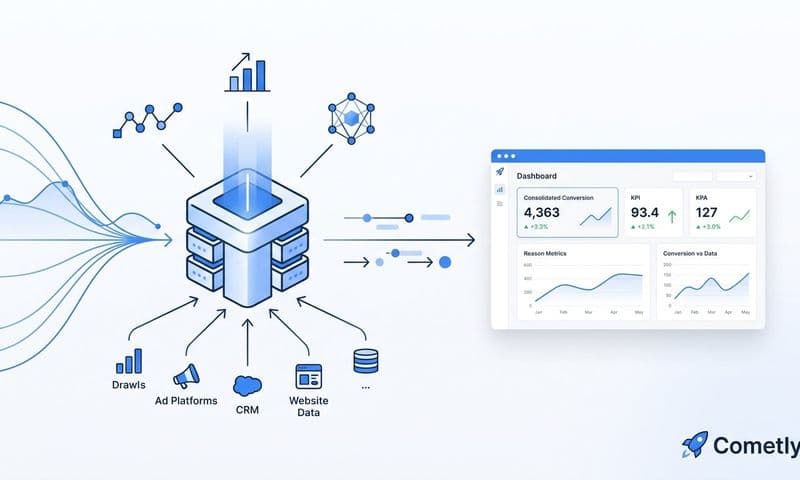
Cometly is an AI-powered marketing attribution platform that connects ad spend to revenue across every channel, using server-side tracking, multi-touch attribution, and intelligent optimization recommendations.
 9 Best Marketing Attribution Platforms to Compare in 2026
Where This Tool Shines
Cometly is built specifically for performance marketers who need to know exactly which ads, campaigns, and channels are driving real revenue, not just clicks. It goes beyond surface-level reporting by capturing every touchpoint in the customer journey, from the first ad click to a closed deal in your CRM.
What sets it apart is the combination of server-side tracking and AI-powered analysis. While browser-based tracking continues to degrade due to iOS privacy changes and cookie deprecation, Cometly's server-side infrastructure collects accurate, first-party data that you can actually trust. Layer in the AI Ads Manager and you get actionable recommendations, not just charts to interpret on your own.
Key Features
Multi-Touch Attribution: Tracks every paid touchpoint across Meta, Google, and all major ad platforms to give you a complete picture of the conversion path.
Server-Side Tracking: Collects data server-to-server, bypassing browser limitations and iOS restrictions for significantly more accurate event capture.
AI Ads Manager: Surfaces performance recommendations and budget optimization suggestions based on your actual campaign data, so you know where to scale and where to cut.
Conversion Sync: Feeds enriched, conversion-ready events back to Meta, Google, and other ad platforms, improving their algorithms' targeting and optimization capabilities.
AI Chat: Lets you query your campaign data in plain language, making it easy to get answers without digging through dashboards or building custom reports.
Real-Time Analytics Dashboard: Connects ad clicks to CRM events and revenue in real time, giving you a live view of campaign performance tied to business outcomes.
Best For
Cometly is an ideal fit for growth-focused marketing teams, performance agencies, and SaaS or ecommerce businesses running campaigns across multiple paid channels. It works especially well for teams that have outgrown last-click attribution and need a reliable, AI-assisted way to tie ad spend directly to pipeline and revenue.
Pricing
Cometly offers paid plans with features scaled to your needs. Visit cometly.com for current pricing details and to explore available tiers.
2. Google Analytics 4 (GA4)
Best for: Marketers who need a free, flexible analytics foundation with native Google Ads integration.
Google Analytics 4 is Google's event-based analytics platform that provides cross-platform reporting, flexible conversion tracking, and deep integration with the Google advertising ecosystem.
 11 Best Marketing Analytics Tools to Track and Optimize Campaign Performance in 2026
Where This Tool Shines
GA4's biggest advantage is accessibility. It is free, widely supported, and deeply connected to Google Ads, Search Console, and Google Tag Manager. For teams running Google-heavy campaigns, the native integration means you can move from ad click to on-site behavior to conversion without stitching together separate tools.
The exploration reports are genuinely powerful for custom funnel analysis and path exploration. If you need to understand how users move through your site before converting, GA4 gives you the flexibility to build those views without a data engineering team.
Key Features
Free Tier: Generous data processing at no cost, making it accessible for businesses of any size.
Native Google Integrations: Connects directly with Google Ads, Search Console, and Google Tag Manager for streamlined campaign reporting.
Event-Based Tracking: Flexible conversion configuration that can capture nearly any user interaction on your site or app.
Exploration Reports: Custom funnel, path, and segment overlap analysis for deeper behavioral insights.
BigQuery Export: Raw data export to BigQuery for teams that need to build custom models or combine GA4 data with other sources.
Best For
GA4 is the right starting point for small to mid-size marketing teams, especially those running primarily Google Ads campaigns. It is less suited for multi-platform attribution across paid social, as its cross-channel modeling has meaningful limitations outside the Google ecosystem.
Pricing
GA4 is free. Google Analytics 360, the enterprise version with higher data limits and SLA guarantees, is a paid product with custom pricing.
3. Triple Whale
Best for: Shopify-based DTC brands that need clean, ecommerce-specific attribution and ROAS reporting.
Triple Whale is an attribution and analytics platform built for direct-to-consumer ecommerce brands, with Shopify at its core and a focus on clear, actionable performance metrics.
 9 Best Digital Advertising Analytics Platforms in 2026
Where This Tool Shines
Triple Whale was designed with the DTC brand in mind. Its summary dashboard gives you a daily snapshot of blended ROAS, new versus returning customer revenue, and ad platform performance in one clean view. For ecommerce operators who check their numbers every morning, this is genuinely useful.
The creative analytics feature is a standout. It breaks down performance at the individual ad level, helping creative and media buying teams understand which ad concepts are actually driving purchases, not just impressions.
Key Features
Pixel-Based Attribution: First-party data collection through Triple Whale's pixel for more reliable conversion tracking than relying solely on ad platform pixels.
Blended ROAS Reporting: Shows true blended ROAS across all channels alongside new versus returning customer breakdowns.
Summary Dashboard: A daily performance overview designed for quick decision-making without digging through multiple reports.
Creative Analytics: Ad-level performance data that connects creative assets to revenue outcomes.
Shopify Integration: Native Shopify connection that pulls order, customer, and revenue data directly into the platform.
Best For
Triple Whale is purpose-built for Shopify DTC brands running Meta and Google Ads. It is less suited for B2B teams, non-Shopify stores, or businesses with complex multi-step sales cycles.
Pricing
Plans start at approximately $129 per month, with pricing scaling based on your store's revenue volume. Check Triple Whale's website for current tier details.
4. Northbeam
Best for: Scaling ecommerce brands that need granular, ML-powered attribution and media mix modeling.
Northbeam is a machine learning-powered multi-touch attribution platform built for ecommerce and DTC brands that need channel-level spend analysis with serious depth.
 8 Best Hyros Alternatives for Marketing Attribution in 2026
Where This Tool Shines
Northbeam differentiates itself with machine learning at the core of its attribution modeling. Rather than applying a fixed attribution rule across all conversions, it uses ML to weight touchpoints based on patterns in your actual data. This makes it particularly valuable for brands with complex, multi-channel funnels where a single attribution model would misrepresent performance.
The media mix modeling capability adds strategic depth. Beyond understanding what happened last week, you can use Northbeam to model how budget shifts across channels might affect overall performance, which is useful for planning cycles and quarterly budget reviews.
Key Features
ML Attribution Modeling: Machine learning-driven attribution that weights touchpoints based on your specific conversion data rather than fixed rules.
Media Mix Modeling: Budget planning capabilities that model the impact of shifting spend across channels.
Granular Ad-Level Data: Performance visibility down to the ad set and creative level across all paid channels.
Custom Attribution Windows: Flexible window configuration and side-by-side model comparisons for nuanced analysis.
Real-Time Spend Tracking: Live revenue and spend data to keep performance reporting current.
Best For
Northbeam is well suited for mid-market to enterprise DTC and ecommerce brands with meaningful ad budgets across multiple channels. It is a strong fit for data-savvy teams that want to go beyond standard attribution models.
Pricing
Northbeam uses custom pricing based on ad spend volume. Contact their team directly for a quote.
5. Rockerbox
Best for: Mid-market brands that want a single measurement layer combining MTA, MMM, and survey-based attribution.
Rockerbox is a unified marketing measurement platform that brings together multi-touch attribution, marketing mix modeling, and post-purchase surveys under one roof.
 9 Best Attribution Software for Shopify in 2026
Where This Tool Shines
The core value of Rockerbox is consolidation. Instead of running separate tools for MTA, MMM, and qualitative attribution, Rockerbox gives you all three in a single platform. This is meaningful because each method has blind spots, and triangulating across all three gives you a more complete picture of marketing effectiveness.
Its first-party data collection and server-side event tracking make it more resilient to the tracking challenges that have become standard in a post-cookie environment. The deduplication logic is also worth noting: it prevents the double-counting of conversions that can inflate reported results when multiple platforms each claim credit for the same sale.
Key Features
Unified Measurement: Combines MTA, MMM, and post-purchase surveys in a single platform for triangulated measurement.
Server-Side Tracking: First-party data collection that maintains accuracy as browser-based tracking becomes less reliable.
Cross-Channel Coverage: Includes paid, organic, and offline channels in a single attribution view.
Deduplication Logic: Prevents conversion double-counting across ad platforms for accurate performance reporting.
BI Tool Integrations: Custom reporting connections to your existing business intelligence stack.
Best For
Rockerbox is a strong fit for mid-market brands that are running campaigns across paid, organic, and offline channels and want one measurement layer rather than multiple disconnected tools.
Pricing
Rockerbox uses custom pricing. Contact their team for a quote based on your channel mix and data volume.
6. HubSpot Marketing Hub
Best for: B2B marketing teams that need to tie paid ad performance directly to CRM contacts, pipeline, and revenue.
HubSpot Marketing Hub is an all-in-one marketing platform with built-in ad analytics that connects paid campaign performance to deals and revenue through native CRM integration.
 9 Best Attribution Software for B2B SaaS in 2026
Where This Tool Shines
For B2B teams, the gap between ad performance and revenue impact is a persistent problem. HubSpot closes that gap by connecting ad clicks directly to CRM contacts, tracking those contacts through the pipeline, and reporting on revenue influenced by paid campaigns. This is something most standalone analytics tools cannot do without significant custom integration work.
The ability to manage Google, Meta, and LinkedIn ads from within HubSpot, alongside your email, landing page, and CRM data, makes it a genuinely unified platform for B2B marketing teams that want one source of truth for campaign performance.
Key Features
CRM-Connected Attribution: Ties ad clicks to named contacts and tracks those contacts through pipeline stages to closed revenue.
Multi-Touch Revenue Attribution: Reports on pipeline influence across multiple marketing touchpoints, not just the last click.
Unified Ad Management: Manage Google, Meta, and LinkedIn campaigns from a single interface alongside your other marketing activities.
We break down the leading options in our AI ad management tool guide.
Campaign Performance Dashboards: Pipeline influence reporting that connects campaign activity to revenue outcomes.
Contact-Level Journey Tracking: Follows individual contacts from first ad click through to closed deal.
Best For
HubSpot Marketing Hub is purpose-built for B2B marketing teams that are already using or considering HubSpot CRM. It is less suited for pure ecommerce or DTC use cases where Shopify-native tools will be a better fit.
Pricing
Marketing Hub Starter begins at $20 per month. Professional and Enterprise tiers are available at higher price points with expanded features and contact limits.
7. Adobe Analytics
Best for: Enterprise organizations that need deep customization, advanced segmentation, and integration across a broader digital experience stack.
Adobe Analytics is an enterprise-grade analytics platform with unlimited variable tracking, advanced segmentation, and tight integration across the Adobe Experience Cloud ecosystem.
Where This Tool Shines
Adobe Analytics is built for organizations that have outgrown standard analytics tools and need a platform that can be shaped precisely to their data model. The unlimited variable tracking and highly customizable reporting structure mean you are not constrained by the predefined dimensions and metrics that limit other platforms.
For enterprises already invested in Adobe Experience Cloud, the integration with Adobe Target, Campaign, and Audience Manager creates a cohesive data environment where analytics feeds directly into personalization and campaign execution. That level of integration is difficult to replicate with point solutions.
Key Features
Unlimited Variable Tracking: Fully customizable reporting dimensions and metrics without the constraints of standard analytics platforms.
Advanced Segmentation: Sophisticated cohort analysis and segment building for deep audience and behavioral analysis.
Real-Time Enterprise Processing: Data processing at scale with the reliability and SLA expectations of enterprise infrastructure.
Adobe Experience Cloud Integration: Native connections to Adobe Target, Campaign, and Audience Manager for a unified digital experience stack.
Data Governance Controls: Privacy and data management tools appropriate for large enterprise environments.
Best For
Adobe Analytics is the right choice for large enterprises with dedicated analytics engineering resources, existing Adobe ecosystem investments, and complex data requirements that standard platforms cannot accommodate.
Pricing
Adobe Analytics uses custom enterprise pricing. Contact Adobe directly for a quote based on your data volume and feature requirements.
8. Supermetrics
Best for: Marketing analysts and agencies that need to pull data from multiple ad platforms into custom reports and data warehouses.
Supermetrics is a data pipeline tool that connects 100-plus marketing platforms to destinations like Google Sheets, Looker Studio, BigQuery, and Snowflake for custom reporting and analysis.
Where This Tool Shines
Supermetrics is not an analytics platform in the traditional sense. It is a data mover, and it does that job extremely well. If your team already has a preferred reporting environment, whether that is a Looker Studio dashboard, a custom BigQuery model, or a client-facing Google Sheets report, Supermetrics gets your ad data there automatically and on a schedule.
For agencies managing multiple client accounts across Meta, Google, LinkedIn, TikTok, and other platforms, the breadth of connectors is a significant time saver. Instead of manually exporting data from each platform, Supermetrics handles the pipeline so your team can focus on analysis and recommendations.
Key Features
100-Plus Connectors: Data connections covering virtually every major ad platform and marketing data source.
Flexible Destinations: Sends data to Google Sheets, Looker Studio, BigQuery, Snowflake, and other warehouse or visualization tools.
Automated Refresh Schedules: Keeps reports current without manual data exports or updates.
Pre-Built Templates: Ready-made report templates for common ad platforms to accelerate reporting setup.
Agency Features: Team sharing and white-label options designed for agencies managing multiple client accounts.
Best For
Supermetrics is ideal for marketing analysts, data teams, and agencies that have a reporting workflow they want to automate. It works best as part of a broader analytics stack rather than as a standalone attribution solution.
Pricing
Plans start at approximately $29 per month, with pricing varying based on the number of connectors and data destinations you need. Check Supermetrics for current plan details.
9. Singular
Best for: Mobile app advertisers that need unified attribution, cost aggregation, and fraud detection across iOS and Android.
Singular is a mobile measurement partner (MMP) that provides unified attribution for mobile app advertisers, with SKAdNetwork support, cost aggregation across thousands of ad networks, and built-in fraud prevention.
Where This Tool Shines
Mobile attribution is a distinct discipline from web analytics, and Singular is built specifically for it. With iOS privacy changes having fundamentally changed how mobile attribution works, SKAdNetwork support is now essential for any MMP. Singular handles the complexity of SKAdNetwork modeling while aggregating cost data from over 2,000 ad networks, giving mobile marketers a unified view of spend and return that would otherwise require manual reconciliation across dozens of platform dashboards.
The fraud detection capability is particularly valuable for mobile user acquisition teams, where invalid traffic and fraudulent installs can quietly drain budgets without appearing in standard performance reports.
Key Features
Mobile Attribution: iOS and Android attribution with full SKAdNetwork support for privacy-compliant measurement.
Cost Aggregation: Pulls cost data from 2,000-plus ad networks into a single reporting view for unified ROI analysis.
Fraud Prevention: Invalid traffic detection and fraud protection built into the attribution layer.
Deep Link Tracking: Tracks deep links for user acquisition campaigns to measure post-install behavior accurately.
ROI Dashboard: Marketing analytics reporting by channel with revenue and cost data in one place.
Best For
Singular is the right choice for mobile-first companies, app developers, and user acquisition teams running campaigns across multiple mobile ad networks. It is purpose-built for mobile and is not designed to replace web-focused analytics tools.
Pricing
Singular offers a free tier for smaller apps and paid plans based on attributed conversion volume. Visit their website for current plan details.
Which Platform Is Right for Your Team?
The right digital advertising analytics platform depends on three things: your channel mix, your data maturity, and how tightly you need to connect ad spend to revenue. There is no single answer that works for every team, but there are clear patterns.
If you are a performance marketing team running campaigns across Meta, Google, and other paid channels and you need accurate multi-touch attribution with AI-powered recommendations, Cometly is built for exactly that workflow. Its server-side tracking, Conversion Sync, and AI Ads Manager give you the infrastructure to capture accurate data and act on it quickly.
For Shopify DTC brands, Triple Whale and Northbeam are both strong options, with Triple Whale better suited for teams that want a clean daily dashboard and Northbeam for those who need deeper ML-driven modeling. B2B teams already in the HubSpot ecosystem will get the most value from Marketing Hub's CRM-connected attribution. Enterprise organizations with complex requirements and dedicated technical resources should evaluate Adobe Analytics. And if mobile is your primary channel, Singular is the purpose-built choice.
GA4 and Supermetrics serve as foundational tools rather than complete attribution solutions. GA4 is a solid free starting point for Google-centric teams, and Supermetrics is invaluable for automating data pipelines into custom reporting environments.
The platforms that deliver the most value in 2026 are the ones that go beyond reporting and help you take action. Ready to see how AI-driven attribution can change the way you manage your ad budget? Get your free demo and discover how Cometly connects every touchpoint to real revenue outcomes.