
You check your ad dashboard and see 150 conversions. Your Shopify backend shows 87 actual sales. The numbers don't match—again. You're spending thousands on ads, but you can't tell which campaigns are actually driving revenue and which are just burning cash.
This isn't a minor reporting glitch. It's a fundamental breakdown in how ecommerce tracking works in 2026, and it's costing businesses real money every single day.
The problem goes deeper than mismatched numbers. When your conversion data is wrong, every decision you make is built on a faulty foundation. You scale campaigns that aren't profitable. You cut budgets from channels that are actually working. You optimize for metrics that don't reflect reality. And your competitors who've solved this problem? They're eating your lunch while you're still trying to figure out which ads actually work.
Understanding why ecommerce conversion tracking breaks down—and how to fix it—is the difference between guessing and knowing. Let's break down exactly what's going wrong with your data and what you can do about it.
The Hidden Gap Between Reported and Real Conversions
Here's the uncomfortable truth: traditional pixel-based tracking is fundamentally broken. The tracking methods that worked perfectly five years ago now miss a massive portion of your actual customer journeys.
When Apple introduced App Tracking Transparency with iOS 14.5, they didn't just add a privacy prompt. They fundamentally changed how mobile tracking works by requiring explicit user opt-in. The result? The majority of iOS users decline tracking, which means your Facebook pixel, Google tag, and every other browser-based tracker simply stops working for those users.
But iOS changes are just one piece of the puzzle. Safari's Intelligent Tracking Prevention (ITP) limits cookie lifespans to seven days for first-party cookies and blocks third-party cookies entirely. Firefox blocks third-party cookies by default. Chrome has announced plans to phase out third-party cookies completely. Your tracking infrastructure is being systematically dismantled by browser privacy updates, which is why understanding why conversion tracking numbers are wrong has become essential knowledge.
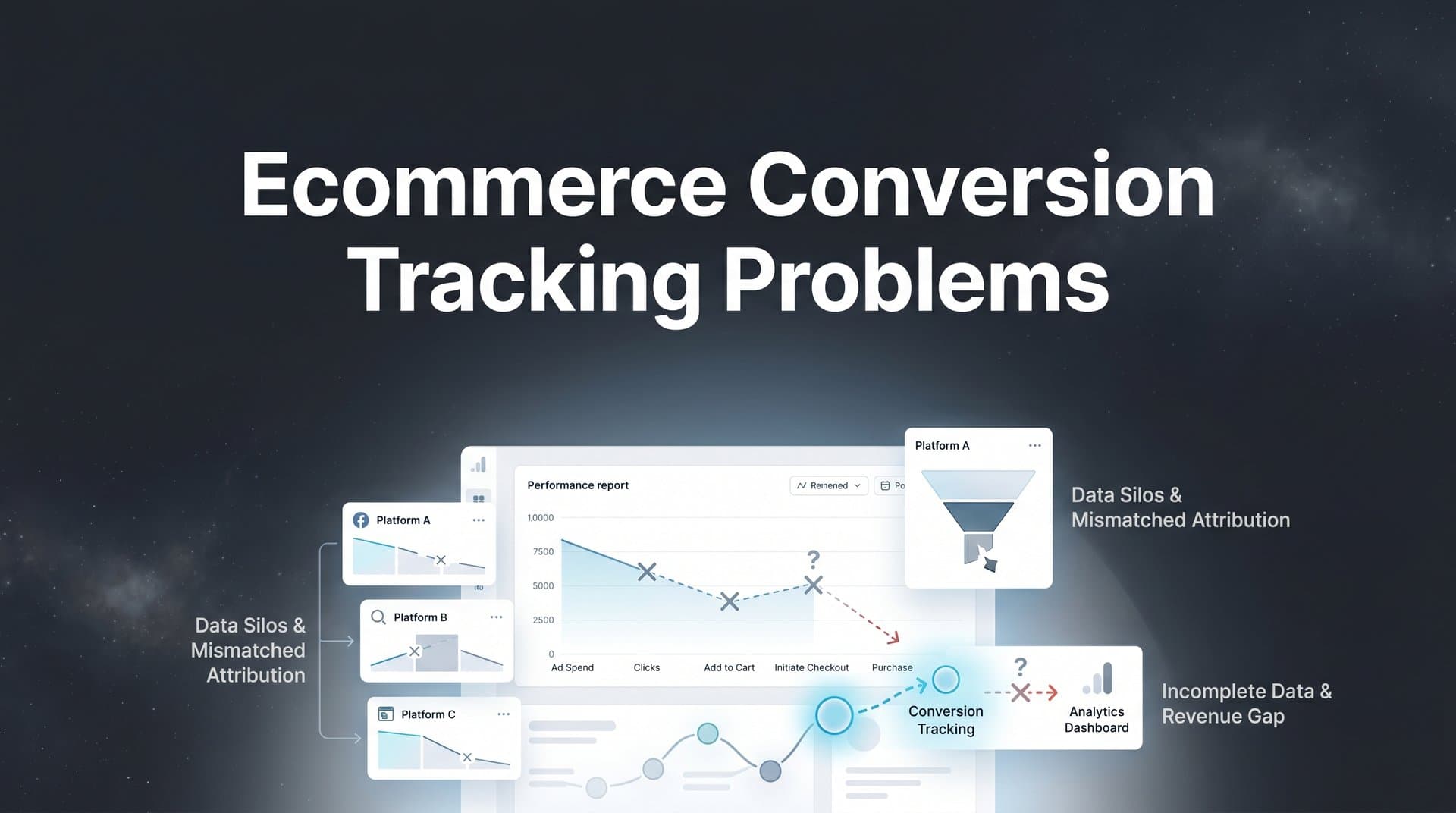
The gap between what ad platforms report and what actually happened gets even wider because of how attribution windows work. Meta might claim credit for a conversion that happened 28 days after someone viewed your ad. Google Ads uses a 30-day click window. If someone saw your Meta ad, clicked your Google ad, and then purchased—both platforms claim the conversion. You see two conversions in your dashboards. Your bank account shows one sale.
Ad platforms also use statistical modeling to fill in the gaps left by privacy restrictions. This modeling isn't neutral—it's designed to make each platform's performance look as good as possible. When platforms can't track a conversion directly, they estimate based on patterns from users they can track. These estimates favor the platform doing the estimating.
The real cost of this inaccurate conversion tracking data isn't just confusing reports. You're making budget allocation decisions based on false signals. You might be pumping money into a Meta campaign that shows a 3x ROAS in the dashboard but is actually breaking even when you look at real revenue. Meanwhile, you're underinvesting in channels that are genuinely profitable but getting less credit in platform reporting.
When you can't trust your conversion data, you can't scale with confidence. You're stuck in a cycle of testing and guessing, never quite sure which campaigns are worth doubling down on and which ones are quietly draining your budget.
Five Common Tracking Failures That Drain Your Ad Budget
Let's get specific about where your tracking is actually breaking down. These aren't theoretical problems—they're happening right now in your campaigns.
Cross-Device Journey Blindspots: Your customer sees your Instagram ad on their phone during their morning commute. They browse your product pages on mobile during lunch. That evening, they sit down at their laptop and make the purchase. Your tracking sees these as completely separate users. The mobile clicks show no conversion. The desktop purchase appears as direct traffic. You conclude that mobile ads don't work and cut the budget, killing the very campaigns that started the customer journey. Understanding cross-device conversion tracking problems is critical to avoiding these costly mistakes.
The Privacy Tech Stack: Ad blockers are installed on roughly 40% of desktop browsers and growing on mobile. VPNs mask user locations and break location-based tracking. Cookie consent banners mean users can—and do—reject tracking cookies entirely. Every one of these privacy tools creates a black hole in your data. The conversion happens, money hits your account, but your tracking system has no record of how that customer found you.
Platform Attribution Wars: This is where things get expensive. A customer clicks your Google Shopping ad, doesn't purchase. Two days later, they see your Meta retargeting ad and click through. They browse but still don't buy. A week later, they search your brand name, click your Google Search ad, and finally purchase. Google claims the conversion (last click). Meta claims the conversion (engaged with the ad). You're paying both platforms for what they each report as a successful conversion, but you only made one sale. This duplicated conversion tracking across platforms makes your reported ROAS look great while your actual profit margin tells a different story.
Delayed and Offline Conversions: Not every purchase happens immediately after an ad click. Someone might click your ad, sign up for your email list, and purchase two weeks later after receiving a promotional email. Or they might call your sales team and complete the transaction over the phone. These delayed and offline conversions often never get connected back to the original ad that started the journey. The ad platform sees no conversion, marks the campaign as underperforming, and reduces delivery. You're penalizing your best acquisition channels.
Implementation Errors That Fail Silently: Your conversion pixel isn't firing on the thank-you page because of a page load timing issue. Your checkout flow redirects through a payment processor that strips tracking parameters. You're sending duplicate events because pixels are installed in multiple places. A developer updated the site and accidentally removed the tracking code. Learning how to fix conversion tracking errors is essential because these technical failures don't announce themselves with error messages—they just quietly break your data while you keep spending money based on incomplete information.
Each of these failures compounds the others. You're not dealing with one tracking problem—you're dealing with five simultaneous breakdowns creating a data disaster.
Why Platform-Reported Data Tells an Incomplete Story
Open your Meta Ads Manager and your Google Ads dashboard side by side. Add up the conversions each platform claims. Now check your actual sales. Notice the problem?
Each ad platform is optimized to make itself look good. This isn't a conspiracy—it's how attribution models work when every platform operates in its own silo. Meta uses a 28-day click and 1-day view attribution window by default. Google Ads uses a 30-day click window. TikTok has its own attribution rules. Each platform is measuring success on its own terms, using its own methodology, with its own incentives.
The difference between click-through, view-through, and modeled conversions creates even more confusion. A click-through conversion means someone clicked your ad and then converted. Pretty straightforward. A view-through conversion means someone saw your ad but didn't click—they converted later through another path. Modeled conversions are statistical estimates based on similar users when direct tracking isn't possible.
These different conversion types get lumped together in platform reporting. You see "150 conversions" without realizing that 40 are view-through (which might have happened anyway), 30 are modeled estimates (which might be double-counted with other platforms), and only 80 are actual click-through conversions you can verify. If you're running campaigns on Google, understanding Google Ads conversion tracking problems specifically can help you interpret these numbers more accurately.
The iOS 14 changes made this worse by forcing platforms to rely more heavily on aggregated and delayed reporting through Apple's SKAdNetwork. Instead of real-time conversion data tied to specific users, you get delayed, aggregated reports that tell you conversions happened but can't tell you exactly which ads or audiences drove them. You're trying to optimize campaigns with data that arrives 24-72 hours late and lacks the granularity you need to make smart decisions.
Platform-reported data isn't useless—it's just incomplete. It shows you part of the picture, filtered through each platform's attribution lens, delayed by privacy frameworks, and optimized to make that platform look effective. Making decisions based solely on what ad platforms tell you is like trying to complete a puzzle when each platform is hiding pieces that don't fit their narrative.
Server-Side Tracking: The Foundation for Accurate Data
The fundamental problem with traditional tracking is that it relies on browsers and cookies—technologies that users can block, browsers can restrict, and privacy updates can break. Server-side tracking solves this by moving conversion data capture from the browser to your server.
Here's the difference: Client-side tracking (the old way) places a pixel on your website that fires when someone converts. That pixel relies on cookies to identify the user and match them back to an ad click. If the user blocks cookies, uses an ad blocker, or browses in private mode, the pixel fails. The conversion happens, but it never gets recorded.
Server-side tracking captures conversion events directly from your backend systems—your ecommerce platform, payment processor, or CRM. When a purchase completes in your Shopify store, your server sends that conversion data directly to your analytics system and ad platforms. No browser required. No cookies needed. No way for ad blockers or privacy settings to interfere. The server-side conversion tracking benefits extend far beyond just bypassing ad blockers.
This approach bypasses the browser limitations that break traditional tracking. It doesn't matter if the customer declined tracking permissions on iOS, blocked cookies in Safari, or used a VPN. Your server knows a purchase happened because it processed the payment. That data gets captured regardless of what the customer's browser allows.
Server-side tracking also enables you to connect your CRM and backend systems to capture the complete customer journey. You can track when someone becomes a lead, when they engage with your sales team, when they make their first purchase, and when they become a repeat customer. This creates a continuous thread of data from the first ad click all the way through to customer lifetime value.
The most powerful part? You can send this accurate, server-side conversion data back to ad platforms through their Conversion APIs. Meta's CAPI, Google's Enhanced Conversions, and TikTok's Events API all allow you to feed platforms better data than they can collect on their own. This improves their machine learning algorithms, helps them find more customers like your best converters, and makes your campaigns more effective. For ecommerce businesses, exploring server-side tracking solutions for ecommerce is no longer optional—it's essential.
Server-side tracking isn't just more accurate—it's more privacy-compliant. You're collecting data with user consent through your own systems rather than relying on third-party cookies that browsers are actively trying to eliminate.
Building a Single Source of Truth Across All Channels
Platform reporting tells you what each channel claims it did. What you actually need is a unified view that shows what really happened across all your marketing touchpoints.
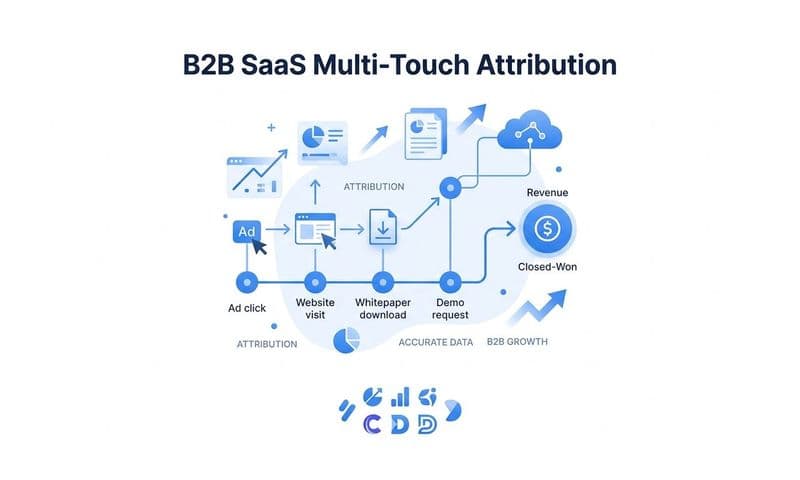
Multi-touch attribution solves this by tracking the entire customer journey from first touch to conversion. Instead of giving all credit to the last click (which is what most platforms do), multi-touch attribution recognizes that customers interact with multiple channels before purchasing. Someone might discover you through a Facebook ad, research on Google, read reviews on a third-party site, get retargeted on Instagram, and finally convert through an email campaign. Each touchpoint played a role. Implementing proper ecommerce attribution tracking shows you how much credit each deserves.
Building this unified view requires connecting all your data sources in one place. Your ad platforms (Meta, Google, TikTok), your website analytics, your CRM, your email marketing system, and your ecommerce backend all need to feed into a central attribution system. This creates a complete picture of how customers actually find and buy from you.
The value of this unified data goes beyond just understanding what happened. When you can see the full customer journey, you can identify patterns that platform-level reporting misses. You might discover that customers who engage with both paid social and paid search convert at 3x the rate of single-channel customers. Or that certain ad creatives start customer journeys that don't convert immediately but lead to high-value purchases weeks later. A proper ecommerce tracking setup for multiple channels makes these insights possible.
This accurate, unified conversion data becomes even more powerful when you feed it back to ad platforms. Instead of letting Meta and Google rely on their own incomplete tracking, you send them accurate conversion data from your server. Their algorithms use this data to find more customers who match your actual converters—not the incomplete subset they can track on their own.
The result is a feedback loop that improves over time. Better data leads to better targeting. Better targeting leads to more conversions. More conversions provide more data to optimize against. Your campaigns get smarter because they're learning from accurate signals instead of fragmented guesses.
From Broken Tracking to Confident Scaling
You can't fix what you can't measure. Start with a diagnostic to identify your biggest tracking gaps.
Compare your ad platform conversion totals to your actual sales for the last 30 days. If the numbers are off by more than 10%, you have a tracking problem worth solving. Check if your conversion pixels are firing correctly on your thank-you page using browser developer tools or a tag manager preview mode. Look at your traffic sources in Google Analytics—if you're seeing a lot of direct traffic or unattributed conversions, you're losing attribution data.
Review your cross-device data. If you see a lot of mobile ad clicks but most conversions happen on desktop as direct traffic, you're missing the connection between mobile engagement and desktop purchases. Implementing cross-device conversion tracking solutions can bridge this gap. Check your attribution windows in each ad platform—are they set to claim credit for conversions that happened weeks after someone interacted with an ad?
Once you've identified the gaps, prioritize fixes based on impact. Start with server-side tracking—this is the foundation that makes everything else work. Implement server-side conversion tracking through your ecommerce platform or a dedicated attribution system. This immediately improves data accuracy by bypassing browser limitations.
Next, unify your data sources. Connect your ad platforms, CRM, and analytics into a single attribution view. This shows you the complete customer journey and eliminates double-counting between platforms. Set up conversion APIs to send your accurate server-side data back to ad platforms, improving their optimization algorithms. Following best practices for tracking conversions accurately ensures you're building on a solid foundation.
Finally, use this accurate attribution data to make confident scaling decisions. You'll know which campaigns are genuinely profitable, which channels work together to drive conversions, and where to allocate your budget for maximum return. You can scale winning campaigns without worrying that the platform is inflating results. You can test new channels knowing you'll accurately measure their impact.
The shift from broken tracking to confident scaling isn't about adding more tools or collecting more data. It's about collecting the right data in the right way—server-side, unified across channels, and connected back to actual revenue.
Your Next Steps
Ecommerce conversion tracking problems aren't going away on their own. Browser privacy restrictions will get stricter, not looser. Ad platforms will continue optimizing their own reporting, not yours. The gap between platform-reported conversions and actual sales will keep growing unless you take action.
The solution is clear: move from client-side to server-side tracking, unify your data across all marketing channels, and use accurate attribution to make decisions. This isn't a nice-to-have upgrade—it's a fundamental requirement for running profitable paid advertising in 2026.
Cometly addresses these challenges by capturing every touchpoint in the customer journey, from initial ad click through CRM events and final purchase. Server-side tracking bypasses browser limitations and privacy restrictions that break traditional pixels. Multi-touch attribution shows you exactly how channels work together to drive conversions, eliminating the double-counting and platform silos that inflate reported results.
The AI-powered insights help you identify which ads and campaigns are genuinely driving revenue—not just the ones that platforms claim credit for. You can feed this accurate conversion data back to Meta, Google, and other ad platforms through their Conversion APIs, improving their targeting algorithms and helping them find more customers like your best converters.
Ready to elevate your marketing game with precision and confidence? Discover how Cometly's AI-driven recommendations can transform your ad strategy. Get your free demo today and start capturing every touchpoint to maximize your conversions.