You open Facebook Ads Manager on a Tuesday morning, coffee in hand, ready to review yesterday's campaign results. The dashboard shows 50 conversions. You feel good. Then you open your CRM. Thirty sales. You check your payment processor. Thirty-one transactions. The gap stares back at you, and you start wondering whether you are optimizing your campaigns based on numbers that simply are not real.
This is not a glitch. It is not a one-time anomaly caused by a slow server or a timezone mismatch. This is a systemic reporting problem that affects virtually every advertiser running campaigns on Facebook, and it has gotten significantly worse since Apple's iOS 14.5 update introduced App Tracking Transparency in 2021. The rules of digital tracking changed, and Facebook's self-reported data has never fully recovered.
Why does this matter beyond the frustration of mismatched numbers? Because every budget decision you make, every campaign you scale, every ad set you kill, is based on this data. If Facebook is telling you a campaign is delivering a 4x return on ad spend when the real number is closer to 2x, you are not just misreading a report. You are actively misallocating your budget. The good news is that this is a solvable problem once you understand what is actually causing it. Let's break it down from the root causes all the way to a practical fix.
The Real Reasons Your Facebook Numbers Don't Match Reality
Before you can fix the discrepancy, you need to understand where it comes from. There are three core mechanisms driving the gap between what Facebook reports and what your backend records show, and each one compounds the others.
Attribution Windows That Cast a Wide Net: Facebook's default attribution setting credits a conversion to an ad if the user clicked that ad within the last seven days or viewed it within the last one day. This sounds reasonable until you think about how people actually shop. A user might see your ad on Monday, forget about it, search Google on Wednesday, click a competitor's ad, and then come back directly on Friday to buy from you. Facebook still claims that conversion because the original click happened within the seven-day window. Your CRM records one sale. Facebook reports one conversion. But so does Google. The same sale gets counted twice, and your reported numbers inflate accordingly.
The iOS Privacy Shift and What It Broke: When Apple introduced App Tracking Transparency, it required apps to ask users for permission before tracking them across other apps and websites. The majority of users declined. This gutted the Facebook pixel's ability to follow users across sessions and devices, creating significant data gaps. Understanding why Facebook ads stopped working after iOS 14 is essential for any advertiser still relying on default pixel tracking.
Browser-level privacy measures compound this further. Safari's Intelligent Tracking Prevention (ITP) and Firefox's Enhanced Tracking Protection (ETP) actively limit how long tracking cookies persist and block certain cross-site data sharing. Even users who have not opted out of anything on iOS are increasingly protected by their browser's default settings, eroding the pixel's effectiveness.
Modeled Conversions and Statistical Guessing: Here is where things get particularly tricky. When Facebook cannot directly observe a conversion due to privacy restrictions, it does not simply leave a blank in your report. Instead, it uses statistical modeling to estimate whether a conversion likely occurred based on aggregated, anonymized signals. Meta refers to these as modeled conversions, and they are built into your Ads Manager reporting by default. This is a major reason Facebook ads show wrong data to advertisers who assume every number is based on observed behavior.
Modeled conversions are not fabrications exactly, but they are educated guesses. They are based on patterns from users who did consent to tracking, extrapolated to users who did not. For some advertisers, modeled conversions represent a substantial portion of the total reported number. You may be looking at a blend of real, observed conversions and statistically inferred ones, with no way to distinguish between them inside Ads Manager.
How Attribution Windows and Credit Models Distort Your View
Attribution is fundamentally a question of who gets credit for a sale. The problem is that Facebook answers this question from its own perspective, using its own rules, and those rules are designed to make Facebook look as valuable as possible. That is not a conspiracy. It is just the nature of self-reported platform data.
View-Through Attribution and the Overcount Problem: View-through attribution credits an ad with a conversion if a user merely saw the ad (without clicking it) and then converted within a set window, typically one day. For brands with strong organic search presence, active email lists, or high direct traffic, this creates a massive overcount. This is one of the key reasons Facebook overreports conversions compared to what your backend systems actually record.
View-through attribution is particularly misleading for upper-funnel awareness campaigns where the ad's role is genuinely indirect. Turning it off or narrowing the window can significantly change your reported conversion numbers, often revealing a much less flattering picture of campaign performance.
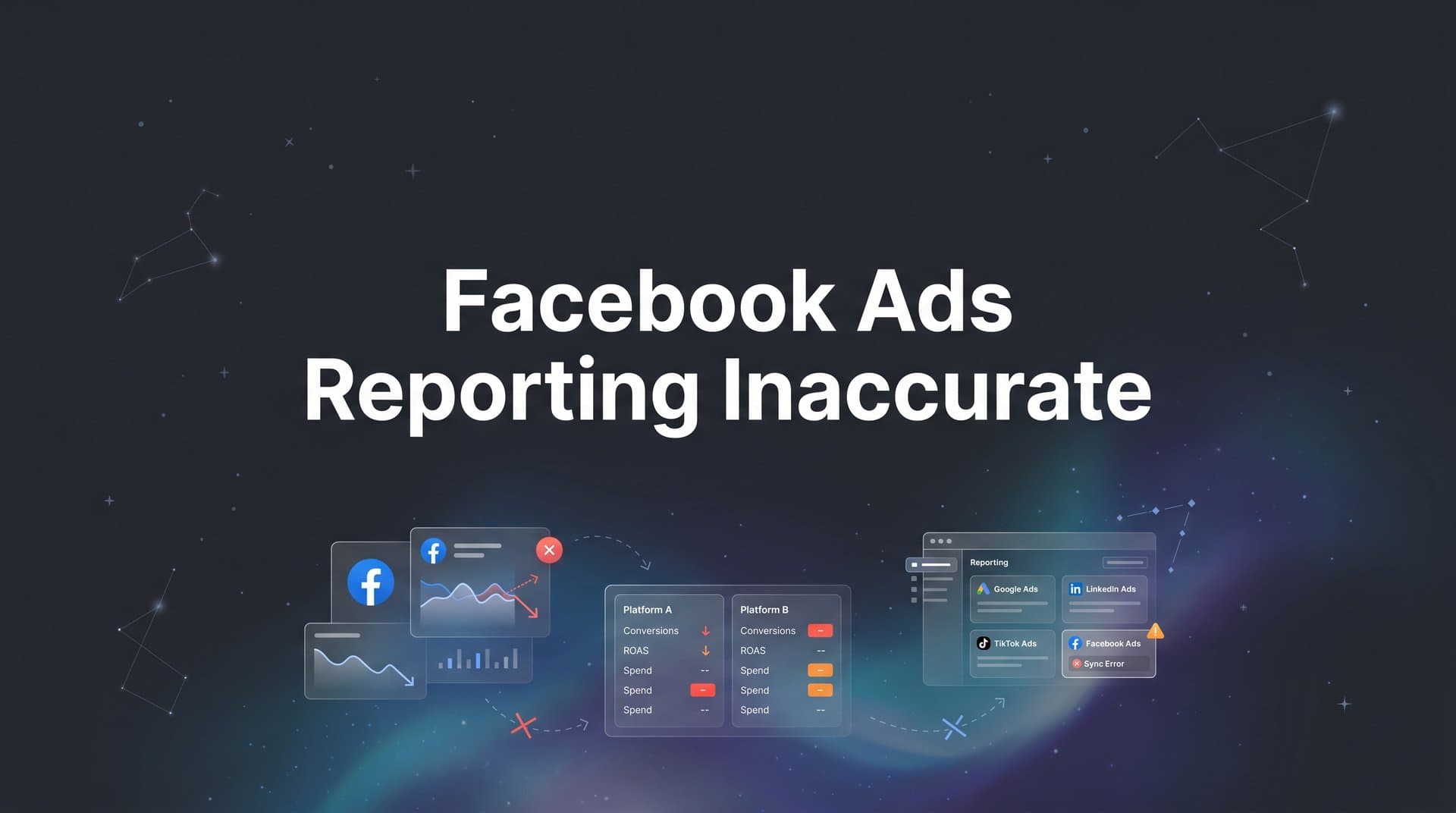
Cross-Platform Double Counting: This is one of the most common and least discussed sources of inflated reporting. When a user interacts with your ads on multiple platforms before converting, each platform applies its own attribution model and claims the full conversion. Facebook sees the click from Tuesday and claims it. Google sees the search click from Thursday and claims it. Your actual revenue? One transaction. Your combined platform-reported conversions? Two.
If you are running campaigns across Facebook, Google, TikTok, and email simultaneously, and you add up the conversions each platform reports, the total will almost always exceed your actual sales. Implementing tracking for Facebook and Google ads through a unified system is the only way to eliminate this double counting problem.
Why Independent Attribution Changes the Picture: The alternative is multi-touch attribution measured by an independent tool that sits outside any single platform. Instead of asking "did Facebook touch this conversion?" you ask "what sequence of touchpoints led to this conversion, and how should credit be distributed across them?" This platform-neutral view gives you a far more accurate picture of where your marketing dollars are actually producing results, and it prevents any single channel from claiming more credit than it deserves.
Pixel Tracking Gaps That Silently Wreck Your Reports
Even setting aside attribution model debates, the Facebook pixel itself has significant technical limitations that cause real conversion data to go missing or get recorded incorrectly. These gaps are often invisible in your reporting, which makes them especially dangerous.
Ad Blockers, Privacy Browsers, and VPNs: A meaningful and growing portion of internet users run ad blockers or privacy-focused browsers that block the Facebook pixel from loading entirely. When the pixel does not fire, the conversion is invisible to Facebook, even if the user clicked your ad and completed a purchase. These are real sales that your pixel simply never sees. The result is underreporting conversions in Facebook ads, where your actual performance is better than what your dashboard shows.
Technical Misfires from Pixel Misconfiguration: Slow page loads, redirect chains, and improperly configured pixel events can cause events to fire late, fire multiple times, or not fire at all. A purchase event that fires twice because of a page reload will show two conversions in your Ads Manager for one actual sale. A purchase event that never fires because the user's connection dropped before the confirmation page loaded means a real conversion disappears from your data entirely. These technical issues accumulate quietly and distort your reporting in both directions.
The Client-Side vs. Server-Side Gap: The core limitation of browser-based pixel tracking is that it depends entirely on the user's browser behaving cooperatively. Privacy settings, extensions, network conditions, and device restrictions can all interfere. Your CRM and payment processor, by contrast, record transactions at the server level, where none of these browser-side variables apply. This is why your CRM almost always tells a different story than your Ads Manager. The CRM is recording what actually happened. The pixel is recording what it was able to observe under increasingly restrictive conditions.
Server-side tracking closes this gap by moving the tracking logic from the user's browser to your own server, which then communicates directly with Facebook. This approach is far more resilient to browser restrictions and privacy settings, and it is the direction the entire industry is moving. Learning how to properly handle tracking paid ads after the iOS update is now a fundamental requirement for accurate reporting.
Spotting the Discrepancies: A Quick Audit Framework
Before you can fix the problem, you need to quantify it. Here is a straightforward process for auditing the gap between your Facebook-reported data and your actual business results.
Step 1: Pull a Parallel Report Across All Three Sources. For a defined date range (the last 30 days is a good starting point), pull your conversion numbers from three places: Facebook Ads Manager, your CRM or sales system, and your payment processor. Record the total reported conversions from Facebook, the total actual leads or sales from your CRM, and the total transactions from your payment processor. The gap between Facebook's number and your backend number is your baseline discrepancy.
Step 2: Cross-Reference the Metrics That Matter Most. Go beyond raw conversion counts. Compare your Facebook-reported ROAS against your true ROAS calculated from actual revenue divided by actual ad spend. A deep dive into Facebook ads ROI analysis will help you understand the difference between platform-reported returns and real business performance.
Step 3: Use UTM Parameters to Verify Traffic Sources Independently. Make sure every Facebook ad link includes properly structured UTM parameters (utm_source, utm_medium, utm_campaign, utm_content). Then check Google Analytics or your own analytics platform to see how many sessions and conversions are being attributed to Facebook as a traffic source. This gives you a third-party view of Facebook's contribution that is independent of Facebook's own reporting. Significant differences between what Facebook claims and what your analytics platform records are a strong signal that your attribution setup needs work.
Step 4: Check Your Pixel Health and Event Quality Score. Inside Facebook Events Manager, review your pixel's event quality score and check for duplicate events, delayed events, or missing events. This diagnostic step often reveals technical issues that are inflating or deflating your reported numbers in ways that have nothing to do with actual campaign performance.
Fixing the Problem: Server-Side Tracking and Independent Attribution
Once you have quantified the gap, you have two primary levers to pull: improving the quality of the data going into Facebook, and building an independent system for measuring what is actually working.
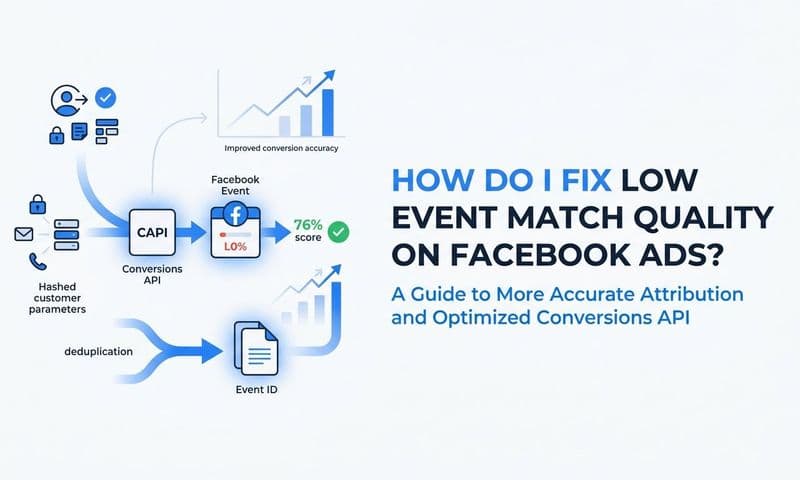
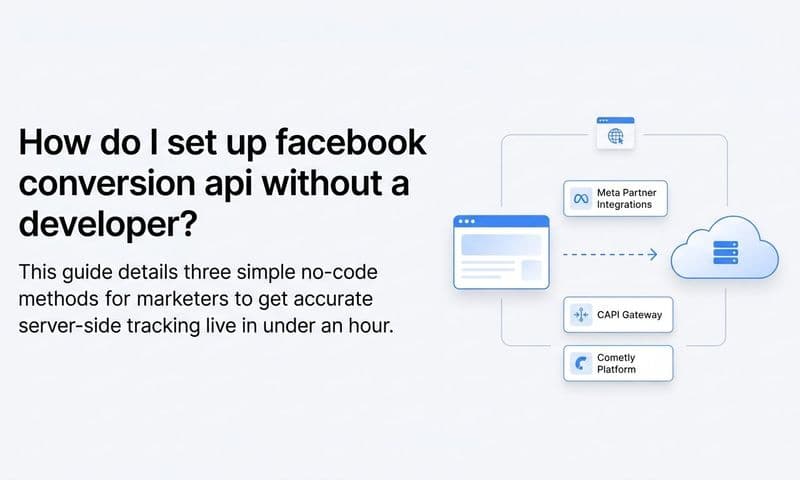
Implementing the Conversions API for Server-Side Tracking: The Facebook Conversions API (CAPI) allows you to send conversion events directly from your server to Facebook, bypassing the browser entirely. Because this connection happens at the server level, it is not affected by ad blockers, browser privacy settings, iOS restrictions, or any of the client-side variables that degrade pixel tracking. For a comprehensive guide on implementation, explore how to start tracking Facebook ads accurately using server-side methods.
The best practice is to run CAPI alongside your pixel, not instead of it. Facebook's deduplication logic will handle events that come in from both sources, preventing double counting while ensuring maximum coverage. The result is a more complete signal reaching Facebook's algorithm, which leads to better optimization and targeting.
Why Independent Multi-Touch Attribution Matters: Even with perfect server-side tracking, you still have the attribution model problem. Facebook will still apply its own attribution windows and claim credit for conversions that other channels influenced. The only way to get a platform-neutral view of your marketing performance is to use an independent attribution tool that pulls data from all your channels and evaluates the full customer journey. Understanding Facebook ads attribution at a deeper level is the first step toward building this kind of cross-channel measurement system.
Multi-touch attribution models (linear, time-decay, data-driven, position-based) distribute credit across all the touchpoints that contributed to a conversion, rather than giving 100% credit to the last click or the most recent ad interaction. This gives you a much more honest picture of how your channels work together, and it prevents you from over-investing in channels that appear to perform well in isolation but are actually just capturing conversions that other channels initiated.
The Virtuous Cycle of Better Data: Here is something worth understanding about how this all connects. When you feed Facebook's algorithm richer, more accurate conversion data through server-side tracking, the algorithm gets better at finding users who are likely to convert. Better targeting leads to better performance. Better performance generates more real conversions. More real conversions give you better data to work with. The improvement in reporting accuracy is not just about understanding what happened in the past. It actively improves what happens in the future.
Building a Reporting Stack You Can Actually Trust
The goal is not just to fix one data gap. The goal is to build a reporting infrastructure where you have genuine confidence in the numbers you are looking at when you make budget decisions.
Connect Every Data Source Into One Unified View: A trustworthy reporting stack connects your ad platforms (Facebook, Google, TikTok, LinkedIn), your CRM, your website analytics, and your payment processor into a single system where every touchpoint from first ad click to closed deal is captured and linked. Building a unified marketing reporting system for multiple platforms eliminates the silos that force you to compare apples to oranges across disconnected dashboards.
Compare Attribution Models Side by Side: Different attribution models tell different stories about the same data. First-touch attribution gives all credit to the channel that introduced the customer. Last-touch gives all credit to the final interaction before conversion. Linear distributes credit evenly. Data-driven uses machine learning to weight touchpoints based on their actual influence. No single model is universally correct, but comparing them side by side reveals which channels are starting conversations, which ones are closing deals, and which ones are doing both. This insight is impossible to get from any single platform's self-reported data.
How Cometly Brings This Together: This is exactly the problem Cometly is built to solve. Cometly connects your ad platforms, CRM, and website tracking into a unified system that captures every touchpoint across the entire customer journey in real time. Instead of relying on Facebook Ads Manager to tell you what Facebook drove, Cometly gives you a platform-neutral view of which ads are actually working and generating real revenue.
Cometly's AI surfaces high-performing ads and campaigns across every channel, giving you recommendations grounded in real attribution data rather than self-reported platform metrics. And because Cometly syncs enriched, conversion-ready events back to Facebook, Google, and other ad platforms, you are not just improving your reporting. You are feeding better data to the algorithms that power your campaigns, improving targeting and optimization simultaneously.
The result is a reporting stack where you can look at your numbers and trust them. Not because the platform told you so, but because the data flows from your actual business results through an independent system designed to give you the truth.
Your Next Steps Toward Accurate Attribution
Facebook ads reporting inaccuracies are not a reason to abandon the platform. Facebook remains one of the most powerful advertising channels available, with unmatched audience targeting capabilities and scale. But they are absolutely a reason to stop making budget decisions based on self-reported Ads Manager data alone.
The path forward is clear. Start by auditing your current data gaps using the framework outlined above. Understand the size of the discrepancy between what Facebook reports and what your backend systems show. Then implement server-side tracking through the Conversions API to close the pixel gaps that browser restrictions have opened. Finally, adopt an independent attribution system that gives you a cross-platform view of your marketing performance, one that no single ad platform can manipulate by applying its own attribution rules.
When you combine accurate data collection with platform-neutral attribution and AI-powered analysis, you stop guessing and start knowing. You scale campaigns that are actually working. You cut spend on campaigns that only look good in Ads Manager. And you build the kind of marketing operation where confidence in your data translates directly into confidence in your decisions.
Ready to see what your marketing is actually driving? Get your free demo and discover how Cometly's attribution platform captures every touchpoint, connects it to real revenue, and gives you the clarity to scale your paid campaigns with confidence.