You're staring at Facebook Ads Manager. The dashboard shows 50 conversions from yesterday's campaign. You feel a rush of optimism—until you check your CRM. Only 32 actual sales. Your stomach sinks. Did you just waste ad spend on phantom conversions? Or is your CRM missing data? The truth is messier: your Facebook pixel simply can't see what it used to, and that gap between reported and actual conversions has become the new normal for digital marketers in 2026.
This disconnect isn't a glitch you can refresh away. It's the result of fundamental shifts in how tracking works across the digital advertising ecosystem. Privacy changes, browser restrictions, and shortened attribution windows have systematically eroded the Facebook pixel's ability to capture accurate conversion data. For marketers making budget decisions based on platform-reported numbers, this creates a dangerous blind spot.
Understanding why facebook pixel data accuracy has declined—and more importantly, what you can do about it—is no longer optional. It's essential for making smart marketing decisions. In this guide, we'll break down the technical reasons behind the accuracy gap, show you how to diagnose your specific data issues, and provide practical solutions to get closer to the truth. Because when your numbers don't match reality, every optimization decision becomes a guess.
The Perfect Storm: Why Your Pixel Can't See What It Used to
The Facebook pixel was built for a different era of the internet—one where browsers freely accepted third-party cookies and users didn't question what data apps collected. That world ended abruptly, and the pixel's effectiveness has been caught in the crossfire of sweeping privacy changes.
The first major blow came in April 2021 with iOS 14.5 and App Tracking Transparency. Apple required apps to explicitly ask users for permission to track their activity across other companies' apps and websites. The impact was immediate and severe. When given a clear choice, most users declined tracking. This means when someone clicks your Facebook ad on their iPhone, then converts on your website through Safari, the pixel often can't connect those dots. Understanding the full scope of iOS tracking limitations for Facebook ads is essential for any marketer navigating this landscape.
But iOS changes are just one piece of the puzzle. Browser-level blocking has become increasingly aggressive across all platforms. Safari's Intelligent Tracking Prevention has been stripping tracking capabilities since 2017, with each update tightening restrictions further. Firefox's Enhanced Tracking Protection blocks third-party tracking cookies by default. Even Chrome, long the holdout for advertiser-friendly policies, is implementing Privacy Sandbox features that fundamentally change how tracking works.
These browser protections don't just block obvious tracking pixels. They actively interfere with the pixel's ability to set persistent cookies, recognize returning visitors, and attribute conversions accurately. When a user visits your site through a Facebook ad, the pixel might fire successfully. But if they return three days later through a Google search to complete their purchase, the pixel often can't recognize them as the same person. The conversion happens, but Facebook never sees it—a common scenario explored in depth when examining Facebook pixel missing conversions.
The attribution window compression makes this worse. Facebook's default attribution windows have shrunk dramatically—from 28-day click and 7-day view to just 7-day click and 1-day view. This change wasn't optional; it was Facebook's response to privacy restrictions. The problem? Many customer journeys take longer than seven days. B2B purchases, high-ticket items, and considered purchases often involve weeks of research. When someone clicks your ad, researches for ten days, then converts, Facebook's pixel doesn't credit that conversion to your campaign—even though your ad directly influenced the decision.
Think of it like trying to track a road trip using only snapshots from the first day. You might see where someone started, but you'll miss most of the journey and potentially the destination entirely. That's what's happening with your Facebook pixel data right now.
Diagnosing Your Data Gap: A Practical Assessment Framework
Before you can fix your tracking accuracy, you need to understand exactly where and how badly it's broken. This requires comparing multiple data sources and identifying patterns in the discrepancies. Start by pulling your actual conversion data from your source of truth—typically your CRM, e-commerce platform, or payment processor.
Run a simple comparison over the past 30 days. Take the total conversions Facebook Ads Manager reports for a specific campaign, then count the actual sales or leads that came from Facebook traffic in your CRM during the same period. The gap between these numbers is your baseline accuracy problem. Many marketers discover Facebook over-reports by 20-40%, though the exact percentage varies significantly based on your audience and industry.
The next step is identifying where the discrepancies concentrate. Break down your analysis by device type, campaign objective, and audience segment. You'll often find that iOS users show much larger gaps than Android users. Campaigns targeting older demographics might show better accuracy than those targeting privacy-conscious younger users who are more likely to use ad blockers or decline tracking. These patterns reflect broader marketing data accuracy challenges affecting the entire industry.
Facebook provides diagnostic tools that many marketers overlook. The Event Match Quality score in Events Manager measures how well your pixel events match to Facebook user accounts. A score below 6.0 indicates serious data quality issues. Low scores typically result from missing key parameters like email addresses, phone numbers, or external IDs that help Facebook match conversions to specific users.
Check your Aggregated Event Measurement configuration as well. This shows which events Facebook is prioritizing for iOS traffic and reveals potential tracking limitations. If your purchase event is ranked seventh in priority, Facebook might not be capturing it at all for iOS users due to the eight-event limit imposed by Apple's privacy framework.
Look for temporal patterns too. Do discrepancies spike on weekends when people shop from personal devices with more privacy protections? Do they increase during the week when corporate firewalls and VPNs interfere with tracking? These patterns reveal specific technical barriers your pixel faces.
Document everything you find. Create a simple spreadsheet tracking reported conversions versus actual conversions by campaign, device, and audience. This baseline assessment becomes your reference point for measuring improvement as you implement tracking solutions. Without this diagnostic foundation, you're essentially flying blind—unable to tell if your fixes are working or if you're just shuffling the same problems around. For a systematic approach to fixing these issues, explore solving attribution data discrepancies.
Server-Side Tracking: Moving Beyond Browser Limitations
The fundamental problem with the Facebook pixel is that it lives in the browser—exactly where privacy protections are strongest. Server-side tracking solves this by moving conversion tracking to your server, where ad blockers and browser restrictions can't reach it. This isn't just a workaround; it's a fundamentally different approach to capturing conversion data.
Here's how it works: instead of relying on JavaScript code running in a user's browser to send conversion events to Facebook, your server sends those events directly through Facebook's Conversions API. When someone completes a purchase, your backend system immediately fires a server-to-server event to Facebook with the conversion details. No browser required. No pixel to block. No cookies to delete.
The Conversions API captures events the traditional pixel misses entirely. When someone uses an ad blocker, the browser pixel never fires—but your server still processes the order and sends the conversion event. When Safari's Intelligent Tracking Prevention prevents cookie-based attribution, the server-side event includes first-party identifiers that Facebook can match to user accounts. Learning how to sync conversion data to Facebook Ads properly can dramatically improve your tracking accuracy.
Implementation requires technical setup, but it's more accessible than many marketers assume. You need a way for your server to communicate with Facebook's API—either through direct API integration, a tag management system with server-side capabilities, or a third-party platform that handles the technical heavy lifting. The key requirement is access to first-party data: email addresses, phone numbers, and other identifiers that Facebook can use to match conversions to specific user accounts.
The quality of your server-side tracking depends heavily on parameter completeness. Facebook's matching algorithm works better when you send multiple identifiers with each event. An event with just an email address might not match. An event with email, phone number, external ID, and click ID has much higher matching probability. This is why platforms that enrich conversion data before sending it to Facebook typically show better results than bare-bones implementations.
One critical consideration: server-side tracking isn't a complete replacement for the pixel. The pixel still provides valuable data about user behavior, page views, and engagement that your server can't see. The optimal setup runs both in parallel—pixel for behavioral data, Conversions API for conversion events—with deduplication logic to prevent counting the same conversion twice. Facebook's system automatically deduplicates events when both sources send the same conversion with matching event IDs.
The improvement in data accuracy can be dramatic. Marketers who implement proper server-side tracking often see their Event Match Quality scores jump from 4-5 to 7-8, with corresponding improvements in conversion capture rates. But the benefits extend beyond just seeing more conversions—they fundamentally change how Facebook's algorithm optimizes your campaigns. For those exploring alternatives to browser-based tracking, understanding first-party data tracking is essential.
Building a Multi-Source Truth: Attribution Beyond the Pixel
Relying solely on Facebook's reported data—even with server-side tracking—means accepting Facebook's version of reality as the only truth. That's a dangerous position for any marketer making budget allocation decisions. The smarter approach builds a multi-source attribution system that connects all your touchpoints into a complete customer journey view.
Think about how customers actually find and buy from you. Someone might see your Facebook ad on Monday, click through but not convert. They search your brand name on Google Tuesday and read blog content. Wednesday they receive your email newsletter. Thursday they click a retargeting ad and finally purchase. If you only look at Facebook's data, you might credit that conversion entirely to the retargeting ad. Google Analytics might credit the organic search. Your email platform claims credit for the newsletter click. Everyone's telling a different story because everyone sees only their piece of the journey.
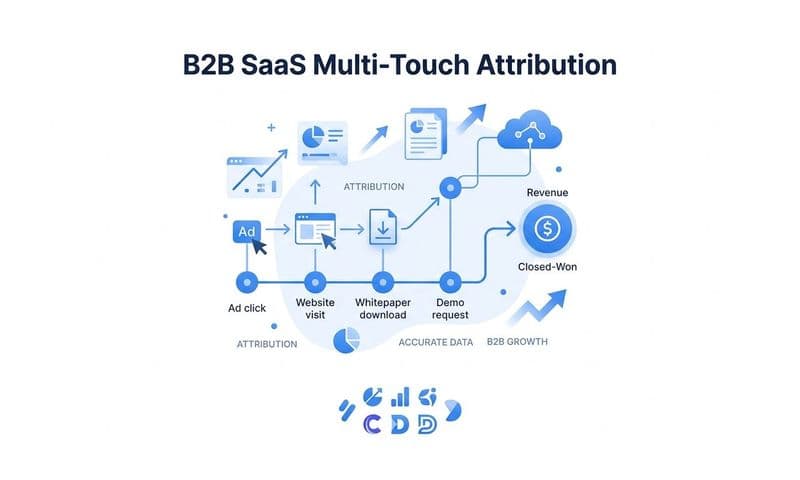
Multi-touch attribution connects these fragmented data sources into a unified view. It tracks the same user across ad platforms, website visits, CRM interactions, and email touchpoints—showing you the actual sequence of events that led to conversion. This visibility changes everything about how you evaluate channel performance. That Facebook ad that "didn't convert" might have started the entire journey. The email that gets credit in your ESP might have been the final nudge after Facebook and Google did the heavy lifting. Understanding Facebook attribution tracking within this broader context is crucial for accurate measurement.
Building this connected view requires capturing data at multiple points. Your website needs tracking that identifies users across sessions and devices. Your CRM needs to log every interaction with lead and customer records. Your ad platforms need to send click and impression data with persistent identifiers. The technical challenge is matching all these events to the same person despite different identifiers, devices, and platforms.
This is where enriched conversion data becomes powerful. When you capture not just that a conversion happened, but the complete context—which ads they saw, which emails they opened, which pages they visited, how long the journey took—you can feed this enriched data back to ad platforms. Facebook's algorithm performs significantly better when trained on complete conversion signals rather than the partial, fragmented data the pixel provides.
The practical impact shows up in your campaign performance. When Facebook's algorithm knows which conversions came from users who also engaged with your content, opened emails, and visited multiple times, it can identify similar high-intent users more accurately. Your targeting improves. Your cost per acquisition drops. Your ROAS increases—not because you changed your creative or targeting, but because you gave the algorithm better training data.
Connecting your full customer journey also reveals budget optimization opportunities the pixel could never show you. You might discover that Facebook campaigns drive low immediate conversions but high-quality traffic that converts after email nurturing. Or that certain campaigns generate conversions Facebook never sees because they happen through phone calls or in-store visits. This intelligence lets you allocate budget based on true impact rather than platform-reported conversions. Dive deeper into marketing and data analytics to build a comprehensive measurement framework.
Feeding Better Data Back to Facebook's Algorithm
Here's something most marketers miss: inaccurate conversion signals don't just hurt your reporting—they actively sabotage your campaign performance. Facebook's optimization algorithm is a machine learning system that learns from conversion patterns. When it receives incomplete or inaccurate conversion data, it learns the wrong lessons and makes poor optimization decisions on your behalf.
Consider what happens when the pixel misses 40% of your conversions. Facebook's algorithm sees that certain audiences, placements, or creative variations generated conversions, while others didn't—but that data is wrong. Some of the "non-converting" segments actually converted; the pixel just didn't see it. Facebook then shifts budget away from these segments, even though they're profitable. You end up spending more on audiences that happen to be easier to track rather than audiences that actually convert better.
The feedback loop works both ways. When you implement server-side tracking and send more complete conversion data back to Facebook, the algorithm gets better training signals. It learns which user characteristics actually predict conversions. It identifies patterns in successful customer journeys. It optimizes toward real performance rather than trackable performance. The result is better targeting, improved bid optimization, and higher return on ad spend. This is the core principle behind how you can improve Facebook Ads performance with better data.
Sending enriched conversion events amplifies this effect. Basic conversion events tell Facebook "this person converted." Enriched events add context: conversion value, product category, customer lifetime value prediction, whether this was a first purchase or repeat purchase. This additional data helps Facebook's algorithm understand not just who converts, but who converts profitably. It can then optimize for high-value conversions rather than just conversion volume.
The technical implementation requires sending conversion events with maximum parameter completeness. Include every available identifier: email, phone, external ID, click ID, browser ID. Add custom data fields with purchase value, product details, and customer segment information. Use event deduplication to ensure Facebook doesn't double-count conversions reported by both pixel and server. The more complete your event data, the better Facebook can match conversions to users and learn from the patterns.
Monitor your Event Match Quality score as a proxy for data quality. Scores above 7.0 indicate Facebook can successfully match most of your conversion events to user accounts. Scores below 6.0 suggest your conversion data is too sparse for effective algorithmic learning. Improving your score often requires collecting more first-party data at conversion points—email addresses, phone numbers, and other identifiers that Facebook can hash and match.
The competitive advantage here is significant. Most advertisers are still relying on degraded pixel data, which means Facebook's algorithm is optimizing their campaigns based on incomplete information. When you feed better data back to the algorithm, you're essentially giving Facebook's AI clearer vision. It can see patterns competitors' campaigns miss. It can identify high-value audiences others overlook. You're not just getting better reporting—you're getting better campaign performance because your algorithm is smarter than theirs. Explore Facebook Ads optimization with data for advanced strategies.
Your Path to Accurate Attribution and Better Performance
The facebook pixel data accuracy challenges we've explored aren't temporary technical hiccups waiting for a fix. Privacy-first tracking is the permanent new reality of digital advertising. Browser restrictions will continue expanding. Users will keep declining tracking. Attribution windows will stay compressed. The marketers who thrive in this environment won't be those hoping for a return to easy tracking—they'll be those who adapted their measurement infrastructure to work with these constraints.
The competitive advantage goes to marketers who implement server-side tracking to bypass browser limitations, who connect their full customer journey across platforms and touchpoints, and who feed enriched conversion data back to ad platforms for better algorithmic optimization. This isn't just about seeing accurate numbers in your dashboard—it's about making smarter budget decisions and giving your campaigns the complete conversion signals they need to perform.
The gap between your Facebook-reported conversions and actual sales will likely never close completely. But you can narrow it dramatically while simultaneously improving campaign performance. Start by diagnosing your specific data accuracy issues. Implement server-side tracking to capture conversions the pixel misses. Build multi-source attribution to understand the complete customer journey. Then use that enriched data to train Facebook's algorithm more effectively.
Ready to close your attribution gap and unlock better campaign performance? Cometly captures every touchpoint across your customer journey—from ad clicks to CRM events—and feeds enriched, conversion-ready data back to Meta, Google, and other ad platforms. Stop guessing which campaigns actually drive revenue. Get your free demo and discover how AI-driven attribution can transform your marketing accuracy and ROI.