You check your Google Ads dashboard and see 247 conversions this month. Your boss smiles. The board nods approvingly. But here's the question that should keep you up at night: what were those conversions actually worth?
Conversion 1 might have been a $29 impulse buy. Conversion 247 could be a $15,000 enterprise deal. Without knowing the difference, you're flying blind—optimizing for quantity while revenue slips through your fingers.
This is where Google conversion value changes everything. It's the metric that transforms Google Ads from a numbers game into a revenue engine, letting you measure not just what happened, but what it meant for your bottom line. When you start tracking conversion value, you stop celebrating vanity metrics and start making decisions that actually move the needle on profitability.
This guide will show you exactly how to set up, optimize, and leverage Google conversion value to make smarter ad spend decisions. Whether you're running ecommerce campaigns or generating B2B leads, you'll learn how to move beyond counting conversions and start measuring real business impact.
The Dollar Sign That Changes Everything
Google conversion value is the monetary amount assigned to each conversion action in your Google Ads account. It's the difference between knowing someone filled out a form and knowing that form submission is worth $500 to your business.
Think of it this way: if you're tracking newsletter signups, form submissions, purchases, and demo requests as conversions, they all show up as "1" in your conversion column. But a newsletter signup might be worth $5 in future revenue, while a demo request could be worth $2,000. Without conversion values, Google treats them as equals—and optimizes accordingly.
This creates a fundamental problem. When Google's algorithm sees all conversions as equally valuable, it might drive tons of low-value actions while missing opportunities for high-value conversions. You end up spending $50 to acquire a $5 newsletter subscriber while ignoring the audience segment that drives $2,000 demos.
Google conversion value solves this by attaching a dollar amount to each conversion, giving you and Google's algorithms the context needed to optimize for revenue, not just volume. Understanding what value per conversion means is essential for making this shift in your advertising strategy.
Static Values: The Fixed Assignment Approach
Static values assign the same dollar amount to every instance of a conversion action. If you determine that each lead is worth $100 to your business, every form submission gets tagged with that $100 value.
This approach works well for lead generation businesses where conversions have relatively consistent value. A B2B software company might know from historical data that qualified leads convert to customers at a predictable rate with predictable deal sizes. If 10% of leads close at an average of $5,000, each lead has an estimated value of $500.
Static values are straightforward to implement—you set them once in Google Ads settings and they apply automatically to all future conversions of that type. No technical implementation required beyond your standard conversion tracking.
Dynamic Values: Transaction-Specific Precision
Dynamic values pull the actual transaction amount from your website and pass it to Google Ads. When someone buys a $47 product, Google records $47. When the next customer purchases $312 worth of items, Google records $312.
This is the gold standard for ecommerce and any business with variable transaction values. Instead of averaging everything out, you're feeding Google the precise value of each conversion, giving its algorithms the granular data they need to optimize effectively. For ecommerce businesses, understanding purchase conversion value is critical for maximizing profitability.
Dynamic values require technical implementation—your conversion tracking code needs to capture the transaction value from your site and send it to Google. But the payoff is worth it: Google can identify which audiences, keywords, and ads drive high-value purchases versus low-value ones, then shift budget accordingly.
The distinction between static and dynamic values isn't just technical—it fundamentally changes how Google optimizes your campaigns. With static values, Google optimizes for conversion volume at your target value. With dynamic values, Google optimizes for actual revenue, learning to prioritize high-value transactions over low-value ones.
Setting Up Conversion Values in Google Ads
Configuring conversion values correctly is the foundation of value-based optimization. Get this wrong, and you're feeding Google's algorithms misleading data. Get it right, and you unlock smarter automated bidding and better budget allocation.
Start by navigating to Tools & Settings in your Google Ads account, then click Conversions under the Measurement section. You'll see all your existing conversion actions listed here. If you need help with the basics, our guide on Google conversion setup walks through the foundational steps.
For each conversion action, click to edit it. Scroll down to the Value section—this is where the magic happens. You'll see options for how to assign value to this conversion action.
Setting Static Values: The Lead Gen Approach
If you're using static values, select "Use the same value for each conversion" and enter your predetermined amount. This is your estimated value for each instance of this conversion action.
How do you determine the right static value? Start with your historical data. If you're tracking demo requests, look at your CRM: what percentage of demos convert to customers, and what's the average deal size? If 20% of demos close at an average of $10,000, each demo is worth approximately $2,000.
For content downloads or newsletter signups, the calculation gets trickier. You might estimate lifetime value based on email engagement rates and eventual conversion to customers. A conservative approach works better than an optimistic one—it's better to slightly undervalue conversions than to overvalue them and waste budget.
Once you've set your static value, Google will automatically apply it to every conversion of that type. No additional technical work required—your existing conversion tracking handles the rest.
Implementing Dynamic Values: The Ecommerce Standard
For dynamic values, select "Use different values for each conversion" in the Value section. Now you need to ensure your conversion tracking code is passing the transaction value to Google.
If you're using Google Tag Manager, you'll need to set up a data layer variable that captures the purchase value from your confirmation page. This typically looks like a JavaScript variable that pulls from your ecommerce platform: revenue, order total, or transaction value. Our Google Tag Manager tutorial covers the technical implementation in detail.
In Google Tag Manager, create a new Data Layer Variable with the variable name that matches your ecommerce platform's structure (commonly "transactionTotal" or "purchase.value"). Then configure your Google Ads conversion tag to use this variable in the "Conversion Value" field.
If you're using the Google tag directly on your site, you'll modify the conversion tracking code to include the dynamic value parameter. The code snippet includes a "value" parameter where you insert your transaction value variable.
Test your implementation thoroughly before relying on it for optimization. Make a test purchase, then check in Google Ads to confirm the conversion recorded with the correct value. Look in the Conversions report and verify that the Conv. value matches your test transaction amount.
The Hybrid Approach: Multiple Conversion Actions
Most businesses benefit from tracking multiple conversion actions with different value configurations. You might have dynamic values for purchases, static values for lead form submissions, and lower static values for newsletter signups.
This multi-conversion setup gives Google's algorithms a complete picture of your conversion funnel. The key is ensuring your values reflect relative importance accurately. If a purchase is worth $100 and a lead is worth $50, make sure your values reflect that 2:1 ratio.
One crucial setting many marketers overlook: the "Count" option for each conversion action. You can choose "Every" conversion or "One" conversion per click. For purchases, "Every" makes sense—if someone buys twice after one click, both should count. For lead forms, "One" prevents duplicate counting if someone submits multiple times.
After setup, give Google at least two weeks to accumulate conversion value data before making major optimization decisions. The algorithms need time to learn the relationship between your targeting, creative, and the actual value being generated.
Why Accurate Conversion Values Make or Break Your Campaigns
Inaccurate conversion values don't just skew your reporting—they actively sabotage your campaigns. Google's Smart Bidding strategies make thousands of micro-decisions per day based on the conversion value data you feed them. When that data is wrong, every decision compounds the error.
Consider Target ROAS bidding. You tell Google to optimize for a 400% return on ad spend. Google's algorithm analyzes which audiences, placements, and times of day generate high-value conversions, then allocates budget accordingly. But if your conversion values are inflated by 50%, Google thinks it's hitting your target when it's actually delivering a 267% ROAS. You're losing money while the dashboard shows green.
The inverse is equally damaging. Undervalued conversions make profitable campaigns look unprofitable. Google pulls budget from your best performers because the data suggests they're underperforming. You manually override the algorithm, fighting against automation that should be working for you. If you're seeing discrepancies, you may be dealing with Google Ads conversion tracking problems that need immediate attention.
The Smart Bidding Dependency
Maximize Conversion Value bidding takes your budget and attempts to generate the highest possible total conversion value. It's essentially saying "I trust you, Google—spend my money where it drives the most revenue."
This strategy is powerful when your conversion values are accurate. Google can identify that mobile users in the evening generate 3x the conversion value of desktop users in the morning, then shift bids accordingly. It can learn that certain audience segments consistently purchase high-value product combinations.
But feed it bad data, and Maximize Conversion Value becomes Maximize Wasted Budget. If your static values overestimate lead quality, Google will chase volume in low-intent audiences. If your dynamic values don't account for returns and refunds, Google optimizes toward customers who buy and return, not customers who buy and keep.
The Cascading Problems of Bad Data
Misallocated budget is just the beginning. Inaccurate conversion values corrupt your entire optimization feedback loop. Google's algorithm learns the wrong patterns, reinforces the wrong behaviors, and drifts further from profitability with each iteration.
Your reporting becomes unreliable. You can't trust your ROAS metrics, which means you can't make confident budget decisions. Should you scale this campaign? The data says yes, but is the data right? You're back to guessing, which defeats the entire purpose of conversion tracking.
Performance reviews become exercises in confusion. Why did campaign A outperform campaign B last month but underperform this month? Is it seasonality, creative fatigue, or just inconsistent conversion value data? Without confidence in your foundation metrics, every analysis is suspect. Regular Google Analytics audits can help identify data quality issues before they derail your campaigns.
The Attribution Challenge
Even with perfect technical implementation, conversion values face accuracy challenges from incomplete attribution. A customer might click your ad on mobile, research on desktop, then purchase in-store. Google only sees the mobile click—it doesn't know about the $500 in-store purchase that resulted.
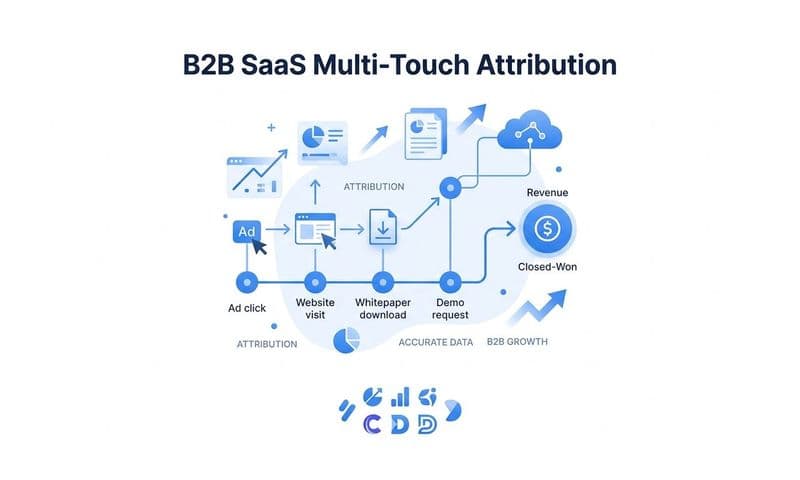
Long B2B sales cycles compound this problem. Someone clicks your ad in January, downloads a whitepaper, attends a webinar in March, requests a demo in May, and closes a $50,000 deal in July. If you're only tracking the whitepaper download at $100, you're dramatically undervaluing the conversion that started the journey. Understanding multi-touch conversion value helps you account for these complex customer journeys.
Multi-touch journeys create attribution ambiguity. A customer might interact with five different campaigns before converting. How do you distribute that conversion value across touchpoints? Google's attribution models attempt to solve this, but they're working with incomplete data—they only see the digital touchpoints, not the phone calls, in-person meetings, or offline research that influenced the decision.
These challenges don't mean conversion values are useless—they mean you need to be thoughtful about implementation and honest about limitations. Approximate accuracy is infinitely better than no value data at all, as long as you understand where the gaps are.
Value-Based Bidding Strategies That Actually Work
Once your conversion values are configured, value-based bidding strategies transform how Google optimizes your campaigns. Instead of chasing clicks or conversions, you're optimizing directly for revenue—but only if you choose the right strategy and configure it correctly.
Target ROAS: The Profitability Governor
Target ROAS (Return on Ad Spend) tells Google exactly how much revenue you want to generate for every dollar spent. Set a 400% target ROAS, and Google aims to generate $4 in conversion value for every $1 in ad spend.
This strategy works best when you have clear profitability targets and consistent conversion value data. If your product margins require a 300% ROAS to break even, you might set a 400% target to ensure profitability after accounting for other costs.
The key to Target ROAS success is setting realistic targets based on historical performance. Don't just pick an aspirational number—look at your actual ROAS over the past 30-60 days and use that as your baseline. If you're currently achieving 350% ROAS, setting a 600% target will cause Google to drastically reduce spend, missing profitable opportunities while chasing an unrealistic goal.
Start conservative. If historical ROAS is 350%, try setting your target at 320% initially. This gives Google room to maintain volume while optimizing toward your goal. Monitor performance for two weeks, then gradually increase your target ROAS if the campaign maintains conversion volume.
Watch for the volume cliff. If you set Target ROAS too aggressively, Google will throttle your campaigns to near-zero impressions, only bidding on the absolute highest-intent searches. You'll hit your ROAS target with perfect efficiency—and generate almost no revenue because volume collapsed.
Maximize Conversion Value: The Revenue Maximizer
Maximize Conversion Value takes a different approach: spend your entire budget to generate the highest possible total conversion value, regardless of efficiency. It's less concerned with ROAS and more focused on absolute revenue.
This strategy makes sense when you're in growth mode with room to scale. If you're not budget-constrained and you want to capture maximum market share, Maximize Conversion Value will find every profitable opportunity and bid aggressively to win it.
You can add a Target ROAS constraint to Maximize Conversion Value, creating a hybrid approach: maximize revenue, but don't go below this efficiency threshold. This gives you growth with guardrails, preventing the algorithm from chasing volume at unprofitable margins.
The risk with Maximize Conversion Value is overspending on diminishing returns. Google will spend your budget, but the last 20% of spend might generate significantly lower ROAS than the first 80%. Monitor your efficiency metrics closely and be ready to add ROAS constraints if profitability suffers.
Choosing Your Strategy: The Decision Framework
Use Target ROAS when profitability is your primary concern and you have clear margin requirements. This is the right choice for businesses with tight unit economics or limited marketing budgets where every dollar needs to pull its weight.
Use Maximize Conversion Value when growth is the priority and you have budget flexibility. This works for well-funded businesses, seasonal promotions, or new product launches where capturing market share matters more than immediate profitability.
Both strategies require a learning period. Google recommends at least 30-50 conversions in the past 30 days before switching to value-based bidding. Less data means more volatility as the algorithm learns. If you're not hitting that threshold, stick with Maximize Conversions or Manual CPC until you've accumulated enough conversion history.
Don't mix strategies randomly across campaigns. If you're running multiple campaigns for the same product, use consistent bidding strategies so you can compare performance meaningfully. Switching between Target ROAS and Maximize Conversion Value makes it impossible to isolate what's actually driving results. For comprehensive guidance on bidding and beyond, explore our Google Ads optimization strategies.
Solving the Attribution Gap: Getting Better Data Into Google
Here's the uncomfortable truth: Google only sees a fraction of your customer journey. Browser-based tracking misses app interactions, in-store purchases, phone calls, and cross-device behavior. iOS privacy updates block significant portions of mobile traffic. The result? Google's optimization algorithms are making decisions based on incomplete data.
This attribution gap means the conversion values Google sees don't reflect reality. A campaign might appear to generate $10,000 in conversion value when it actually drove $25,000—Google just can't connect all the dots. When the algorithm optimizes based on the $10,000 it can see, it underinvests in genuinely profitable campaigns.
Server-Side Tracking: Beyond Browser Limitations
Server-side tracking solves browser-based limitations by sending conversion data directly from your server to Google, bypassing ad blockers, cookie restrictions, and iOS tracking prevention. When a conversion happens on your site, your server communicates directly with Google's servers to report it.
This approach captures conversions that browser-based tracking would miss entirely. Users with ad blockers, strict privacy settings, or who convert across multiple devices all get tracked accurately because the data flows server-to-server, not through potentially blocked browser pixels. Learn more about the differences in our comparison of Google Analytics vs server-side tracking.
The implementation requires technical work—you're essentially building a direct pipeline between your conversion events and Google's Conversion API. But the payoff is significantly more accurate conversion value data, which means better optimization and more reliable reporting.
CRM Integration: Connecting Offline Value
The most valuable conversions often happen offline. A customer clicks your ad, fills out a form, gets a sales call, and closes a $50,000 deal three months later. Google saw the form fill but has no idea about the $50,000 that resulted.
Offline conversion imports solve this by letting you upload conversion data from your CRM back into Google Ads. You match conversions to the original click using Google Click ID (GCLID), then import the actual deal value and close date. If you're using Salesforce, our guide on how to integrate Google Analytics with Salesforce covers the technical requirements.
This creates a complete feedback loop. Google learns that certain campaigns, keywords, and audiences drive high-value offline conversions, not just online form fills. The algorithm can then optimize toward the audiences that actually close deals, not just the ones that fill out forms.
The challenge is maintaining clean data matching. You need to capture GCLID when the lead first converts, store it in your CRM, then include it when uploading offline conversions. Many businesses struggle with this technical requirement, but it's essential for accurate attribution.
Enhanced Conversions: Enriching First-Party Data
Enhanced conversions supplement your existing tracking by sending hashed first-party data (email, phone, address) to Google along with conversion events. Google uses this data to improve attribution matching, especially for users who convert across devices or browsers.
Someone might click your ad on their phone, then purchase later on their laptop using a different browser. Without enhanced conversions, Google might not connect those two events. With enhanced conversions, Google can match the email address from both touchpoints and properly attribute the conversion.
This doesn't just improve reporting accuracy—it actively improves campaign performance. When Google can correctly attribute more conversions, its algorithms have better data for optimization. Campaigns that appeared marginal might actually be strong performers once attribution improves.
The combination of server-side tracking, offline conversion imports, and enhanced conversions creates a robust attribution foundation. You're feeding Google the most complete picture possible of conversion value, which enables smarter bidding decisions and more accurate performance measurement.
Measuring What Matters: Conversion Value Metrics to Track
Having conversion value data is only useful if you know how to interpret it. The right metrics reveal which campaigns drive real revenue, which audiences are worth scaling, and where you're wasting budget on low-value conversions.
Conv. Value: Total Revenue Generated
This is the foundational metric—the total monetary value of all conversions in a given time period. It answers the most basic question: how much revenue did this campaign generate?
Look at Conv. Value across campaigns to identify your revenue drivers. Campaign A might have fewer conversions than Campaign B, but if Campaign A's Conv. Value is 3x higher, it's the real performer. This metric forces you to look beyond volume and focus on actual business impact.
Track Conv. Value trends over time to spot performance shifts. A declining Conv. Value trend might indicate audience fatigue, increased competition, or a shift toward lower-value conversions. Rising Conv. Value suggests you're reaching higher-intent audiences or improving at driving valuable actions.
Conv. Value/Cost: Your True ROAS
This metric divides total conversion value by total cost, giving you return on ad spend. A Conv. Value/Cost of 4.0 means you generated $4 in conversion value for every $1 spent—a 400% ROAS.
Use this metric to evaluate campaign efficiency. High Conv. Value with low Conv. Value/Cost means you're generating revenue but spending too much to get it. Low Conv. Value with high Conv. Value/Cost suggests an efficient campaign that could potentially scale with more budget.
Compare Conv. Value/Cost across campaigns, ad groups, and keywords to identify efficiency opportunities. Your top-performing keyword by conversions might have mediocre ROAS, while a lower-volume keyword drives much higher efficiency. This insight guides budget reallocation decisions.
Set minimum ROAS thresholds based on your business economics. If you need 300% ROAS to be profitable, anything below that threshold is actively losing money. Pause or restructure campaigns that consistently fall short.
Conv. Value/Click: Revenue Per Click
This metric shows the average conversion value generated per click. It's particularly useful for comparing the quality of traffic from different sources, placements, or audiences.
High Conv. Value/Click indicates you're attracting high-intent traffic that converts at high values. Low Conv. Value/Click suggests you're getting clicks from users who either don't convert or convert at low values. This metric helps you identify which targeting parameters drive valuable traffic versus cheap clicks.
Use Conv. Value/Click to evaluate audience quality. An audience segment with a $15 Conv. Value/Click is dramatically more valuable than one with a $2 Conv. Value/Click, even if both have similar conversion rates. This guides audience expansion and exclusion decisions.
The Performance Review Framework
Build a regular review cadence around these metrics. Weekly reviews should focus on identifying anomalies and quick optimization opportunities. Monthly reviews should analyze trends and make strategic decisions about campaign structure and budget allocation.
Create custom reports that segment performance by campaign type, audience, device, and time period. Look for patterns: Do mobile users generate lower conversion values? Does weekend traffic convert at higher values? Are certain audience segments consistently more profitable?
Don't just look at account-level metrics. Drill down to ad group and keyword level to find hidden opportunities. Your overall ROAS might be 350%, but individual keywords could range from 150% to 800%. Reallocating budget from the bottom performers to the top performers can dramatically improve overall efficiency.
Set up automated rules or alerts for significant metric changes. If a campaign's Conv. Value/Cost drops below your threshold, you want to know immediately, not discover it in next month's review. Early detection allows for quick adjustments before significant budget is wasted.
Putting It All Together
Google conversion value isn't just another metric to track—it's the foundation of intelligent advertising. It transforms Google Ads from a platform that counts actions into one that measures actual business impact, enabling you to make optimization decisions based on revenue, not guesswork.
Start with an honest audit of your current conversion value setup. Are you tracking values at all? If yes, are they accurate? Do they reflect the true worth of each conversion to your business? For ecommerce, are you using dynamic values to capture actual transaction amounts? For lead gen, have you calculated realistic static values based on historical close rates and deal sizes?
Fix the foundation before optimizing the details. Inaccurate conversion values corrupt everything downstream—your bidding strategies, your reporting, your budget decisions. Get the data right first, then leverage it for optimization.
Consider the attribution gaps in your current setup. Are you capturing offline conversions? Are you accounting for cross-device journeys? Are iOS users and ad blocker users invisible in your data? The more complete your conversion value data, the smarter Google's algorithms can optimize.
Value-based bidding strategies like Target ROAS and Maximize Conversion Value are powerful tools, but they're only as good as the data you feed them. Implement server-side tracking, set up offline conversion imports, and use enhanced conversions to give Google the most complete picture possible of what's actually driving revenue.
Monitor your conversion value metrics religiously. Conv. Value, Conv. Value/Cost, and Conv. Value/Click tell you what's working and what's not. Build a regular review process, set performance thresholds, and be willing to make tough decisions about underperforming campaigns.
The marketers who win aren't the ones with the biggest budgets—they're the ones with the best data. When you know exactly what each conversion is worth and can feed that information into Google's optimization algorithms, you stop competing on spend and start competing on intelligence.
Ready to elevate your marketing game with precision and confidence? Discover how Cometly's AI-driven recommendations can transform your ad strategy—Get your free demo today and start capturing every touchpoint to maximize your conversions.