Your Facebook campaign is humming. ROAS looks solid at 3.2x. Then overnight, the numbers crater—Facebook now shows half the conversions, yet your Shopify dashboard tells a different story: sales haven't dropped at all. You refresh the ads manager three times, convinced something's broken. It's not broken. It's just blind.
This is the reality marketers face in the wake of Apple's iOS privacy changes. When iOS 14.5 rolled out App Tracking Transparency (ATT) in April 2021, it fundamentally rewired how digital advertising works. Users got a simple prompt: "Allow this app to track your activity across other companies' apps and websites?" The majority tapped "Ask App Not to Track."
That single tap severed the connection between your ad spend and your conversion data. Platforms like Meta, Google, and TikTok suddenly lost visibility into what happens after someone clicks your ad. Your campaigns still drive sales—customers still buy—but the platforms can't see it anymore. You're flying blind, making budget decisions based on incomplete information, potentially cutting winners and doubling down on losers without knowing the difference.
Here's what's actually happening behind the scenes, why it matters more than you think, and the practical solutions that let you see your marketing reality clearly again.
The iOS Privacy Shift That Rewrote Digital Advertising Rules
App Tracking Transparency isn't a minor technical adjustment. It's a fundamental restructuring of how tracking works on iOS devices.
Before ATT, every iPhone and iPad had an Identifier for Advertisers (IDFA)—essentially a unique ID that apps could access to track user behavior across different apps and websites. When you clicked a Facebook ad for running shoes, then later opened a fitness app, then eventually made a purchase through Safari, that IDFA connected all those dots. The ad platform knew the journey from impression to conversion.
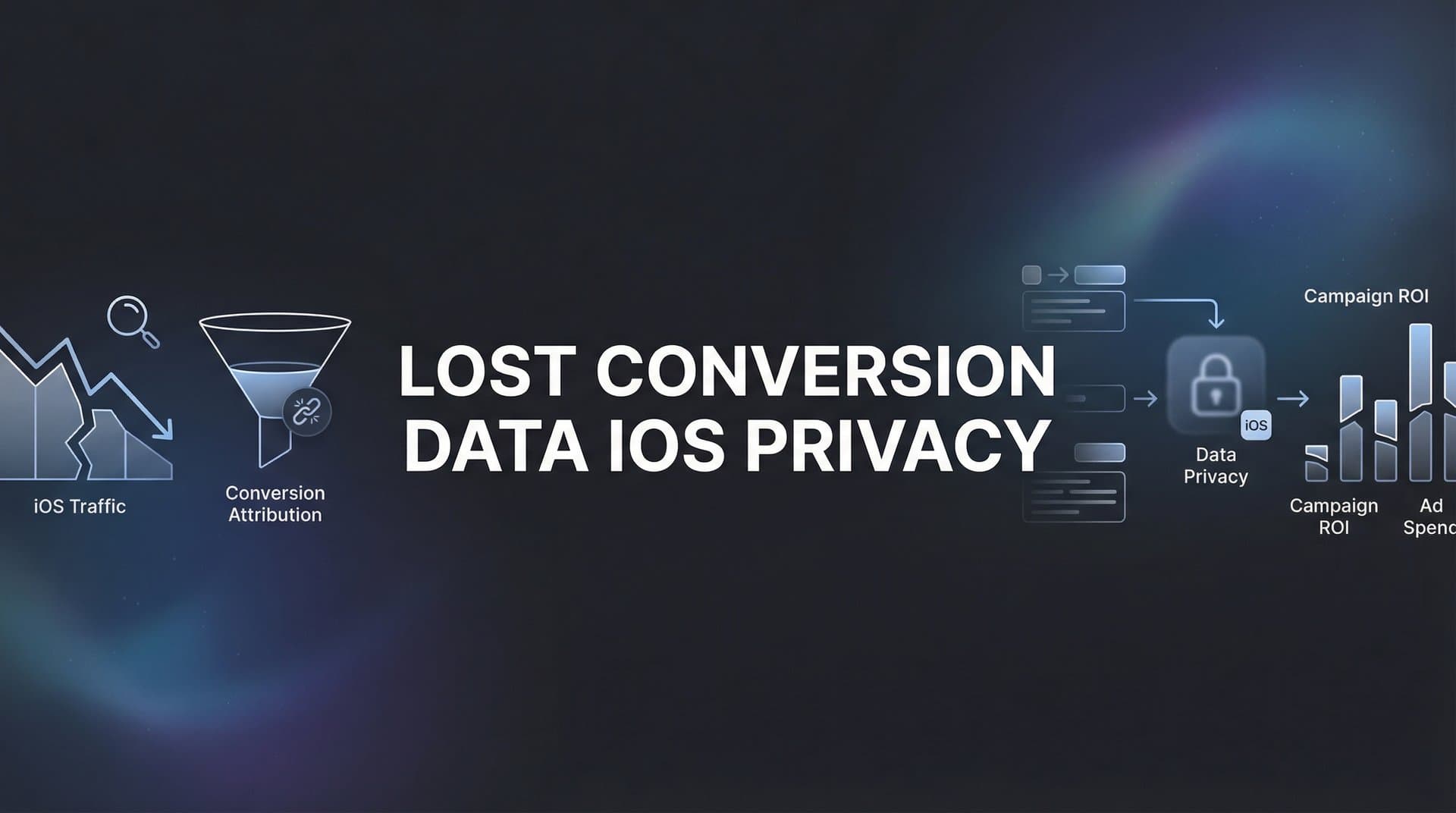
ATT changed the rules. Now apps must explicitly ask permission before accessing the IDFA. When users decline—and research consistently shows opt-in rates hover around 15-25% globally—the IDFA becomes unavailable to that app. The tracking chain breaks.
Here's the technical mechanism that matters: without IDFA access, Facebook can't definitively connect the person who clicked your ad at 2pm to the person who purchased your product at 6pm, even if they're the same individual using the same device. The identifier that linked those events is gone.
Think of it like trying to track a customer through a store after they put on a different disguise every five minutes. You know someone walked in the entrance. You know someone made a purchase. But proving they're the same person? Nearly impossible without a consistent identifier.
This affects every major advertising platform. Meta's Facebook and Instagram ads. Google's display network and YouTube campaigns. TikTok ads. Pinterest. Snapchat. Any platform that relied on cross-app or cross-site tracking to measure conversions faces the same challenge.
The scope is massive because iOS users represent a significant, often high-value segment of most advertisers' audiences. In markets like the United States, iOS holds roughly 50-60% market share. These users tend to have higher purchasing power and engagement rates. Losing visibility into half your conversions—often the more valuable half—fundamentally distorts your marketing data.
Apple introduced SKAdNetwork as their privacy-preserving alternative, but it's a poor substitute for what marketers lost. SKAdNetwork provides conversion data in aggregated form, delayed by 24-48 hours, with limited campaign detail. You get confirmation that conversions happened, but without the granular attribution data needed for optimization.
The ATT framework isn't a bug to be fixed. It's Apple's permanent stance on user privacy. And it's just the beginning—Google has announced similar restrictions coming to Android, and third-party cookie deprecation continues to progress. The tracking infrastructure that powered digital advertising for the past decade is being systematically dismantled.
How Missing Data Distorts Your Marketing Reality
The immediate impact of lost conversion data creates three compounding problems that quietly sabotage your marketing effectiveness.
Attribution Gaps Create Phantom Campaign Failures: Your ads still work. Customers still click, browse, and buy. But when the platform can't track the conversion back to the original ad, that success goes uncredited. A campaign generating strong ROI appears to be underperforming because the platform only sees a fraction of the conversions it's actually driving.
This creates a dangerous decision-making environment. You might pause or reduce budget on campaigns that are actually your best performers, simply because the reported data makes them look like losers. Meanwhile, campaigns that happen to have better visibility—perhaps targeting Android users or desktop traffic—appear more successful than they are, leading you to overinvest in the wrong places.
The distortion compounds when you compare time periods. That campaign you ran in early 2021 showed 500 conversions at $30 CPA. The same campaign structure in 2026 shows 250 conversions at $60 CPA. Did performance really tank? Or are you just seeing half the data now while actual results stayed consistent?
Audience Degradation Weakens Your Targeting Foundation: Retargeting and lookalike audiences depend on behavioral signals—who viewed products, added to cart, made purchases. When platforms lose visibility into these actions for iOS users, your audience pools shrink dramatically.
Your retargeting campaign that used to reach 10,000 people who viewed your product page now reaches 4,000—because the platform can't identify the iOS users who took that action. Your lookalike audiences become less accurate because they're built from an incomplete sample that skews toward Android and desktop users.
The result? Your targeting becomes less precise exactly when you need it to be more efficient. You're reaching fewer qualified prospects and more cold audiences, driving up acquisition costs and reducing conversion rates.
Algorithm Starvation Kills Optimization Performance: Modern ad platforms rely on machine learning algorithms that optimize toward conversion events. Feed the algorithm 100 conversions per day, and it learns quickly which audiences, placements, and creative variations drive results. Feed it 50 conversions because half are invisible, and the learning process becomes dramatically slower and less accurate.
This matters more as platforms like Meta and Google shift toward automated bidding and broad targeting strategies. These approaches work brilliantly when the algorithm has rich conversion data to learn from. They fail spectacularly when conversion signals are sparse or unreliable.
Your cost per acquisition climbs not because your ads got worse, but because the optimization engine is making decisions based on incomplete information. It's like trying to teach someone to cook while blindfolding them half the time—they'll learn eventually, but the process becomes inefficient and the results inconsistent.
The compounding effect of these three problems creates a downward spiral. Poor attribution leads to bad budget decisions. Degraded audiences reduce targeting precision. Starved algorithms drive up costs. Each problem amplifies the others, making your entire paid marketing operation less effective even when the fundamental quality of your offers and creative remains strong.
Reading the Warning Signs in Your Own Data
The tricky part about iOS tracking loss is that it's invisible until you know where to look. Your campaigns still run. The dashboards still populate. But beneath the surface, the numbers tell a story of systematic underreporting.
The Conversion Disconnect Pattern: Open your ad platform and note your conversion count. Now check your actual sales data—Shopify, Stripe, your CRM, wherever truth lives in your business. If you see a significant gap where platform-reported conversions are 30-50% lower than actual sales, you're experiencing ATT impact.
This gap often appears suddenly rather than gradually. Many marketers remember a specific point in mid-2021 when their Facebook conversion numbers dropped sharply while actual revenue stayed steady or grew. That inflection point marks when ATT adoption reached critical mass in their customer base.
The pattern becomes more obvious when you segment by traffic source. If your Facebook ads show 100 conversions but your analytics attributes 180 purchases to Facebook as the last click source, that 80-conversion gap represents lost visibility. The sales happened. The platform just can't claim credit. Understanding how to fix attribution discrepancies in data becomes essential for accurate reporting.
The iOS vs Android Performance Split: Most analytics platforms let you segment performance by operating system. Pull a report comparing iOS and Android conversion rates, average order values, and cost per acquisition over the past 90 days.
If iOS performance appears dramatically worse—lower conversion rates, higher CPAs, fewer attributed conversions—while your business logic suggests these audiences should perform similarly, you're seeing ATT impact rather than genuine performance differences. iOS users didn't suddenly become less interested in your products. Your tracking just can't follow their journey as effectively.
This diagnostic becomes especially clear for businesses that historically saw similar performance across device types. A sudden divergence where iOS metrics crater while Android stays stable points directly to tracking loss, not audience quality issues. Implementing cross-device conversion tracking solutions can help bridge these visibility gaps.
The Rise of "Dark Traffic": Check your analytics for increases in direct traffic, unattributed conversions, or purchases with unknown source. These categories often balloon after ATT because the attribution chain breaks—customers arrive at your site, but the referrer information is lost or obscured.
Many businesses report seeing their "direct" traffic double or triple as a percentage of total conversions. These aren't people typing your URL from memory. They're customers who clicked ads, engaged with email campaigns, or followed social links—but the tracking parameters got stripped away or the cookie/identifier that would have connected the dots is missing.
Similarly, watch for increased conversion delay windows. If you notice more conversions being attributed days or weeks after the initial click, it might indicate that the immediate attribution broke, and only later touchpoints (like a direct visit or email click) provided enough signal to claim credit.
Your analytics platform might show a "not set" or "unknown" source category growing. Your ad platforms might report increasing numbers of "view-through conversions" because they can't prove a click-through conversion occurred. These are symptoms of the same underlying problem—the tracking infrastructure can't reliably connect cause and effect.
The most reliable diagnostic combines all three: platform-reported conversions drop, iOS performance appears worse than it should, and unattributed traffic grows. When you see this pattern, you're not dealing with campaign performance issues. You're dealing with a measurement crisis that requires infrastructure changes, not creative tweaks.
Server-Side Tracking: Bypassing the Browser Bottleneck
The fundamental problem with traditional conversion tracking is that it happens client-side—in the user's browser or app, subject to all the privacy restrictions, ad blockers, and consent requirements that live there. Server-side tracking solves this by moving the data transmission to your server, where ATT restrictions don't apply.
Here's how the mechanism works differently. With traditional pixel-based tracking, when someone makes a purchase on your site, JavaScript code in their browser fires a conversion event to Facebook's servers. But if they're an iOS user who opted out of tracking, that event either doesn't fire or arrives without enough identifying information to connect it to the original ad click.
Server-side tracking flips the model. When that same purchase happens, your server—not the user's browser—sends the conversion data directly to Facebook's Conversions API (CAPI). The data flow bypasses the client-side restrictions entirely because it's a server-to-server communication that doesn't rely on cookies, pixels, or device identifiers subject to ATT.
Meta's Conversions API is the most widely adopted implementation because Facebook and Instagram ads were hit hardest by iOS changes. CAPI lets you send conversion events with additional context—customer email addresses (hashed for privacy), phone numbers, purchase values, product details—that help Meta match the conversion to the right user without relying on cookies. Learning how to sync conversion data to Facebook Ads properly can dramatically improve your attribution accuracy.
Google offers similar server-side options through Google Analytics 4's Measurement Protocol and Google Ads' enhanced conversions. TikTok, Snapchat, and Pinterest have all introduced their own server-side event APIs following the same principle: let advertisers send conversion data directly from their servers to improve attribution accuracy.
The matching process works through first-party identifiers. When someone clicks your ad, they eventually land on your site and might provide an email address during checkout or account creation. Your server sends that email (hashed) along with the conversion event to the ad platform. The platform can match that hashed email to their user database and connect the conversion to the original ad interaction—even if client-side tracking failed.
This approach isn't perfect. It requires that users provide identifiable information like email addresses, so top-of-funnel events (page views, video watches) remain harder to track. The matching rates vary—not every conversion can be definitively linked back to an ad. But server-side tracking typically recovers 60-80% of the conversion visibility lost to ATT, a dramatic improvement over relying solely on pixel-based tracking.
Implementation requires technical work. You need server-side code that captures conversion events and formats them according to each platform's API specifications. Many e-commerce platforms like Shopify offer apps that handle this automatically. Custom implementations might require developer resources to build the integration properly.
The key advantage extends beyond just recovering lost conversions. Server-side events tend to be more reliable—they're not blocked by ad blockers, they don't fail if JavaScript is disabled, and they capture data even if the user closes the browser window before the pixel fires. You get cleaner, more complete data that reflects actual business outcomes rather than just trackable browser events.
Building a Privacy-Resilient Attribution System
Server-side tracking solves the immediate measurement crisis, but a truly resilient attribution system requires rethinking your entire data strategy around first-party relationships and multi-touch visibility.
First-Party Data Becomes Your Foundation: Every touchpoint where you can collect customer information with consent becomes critical. Email capture at the top of funnel. Account creation before purchase. Post-purchase surveys. SMS opt-ins. Each interaction where a customer voluntarily provides identifying information creates an opportunity to track their journey without relying on third-party cookies or device IDs.
The strategy shifts from passive tracking to active relationship building. Instead of silently following users across the web with cookies, you create value exchanges that encourage them to identify themselves. A useful lead magnet in exchange for an email. A loyalty program that requires account creation. A personalized shopping experience that improves when users log in. Mastering first-party data tracking setup is now essential for sustainable marketing measurement.
This first-party data gets enriched at every stage. When someone clicks your Facebook ad and lands on your site, you might not know who they are yet. But when they sign up for your email list, you capture their email. When they make a purchase, you add transaction data. When they engage with your email campaigns, you track that behavior. Over time, you build a comprehensive profile of each customer's journey using identifiers they've voluntarily provided.
Multi-Touch Attribution Connects the Full Journey: Most ad platforms only see their own touchpoints. Facebook knows about Facebook clicks. Google knows about Google clicks. Neither sees the complete picture of how these channels work together to drive conversions.
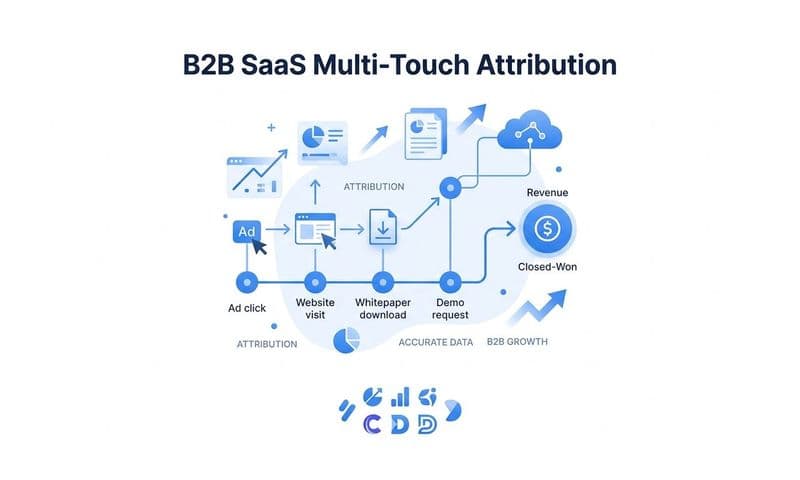
A multi-touch attribution system captures every touchpoint—paid ads, organic social, email, direct traffic, referrals—and assigns appropriate credit based on the role each played in the conversion. This requires tracking infrastructure that follows users across channels using first-party identifiers rather than third-party cookies. Understanding multi-touch attribution models for data helps you implement the right approach for your business.
When implemented properly, you can see that a customer first discovered you through a Facebook ad, researched via Google search, engaged with an email campaign, and finally converted through a retargeting ad. Instead of giving 100% credit to the last click (the retargeting ad), you understand that all four touchpoints contributed to the sale.
This visibility becomes crucial for budget allocation decisions. You might discover that your Facebook prospecting campaigns rarely get last-click credit but consistently introduce customers who later convert through other channels. Without multi-touch attribution, you might cut that Facebook spend thinking it's ineffective, when it's actually an essential top-of-funnel driver.
Feeding Enriched Data Back to Ad Platforms: The most sophisticated approach creates a feedback loop where your attribution system doesn't just measure performance—it actively improves it by sending better data back to ad platforms.
When you capture a conversion with rich first-party data—customer email, purchase value, product categories, lifetime value indicators—you can send that enriched event back to Meta, Google, and other platforms through their server-side APIs. This gives their algorithms better signals to optimize against. This process of conversion data activation transforms passive measurement into active optimization.
Instead of just telling Facebook "a conversion happened," you're saying "a high-value customer who bought premium products converted, here's their hashed email for matching." The platform's machine learning can use this richer signal to find more customers who look like this one, improving targeting precision and reducing acquisition costs.
This approach transforms attribution from a passive measurement exercise into an active optimization tool. Your tracking infrastructure becomes a competitive advantage, feeding better data to ad algorithms than competitors who rely solely on degraded pixel-based tracking.
Putting Your Data Recovery Plan Into Action
Understanding the problem and the solutions is one thing. Actually implementing a privacy-resilient tracking system requires a structured approach that balances quick wins with long-term infrastructure improvements.
Start with a Tracking Audit: Before implementing new solutions, map your current state. Document every conversion event you track, how you track it (pixel vs server-side), and what percentage of conversions you're likely capturing. Compare platform-reported conversions against actual sales data to quantify your attribution gap. Identify which platforms and campaigns are most affected by tracking loss.
This audit reveals your priorities. If Facebook shows a 60% attribution gap while Google shows only 20%, you know where to focus first. If iOS traffic represents 70% of your audience, server-side tracking becomes urgent. If you have strong email capture but weak post-purchase tracking, you know which touchpoints need attention. Conducting thorough attribution data analysis provides the foundation for informed decisions.
Implement Server-Side Tracking for Major Platforms: Start with Meta's Conversions API if Facebook or Instagram ads represent significant spend. Most businesses can implement CAPI within a few days using existing apps or plugins for their e-commerce platform. Validate that events are firing correctly by checking the Events Manager and comparing server-side event volumes to pixel-based events.
Expand to Google's enhanced conversions and other platforms based on your spend allocation. Each implementation follows similar patterns—capture conversion events server-side, include first-party identifiers when available, send formatted data to the platform's API endpoint.
Set realistic expectations during this phase. You won't recover 100% of lost attribution. Expect to improve visibility by 50-80% depending on your ability to collect first-party identifiers. Some conversions will remain unattributable—users who never provide an email, who use privacy tools aggressively, who take complex paths across multiple devices.
Build First-Party Data Collection Into Your Funnel: Look for natural points to collect customer information earlier in the journey. Could you offer a valuable resource in exchange for email at the top of funnel? Would a quiz or assessment tool provide value while capturing data? Can you incentivize account creation before checkout? Developing robust first-party data collection strategies pays dividends across your entire marketing operation.
The key is making these exchanges valuable for customers, not just extracting data. People willingly provide information when they get something useful in return—personalization, exclusive content, better service, loyalty rewards. Focus on creating genuine value, and the data collection becomes a natural byproduct.
Future-Proof Against Coming Changes: iOS privacy changes were just the beginning. Google continues working toward third-party cookie deprecation in Chrome. Privacy regulations like GDPR and CCPA add compliance requirements. Future privacy restrictions are inevitable.
The tracking infrastructure you build now should assume that third-party tracking will continue to degrade. Prioritize first-party data relationships. Invest in server-side infrastructure. Build direct customer connections that don't depend on intermediary platforms or tracking technologies that might disappear. Adopting privacy-compliant conversion tracking methods ensures your measurement strategy remains viable as regulations evolve.
This approach doesn't just solve today's iOS attribution problem—it positions you to adapt quickly when the next privacy change arrives. You're building on a foundation of consented, first-party relationships rather than brittle third-party tracking that breaks with each new restriction.
Moving Forward with Clear Vision
iOS privacy changes aren't a temporary disruption waiting to be reversed. They're the permanent new reality of digital marketing, with more restrictions coming rather than fewer. Apple isn't backing down on ATT. Google is moving forward with Privacy Sandbox. Privacy regulations continue expanding globally.
The marketers who thrive in this environment are the ones who stop fighting privacy restrictions and start building infrastructure designed for this reality. Server-side tracking, first-party data strategies, and multi-touch attribution aren't optional nice-to-haves anymore—they're essential foundations for making confident marketing decisions.
The competitive advantage goes to businesses that can see their marketing reality clearly while competitors fly blind. When you know which campaigns actually drive revenue, which audiences convert best, and how your channels work together, you can allocate budget with confidence. You can scale winners and cut losers based on real data rather than incomplete platform reporting.
This isn't about recovering the tracking capabilities of 2020. It's about building something better—a measurement system based on real customer relationships, enriched with first-party data, resilient against future privacy changes, and designed to feed better signals back to ad platforms for improved performance.
The technical work required is real. Server-side implementations take effort. First-party data strategies require rethinking your customer journey. Multi-touch attribution demands infrastructure investment. But the alternative—making million-dollar budget decisions based on data you know is 50% incomplete—is far more costly.
Ready to elevate your marketing game with precision and confidence? Discover how Cometly's AI-driven recommendations can transform your ad strategy—Get your free demo today and start capturing every touchpoint to maximize your conversions.