You're spending thousands on Meta ads, Google campaigns, and LinkedIn outreach. Your dashboards show conversions. Your sales team celebrates closed deals. But when you try to connect the dots between ad spend and actual revenue, the story falls apart.
Meta claims credit for 50 conversions this month. Google Ads reports 45. Your LinkedIn campaign manager swears their retargeting drove 30 sales. Add those up, and you've somehow generated more conversions than you actually closed. The math doesn't work, but your budget decisions depend on figuring out what's real.
This is the hidden crisis facing modern marketers. Without proper attribution, you're making million-dollar decisions based on conflicting data from platforms that each want to prove their value. Marketing attribution importance isn't just about tracking—it's about transforming guesswork into confidence. It's the difference between hoping your campaigns work and knowing exactly which efforts drive revenue.
The Hidden Cost of Flying Blind Without Attribution
Every month without proper attribution, your marketing budget slowly bleeds efficiency. You're not just missing opportunities—you're actively funding underperformers while starving your best channels.
Think about what happens when you can't identify your true revenue drivers. You allocate next quarter's budget based on last quarter's "best guesses." Maybe you increase spend on a channel because the dashboard looked promising. Maybe you cut a budget line because the reported conversions seemed low. Without attribution connecting ad clicks to actual revenue, these decisions are essentially coin flips with five-figure stakes.
The compounding effect is brutal. A 10% misallocation this quarter becomes 15% next quarter as you double down on what appears to be working. Within a year, you could be spending 30-40% of your budget on channels that contribute minimally to pipeline while underfunding the touchpoints that actually convert.
Here's the frustrating part: platform-reported metrics aren't lying—they're just incomplete. When Meta reports a conversion, someone probably did click your ad before purchasing. When Google claims credit, they're technically correct that the person searched and clicked. The problem is they're all claiming credit for the same customer journey, inflating your perceived success while hiding the real story.
This disconnect between platform metrics and business outcomes creates dangerous blind spots. Your CFO sees customer acquisition costs rising. Your dashboards show "successful" campaigns. But your actual revenue per marketing dollar keeps declining. Without attribution, you can't explain the gap or fix it. Understanding channel attribution in digital marketing revenue tracking becomes essential for bridging this disconnect.
The risk intensifies as ad costs climb. When a click cost $2, inefficient allocation was annoying. When clicks cost $15 or $30, poor attribution becomes an existential threat. You can't afford to guess which channels deserve more investment and which need to be cut.
Gut-feel marketing worked when budgets were small and channels were simple. In today's multi-platform environment with complex customer journeys, intuition fails. You need systems that track every touchpoint and connect them to revenue outcomes. Without that foundation, you're essentially flying blind through increasingly expensive airspace.
Mapping the Complete Customer Journey
Your customers don't convert in a straight line. They discover your brand on Instagram, research on Google, read reviews, visit your website three times, download a guide, and finally convert after seeing a retargeting ad. Which touchpoint deserves credit for that sale?
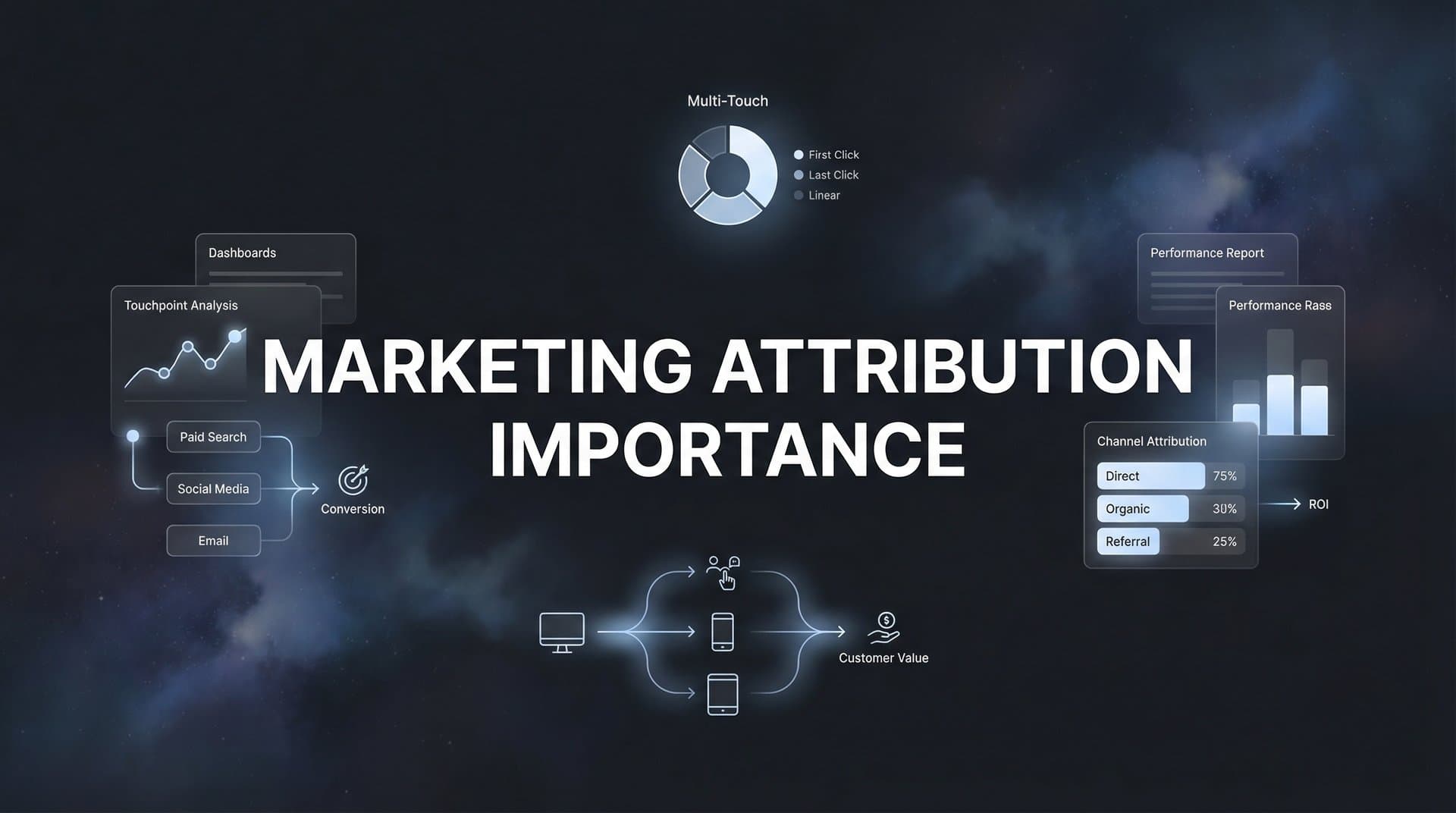
This is where attribution models transform confusion into clarity. Multi-touch attribution recognizes that most customer journeys involve multiple interactions across different channels before conversion. Instead of giving all credit to the last click—or worse, letting each platform claim 100% credit—multi-touch models distribute value across the touchpoints that actually influenced the decision.
Single-touch attribution models like "first click" or "last click" still have their place. If you're running a simple, direct-response campaign where customers typically convert immediately, last-click attribution might tell you everything you need. But for most businesses today, especially in B2B or high-consideration purchases, single-touch models miss the bigger picture.
Consider a SaaS company selling a $5,000 annual subscription. The typical buyer might interact with your brand 8-12 times over several weeks. They might discover you through a podcast ad, visit your website after a Google search, download a comparison guide, attend a webinar, receive nurture emails, and finally book a demo after seeing a LinkedIn retargeting ad. Giving all credit to that final LinkedIn ad ignores the foundation built by earlier touchpoints.
Effective attribution requires tracking every meaningful interaction. That means capturing data from ad clicks, website visits, content downloads, email opens, CRM events, and conversion actions. Each touchpoint adds a piece to the puzzle of understanding what actually drives customers to buy. A comprehensive attribution marketing tracking approach ensures no valuable data slips through the cracks.
The challenge is that this data lives in fragmented systems. Your ad platforms track clicks. Your website analytics track visits. Your CRM tracks sales conversations. Your email platform tracks engagement. Without a unified view connecting these touchpoints to individual customer journeys, you can't see the patterns that reveal what's working.
Fragmented data creates blind spots that lead to catastrophically poor decisions. You might see that your blog generates lots of traffic but few immediate conversions, so you consider cutting content marketing. What you're missing is that 60% of your highest-value customers read three or more blog posts before entering your sales funnel. Without attribution connecting those early touchpoints to eventual revenue, you'd eliminate a critical pipeline driver.
The goal isn't just collecting data—it's connecting it. When you can trace a customer's complete journey from first touch through closed deal, you gain the insight to optimize every stage. You discover which channels work best for initial discovery versus final conversion. You identify which content pieces actually influence buying decisions. You understand the true value of touchpoints that might not get last-click credit but play essential roles in the journey.
Five Ways Proper Attribution Transforms Campaign Performance
Attribution doesn't just tell you what happened—it changes what you do next. Here's how proper attribution fundamentally transforms the way marketing teams operate and optimize.
Separating Contributors from Credit-Takers: Some channels genuinely drive pipeline. Others just happen to be present when customers convert. Attribution reveals the difference. You might discover that your display ads rarely initiate customer journeys but play a crucial role in keeping your brand top-of-mind during consideration. Or you might find that a channel claiming lots of conversions is actually just retargeting people who were already going to buy. This distinction is critical for smart budget allocation.
Confident Budget Reallocation: When you know which channels and campaigns actually contribute to revenue, budget decisions become straightforward. Instead of spreading your investment thin across every platform "just in case," you can confidently shift resources to high-performers. This doesn't mean abandoning channels with lower last-click conversions—it means understanding their true role and funding them appropriately. A channel that assists 70% of conversions but only closes 10% deserves a different budget than one that both initiates and closes deals.
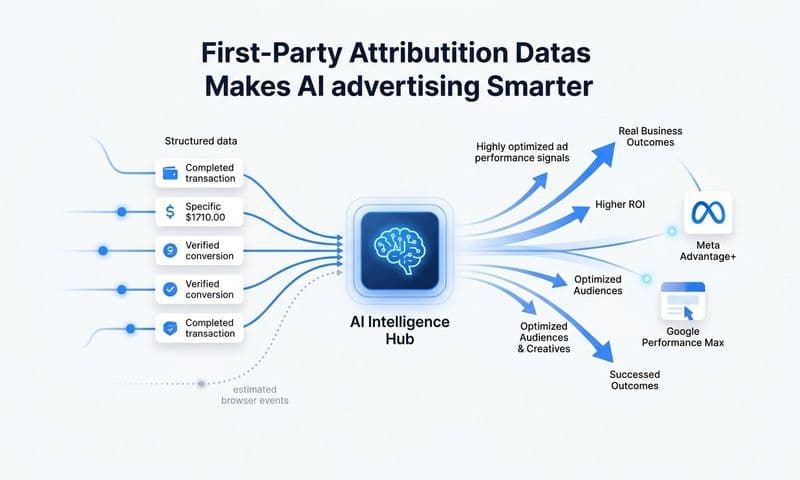
Feeding Better Data to Ad Platforms: Here's where attribution creates a powerful feedback loop. Platforms like Meta and Google use machine learning to optimize your campaigns, but their algorithms only work as well as the data you feed them. When you track conversions accurately and send that data back to ad platforms, you dramatically improve their ability to find similar high-value customers. If your attribution shows that certain ad clicks lead to $10,000 deals while others generate $500 sales, feeding that distinction back to the platform helps it prioritize the right audiences. Implementing marketing revenue attribution ensures your platforms receive the quality data they need.
Identifying Hidden Optimization Opportunities: Attribution surfaces patterns you'd never spot in isolated platform dashboards. You might discover that customers who interact with both your podcast ads and Google search convert at 3x the rate of those who only touch one channel. That insight suggests a cross-channel attribution strategy you wouldn't have considered. Or you might find that certain ad creative works brilliantly for initial awareness but poorly for conversion, while other creative does the opposite. These nuances only emerge when you can see the complete journey.
Optimizing the Full Funnel, Not Just Endpoints: Traditional optimization focuses on conversion rates and cost per acquisition. Attribution lets you optimize earlier. You can identify which top-of-funnel activities lead to the highest-quality pipeline months later. You can spot which middle-funnel content pieces move prospects closest to purchase. This upstream optimization compounds over time, improving not just conversion rates but the quality of traffic entering your funnel in the first place.
The transformation isn't subtle. Marketing teams with proper attribution make fundamentally different decisions than those flying blind. They scale winners aggressively instead of cautiously. They cut underperformers quickly instead of giving them "one more month." They optimize for revenue impact instead of platform-reported metrics.
This shift from reactive to proactive marketing creates a compounding advantage. Better data leads to better decisions. Better decisions improve results. Better results generate more data to refine your approach further. Teams locked in this cycle pull ahead of competitors still guessing which ads work.
Navigating Attribution in a Privacy-First World
Just as marketers started getting serious about attribution, the tracking landscape shifted beneath their feet. iOS App Tracking Transparency, cookie deprecation, and increasing privacy regulations have disrupted traditional attribution methods that relied on browser cookies and device tracking.
The impact has been significant. When Apple introduced ATT, many marketers saw their Facebook attribution data drop by 30-50% overnight. Not because their ads stopped working—because the tracking mechanisms broke. Google's planned cookie deprecation promises similar disruption for web-based tracking. The old playbook of relying on third-party cookies to follow users across the internet is becoming obsolete.
This creates a genuine challenge for attribution. If you can't track users across devices and platforms as reliably as before, how do you connect touchpoints into coherent customer journeys? How do you know which ads drove which outcomes when the tracking signals keep disappearing? These are among the most pressing attribution challenges in marketing analytics that teams face today.
The answer lies in shifting from browser-based tracking to more reliable methods. Server-side tracking has emerged as the most effective approach for maintaining attribution accuracy despite privacy restrictions. Instead of relying on cookies that users can block or browsers can restrict, server-side tracking captures data directly from your website and sends it to your analytics systems through your own servers.
This approach offers several advantages. It's more reliable because it doesn't depend on third-party cookies that can be blocked. It's more accurate because you control the data flow instead of relying on browser-based scripts that might fail to load. And it's more privacy-compliant because you're tracking events on your own properties rather than following users across the internet.
Building privacy-friendly attribution also means focusing on first-party data. The information customers share directly with you—email addresses, account information, purchase history—becomes more valuable than ever. When someone creates an account or makes a purchase, you can connect that known identity to their previous anonymous browsing behavior, filling in gaps that cookie-based tracking might miss.
The key is creating systems that work with privacy restrictions rather than fighting against them. That means implementing proper consent management, respecting user preferences, and building tracking infrastructure that doesn't depend on methods that are being phased out. It also means accepting some level of data gaps and focusing on directional accuracy rather than perfect precision. Staying current with the latest trends in marketing attribution technology helps teams adapt to these evolving requirements.
Smart marketers are adapting by combining multiple data sources to create a more complete picture. Server-side tracking captures what happens on your properties. CRM data shows which leads convert to customers. Ad platform APIs provide campaign performance data. When you connect these sources intelligently, you can maintain effective attribution even as individual tracking methods become less reliable.
Building an Attribution Strategy That Actually Works
Understanding attribution importance is one thing. Implementing a system that delivers actionable insights is another. Here's how to build attribution infrastructure that actually improves your marketing decisions.
Start by connecting your data sources into a unified ecosystem. Your ad platforms need to talk to your website analytics. Your website needs to connect to your CRM. Your CRM needs to feed conversion data back to your ad platforms. Without these connections, you're collecting data in silos that can't reveal the complete customer journey.
The technical implementation matters less than the outcome. Whether you use native integrations, custom APIs, or a dedicated attribution platform, the goal is the same: create a single source of truth that tracks customers from first touch through final conversion and beyond. Every meaningful interaction should be captured and connected to the individual customer who experienced it. Exploring the best marketing attribution solutions can help you identify the right approach for your organization.
Next, choose attribution models that align with your actual business model and sales cycle. If you're running direct-response ecommerce with short purchase cycles, a last-click or time-decay model might work well. If you're in B2B with long sales cycles and multiple stakeholders, you need multi-touch attribution that recognizes the complexity of your customer journey. Our guide on what is marketing attribution model breaks down the options available.
Many businesses benefit from comparing multiple attribution models side by side. Look at the same data through first-click, last-click, linear, and time-decay lenses. The differences reveal important insights about which channels initiate relationships versus which ones close deals. This multi-model approach prevents you from over-optimizing for a single perspective.
AI-powered attribution takes this further by analyzing patterns across your entire dataset to surface opportunities you'd likely miss manually. When you're tracking thousands of customer journeys across dozens of channels, human analysis hits limits. AI can identify that customers who engage with specific content combinations convert at higher rates, or that certain audience segments respond differently to various channel sequences.
These AI-driven insights become your competitive advantage. While competitors are manually reviewing dashboards and making educated guesses, you're operating with data-driven recommendations that account for interactions and patterns across your entire marketing ecosystem. The AI doesn't replace human judgment—it amplifies it by surfacing the signal in the noise.
Implementation should be iterative. Start with your highest-value channels and most important conversion events. Get those tracking properly and connected to your attribution system. Then expand to additional touchpoints and channels. Trying to implement perfect attribution across every possible interaction from day one leads to paralysis. Start focused, prove value, then expand.
The most important step is actually using the insights. Attribution systems that generate reports nobody acts on are expensive dashboards. The value comes from making different decisions based on what the data reveals. That means establishing processes for regular attribution review, budget reallocation based on findings, and continuous optimization of your channel mix.
Turning Attribution Into Competitive Advantage
Data collection is the starting point, not the destination. The real value of attribution emerges when you transform insights into action—when you move from knowing what happened to confidently scaling what works.
This shift from analysis to optimization creates a feedback loop that compounds over time. You identify which campaigns drive the highest-value customers. You scale those campaigns. The additional data from scaling refines your attribution models. Better models surface new optimization opportunities. You act on those opportunities, generating more data and insights.
Teams locked in this cycle pull ahead of competitors still making budget decisions based on platform-reported metrics. While others are cautiously testing and hoping, you're aggressively scaling proven winners and quickly cutting underperformers. The confidence that comes from accurate attribution changes how boldly you can move.
Creating effective feedback loops means connecting attribution insights directly to ad platform algorithms. When you feed accurate conversion data back to Meta, Google, and other platforms, you improve their ability to find similar high-value customers. This creates a virtuous cycle where better attribution leads to better targeting, which generates better results, which provides better data to further refine your approach.
The compounding advantage of accurate attribution becomes more pronounced over time. In month one, you might see a 10% improvement in budget efficiency. By month six, as you've optimized channel mix, refined targeting, and eliminated waste, that improvement might reach 30-40%. The longer you operate with accurate attribution, the wider the gap grows between your performance and competitors flying blind.
This isn't just about spending less to achieve the same results—it's about achieving better results with smarter investment. Attribution helps you identify and scale the channels that drive your highest-value customers, not just the most conversions. That distinction matters enormously for long-term profitability and growth.
The Foundation for Sustainable Marketing Growth
Marketing attribution importance extends far beyond knowing which ads work. It's about building the foundation for sustainable, scalable growth in an increasingly complex and expensive advertising landscape.
In an era of rising ad costs and fragmenting customer journeys, marketers who invest in proper attribution gain a significant competitive advantage. They make confident decisions while competitors guess. They scale aggressively while others test cautiously. They optimize their full funnel while others focus only on last-click conversions.
The challenges aren't trivial. Privacy restrictions, tracking limitations, and data fragmentation make attribution harder than ever. But these same challenges make attribution more valuable. When everyone faces the same obstacles, the teams that solve them pull ahead decisively.
The path forward is clear: connect your data sources, implement reliable tracking, choose appropriate attribution models, and most importantly, act on the insights you uncover. Attribution without action is just expensive reporting. Attribution that drives better decisions transforms your entire marketing operation.
Ready to elevate your marketing game with precision and confidence? Discover how Cometly's AI-driven recommendations can transform your ad strategy—Get your free demo today and start capturing every touchpoint to maximize your conversions.