

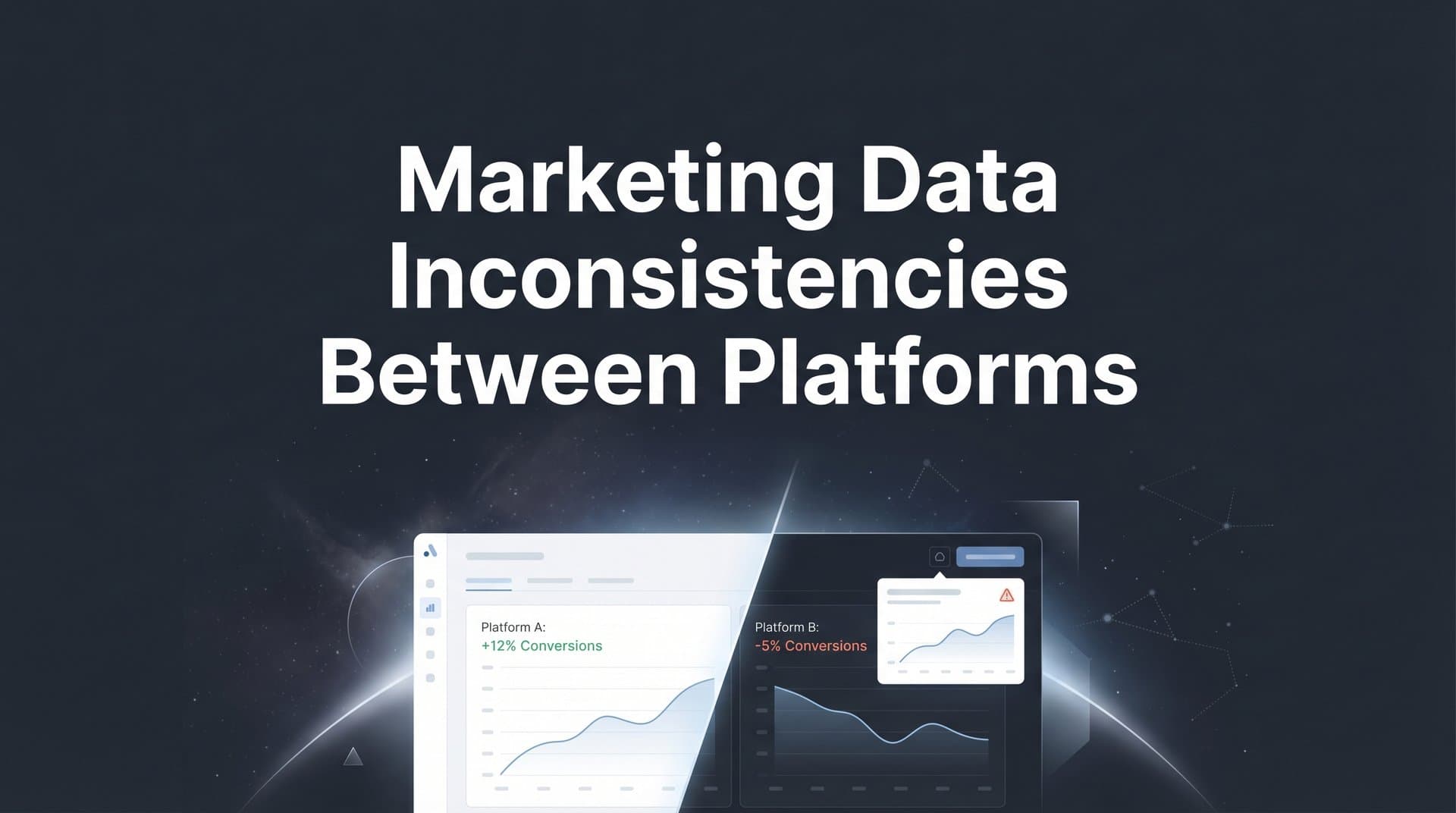
When your Google Ads dashboard shows 47 conversions but Meta reports 62 and your CRM only has 31 closed deals, you have a data inconsistency problem. This disconnect between platforms costs marketers hours of manual reconciliation and leads to misallocated budgets. The root causes vary: different attribution windows, cookie limitations, tracking gaps, and siloed data sources that never communicate.
The good news is that specialized tools now exist to unify your marketing data, reconcile discrepancies, and give you a single source of truth. We evaluated these solutions based on cross-platform integration capabilities, attribution accuracy, ease of implementation, and real-time data synchronization. Here are the top tools for solving marketing data inconsistencies in 2026.
1. Cometly
Best for: Marketers needing accurate attribution and server-side tracking to bypass browser limitations
Cometly is a marketing attribution platform that tracks the entire customer journey from ad click to CRM conversion using server-side tracking technology.
 9 Best Tools to Fix Marketing Data Inconsistencies Between Platforms in 2026
Where This Tool Shines
Cometly addresses the core problem of data inconsistencies by capturing conversion events independently of browser-based tracking. When iOS updates and cookie blockers cause gaps in your data, Cometly's server-side approach ensures you're still capturing the full picture.
The platform's AI-powered recommendations analyze your complete attribution data to identify which campaigns truly drive revenue. Instead of relying on platform-reported metrics that often conflict, you get a unified view that shows exactly which touchpoints contribute to conversions.
Key Features
Server-Side Tracking: Captures conversion data that browser-based pixels miss, ensuring accuracy even with cookie blockers and iOS limitations.
Multi-Touch Attribution: Tracks every touchpoint across all ad platforms to show the complete customer journey from first click to final conversion.
Conversion Sync: Feeds enriched conversion data back to Meta, Google, and other platforms to improve their algorithm optimization and targeting.
AI-Powered Recommendations: Analyzes cross-platform performance to suggest budget allocation changes and identify high-performing campaigns.
Real-Time Analytics Dashboard: Displays unified metrics across all platforms with direct comparison capabilities to spot discrepancies immediately.
Best For
Digital marketing teams and agencies managing significant ad spend across multiple platforms who need accurate attribution to make confident budget decisions. Particularly valuable for businesses struggling with iOS tracking limitations and those who want to feed better conversion data back to ad platforms.
Pricing
Custom pricing based on ad spend volume. Demo available to explore features and discuss implementation for your specific tracking needs.
2. Funnel.io
Best for: Teams aggregating data from hundreds of marketing sources into warehouses or BI tools
Funnel.io is a data aggregation platform that connects over 500 marketing data sources and automatically maps and transforms data for consistent reporting.
 9 Best AI Marketing Analytics Software Tools in 2026
Where This Tool Shines
Funnel.io excels at the ETL process: extracting data from diverse platforms, transforming it into consistent formats, and loading it wherever you need it. When you're pulling data from dozens of ad networks, social platforms, and analytics tools, Funnel.io handles the heavy lifting of standardization.
The platform's automated data mapping means you don't have to manually reconcile field names and metrics across sources. Revenue from Google Ads, Meta, and LinkedIn all flows into the same standardized format, making cross-platform comparison straightforward.
Key Features
500+ Native Data Connectors: Pre-built integrations with major ad platforms, analytics tools, and marketing software eliminate custom API work.
Automated Data Mapping: Transformation rules automatically standardize metrics and dimensions across different platforms for consistent reporting.
Flexible Export Options: Send unified data to any BI tool, data warehouse, spreadsheet, or visualization platform you already use.
Historical Data Backfill: Pull in past performance data to analyze trends and compare current results against historical benchmarks.
Data Quality Monitoring: Alerts notify you when data sources stop reporting or metrics fall outside expected ranges.
Best For
Marketing operations teams at mid-sized to enterprise companies who need to centralize data from many sources into a data warehouse or BI platform. Ideal for organizations with established analytics infrastructure looking to automate data collection.
Pricing
Starts at $1,000 per month for the Essentials plan. Pricing scales based on the number of data sources and volume of data processed.
3. Supermetrics
Best for: Marketers who build reports in Google Sheets, Excel, or Looker Studio
Supermetrics is a data pipeline tool that pulls marketing data from various platforms directly into spreadsheets, Looker Studio, and data warehouses for unified reporting.
 9 Best Tools to Fix Marketing Data Inconsistencies Between Platforms in 2026
Where This Tool Shines
Supermetrics makes data aggregation accessible without requiring a data engineering team. If you're comfortable building reports in Google Sheets or Looker Studio, Supermetrics brings all your platform data into these familiar tools automatically.
The scheduled refresh feature means your reports stay current without manual exports. Set it up once, and your cross-platform performance dashboard updates every morning with fresh data from all your sources.
Key Features
Direct Spreadsheet Integration: Pull data from any connected platform directly into Google Sheets or Excel with simple query builders.
Scheduled Automatic Refreshes: Set reports to update hourly, daily, or weekly so your data stays current without manual intervention.
Data Blending Capabilities: Combine metrics from multiple sources in a single report to calculate blended metrics like total ROAS or overall conversion rate.
Pre-Built Templates: Start with ready-made report templates for common use cases like cross-channel performance or campaign comparison.
Looker Studio Integration: Create interactive dashboards that automatically refresh with data from all your marketing platforms.
Best For
Small to mid-sized marketing teams who prefer working in spreadsheets and Looker Studio rather than enterprise BI platforms. Perfect for marketers who need quick cross-platform reports without technical complexity.
Pricing
Starts at $39 per month for a single data connector. Pricing increases based on the number of connectors and destinations needed for your reporting stack.
4. Segment
Best for: Companies building a customer data infrastructure with real-time routing capabilities
Segment is a customer data platform that collects, cleans, and routes customer data in real-time across your entire marketing and analytics stack.
 8 Best Attribution-Focused Platforms vs Segment: Which Approach Fits Your Marketing Stack in 2026
Where This Tool Shines
Segment acts as the central nervous system for customer data. Instead of implementing tracking code for every tool separately, you implement Segment once, and it routes events to all your destinations simultaneously. This creates consistency because every platform receives the same event data at the same time.
The identity resolution feature is particularly powerful for reducing discrepancies. Segment stitches together user behavior across devices and sessions, creating a unified customer profile that all your downstream tools can reference.
Key Features
Single Tracking API: Implement one tracking library across web, mobile, and server instead of separate code for each analytics or marketing tool.
Real-Time Data Routing: Send customer events to 400+ destinations instantly, ensuring all platforms have the same data at the same time.
Identity Resolution: Merge anonymous and known user data across devices and sessions to create unified customer profiles.
Data Governance Controls: Set privacy rules, filter sensitive data, and maintain compliance across all downstream destinations from a central interface.
Schema Validation: Ensure data consistency by validating that events match expected formats before routing to destinations.
Best For
Product-led companies and SaaS businesses that need a robust customer data infrastructure. Best suited for teams with engineering resources who want to build a scalable, long-term data foundation.
Pricing
Free tier available for up to 1,000 monthly tracked users. Team plan starts at $120 per month and scales based on monthly tracked users and destinations.
5. Triple Whale
Best for: Shopify ecommerce brands struggling with attribution accuracy on Meta and Google
Triple Whale is an ecommerce analytics platform with a first-party pixel that provides accurate attribution for Shopify brands dealing with platform data discrepancies.
 7 Best Funnel.io Alternatives for Marketing Data Analytics in 2026
Where This Tool Shines
Triple Whale was built specifically for the ecommerce attribution problem. Its first-party pixel tracks conversions independently of Meta and Google, giving you a neutral measurement layer to validate what platform dashboards report.
The platform calculates blended ROAS and MER (Marketing Efficiency Ratio) across all channels, helping you understand true profitability when individual platform metrics conflict. Post-purchase surveys add another attribution data point by asking customers directly how they discovered your brand.
Key Features
First-Party Pixel Tracking: Independent conversion tracking that doesn't rely on platform pixels, providing a neutral source of truth for attribution.
Blended ROAS Calculations: See overall return on ad spend across all platforms combined, not just what each platform claims individually.
Creative Performance Analytics: Track which ad creatives drive the most revenue across campaigns and platforms in a unified view.
Post-Purchase Survey Attribution: Collect customer-reported attribution data through surveys that ask how shoppers found your store.
Shopify Native Integration: Deep integration with Shopify data including customer lifetime value, product performance, and cohort analysis.
Best For
Direct-to-consumer Shopify brands spending $50,000 or more monthly on paid advertising. Particularly valuable for brands where iOS tracking limitations have created significant attribution gaps.
Pricing
Starts at $129 per month for the Growth plan. Pricing tiers scale based on monthly revenue and feature access needed.
6. Northbeam
Best for: Brands needing machine learning attribution and media mix modeling for budget allocation
Northbeam is an attribution and media mix modeling platform that uses machine learning to provide cross-channel insights and spend recommendations.
 9 Best Ad Tracking Software Solutions After iOS Privacy Updates in 2026
Where This Tool Shines
Northbeam applies statistical modeling to your marketing data to determine true incremental impact. Rather than relying on last-click or platform-reported attribution, it analyzes patterns across all your marketing activities to identify what's actually driving conversions.
The media mix modeling approach is particularly valuable when you're investing in channels like podcasts, TV, or influencer marketing where direct attribution is challenging. Northbeam quantifies the contribution of these channels alongside your digital advertising.
Key Features
Machine Learning Attribution: Advanced models analyze customer journey patterns to assign conversion credit more accurately than rules-based attribution.
Media Mix Modeling: Statistical analysis determines optimal budget allocation across all channels including hard-to-track offline media.
Cross-Channel Path Analysis: Visualize common customer journeys across touchpoints to understand how channels work together to drive conversions.
Incrementality Recommendations: Suggestions for budget shifts based on which channels are likely to drive the most incremental revenue.
Forecasting Tools: Predict future performance based on different budget allocation scenarios to plan spending more effectively.
Best For
Ecommerce and DTC brands with monthly ad spend above $100,000 who need sophisticated attribution modeling. Companies investing in multiple channels including harder-to-track media benefit most from the statistical approach.
Pricing
Custom pricing based on ad spend and data volume. Typically starts around $1,000 per month for smaller brands and scales up for enterprise accounts.
7. Measured
Best for: Validating marketing effectiveness through controlled incrementality experiments
Measured is an incrementality measurement platform that validates whether your marketing actually drives conversions through controlled experiments.
 9 Best Enterprise Attribution Solutions for Large-Scale Marketing Teams in 2026
Where This Tool Shines
Measured takes a fundamentally different approach to solving data inconsistencies. Instead of trying to reconcile conflicting platform reports, it runs geo-based experiments to measure true incremental impact. By comparing performance in test markets where ads run versus control markets where they don't, you get unbiased measurement of actual effectiveness.
This approach is particularly valuable when platform attribution has become unreliable. Rather than trusting what Meta or Google report, you validate performance through experimental design that isolates causal impact.
Key Features
Geo-Based Testing: Run controlled experiments that compare performance across similar geographic markets to measure true incremental lift.
Always-On Measurement: Continuous testing framework provides ongoing validation of marketing effectiveness rather than one-time studies.
Platform-Agnostic Validation: Measure true impact regardless of what individual platforms report, providing an independent source of truth.
Media Mix Optimization: Recommendations for budget allocation based on validated incremental return rather than platform-reported metrics.
Statistical Rigor: Proper experimental design with confidence intervals and statistical significance testing for reliable results.
Best For
Brands with significant ad budgets (typically $500,000+ monthly) who need to validate marketing effectiveness at scale. Best suited for companies where attribution accuracy directly impacts major budget decisions.
Pricing
Enterprise pricing model requiring direct contact for quotes. Investment typically reflects the scale of testing and measurement required for your spend levels.
8. Rockerbox
Best for: Multi-touch attribution across online and offline channels with customizable models
Rockerbox is a multi-touch attribution platform that tracks the full customer journey across online and offline channels with customizable attribution models.
Where This Tool Shines
Rockerbox captures journey-level data across every touchpoint, from initial awareness through conversion and beyond. This comprehensive tracking means you can see exactly how channels work together rather than relying on each platform's isolated view of its own contribution.
The custom attribution model builder lets you test different approaches to credit assignment. Compare last-click, first-click, linear, time-decay, and custom models side-by-side to understand how attribution methodology affects your performance analysis.
Key Features
Journey-Level Tracking: Capture every touchpoint in the customer journey across all channels to see complete paths to conversion.
Custom Attribution Models: Build and compare multiple attribution models to understand how different credit assignment approaches affect your insights.
TV and Podcast Attribution: Track impact of traditional and audio advertising through pixel-based measurement and survey methodologies.
Cohort Analysis: Analyze customer lifetime value by acquisition source and cohort to understand long-term channel performance.
Deduplication Logic: Automatically remove duplicate conversion events across platforms to prevent overcounting in cross-platform reports.
Best For
Marketing teams at growth-stage companies running omnichannel campaigns who need flexibility in attribution methodology. Particularly useful for brands investing in both digital and traditional media.
Pricing
Custom pricing based on data volume and number of channels tracked. Contact their sales team for quotes specific to your tracking requirements.
9. Adverity
Best for: Enterprise organizations requiring data governance and AI-powered quality monitoring
Adverity is an enterprise marketing data platform with AI-powered data quality monitoring and governance features for large organizations.
Where This Tool Shines
Adverity brings enterprise-grade data governance to marketing analytics. When you're managing data from hundreds of sources across multiple teams and regions, the platform's audit trails and access controls ensure data integrity and compliance.
The AI-powered anomaly detection automatically flags data inconsistencies before they affect reporting. If a data source stops reporting or metrics suddenly spike, you receive alerts immediately rather than discovering problems when stakeholders question your dashboards.
Key Features
AI-Powered Data Quality Alerts: Machine learning monitors data patterns and automatically flags anomalies, missing data, or unexpected changes.
Automated Anomaly Detection: Identify data inconsistencies and quality issues before they impact reporting and decision-making.
Enterprise Data Governance: Role-based access controls, audit trails, and compliance features for organizations with strict data policies.
Custom Transformation Workflows: Build complex data transformation logic to standardize metrics across diverse sources and business units.
Multi-Region Support: Handle data from global marketing operations with region-specific compliance and data residency requirements.
Best For
Enterprise marketing organizations with complex data infrastructure, multiple teams, and strict governance requirements. Companies managing marketing data across regions and business units benefit from the platform's controls and monitoring.
Pricing
Enterprise pricing model requiring direct contact for quotes. Investment reflects the scale and complexity of enterprise data operations.
Making the Right Choice
The tool you choose depends on the specific data inconsistency challenge you're facing. For teams struggling with attribution accuracy and needing to feed better conversion data back to ad platforms, Cometly offers the most comprehensive solution with its server-side tracking and AI recommendations. The platform addresses the root cause of many inconsistencies by capturing data that browser-based tracking misses.
If your primary challenge is aggregating data from dozens of sources into a data warehouse or BI tool, Funnel.io provides robust ETL capabilities with 500+ connectors. Supermetrics serves a similar purpose for teams who prefer working in spreadsheets and Looker Studio rather than enterprise platforms.
Ecommerce brands on Shopify often find Triple Whale's pixel-based approach solves their specific tracking gaps, particularly around Meta and Google attribution. The platform's ecommerce focus means features are tailored to the unique challenges DTC brands face.
For enterprise teams requiring incrementality validation and media mix modeling, Measured and Northbeam deliver the statistical rigor needed for large budget decisions. These platforms go beyond attribution to validate actual causal impact through experimental design.
The key is matching the tool to your specific problem. Are you dealing with attribution gaps caused by iOS limitations? Do you need to aggregate data from many sources? Are you trying to validate whether your marketing actually drives incremental revenue? Different tools solve different aspects of the data inconsistency puzzle.
Ready to elevate your marketing game with precision and confidence? Discover how Cometly's AI-driven recommendations can transform your ad strategy. Get your free demo today and start capturing every touchpoint to maximize your conversions.



