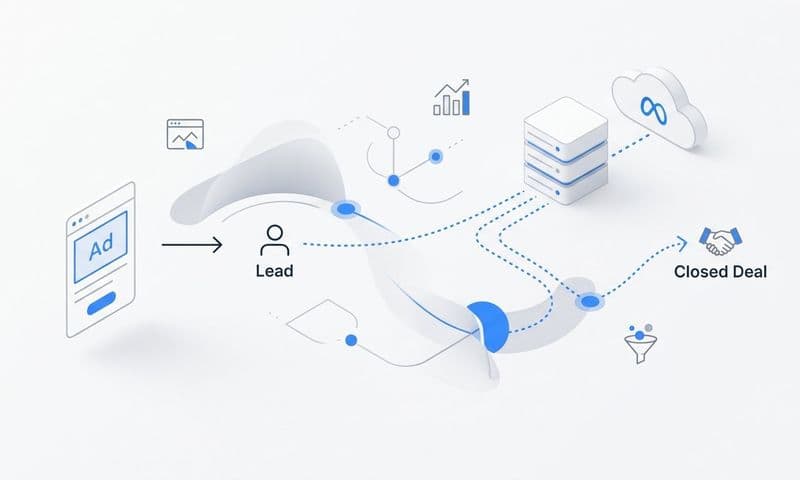


If you are running paid ads across multiple channels, you already know the problem: your ad dashboards tell you one story, your CRM tells you another, and somewhere in between, budget gets wasted on campaigns that look like they are working but are not. Attribution platforms solve this by connecting every touchpoint in the customer journey to actual revenue outcomes.
But not all platforms are built the same. Some are designed for ecommerce, others for enterprise media mix modeling, and a few are purpose-built for B2B SaaS teams that need to connect ad spend directly to pipeline and closed-won deals. This list covers the top rated attribution platforms in 2026, evaluated on accuracy, ease of setup, integration depth, and how well they serve B2B marketing teams.
Whether you are a growth marketer, a paid media lead, or a marketing ops professional, this guide will help you find the right fit.
1. Cometly
Best for: B2B SaaS teams that need to connect ad spend directly to pipeline and closed-won revenue.
Cometly is a marketing attribution and analytics platform built specifically for B2B SaaS companies, connecting ad platforms, CRM data, and Stripe revenue into a single source of truth.
 9 Best Attribution Platforms for Agencies in 2026
Where This Tool Shines
Most attribution tools stop at the conversion event. Cometly goes further by connecting the entire journey from first ad click through to closed-won revenue, giving B2B teams a clear picture of which campaigns are actually driving deals, not just form fills.
The platform's server-side conversion tracking and Conversion API integration make it resilient to the browser-based tracking limitations that have become increasingly common. Rather than relying on cookies that may not fire, Cometly captures events server-side and sends enriched conversion data back to Meta, Google, and other ad platforms to improve algorithmic targeting and campaign optimization.
Key Features
Multi-Touch Attribution: Tracks every touchpoint across all major ad channels with flexible attribution model options.
Server-Side Conversion Tracking: Captures conversion events server-side and integrates with Conversion APIs to maintain data accuracy as browser tracking degrades.
AI Ads Manager: Provides spend recommendations and identifies high-performing ads across every channel so you can scale with confidence.
Pipeline and Revenue Attribution: Connects directly to Stripe and CRM data to attribute pipeline and closed-won revenue back to specific campaigns and channels.
Customer Journey Analytics: Maps the full customer journey with 70+ native integrations across ad platforms, CRMs, and data tools.
Best For
Cometly is the strongest fit for B2B SaaS marketing teams and growth leaders who need more than click-level data. If your sales cycle is longer than a few days, your deals involve multiple stakeholders, and you want to understand which campaigns are driving actual revenue rather than vanity metrics, Cometly is built for exactly that scenario.
Pricing
Paid plans are available. Visit cometly.com for current pricing details and to explore which plan fits your team's needs.
2. Rockerbox
Best for: Mid-market brands with fragmented data across many channels who need a unified marketing data layer.
Rockerbox is a marketing data platform that normalizes spend and conversion data across paid, organic, direct, and offline channels into a single, consistent view.
 9 Top Rated Attribution Platforms for B2B SaaS Teams in 2026
Where This Tool Shines
Rockerbox's core strength is data normalization. If your marketing stack has grown organically over time and your data lives in disconnected silos, Rockerbox acts as the connective layer that brings everything together. It handles the messy work of standardizing channel names, deduplicating conversions, and creating a clean dataset that your team can actually trust.
Offline attribution support is a notable differentiator. For brands running direct mail, radio, or event-based campaigns alongside digital, Rockerbox can incorporate those touchpoints into the attribution model rather than leaving them out of the picture entirely.
Key Features
Unified Data Normalization: Standardizes marketing data from paid, organic, direct, and offline sources into a single consistent layer.
Multi-Touch Attribution: Supports multiple attribution models across paid and organic channels.
Offline Attribution: Includes direct mail and offline channel attribution alongside digital touchpoints.
Customizable Models: Allows teams to configure attribution models to match their specific business logic.
Data Warehouse Integration: Connects to major data warehouses for teams that want to run their own analysis on top of normalized data.
Best For
Rockerbox works well for mid-market brands running a wide mix of channels, including offline, who need reliable data normalization before they can do meaningful attribution analysis. It is less specialized for B2B SaaS deal-level attribution but strong for teams with complex, multi-channel media mixes.
Pricing
Custom pricing. Contact Rockerbox directly for a quote based on your channel mix and data volume.
3. Triple Whale
Best for: Shopify-based DTC brands focused on Meta, TikTok, and Google ad performance.
Triple Whale is an attribution and analytics platform purpose-built for direct-to-consumer ecommerce brands running on Shopify.
 9 Top Rated Attribution Platforms for B2B SaaS Teams in 2026
Where This Tool Shines
Triple Whale has built a reputation in the DTC space for making attribution data accessible and actionable without requiring a data team. The summary dashboard gives brand owners and media buyers a blended view of ROAS, contribution metrics, and channel performance at a glance, which is genuinely useful when you are making daily budget decisions across Meta and TikTok.
The creative analytics dashboard is a standout feature for performance marketers who need to understand which specific ad creatives are driving purchases, not just which campaigns. Combined with post-purchase survey integration for self-reported attribution, Triple Whale gives DTC teams multiple data signals to triangulate performance.
Key Features
Pixel-Based First-Party Attribution: Shopify-native pixel captures purchase events and attributes them back to ad touchpoints.
Creative Analytics: Ad-level performance reporting to identify which creatives are driving the most revenue.
Summary Dashboard: Blended ROAS and contribution metrics across channels in a single view.
Post-Purchase Survey Integration: Captures self-reported attribution data directly from customers at checkout.
Server-Side Event Support: TikTok and Meta attribution with server-side event matching to improve signal quality.
Best For
Triple Whale is built for Shopify DTC brands. If you are running a B2B SaaS business or have a longer sales cycle involving a CRM, this is not the right tool. But for ecommerce teams spending heavily on Meta and TikTok, it is one of the most operator-friendly platforms available.
Pricing
Plans start at approximately $129/month. Visit triplewhale.com for current plan details and to find the right tier for your ad spend volume.
4. Northbeam
Best for: High-spend ecommerce and DTC brands that need ML-powered attribution blending MTA and media mix modeling.
Northbeam is a machine learning-powered attribution platform that combines multi-touch attribution and media mix modeling for brands with significant advertising scale.
 8 Best Rockerbox Alternatives for Marketing Attribution in 2026
Where This Tool Shines
Northbeam's differentiation is its ML-driven approach to attribution modeling. Rather than applying a fixed rule-based model like last-click or linear, Northbeam builds custom models that blend multi-touch attribution with media mix modeling signals, which is particularly valuable for high-spend brands where small improvements in budget allocation can translate to meaningful revenue gains.
The predictive spend analysis feature helps media buyers understand where incremental budget is likely to have the highest return, moving attribution from a reporting function into an active planning tool. This is where Northbeam earns its place in the stack for brands spending at scale.
Key Features
ML Attribution Models: Machine learning models that blend multi-touch attribution and media mix modeling signals.
Predictive Spend Analysis: Budget allocation recommendations based on predicted incremental return by channel.
Cross-Channel Reporting: Performance reporting across all paid channels in a unified view.
First-Party Data Integration: Connects first-party data sources to improve model accuracy.
High-Spend Optimization: Model outputs become more reliable at higher ad spend volumes, making it best suited for scaled brands.
Best For
Northbeam is designed for ecommerce and DTC brands with substantial monthly ad spend. The ML models require meaningful data volume to generate reliable outputs, so this platform is less suited for smaller budgets or B2B teams with longer, lower-volume sales cycles.
Pricing
Custom pricing based on ad spend volume. Contact Northbeam directly for a quote.
5. HubSpot Marketing Hub
Best for: Teams already using HubSpot CRM who want native attribution reporting without adding a separate tool.
HubSpot Marketing Hub includes built-in multi-touch attribution reporting tied directly to CRM contact and deal records, making it a natural fit for teams already in the HubSpot ecosystem.
 9 Best Ad Attribution Platforms Compared for B2B SaaS Teams in 2026
Where This Tool Shines
The biggest advantage HubSpot's attribution reporting offers is native CRM integration. Because the attribution data lives inside the same platform as your contact and deal records, you can see which marketing touchpoints influenced specific deals without any data syncing or third-party connectors. For teams already paying for HubSpot, this removes the need for a separate attribution tool entirely.
HubSpot supports several attribution models including first touch, last touch, linear, U-shaped, W-shaped, and full path, giving marketing teams flexibility to compare how different models tell different stories about campaign performance.
Key Features
Multiple Attribution Models: Supports first touch, last touch, linear, U-shaped, W-shaped, and full path models.
CRM-Native Reporting: Attribution tied directly to HubSpot contact and deal records without additional connectors.
Revenue Attribution Reports: Connects marketing touchpoints to deal revenue within the HubSpot CRM.
Native Channel Integration: Works natively with HubSpot email, ads, landing pages, and forms.
No Additional Tool Required: Attribution is a built-in feature for teams already on Marketing Hub Professional or Enterprise.
Best For
HubSpot's attribution reporting is the right choice for teams already invested in the HubSpot ecosystem. If you are using a different CRM or need deeper cross-channel attribution beyond HubSpot's native channels, a dedicated attribution platform will likely serve you better.
Pricing
Marketing Hub Professional starts at $800/month. Enterprise pricing is available for larger teams. Attribution reporting is included in Professional and above.
6. Ruler Analytics
Best for: B2B lead generation teams that need to connect digital touchpoints to offline sales conversations and CRM revenue.
Ruler Analytics is a B2B attribution platform that tracks the full customer journey from first digital touchpoint through to offline sales conversations and CRM-recorded revenue.
 8 Best Attribution Tools with Onboarding Support in 2026
Where This Tool Shines
Ruler Analytics was built for a specific and common B2B challenge: a prospect clicks an ad, fills out a form, has a sales conversation over the phone or email, and eventually closes as a deal in the CRM. Most attribution tools drop the thread after the form fill. Ruler Analytics follows it all the way through by connecting call tracking, form submissions, and CRM deal values into a single attribution view.
This makes it particularly valuable for professional services, agencies, and B2B companies where deals close through sales conversations rather than self-serve checkout flows. The ability to see which channels and campaigns are driving calls that convert into revenue is a meaningful step up from form-fill attribution alone.
Key Features
Call Tracking Attribution: Attributes inbound phone calls back to the original marketing source and campaign.
Offline Conversion Tracking: Connects offline sales outcomes to digital marketing touchpoints via CRM integration.
Multi-Touch Attribution: Tracks touchpoints across digital and offline channels throughout the customer journey.
CRM Integration: Integrates with Salesforce, HubSpot, and other major CRM platforms to pull deal revenue data.
Channel and Campaign Revenue Attribution: Reports revenue attribution at the channel and campaign level for accurate ROI analysis.
Best For
Ruler Analytics is a strong fit for B2B lead generation businesses where phone calls and sales conversations are a significant part of the conversion path. If your entire sales process is digital and self-serve, the call tracking features will be less relevant, but for traditional B2B sales motions it fills an important gap.
Pricing
Plans start at approximately $199/month. Visit ruleranalytics.com for current pricing and plan details.
7. Dreamdata
Best for: B2B teams with complex buying committees and long sales cycles that need account-level attribution.
Dreamdata is a B2B revenue attribution platform that maps touchpoints across all contacts within an account to reveal the full buying committee journey.
Where This Tool Shines
In B2B, a single deal often involves five, six, or more stakeholders, each interacting with your marketing content in different ways and at different times. Most attribution platforms treat each contact as an isolated individual. Dreamdata takes an account-based approach, stitching together every touchpoint across every contact within an account to show the full picture of how a deal was influenced.
This account-level view is genuinely useful for teams running LinkedIn campaigns, content marketing, and demand generation programs where influence is spread across a buying committee rather than concentrated in a single decision-maker. It connects to Salesforce and HubSpot to pull deal data and map revenue back to the touchpoints that mattered.
Key Features
Account-Based Attribution: Maps touchpoints across all contacts within an account rather than treating each contact in isolation.
Pipeline and Revenue Attribution: Connects to Salesforce and HubSpot to attribute pipeline and closed-won revenue at the account level.
B2B Attribution Models: Designed for long sales cycles with models that account for multi-stakeholder journeys.
Ad Platform Integrations: Connects to LinkedIn, Google, and Meta for campaign-level attribution reporting.
Customer Journey Analytics: Full account-level journey visualization across all digital touchpoints.
Best For
Dreamdata is best suited for B2B companies with enterprise or mid-market sales motions, longer sales cycles, and buying committees. If you are selling self-serve SaaS with short cycles, the account-based complexity may be more than you need, but for complex B2B sales it is one of the most purpose-built platforms available.
Pricing
A free tier is available. Paid plans start at approximately $999/month. Visit dreamdata.io for current plan details.
8. Attribution App
Best for: SaaS and subscription businesses that need to connect acquisition channel data to LTV, churn, and subscription revenue events.
Attribution App is an attribution platform built specifically for SaaS and subscription businesses, connecting acquisition channel data to subscription revenue events and long-term customer value.
Where This Tool Shines
Most attribution platforms measure success at the point of conversion, whether that is a form fill, a trial signup, or a first purchase. For subscription businesses, that is only the beginning of the story. Attribution App follows the customer journey through trials, paid conversions, upgrades, and eventually churn, connecting each of those events back to the original acquisition channel.
This means you can answer questions that most attribution tools cannot: which channels are driving customers with the highest LTV? Which acquisition sources have the highest churn rates? Where should you invest to acquire customers who stick around? For SaaS teams managing subscription revenue, these are the metrics that actually determine whether a channel is profitable.
Key Features
Subscription Revenue Attribution: Connects acquisition channel data to subscription events including trials, conversions, upgrades, and churn.
LTV and CAC Analysis: Reports lifetime value and customer acquisition cost by acquisition channel.
Trial-to-Paid Conversion Tracking: Tracks which channels drive free trials that convert to paying customers.
Billing Platform Integration: Integrates with Stripe, Recurly, and other subscription billing tools.
Churn Attribution: Identifies which acquisition channels drive customers with higher churn rates over time.
Best For
Attribution App is the right fit for SaaS and subscription businesses that want to move beyond conversion-level attribution and understand the long-term revenue impact of their acquisition channels. It is particularly valuable for teams running free trial models where the conversion-to-paid step is critical to measure accurately.
Pricing
Custom pricing. Contact Attribution App directly for a quote based on your subscription revenue volume and data needs.
9. Google Analytics 4 (GA4)
Best for: Teams running Google Ads who need a baseline attribution layer at no platform cost.
Google Analytics 4 is Google's free web analytics platform with a built-in data-driven attribution model and native integration with Google Ads campaigns.
Where This Tool Shines
GA4's primary strength is its native connection to Google Ads. If Google is your primary paid channel, GA4 gives you campaign-level attribution data without paying for an additional platform. The data-driven attribution model uses Google's machine learning to distribute credit across touchpoints based on actual conversion probability rather than applying fixed rules, which is a meaningful improvement over simple last-click models.
For teams just starting to build out their attribution practice, GA4 provides a solid foundation. It covers organic search, paid search, referral, and direct traffic in a single cross-channel view, and the event-based tracking model is flexible enough to capture custom conversion events relevant to your business.
Key Features
Data-Driven Attribution: ML-powered attribution model that distributes credit based on conversion probability across touchpoints.
Native Google Ads Integration: Direct connection to Google Ads for campaign-level attribution without additional connectors.
Cross-Channel Reporting: Reports across organic, paid, referral, and direct traffic in a unified view.
Event-Based Tracking: Flexible event model for defining and tracking custom conversion events.
Free to Use: No platform fee for standard GA4. Google Analytics 360 is available for enterprise needs at custom pricing.
Best For
GA4 is the right starting point for teams with limited budget or those heavily reliant on Google Ads. It is worth noting that GA4 does not natively connect to CRM deal data, which means it cannot close the loop to pipeline and revenue the way dedicated B2B attribution platforms can. For teams that need that connection, GA4 works best as a complementary tool rather than the primary attribution source.
Pricing
Free for standard use. Google Analytics 360 is available at custom enterprise pricing for organizations that need higher data limits and additional features.
Which Attribution Platform Is Right for Your Team?
The right attribution platform depends almost entirely on your business model, your sales motion, and what question you most need to answer. Here is a quick breakdown by use case to help you decide.
B2B SaaS teams connecting ad spend to pipeline and revenue: Cometly is the purpose-built choice. It connects ad platforms, CRM data, and Stripe revenue into a single view, with server-side tracking and AI-powered recommendations built in. If you need to know which campaigns are driving closed-won deals, not just form fills, this is where to start.
B2B teams with complex buying committees and long sales cycles: Dreamdata's account-based attribution is the strongest fit. It maps touchpoints across every stakeholder in an account, which is essential when multiple people influence a single deal.
B2B lead gen with phone-based sales conversations: Ruler Analytics fills the gap between digital touchpoints and offline sales conversations, connecting call tracking and form submissions to CRM deal values.
Teams already using HubSpot: HubSpot Marketing Hub's native attribution reporting is often sufficient and removes the need for a separate tool. Start there before adding another platform to your stack.
SaaS and subscription businesses focused on LTV and churn: Attribution App is built specifically for this use case, connecting acquisition channels to subscription events over the full customer lifecycle.
Shopify DTC brands running Meta and TikTok: Triple Whale is the most operator-friendly option for this segment. Northbeam is the better choice for high-spend brands that need ML-powered modeling.
Teams with fragmented data across many channels: Rockerbox's data normalization layer is the right starting point before layering on more advanced attribution models.
Teams just getting started with Google Ads: GA4 is free, reliable for Google-channel attribution, and a solid baseline. Upgrade to a dedicated platform when you need CRM-connected revenue attribution.
If you are a B2B SaaS marketing team ready to move beyond surface-level metrics and connect your ad spend to real revenue outcomes, Cometly is built for exactly that. You can explore multi-touch attribution models and how B2B revenue attribution works in practice with the resources available on the Cometly blog. When you are ready to see it in action, Get your free demo and start capturing every touchpoint from first click to closed-won deal.