

You've spent hours crafting the perfect campaign, setting up your UTM parameters, and launching your ads—only to find your analytics showing a mess of (not set) values, duplicate entries, or missing data entirely. Sound familiar? You're not alone.
UTM parameter tracking problems are one of the most frustrating issues digital marketers face because they directly undermine your ability to understand what's actually driving results. When your tracking breaks, you're essentially flying blind, making budget decisions based on incomplete or inaccurate data.
The good news? Most UTM tracking issues follow predictable patterns, and once you know what to look for, they're entirely fixable.
This guide walks you through a systematic approach to diagnosing and fixing the most common UTM tracking issues. Whether you're dealing with parameters being stripped by redirects, inconsistent naming conventions causing data fragmentation, or cross-domain tracking failures, you'll learn exactly how to identify the root cause and implement lasting solutions.
By the end, you'll have a reliable tracking system that captures every touchpoint accurately—giving you the confidence to scale campaigns based on real data, not guesswork.
Step 1: Audit Your Current UTM Implementation for Errors
Before you can fix what's broken, you need to understand what you're working with. Start by examining your existing UTM parameters for the technical errors that most commonly break tracking.
The first culprit to check: encoding issues. Spaces in your UTM parameters should never appear as literal spaces—they need to be encoded as %20 or replaced with underscores or hyphens. If you're seeing URLs like "utm_campaign=spring sale" instead of "utm_campaign=spring_sale" or "utm_campaign=spring%20sale", you've found your problem. Special characters like ampersands, question marks, and hashtags can also break parameter parsing if not properly encoded.
Next, review your URL structure systematically. UTM parameters must follow a specific order: they start with a question mark (?), then each parameter is separated by an ampersand (&). A properly formatted URL looks like this: yoursite.com/page?utm_source=facebook&utm_medium=cpc&utm_campaign=spring_sale. If you're seeing multiple question marks or missing ampersands, your parameters won't register correctly.
Use Google's Campaign URL Builder or similar validation tools to check your parameter syntax. These tools automatically format parameters correctly and catch common mistakes before they reach production. Simply paste your destination URL and fill in the parameter fields—the tool generates a properly formatted tracking URL.
Here's where organization becomes critical: create a master spreadsheet documenting all your active campaigns and their UTM structures. Include columns for campaign name, destination URL, source, medium, campaign, content, and term parameters. This inventory serves two purposes—it helps you spot inconsistencies across campaigns, and it becomes your reference guide for maintaining standards going forward.
As you audit, watch for these red flags: parameters that suddenly cut off mid-word (indicating truncation), URLs exceeding 2,000 characters (which some systems reject), and parameters appearing in the wrong order. Each of these technical issues can cause your analytics platform to misread or completely ignore your tracking data.
Pay special attention to how your team creates UTM URLs. If different people are manually typing parameters, you're almost guaranteed to have inconsistencies. Manual creation leads to typos, formatting variations, and the encoding issues we mentioned earlier. Consider using dedicated UTM tracking tools to standardize the process.
Step 2: Identify Where Parameters Are Being Lost or Stripped
Now that you've verified your UTM parameters are correctly formatted, it's time to trace where they disappear during the user journey. This is where many marketers discover the real source of their tracking problems.
Start by testing redirect chains. Every time a URL redirects—whether it's a 301 permanent redirect or a 302 temporary redirect—there's a risk that UTM parameters get stripped. This happens because some redirect configurations don't preserve query strings by default.
To test this, create a tracking URL with full UTM parameters and click through it yourself. Watch your browser's address bar as the page loads. Do the parameters stay intact through each redirect, or do they vanish at some point? If they disappear, you've found where the break occurs.
Link shorteners are notorious parameter strippers. Many URL shortening services—especially free ones—don't preserve query strings unless you explicitly configure them to do so. If you're using Bitly, Rebrandly, or similar tools, check their settings to ensure parameter preservation is enabled. Better yet, test a shortened URL before using it in a live campaign.
JavaScript-based navigation presents another common pitfall. Single-page applications and sites using JavaScript frameworks sometimes handle navigation in ways that don't preserve query strings. If your landing page uses JavaScript to route users or load content dynamically, test whether UTM parameters survive these transitions.
Here's a scenario many marketers encounter: you're running ads that link to your homepage, which then uses JavaScript to route users to specific product pages. If that routing doesn't explicitly carry over the query parameters, your UTM data gets left behind on the homepage and never reaches your analytics.
Check your landing pages for plugins or server configurations that might strip parameters. Some caching plugins, security tools, and content management systems have settings that remove query strings to improve caching efficiency or prevent injection attacks. WordPress sites, in particular, often have security plugins that strip unfamiliar parameters by default.
Payment processors and third-party checkout systems deserve special attention. When users leave your site to complete a purchase on a platform like Stripe, PayPal, or Shopify checkout, parameters often get lost in the transition. The user clicks "Buy Now" with full UTM data, gets sent to the payment processor, then returns to your confirmation page with no tracking information whatsoever. These are common attribution tracking challenges that require specific solutions.
To diagnose these issues systematically, create a test campaign with distinctive UTM parameters—something like utm_source=test&utm_medium=diagnostic&utm_campaign=parameter_test. Then click through every possible user path: from ad to landing page, through any redirects, across domain boundaries, and into any third-party systems. At each step, check whether the parameters are still present.
Step 3: Standardize Your UTM Naming Conventions
Even perfectly formatted UTM parameters become useless if your naming conventions are inconsistent. This is where many tracking systems fall apart—not from technical failures, but from human inconsistency.
The problem is simple but devastating: "facebook", "Facebook", and "FACEBOOK" create three separate entries in your analytics. Same with "cpc", "CPC", and "Cpc". Multiply this across dozens of campaigns and hundreds of ads, and your reporting becomes fragmented beyond usefulness.
Create a documented naming taxonomy that everyone on your team follows religiously. This document should specify exactly how to format every parameter value. Most teams find that lowercase-only conventions work best because they're simple and eliminate case sensitivity issues entirely. Following UTM parameter best practices from the start prevents these headaches.
Source Parameter Standards: Define how you'll name each traffic source. Will you use "facebook" or "fb"? "google_ads" or "adwords" or "google"? Pick one format and stick with it across all campaigns. Your taxonomy should list every source you use with its exact spelling.
Medium Parameter Standards: Establish clear categories for traffic types. Common mediums include cpc (paid search), social (organic social), email, display, and referral. Decide whether you'll use abbreviations or full words, and whether you'll differentiate between paid and organic social (social_paid vs social_organic, for example).
Word Separation Rules: When campaign names contain multiple words, will you use underscores (spring_sale), hyphens (spring-sale), or plus signs (spring+sale)? Underscores are generally the safest choice because they're URL-safe and easy to read in reports. Avoid spaces entirely—they cause encoding issues and make URLs harder to share.
Campaign Naming Structure: Develop a consistent format for campaign names. Many teams use a hierarchical structure like "product_objective_audience_date". For example: "crm_leads_smb_q1" immediately tells you this campaign promotes your CRM to small businesses for lead generation in Q1. This structure makes reporting infinitely easier when you're analyzing dozens of concurrent campaigns.
Build a UTM parameter template library for common campaign types. Create pre-approved templates for Facebook ads, Google Ads, email campaigns, LinkedIn sponsored content, and any other channels you regularly use. When someone needs to launch a campaign, they start with the template rather than creating parameters from scratch.
The template approach has another benefit: it forces standardization at the point of creation. If your Facebook ad template always uses utm_source=facebook&utm_medium=social_paid, no one can accidentally create a campaign with utm_source=fb&utm_medium=cpc and fragment your data. For teams managing multiple channels, explore UTM parameter management tools to automate this process.
Step 4: Configure Cross-Domain and Subdomain Tracking
Your customer journey rarely stays on a single domain. Users might click an ad that lands on your marketing site, navigate to your blog subdomain, then complete a purchase on your checkout domain. Without proper cross-domain tracking, each transition looks like a new session from a new source—destroying your attribution data.
In Google Analytics 4, cross-domain tracking requires explicit configuration. You need to tell GA4 which domains belong to your property so it can maintain the same client ID as users move between them. Navigate to Admin > Data Streams > Configure tag settings > Configure your domains, then add every domain and subdomain where you want to preserve tracking.
The configuration passes the client ID (_ga parameter) along with your UTM parameters when users cross domain boundaries. This ensures GA4 recognizes the user as the same person rather than starting a new session and attributing the conversion to "direct" traffic.
Subdomain tracking presents similar challenges. If your main site is example.com and your blog is blog.example.com, you need to configure cookie domain settings to share tracking data across subdomains. In GA4, this typically means setting your cookie domain to ".example.com" (with the leading dot) so cookies work across all subdomains.
Test the complete user path across all domains to verify parameter persistence. Create a test campaign URL with distinctive UTM parameters, then manually click through every possible path a user might take. Check that both the client ID and UTM parameters survive each domain transition. If they don't, your configuration isn't working correctly.
Payment processors and third-party checkout systems require special attention because they're outside your direct control. When users leave your site for Stripe, PayPal, or Shopify checkout, you're relying on those platforms to return users to your confirmation page with tracking data intact.
Most modern payment processors support passing custom parameters through the checkout flow. In Stripe, for example, you can include UTM data in the metadata field, which gets returned to your webhook or redirect URL after payment. This requires custom implementation but ensures you don't lose attribution data at the most critical moment—the conversion.
For Shopify stores, cross-domain tracking to external checkout pages can be particularly tricky. Shopify's checkout domain is separate from your main store domain, and standard GA4 cross-domain tracking doesn't always work seamlessly. You may need to implement custom tracking through Shopify's checkout.liquid file or use a specialized attribution platform that handles these transitions automatically. Learn more about Shopify reporting and Google Analytics for ad tracking to solve these issues.
If you're evaluating vendors, our AI UGC for Shopify breakdown can help.
Self-referrals are a telltale sign of cross-domain tracking failure. If you're seeing your own domain listed as a referral source in analytics, it means users are crossing domain boundaries without proper tracking, causing GA4 to treat each domain as a separate traffic source.
Step 5: Implement Server-Side Tracking as a Backup Layer
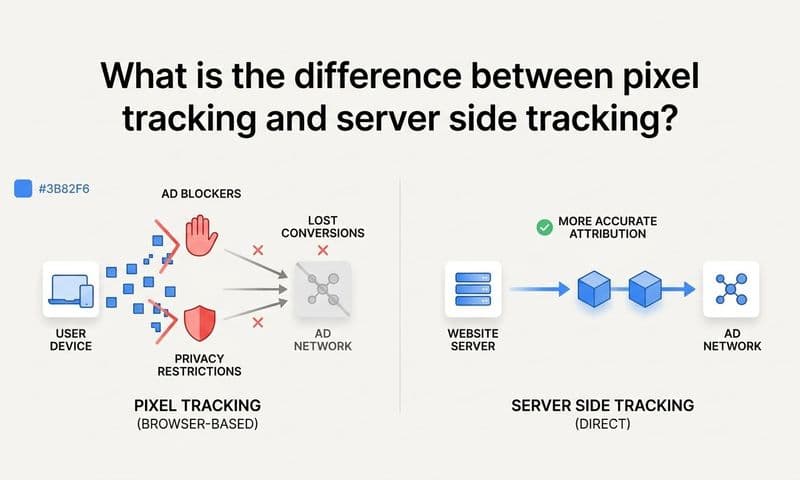
Client-side UTM tracking—the traditional method where JavaScript reads parameters from the URL—is increasingly unreliable. Ad blockers, iOS privacy features, and browser restrictions are blocking or limiting client-side tracking scripts, creating gaps in your attribution data that you might not even realize exist.
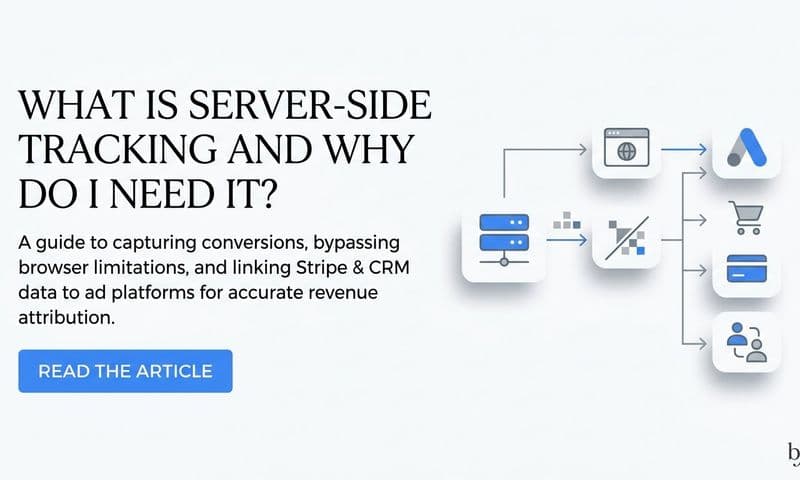
This is why server-side tracking has become essential for accurate attribution. Instead of relying solely on browser-based JavaScript to capture UTM parameters, server-side tracking captures and stores this data on your server before it ever reaches the user's browser.
Here's how it works: when a user clicks your ad with UTM parameters, the request first hits your server. Your server captures the UTM data, stores it in a database or session, and associates it with that user's session or profile. This happens regardless of whether the user has ad blockers enabled or privacy settings that would normally block client-side tracking scripts.
The technical implementation varies depending on your stack, but the principle remains the same. Your server-side code extracts UTM parameters from the incoming request URL, stores them in a way that persists across the user's session, and then sends that data to your analytics and attribution platforms through server-to-server connections. Understanding the differences between Google Analytics vs server-side tracking helps you choose the right approach.
Server-side tracking solves several critical problems that plague UTM-only approaches. When users have ad blockers installed, client-side analytics scripts often get blocked entirely—meaning not only do you lose UTM data, you lose the entire visit. Server-side tracking captures the data before the user's browser has a chance to block anything.
iOS privacy features like Intelligent Tracking Prevention (ITP) limit how long cookies persist and restrict cross-site tracking. These restrictions can cause attribution windows to shorten dramatically or disappear entirely for iOS users, who represent a significant portion of high-value mobile traffic. Server-side tracking bypasses these browser-level restrictions by handling data on your infrastructure. This is one of many cookie tracking problems in advertising that server-side solutions address.
Connecting server-side events with your analytics and attribution platforms requires setting up server-to-server integrations. For Google Analytics 4, this means implementing the Measurement Protocol API to send events directly from your server. For marketing attribution platforms, you'll use their API or webhook endpoints to transmit conversion data along with the associated UTM parameters.
This is where platforms like Cometly provide significant value beyond basic UTM tracking. While UTM parameters only capture the initial click source, Cometly tracks the complete customer journey across every touchpoint—from ad click through website visits, form submissions, and CRM events—all the way to closed revenue. The platform captures data server-side, ensuring accuracy even when browser-based tracking fails, and connects all these touchpoints to show true multi-touch attribution.
The combination approach—client-side tracking as your primary method with server-side as backup—gives you the most reliable data. When client-side tracking works, you get real-time data in your analytics dashboard. When it fails due to ad blockers or privacy features, your server-side tracking ensures you still capture the essential attribution data. For a deeper dive, explore first-party data tracking setup strategies.
Step 6: Validate and Monitor Your Tracking Continuously
Setting up tracking correctly is only half the battle. Without ongoing validation and monitoring, your carefully constructed system will gradually degrade as team members create new campaigns, redirect chains change, and technical configurations drift.
Create a pre-launch checklist for testing UTM parameters before campaigns go live. This checklist should include: validate URL syntax using a builder tool, test the click-through path from ad to landing page, verify parameters appear in your analytics real-time reports, check that parameters persist through any redirects, and confirm cross-domain tracking works if applicable.
We compare the leading options in our ad builder roundup.
The real-time reports in Google Analytics 4 are invaluable for validation. Launch your test campaign, click through it yourself, then immediately check GA4's real-time view to see if the traffic appears with correct source, medium, and campaign attribution. If it doesn't show up within a few minutes, something is broken.
Set up automated alerts for unusual spikes in (not set) or (direct) traffic. These values indicate tracking failures—either parameters are being stripped, your tracking code isn't firing, or users are somehow bypassing your UTM parameters. A sudden increase in (not set) values often signals that a recent change broke something in your tracking implementation.
Build a dashboard specifically for monitoring UTM data quality over time. This dashboard should track: percentage of sessions with complete UTM data, count of (not set) values by parameter, list of unique source/medium combinations (to catch typos and inconsistencies), and trends in direct traffic (which often masks attribution failures). Implementing real-time data tracking helps you catch issues immediately.
Schedule quarterly audits to catch drift in naming conventions and implementation. Even with the best documentation and templates, inconsistencies creep in over time. Someone creates a campaign manually, a new team member doesn't follow the taxonomy, or an agency partner uses their own naming convention. Regular audits identify these issues before they fragment your data beyond repair.
During these audits, export your source/medium data and look for variations that should be consolidated. If you see "facebook", "Facebook", "fb", and "FB" all appearing as separate sources, you know your naming standards aren't being followed. Use custom channel groupings or data filters to consolidate these variations in reporting, then update your documentation and training to prevent future inconsistencies.
Monitor your redirect chains regularly. As your site evolves, URLs change, pages get moved, and new redirects get added. Each change is an opportunity for parameters to get stripped. Test your most important campaign landing pages monthly to ensure redirects still preserve UTM data.
Putting It All Together
UTM parameter tracking problems don't have to derail your marketing analytics. By systematically auditing your implementation, identifying where parameters get lost, standardizing naming conventions, configuring cross-domain tracking, adding server-side backup, and establishing ongoing monitoring, you create a robust system that delivers accurate attribution data.
Here's your quick checklist for reliable UTM tracking: validate syntax before launching campaigns using URL builder tools, test all redirect paths to ensure parameters survive each hop, enforce naming standards across teams with documented taxonomies and templates, configure cross-domain tracking properly in your analytics platform, implement server-side capture for resilience against ad blockers and privacy features, and monitor data quality weekly through automated alerts and dashboards.
The reality is that even perfectly implemented UTM tracking has limitations. It only captures the initial click source, not the complete journey across multiple touchpoints. It relies on browser-based data that's increasingly restricted by privacy features. And it requires constant vigilance to maintain accuracy as campaigns and infrastructure evolve.
When you need attribution that goes beyond UTM parameters—capturing every touchpoint from ad click through website behavior, form submissions, CRM events, and closed revenue—Cometly provides the complete picture that manual UTM tracking alone can't deliver. The platform combines first-party tracking with server-side data capture to ensure accuracy even when browser-based tracking fails, then connects all these touchpoints to show exactly which campaigns and channels are driving real revenue.
Ready to elevate your marketing game with precision and confidence? Discover how Cometly's AI-driven recommendations can transform your ad strategy—Get your free demo today and start capturing every touchpoint to maximize your conversions.