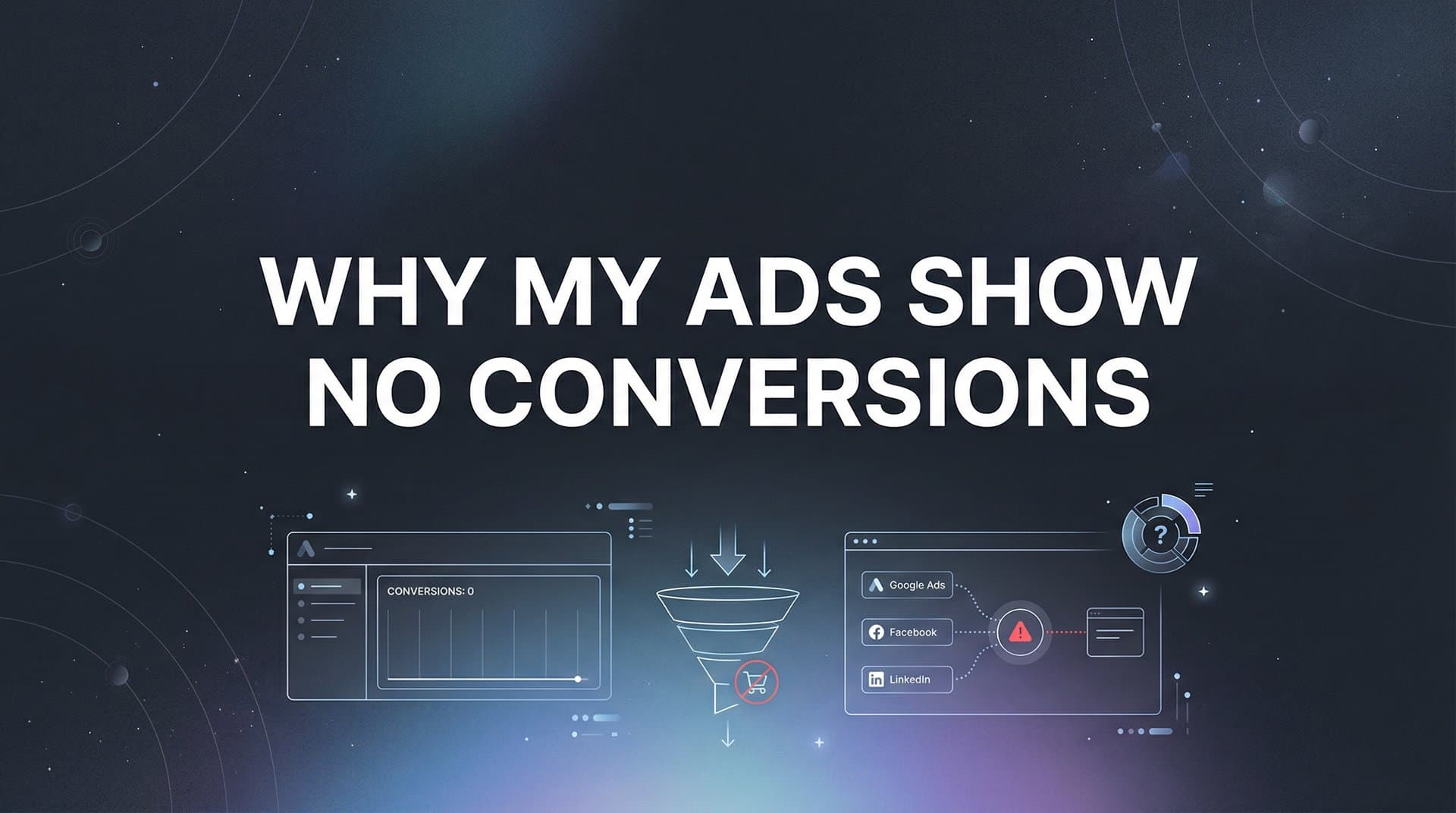
You've launched your campaigns, set your budgets, and watched the clicks roll in. Traffic looks good. Engagement seems solid. But when you check your conversion column, there it is: zero. Nothing. Not a single conversion tracked.
It's one of the most frustrating moments in paid advertising. You know people are visiting your site. You can see the sessions in your analytics. But according to your ad platform, none of those clicks turned into leads, sales, or any meaningful action.
Here's the thing: when your ads show no conversions, it rarely means your campaigns aren't working. More often, it means your data isn't flowing correctly. Something in the tracking chain is broken, misconfigured, or simply invisible to your ad platform. The good news? Most of these issues follow predictable patterns, and once you know what to look for, they're fixable.
This guide will walk you through the seven most common reasons ads show zero conversions and exactly how to diagnose and fix each one. Whether you're dealing with a tracking pixel that won't fire, privacy restrictions blocking your data, or attribution windows that don't match your sales cycle, you'll find practical solutions you can implement today.
The Tracking Pixel Isn't Firing Properly
Let's start with the most common culprit: your tracking pixel simply isn't working. This happens more often than you'd think, and it's usually the first place to check when conversions mysteriously disappear.
Pixel installation errors come in several flavors. Sometimes the code gets placed in the wrong location on your page—buried in a footer where it loads too late, or positioned after other scripts that block it from executing. Other times, the pixel fires on the wrong pages entirely. You might have it tracking homepage visits when you actually need it on your thank-you page after a purchase.
Consent management platforms add another layer of complexity. If your site uses a cookie banner to comply with GDPR or CCPA, your pixel might be blocked until users accept tracking. But if the pixel never gets permission to fire, conversions never get recorded. The user completes their purchase, but your ad platform has no idea it happened. Understanding Facebook ads tracking pixel issues can help you identify these common problems faster.
Here's how to diagnose pixel issues quickly. Open your website in Chrome or Firefox, then open the browser's developer tools. Navigate to the Network tab and filter for tracking requests. Complete a test conversion yourself—fill out your form, complete a purchase, whatever action you're trying to track. Watch the Network tab to see if the conversion event fires.
For Meta ads, install the Meta Pixel Helper browser extension. It shows you in real-time whether your pixel is active, what events it's firing, and whether any errors are preventing it from working correctly. Green means everything's good. Yellow or red flags indicate problems you need to fix.
Google Ads users should use Google Tag Assistant. It works similarly, showing you which Google tags are present on any page and whether they're functioning properly. Load your conversion page and check whether the conversion tracking tag appears and fires successfully. If you're experiencing issues, our guide on Google Ads conversion tracking problems covers the most common fixes.
Common fixes are usually straightforward once you've identified the problem. If the pixel isn't firing at all, reinstall it following the platform's current installation guide. Platforms update their tracking code regularly, and old implementations sometimes break. If JavaScript conflicts are blocking your pixel, check for errors in your browser console and resolve any script conflicts.
For consent management issues, configure your pixel to fire after users grant consent. Most modern consent platforms integrate with major ad platforms, allowing pixels to load conditionally once permission is given. Make sure this integration is set up correctly.
Double-check that your pixel fires on the actual conversion page, not just your landing page. If you're tracking form submissions, the pixel should fire on the thank-you page users see after submitting. If you're tracking purchases, it should fire on the order confirmation page. Firing on the wrong page means you're tracking visits, not conversions.
Your Conversion Event Setup Has Gaps
Even when your pixel fires correctly, conversion tracking can fail if the events themselves are misconfigured. This is where things get technical, but understanding event setup is crucial for accurate conversion data.
The most common mistake is tracking the wrong action entirely. You might be tracking page views when you actually need to track form submissions. Or tracking link clicks when you need completed purchases. Ad platforms need to know the specific moment a conversion happens, and if you're telling them to track the wrong event, they'll never capture actual conversions.
Event parameters matter more than most marketers realize. When you set up a conversion event, you're not just telling the platform what happened—you're providing context about the value, the product purchased, the form submitted. If these parameters are missing or incorrectly configured, the platform might receive the event but fail to attribute it properly.
For example, if you're tracking purchases but not passing the transaction ID or order value, the platform can't distinguish between a $50 sale and a $5,000 sale. If you're tracking leads but not passing the lead source or form type, you can't segment conversion data to understand what's actually working. Learning how to properly set up Google Ads conversion tracking from the start prevents these issues.
Testing conversion events before launching campaigns saves enormous headaches later. Both Meta and Google offer testing environments where you can verify events fire correctly and include all necessary parameters. Meta's Events Manager includes a Test Events tool that shows you exactly what data your pixel is sending in real-time.
Use this tool religiously. Complete a test conversion on your site while watching the Test Events feed. You should see your conversion event appear within seconds, complete with all the parameters you configured. If parameters are missing or values look wrong, fix them before spending another dollar on ads.
Google's Tag Assistant works similarly for Google Ads conversions. It shows you which tags fired, what data they sent, and whether any errors occurred during the process. Run through your entire conversion funnel while monitoring Tag Assistant to catch configuration issues early.
Another common gap: custom conversion events that aren't properly linked to your ad campaigns. You might have set up the event correctly, but if you haven't selected it as the conversion goal in your campaign settings, the platform won't optimize for it or report on it. Check your campaign settings to ensure the conversion event you're tracking is actually the one your campaign is optimizing toward.
iOS Privacy Changes and Browser Restrictions Are Blocking Data
This is the elephant in the room for modern digital advertising. Even when your tracking is perfectly configured, privacy restrictions are blocking a significant portion of conversion data from reaching your ad platforms.
iOS App Tracking Transparency fundamentally changed how conversion tracking works for Meta and other platforms. When users choose "Ask App Not to Track" on their iPhone, apps can't access the device identifier needed to connect ad clicks to conversions. This doesn't mean conversions aren't happening—it means the ad platform can't see them. If you've noticed declining performance, understanding why Facebook ads stopped working after iOS 14 provides essential context.
The impact is substantial. Many businesses saw reported conversions drop significantly after iOS 14.5, even though actual sales remained stable. The conversions were still occurring, but the tracking connection was severed. Users clicked ads, made purchases, but the ad platform had no way to connect those two events.
Browser-based tracking prevention compounds the problem. Safari's Intelligent Tracking Prevention and Firefox's Enhanced Tracking Protection actively limit how long cookies can persist and what data they can collect. Safari now expires first-party cookies after seven days of inactivity, which means if someone clicks your ad today but converts next week, the cookie connecting them to your ad is already gone.
This creates a particularly painful scenario: you might be running successful campaigns that drive conversions days or weeks after the initial click, but your ad platform shows zero conversions because the tracking cookie expired before the purchase happened. Your attribution window might be set to 28 days, but browser restrictions cut that short.
Server-side tracking has emerged as the most effective solution to these privacy-related data gaps. Instead of relying solely on browser-based pixels that users can block, server-side tracking sends conversion data directly from your server to the ad platform. This bypasses browser restrictions and provides more reliable conversion data.
The technical implementation varies by platform, but the concept is consistent: when a conversion happens on your site, your server sends that information to the ad platform's API rather than relying on a client-side pixel in the user's browser. This captures conversions that traditional pixel tracking would miss entirely.
Meta's Conversions API and Google's Enhanced Conversions both use server-side tracking to supplement client-side pixel data. Implementing enhanced conversions for Google Ads typically requires developer resources, but the improvement in conversion visibility often justifies the investment. Businesses using server-side tracking frequently see conversion data improve significantly compared to pixel-only implementations.
The key is using server-side tracking alongside client-side pixels, not as a replacement. This dual approach captures the maximum amount of conversion data: client-side pixels catch what they can, and server-side tracking fills in the gaps where browser restrictions block pixel-based tracking.
Attribution Windows Don't Match Your Sales Cycle
Sometimes your tracking works perfectly, but conversions still show as zero because they're happening outside the timeframe your ad platform is monitoring. This is where attribution window mismatches create invisible conversions.
Default attribution windows are designed for quick conversion cycles. Meta uses a 7-day click and 1-day view attribution window by default. Google Ads defaults to 30 days for Search and 7 days for Display. These settings work well for e-commerce impulse purchases or simple lead generation, but they fall short for longer sales cycles.
If you're selling enterprise software, consulting services, or high-consideration products, your sales cycle might span weeks or months. Someone might click your ad today, research for three weeks, talk to sales, then convert a month later. According to your ad platform's default settings, that conversion happened outside the attribution window—so it shows as zero conversions from your ad.
The conversion happened. Your ad influenced the sale. But because the purchase occurred 30 days after the click and your attribution window was set to 7 days, the platform doesn't connect the two events. From the platform's perspective, the ad drove zero conversions, even though it directly contributed to a valuable sale. Understanding Facebook ads attribution models helps you configure settings that match your actual customer journey.
This creates a particularly frustrating scenario where your ads might be performing well, but the data makes them look like failures. You see traffic, you see sales in your CRM, but the connection between the two is invisible to your ad platform because the timing doesn't fit the attribution window.
Adjusting attribution settings can reveal these hidden conversions. Both Meta and Google allow you to customize attribution windows to better match your sales cycle. If your average time from first click to conversion is 21 days, set your attribution window accordingly. You'll start seeing conversions that were always there but previously fell outside the reporting window.
Understanding platform-specific window options helps you configure tracking correctly. Meta offers attribution windows from 1-day click to 28-day click, with various view-through options. Google Ads allows windows up to 90 days for Search campaigns. Choose the window that aligns with your actual customer journey, not just the default setting.
One important caveat: longer attribution windows can sometimes inflate conversion counts if you're not careful. Someone might click multiple ads before converting, and with a long window, multiple campaigns might claim credit for the same conversion. This is where understanding attribution models becomes important, but the first step is ensuring your window is long enough to capture conversions in the first place.
Landing Page or Funnel Issues Are Preventing Conversions
Sometimes the problem isn't that conversions aren't being tracked—it's that conversions aren't happening at all. If your tracking is perfect but users are bouncing or abandoning their purchase, you'll see zero conversions because zero conversions are occurring.
Slow load times kill conversions before tracking even enters the equation. If your landing page takes more than three seconds to load, many users will leave before it fully renders. They never see your offer, never interact with your form, never convert. Your pixel might be ready to fire, but it never gets the chance because the user is already gone.
Page speed issues are particularly damaging on mobile devices, where users have less patience and slower connections. You might see clicks from mobile ads but zero conversions because your page is too slow to load on mobile networks. The tracking pixel eventually fires, but by then the user has already bounced.
Broken forms and checkout errors create a different kind of problem. Users want to convert, they're trying to complete your form or purchase, but technical issues prevent them from finishing. A form that doesn't submit, a checkout that throws errors, a payment gateway that fails—these issues stop conversions from happening while your ad spend continues.
The frustrating part is that your ad platform shows clicks and traffic, making it look like campaigns are working. But if those visitors hit a broken form, they can't convert no matter how good your targeting is. You're paying for traffic that has no path to conversion. Learning where most marketing conversions drop off helps you identify and fix these critical funnel issues.
Using analytics to identify drop-off points reveals where users are abandoning your funnel. Set up funnel visualization in Google Analytics to track the percentage of users who complete each step of your conversion process. If 1,000 people land on your page but only 10 reach your thank-you page, you have a funnel problem, not a tracking problem.
Look for dramatic drop-offs at specific steps. If 80% of users abandon at your form page, test the form for errors. Try submitting it yourself on different devices and browsers. Check whether required fields are clearly marked, whether the submit button works, whether error messages display properly.
If the drop-off happens at checkout, investigate payment processing. Are all payment methods working? Do test transactions complete successfully? Are there any error messages appearing during the checkout process? Sometimes a payment gateway integration breaks, and you don't realize it until you notice conversions have stopped.
Mobile-specific issues deserve special attention. Test your entire conversion funnel on mobile devices, not just desktop. Forms that work perfectly on desktop sometimes fail on mobile due to viewport issues, button sizing problems, or keyboard interference with form fields. If most of your traffic comes from mobile ads but you're seeing zero mobile conversions, mobile usability issues are likely the culprit.
Getting Complete Conversion Visibility Across Platforms
Even when everything is configured correctly, platform-native tracking often underreports conversions. This isn't necessarily because of errors—it's because ad platforms can only see the data they have access to, and modern customer journeys often extend beyond what any single platform can track.
Data silos create blind spots in conversion tracking. Someone might click your Facebook ad on their phone during their commute, research on their laptop at work, then convert on their tablet at home. To you, that's one customer journey leading to one conversion. But to Facebook's pixel, those might look like three different users on three different devices, and the conversion might not get attributed to the original ad click. This is why Facebook ads reporting discrepancies are so common.
Cross-device journeys are increasingly common, but platform tracking struggles to connect the dots. Cookies are device-specific, so when users switch devices, the tracking connection breaks. They clicked your ad, they converted, but the platform can't prove the connection because the conversion happened on a different device than the click.
Privacy restrictions compound these limitations. Between iOS tracking prevention, browser cookie restrictions, and users actively blocking tracking, a significant percentage of conversions happen in ways that platform pixels simply can't detect. The conversions are real, but they're invisible to your ad platform's native tracking.
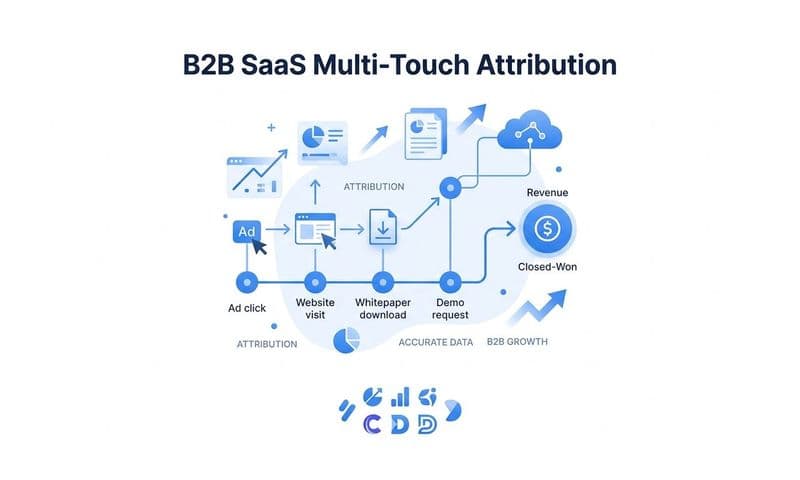
This is where unified attribution becomes valuable. Instead of relying solely on what each ad platform can see through its own pixel, unified attribution connects ad data with your CRM, backend systems, and actual business results. When someone converts, you match that conversion back to their ad interactions across all platforms, creating a complete picture of what's driving revenue.
The approach works by tracking users across their entire journey, not just the moments when ad platform pixels can see them. When a lead enters your CRM or a purchase appears in your order management system, attribution platforms match that conversion back to all the marketing touchpoints that influenced it—even if those touchpoints happened across different devices, platforms, or sessions.
This captures conversions that platform-native tracking misses entirely. The person who clicked your Facebook ad on mobile, then Googled your brand and clicked a search ad, then converted directly by typing your URL—platform tracking might miss that conversion or attribute it incorrectly. Unified attribution sees the full path and credits the touchpoints that actually influenced the sale. Using ad tracking tools to scale ads with accurate data makes this process significantly easier.
Feeding accurate conversion data back to ad platforms creates a powerful feedback loop. When you send enriched conversion data to Meta, Google, and other platforms through their APIs, you're not just improving your reporting—you're improving their optimization algorithms. The platforms can use this more complete conversion data to identify patterns and optimize targeting more effectively.
This is particularly valuable for server-side conversion tracking. When your attribution system sends conversion data directly to ad platforms via API, it includes conversions that client-side pixels missed due to privacy restrictions or cross-device journeys. The platforms receive more accurate signals about what's working, which improves their ability to find and convert similar users. Implementing conversion sync for Facebook ads ensures your optimization algorithms receive complete data.
The result is better campaign performance, not just better reporting. When ad platforms have complete conversion data, their machine learning algorithms can optimize more effectively. They identify the characteristics of users who actually convert, not just the subset of converters that pixel tracking happened to catch.
Putting It All Together
When your ads show zero conversions, approach it like a detective investigating a crime scene. Start with the technical fundamentals: verify your tracking pixel fires correctly, check that conversion events are properly configured, and test the entire tracking chain from click to conversion.
If the technical setup checks out, consider privacy-related data loss. Are iOS restrictions or browser tracking prevention blocking a significant portion of your conversion data? Server-side tracking can recover much of this lost visibility, capturing conversions that client-side pixels miss entirely.
Review your attribution settings to ensure they match your actual sales cycle. Default windows work for quick conversions, but longer consideration purchases need longer attribution windows. A 7-day window might hide conversions that are happening at 14 or 21 days.
Don't forget to examine the actual user experience. Slow pages, broken forms, and checkout errors prevent conversions from happening in the first place. No amount of tracking optimization can fix a funnel that doesn't work.
Here's the crucial insight: "zero conversions" rarely means your ads aren't working. It usually means data isn't flowing correctly somewhere in the chain from ad click to conversion tracking. The conversions might be happening, but something is preventing that information from reaching your ad platform.
This is why complete conversion visibility matters so much. When you can connect ad data with your CRM and backend systems, you see the full picture of what's driving revenue. You capture conversions that platform-native tracking misses, attribute them accurately across touchpoints, and feed that enriched data back to ad platforms to improve their optimization.
The marketers who solve conversion tracking issues fastest are those who think beyond platform-native reporting. They verify technical implementation, yes, but they also implement tracking solutions that capture the complete customer journey across devices, platforms, and privacy restrictions.
Ready to elevate your marketing game with precision and confidence? Discover how Cometly's AI-driven recommendations can transform your ad strategy—Get your free demo today and start capturing every touchpoint to maximize your conversions.