

You are spending thousands on ads each month, but something feels off. Your Meta campaigns show impressive click-through rates, yet your sales team says leads are coming from Google. Your TikTok ads claim credit for conversions that your CRM attributes to email. Sound familiar?
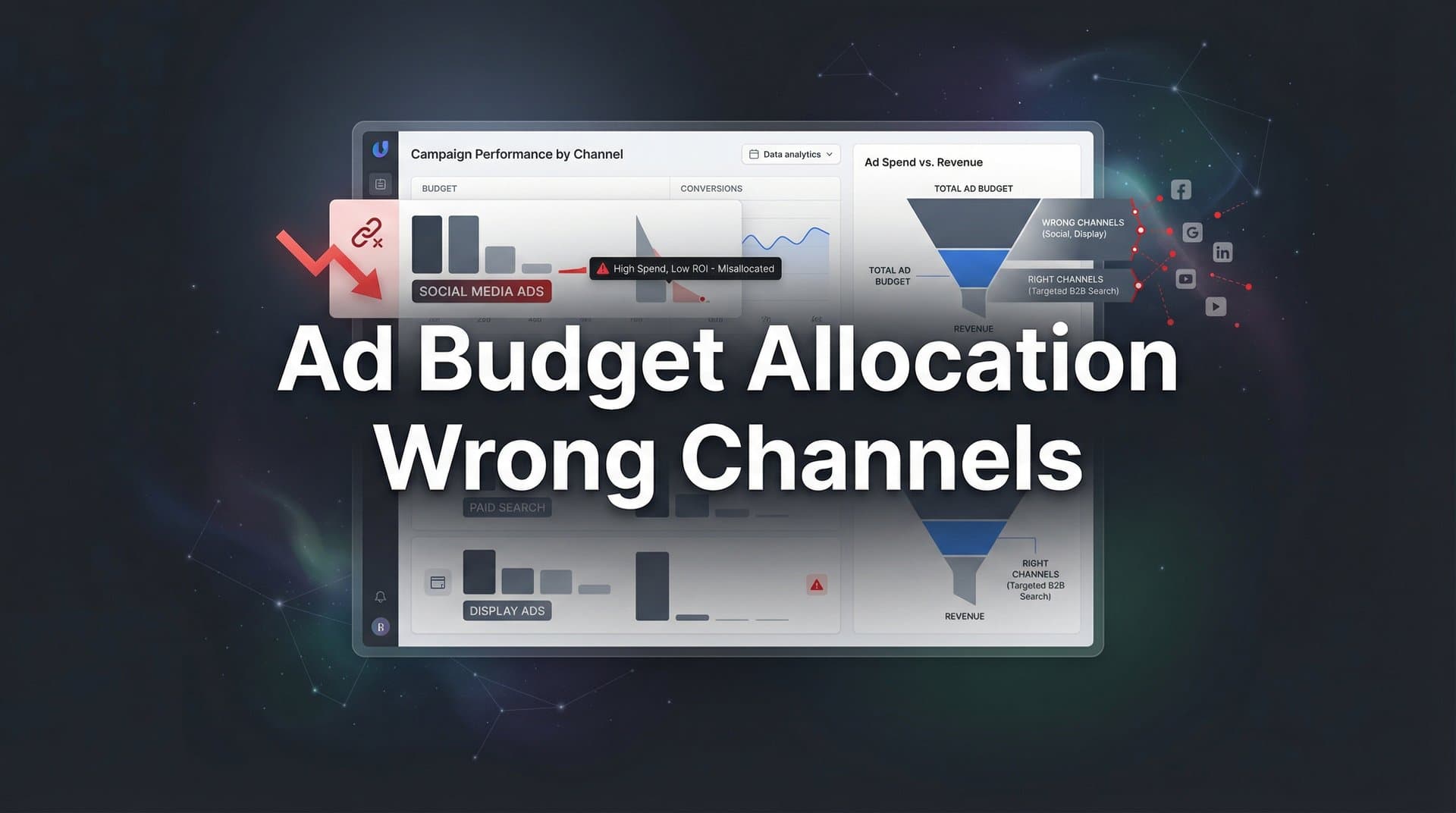
When ad budget allocation flows to wrong channels, you are not just wasting money. You are actively funding underperformers while starving the campaigns that actually drive revenue.
The root cause is almost always the same: fragmented data and unreliable attribution. Each ad platform wants to take credit for every conversion, creating a distorted picture that leads to misguided budget decisions. Meta says it drove 200 conversions. Google claims 180. LinkedIn reports 75. But your CRM only shows 150 total sales for the month. The math does not add up because everyone is measuring differently.
This guide walks you through a systematic process to identify where your budget is being misallocated, fix the underlying attribution problems, and reallocate spend to channels that genuinely drive results. By the end, you will have a clear framework for making confident, data-backed budget decisions that align your spending with actual revenue generation.
Step 1: Audit Your Current Channel Performance Data
Before you can fix budget allocation, you need to see exactly how broken it is. This starts with pulling conversion data from every ad platform you are running and comparing it against what actually happened in your business.
Log into each platform separately. Meta Ads Manager, Google Ads, TikTok Ads, LinkedIn Campaign Manager. Export the conversion data for the past 30 days. You want total conversions, conversion value, and cost per conversion for each channel.
Now pull the same time period from your source of truth. This is your CRM if you are B2B, your e-commerce platform if you are selling products, or your payment processor if you are running a subscription business. Count how many actual sales, leads, or sign-ups you received. Note the total revenue generated.
Here is where it gets interesting. Add up all the conversions your ad platforms are claiming. Compare that number to what your business actually recorded. In most cases, the platforms will collectively claim 150-300% more conversions than you actually received.
This is not a glitch. Ad platforms use attribution windows that count conversions for days or weeks after someone clicks an ad. If a customer clicked your Meta ad on Monday, saw your Google ad on Wednesday, and converted on Friday, both platforms will claim that conversion. Multiply this across thousands of customer journeys, and you get massive over-reporting.
Document the discrepancies channel by channel. Create a simple spreadsheet with columns for platform-reported conversions, actual conversions you can verify in your CRM, and the percentage difference. You will likely find that certain channels over-report more aggressively than others.
Pay special attention to retargeting campaigns. These often show excellent conversion rates because they target people already interested in your product. But they frequently get credit for conversions that would have happened anyway, making them appear more valuable than they actually are. This is a common source of wasted ad budget on wrong attribution.
The goal of this audit is not to find the perfect truth yet. It is to identify how far off your current data is from reality, and which channels show the largest gaps between claimed performance and verified results.
Step 2: Map the Complete Customer Journey
Numbers tell you what is happening. Customer journeys tell you why. To fix budget allocation, you need to understand the actual path people take from discovery to purchase.
Start by selecting 10-20 recent conversions from your CRM. Choose a mix of deal sizes and customer types to get a representative sample. For each one, work backward to identify every touchpoint they had with your marketing before converting.
This detective work requires pulling data from multiple sources. Check your CRM notes for how leads first heard about you. Review email engagement history. Look at website analytics to see which pages they visited and from which sources. Check ad platform data for any clicks or impressions associated with their email address or device ID.
You will start to see patterns emerge. Perhaps most customers first discover you through Google search, engage with your content for a few weeks, click a Meta retargeting ad, and then convert after receiving an email. Or maybe LinkedIn generates initial awareness, Google captures high-intent searches, and Meta closes the deal.
The key insight here is identifying where attribution breaks down. You might find that customers are clicking Google ads but your tracking is not capturing it because they switch devices. Or that podcast ads are driving significant brand searches, but you have no way to connect those dots in your current setup. Many marketers struggle because they cannot track customer journey across channels effectively.
Note which touchpoints are invisible to your current tracking. These are the gaps that lead to budget misallocation. If you cannot see that podcast ads are initiating customer journeys, you will naturally under-invest in them because they show no direct conversions.
Look for patterns in how different customer segments convert. Enterprise deals might require 8-10 touchpoints across multiple channels over several months. Small business customers might convert after just 2-3 interactions. High-value customers might start with organic content before ever clicking a paid ad.
Document these journey maps visually. Draw out the typical path for each customer segment, noting which channels appear at each stage. This becomes your blueprint for understanding where budget should actually flow based on how customers naturally discover and evaluate your business.
Step 3: Implement Unified Cross-Channel Tracking
Fragmented tracking creates fragmented budgets. To allocate spend correctly, you need every channel feeding into a single source of truth that captures the complete customer journey.
This is where marketing attribution platforms come in. Instead of relying on each ad platform's self-reported data, you connect all your channels to one system that tracks every touchpoint and assigns credit based on actual contribution to conversions.
The foundation of accurate tracking is server-side implementation. Browser-based tracking misses significant data due to ad blockers, cookie restrictions, and iOS privacy changes. Server-side tracking captures events directly from your server, bypassing these limitations and providing more complete data.
Start by connecting your ad platforms to your attribution system. This typically involves installing tracking pixels on your website and configuring API connections that send conversion data from your CRM back to the attribution platform. The goal is creating a closed loop where every customer interaction gets recorded and connected to eventual outcomes.
Pay special attention to CRM integration. Your CRM holds the ultimate truth about which leads became customers and how much revenue they generated. When this data syncs with your ad platform data, you can finally see which clicks actually led to closed deals, not just form submissions that went nowhere.
Test your tracking thoroughly before trusting it for budget decisions. Complete test conversions on different devices and browsers. Use incognito mode. Try converting after clearing cookies. Submit test leads through different channels and verify they appear correctly in your attribution system with all touchpoints captured.
One critical capability to verify is cross-device tracking. Customers often discover you on mobile but convert on desktop, or vice versa. If your tracking cannot connect these sessions to the same person, you will miss crucial touchpoints and misattribute conversions. Understanding why your ad platform shows wrong data helps you appreciate the importance of unified tracking.
Once unified tracking is in place, you gain visibility into the full customer journey that no single platform can provide. You can see that a customer first clicked your Google ad, returned via organic search, engaged with your Meta retargeting campaign, and finally converted after clicking an email. Each channel gets appropriate credit based on its actual role in the conversion.
This complete picture is what makes intelligent budget allocation possible. Without it, you are flying blind, making decisions based on incomplete data that naturally favors certain channels over others.
Step 4: Analyze True Revenue Attribution by Channel
Now that you have unified tracking capturing every touchpoint, it is time to analyze what your data actually reveals about channel performance. This is where you discover which channels deserve more budget and which ones have been over-funded.
Start by comparing multi-touch attribution data against the last-click reports from your ad platforms. Last-click attribution gives all credit to the final touchpoint before conversion. Multi-touch attribution distributes credit across all the interactions that contributed to the sale.
The differences can be dramatic. A channel like Meta retargeting might claim 40% of your conversions in last-click attribution, but multi-touch analysis reveals it only influenced 15% of customer journeys, with most of the heavy lifting done by Google search and organic content. This is why revenue attribution to wrong campaigns is such a common problem.
Calculate actual cost per acquisition for each channel using your unified data. Take the total spend on each channel and divide it by the number of conversions it genuinely contributed to, not the inflated numbers the platform reports. This gives you a realistic view of efficiency.
Do the same for return on ad spend. Take the actual revenue generated by customers who interacted with each channel and divide by the spend. Again, use verified revenue from your CRM, not platform-reported conversion values that might be estimates or duplicated across channels.
You will likely discover channels that influence conversions but receive no credit in platform reporting. Top-of-funnel awareness campaigns on YouTube or display networks might not generate many direct clicks, but they initiate customer journeys that eventually convert through other channels. Without multi-touch attribution, these appear worthless when they are actually valuable.
On the flip side, identify channels consuming budget without contributing to the conversion path. Some channels might drive clicks and even form submissions, but analysis reveals those leads never close into customers. They look good in platform dashboards but provide no actual business value. Learning to evaluate marketing channels properly helps you stop wasting budget on vanity metrics.
Create a performance ranking based on true contribution to revenue. List your channels from highest to lowest actual ROAS using your unified attribution data. This ranking will almost certainly differ from what platform dashboards suggest, and it should guide your reallocation decisions.
Pay attention to how different attribution models change the picture. First-touch attribution shows which channels are best at customer acquisition. Last-touch shows which channels close deals. Multi-touch models like linear or time-decay provide a balanced view. Understanding these perspectives helps you allocate budget across the full funnel appropriately.
Step 5: Reallocate Budget Based on Verified Performance
You have identified the discrepancies, mapped customer journeys, implemented unified tracking, and analyzed true channel performance. Now comes the moment of truth: actually shifting your budget to align with verified results.
Start conservatively. Even when data clearly shows a channel is underperforming, making massive cuts all at once can destabilize your entire marketing system. Begin with incremental changes of 10-20% to test the impact before committing to larger shifts.
Identify your biggest misallocation first. This is usually a channel that platform data suggests is performing well but unified attribution reveals is over-credited. Reduce spend here by 15% and document your baseline metrics before making the change.
Simultaneously, increase budget to genuinely high-performing channels that have been under-funded. If your analysis shows Google search is driving 40% of actual revenue but only receiving 25% of budget, shift some of that over-allocated spend here. Following marketing budget allocation best practices ensures you make these shifts strategically.
Set up monitoring to track performance changes after reallocation. Watch both the channels you reduced and those you increased. You want to see if cutting budget from over-credited channels actually impacts conversions, or if they were taking credit for sales that happen anyway.
Document everything. Record your baseline conversion volume, cost per acquisition, and revenue for each channel before making changes. Then track these same metrics daily for the first week and weekly thereafter. This creates a clear before-and-after comparison that validates whether your reallocation improved performance.
Be prepared for platform metrics to look worse even as business results improve. When you cut budget from a retargeting campaign that was over-reporting, that platform will show fewer conversions. But your overall business conversions might stay the same or even increase as you fund channels that actually drive new customer acquisition.
Test different allocation scenarios. Try shifting budget to top-of-funnel awareness if your analysis shows these channels initiate valuable journeys. Or invest more in mid-funnel consideration channels if that is where customers get convinced. Let verified data guide your experiments.
Give changes time to show results. Marketing systems have momentum. A channel you just cut might have already generated awareness that will convert over the next few weeks. Similarly, a channel you just funded needs time to generate new pipeline. Plan for at least two to four weeks of data before drawing conclusions.
The goal is not to find the perfect allocation immediately. It is to create a process of continuous improvement where you systematically shift budget toward channels that drive verified results and away from those that look good in platform dashboards but do not contribute to actual revenue.
Step 6: Build a Sustainable Optimization System
Fixing budget allocation once is valuable. Building a system that keeps it optimized over time is transformational. The final step is creating processes that prevent misallocation from creeping back in.
Establish a regular attribution review cadence. For most businesses, weekly or bi-weekly reviews strike the right balance between staying responsive and avoiding over-reaction to short-term fluctuations. Block time on your calendar specifically for analyzing channel performance using your unified attribution data.
Build dashboards that surface discrepancies automatically. Set up views that compare platform-reported conversions against your CRM data side by side. When the gap between what Meta claims and what your CRM shows grows beyond a certain threshold, you know attribution is drifting and budget allocation needs attention. Using marketing budget optimization tools can automate much of this monitoring.
Create alerts for significant divergence. If a channel suddenly starts claiming 50% more conversions than your unified tracking shows, that is a signal to investigate. Either tracking broke, the platform changed its attribution methodology, or campaign performance genuinely shifted in a way that requires budget adjustment.
Feed accurate conversion data back to your ad platforms. This is called conversion sync or enhanced conversions, and it dramatically improves how platform algorithms optimize your campaigns. When Meta and Google receive verified conversion data from your CRM instead of relying on cookie-based tracking, their machine learning can identify truly valuable audiences and placements.
This creates a virtuous cycle. Better data leads to better platform optimization, which improves actual performance, which makes your attribution more accurate, which enables smarter budget decisions. The platforms stop optimizing for conversions they think happened and start optimizing for conversions that actually did happen.
Related reading: our complete guide to ad platform optimization tools.
Document your allocation decisions and the reasoning behind them. When you shift budget, write down why you made that choice and what you expect to happen. This creates accountability and helps you learn which types of reallocations work best for your specific business.
Review your attribution model periodically. As your business evolves, the model that best represents customer journeys might change. A startup focused on rapid acquisition might prioritize first-touch attribution. A mature company optimizing for efficiency might weight last-touch more heavily. Adjust your model to match your current business priorities. Consider exploring AI-powered budget allocation recommendations to enhance your decision-making process.
Train your team to think in terms of verified performance, not platform metrics. Make unified attribution data the default source of truth in budget discussions. When someone proposes increasing spend on a channel, the first question should be "What does our attribution system show about this channel's true contribution to revenue?"
The marketers who consistently outperform their competition are not those with the biggest budgets or the flashiest creative. They are the ones who know exactly where their budget performs best and have systems in place to keep that knowledge current and actionable.
Making Data-Driven Allocation Your Competitive Advantage
Fixing ad budget allocation requires moving beyond platform-reported metrics to understand where your revenue actually comes from. The six-step process gives you a clear framework: audit your current data discrepancies, map real customer journeys to see what your attribution is missing, implement unified tracking that captures every touchpoint, analyze true channel performance, reallocate budget based on verified data, and build systems that keep your allocation optimized over time.
Quick checklist for immediate action: Pull last month's conversion data from all platforms and compare against CRM records. Identify your top three channels with the largest reporting discrepancies. Evaluate whether your current tracking captures the full customer journey from first touch to closed deal. Consider implementing server-side tracking and multi-touch attribution to get complete visibility.
The gap between what ad platforms claim and what actually drives revenue is costing you thousands every month. Every dollar allocated to an over-credited channel is a dollar not funding the campaigns that genuinely grow your business. The sooner you implement unified attribution and data-driven allocation, the sooner you stop wasting budget on channels that look good in dashboards but do not deliver real results.
The marketers who win are not those with the biggest budgets. They are the ones who know exactly where their budget performs best and act on that knowledge with confidence. They have moved beyond trusting platform metrics to building attribution systems that reveal the complete truth about channel performance.
Ready to elevate your marketing game with precision and confidence? Discover how Cometly's AI-driven recommendations can transform your ad strategy. Get your free demo today and start capturing every touchpoint to maximize your conversions.



