You pull up your Facebook Ads dashboard. Then you open Google Analytics in the next tab. Same time period, same campaigns, same business. And somehow, the numbers look like they came from two completely different companies.
If you have ever stared at that screen wondering which report to believe, you are not alone. This is one of the most common and genuinely costly frustrations in digital advertising. Marketers lose hours trying to reconcile reports that will never agree, and worse, they make budget decisions based on whichever number feels more trustworthy in the moment.
Here is the important thing to understand upfront: this is not a bug. It is not a glitch in your setup. The disconnect between ad platform data and analytics is a structural reality rooted in how these systems were designed to measure the world differently. Understanding why that gap exists, what it means for your decisions, and how to close it is one of the most valuable things a performance marketer can do. That is exactly what this article covers.
Two Systems, Two Realities: How Ad Platforms and Analytics See the World Differently
Think of ad platforms and analytics tools as two witnesses to the same event. They were both there. They both have a story to tell. But they were standing in different places, watching through different lenses, and writing in different notebooks.
Ad platforms like Meta and Google track conversions using their own pixels, tags, and increasingly, modeled signals. When someone clicks your ad and later completes a purchase, the platform's pixel fires and credits that conversion to the campaign. The key word is "credits." Ad platforms are built with a specific purpose: to demonstrate the value of their ad inventory. Their attribution logic reflects that purpose.
Analytics platforms like GA4, on the other hand, track sessions and behavior based on UTM parameters and cookies. When a user arrives on your website, GA4 looks at the URL parameters to understand where they came from. If those parameters are present and intact, GA4 attributes the session correctly. If they are missing, stripped, or expired, GA4 defaults to direct or organic. The platform is built to understand website behavior, not to advocate for any particular traffic source.
This difference in purpose creates a difference in measurement philosophy. Ad platforms apply attribution windows that extend well beyond the moment of conversion. Meta, for example, defaults to a 7-day click and 1-day view attribution window. That means if someone sees your ad on a Monday and converts the following Sunday through a direct visit, Meta claims credit. GA4 records that session as direct traffic because there was no UTM parameter attached to the final visit. Both systems are technically correct within their own frameworks. They just happen to produce completely different numbers.
View-through attribution is another major contributor to this gap. Ad platforms count conversions that occurred after someone simply saw an ad, without ever clicking it. Analytics tools have no mechanism to track ad impressions, so these conversions are entirely invisible to them. From GA4's perspective, that customer came from nowhere. From Meta's perspective, it was the ad that did the work. Understanding the full scope of this requires looking at how Google Analytics compares to a dedicated attribution platform in practice.
Some level of discrepancy between these two systems is not just expected. It is mathematically inevitable. The mistake is assuming they should match. The goal is not perfect alignment. It is understanding the gap well enough to make smart decisions despite it.
The Specific Culprits Behind the Numbers Gap
Once you accept that discrepancy is built into the architecture, the next question becomes: what makes it worse? Several specific technical realities widen the gap between what ad platforms report and what your analytics shows.
Attribution Window Mismatches: As covered above, ad platforms apply attribution windows that can stretch days or weeks beyond a conversion event. A user who clicked a Google ad eight days ago and just converted today may appear in Google Ads data but not in a GA4 report filtered to the same date range. The conversion happened, but the two systems are counting it in different time buckets based on different rules.
Cross-Device and Cross-Browser Fragmentation: A user who clicks an ad on their phone during lunch, then converts on their laptop that evening, creates a fragmented journey that neither system handles perfectly. Ad platforms use probabilistic matching to try to connect these touchpoints, sometimes successfully, sometimes not. Analytics tools typically cannot stitch cross-device journeys together at all without a logged-in user identifier. The result is double-counting on the ad platform side and undercounting on the analytics side.
iOS Privacy Changes and Modeled Conversions: Apple's App Tracking Transparency framework fundamentally changed how ad platforms can observe user behavior across apps and websites. Meta publicly acknowledged this shift and moved to aggregated event measurement and modeled conversions to fill the gaps. This means a meaningful portion of Meta's reported conversions are statistically estimated, not directly observed. Analytics tools lose visibility into these same users entirely, which is why the gap between Meta-reported conversions and GA4-recorded conversions has grown significantly for many advertisers since iOS 14.
Browser-Level Tracking Restrictions: Safari's Intelligent Tracking Prevention, Firefox's Enhanced Tracking Protection, and the widespread use of ad blockers all limit how pixels fire and how long cookies persist. A pixel that does not fire means a conversion that never gets reported to the ad platform. A cookie that expires early means a returning user looks like a new session. These restrictions affect both ad platform pixels and analytics tags, but they do not affect both systems equally, which creates asymmetric data loss. The right ad tracking tools help you scale ads using accurate data even in this restricted environment.
UTM Parameter Loss: If a UTM parameter gets stripped from a URL during a redirect chain, a social share, or an email client that scrubs tracking parameters, GA4 loses the ability to attribute that session to the correct campaign. The conversion gets recorded as direct or organic, even though it originated from a paid ad. This is one of the most common and preventable sources of discrepancy, and it is often discovered only after a thorough tracking audit.
Why This Data Gap Leads to Bad Marketing Decisions
Data discrepancies would be an interesting technical curiosity if they did not cost money. But they do. When marketers operate with misaligned data, the downstream decisions are often wrong in ways that compound over time.
The most common mistake is trusting inflated ad platform numbers at face value. If Meta reports 300 conversions and GA4 shows 180, and you optimize toward Meta's number without understanding why the gap exists, you may be pouring budget into a channel that is claiming credit for conversions it did not cause. This is the attribution overlap problem: when a user touched multiple channels before converting, every ad platform with a pixel in the journey will claim full credit. The sum of ad platform conversions routinely exceeds the actual number of conversions recorded anywhere in your business.
The opposite mistake is equally damaging. Marketers who distrust their ad platform data and rely exclusively on analytics often undercount the real contribution of upper-funnel activity. Awareness campaigns, video ads, and prospecting campaigns rarely get credit in last-click analytics models because they are rarely the final touchpoint before conversion. If you cut spend on a channel because GA4 shows low conversion volume, but that channel was actually warming up audiences who later converted through retargeting or branded search, you have just cut a working part of your funnel without knowing it.
The result of both errors is the same: budget gets allocated toward the wrong outcomes. You scale what looks good on paper rather than what is genuinely driving revenue. You pause campaigns that are contributing to the pipeline because they do not get last-click credit. Over time, these compounding misallocations can quietly erode the efficiency of an entire ad program. Applying sound data analytics in marketing is what separates teams that catch these errors early from those that discover them after significant budget waste.
The solution is not to pick one data source and ignore the other. It is to build a measurement infrastructure that gives you a reconciled, unified view of performance so you can make decisions with confidence rather than guesswork.
Server-Side Tracking and First-Party Data: The Modern Fix
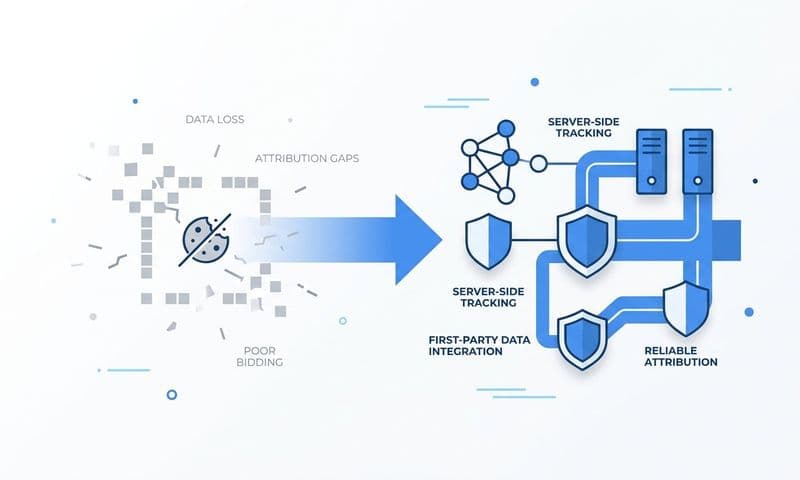
Browser-based tracking was built for a different era of the internet. Pixels, third-party cookies, and client-side tags worked reasonably well when users had fewer privacy protections and browsers did not actively block tracking scripts. That era is over. The modern solution is server-side tracking, and it changes the data quality equation in a fundamental way.
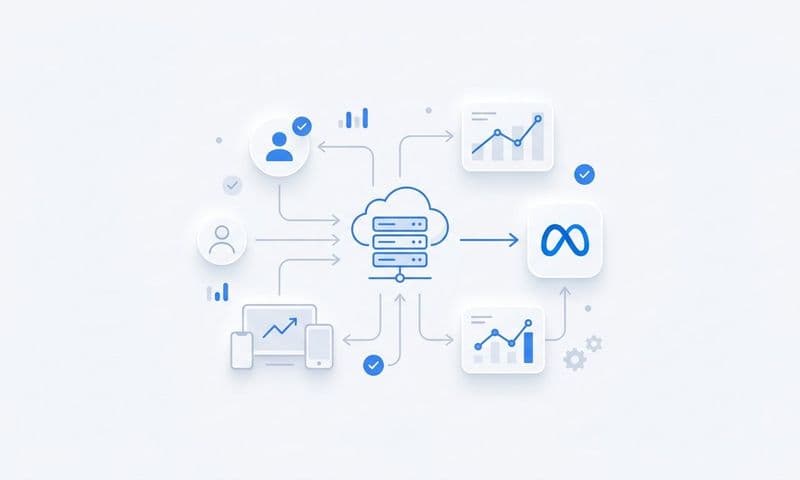
Server-side tracking sends conversion data directly from your server to ad platforms, rather than relying on a pixel firing in the user's browser. When a purchase is completed, your server detects that event and sends the conversion signal to Meta, Google, or any other platform via their Conversion APIs. Because this happens at the server level, it bypasses ad blockers, browser restrictions, cookie limitations, and the iOS tracking limitations that cause so much data loss in traditional setups.
The practical impact is significant. Advertisers who implement server-side tracking typically see a recovery of conversion data that was previously going unrecorded. That recovered data improves the signal quality that ad platform algorithms use for optimization, which means better targeting, more efficient bidding, and stronger campaign performance over time.
Conversion APIs are the technical mechanism that makes this possible. Meta's Conversions API (CAPI), Google's Enhanced Conversions, and TikTok's Events API all allow marketers to send verified, server-side conversion signals back to the respective platforms. These signals can be matched to user identities using hashed first-party identifiers like email addresses, giving platforms a more reliable signal than a third-party cookie that may have been blocked or expired.
First-party data is the other half of this equation. Data collected directly from your own systems, including your CRM, checkout flow, and website, is inherently more reliable than data inferred from third-party cookies. When you connect first-party data to your attribution layer, you can track actual revenue events rather than proxy metrics like page views or form fills. You know which ad led to a real customer, not just a click. Platforms built around a unified analytics platform model make this connection far more reliable at scale.
Together, server-side tracking and first-party data create a more complete and accurate picture of the customer journey. They reduce the gap between what ad platforms report and what actually happened, and they give your analytics and attribution tools better raw material to work with.
Multi-Touch Attribution: Replacing Guesswork With a Full Customer Journey View
Even with perfect tracking infrastructure, a single-touch attribution model will give you an incomplete picture of how your marketing actually works. Last-click attribution, which is the default in many analytics tools, gives all the credit for a conversion to the final touchpoint before purchase. First-click does the opposite. Both models tell part of the story and ignore the rest.
Multi-touch attribution distributes credit across all the touchpoints a customer interacted with before converting. If a customer first discovered your brand through a Facebook prospecting ad, later clicked a Google retargeting ad, and finally converted after clicking a branded search ad, a multi-touch model acknowledges the contribution of all three. Each touchpoint gets a share of the credit based on the model's logic. The best marketing attribution platforms for revenue tracking are built specifically to handle this kind of multi-channel complexity.
This matters because it changes how you evaluate channel performance. A prospecting campaign on Meta may show almost no last-click conversions in GA4, leading you to conclude it is not working. But a multi-touch model might reveal that it is consistently the first touchpoint for customers who go on to convert through other channels. That is a very different story, and it leads to a very different budget decision.
Different multi-touch models serve different business contexts. A linear model distributes credit equally across all touchpoints, which works well when you want to understand the full funnel without making assumptions about which touchpoints matter most. A time-decay model gives more credit to touchpoints closer to the conversion, which suits shorter purchase cycles where recency is a strong signal. A data-driven model uses historical conversion data to assign credit based on which touchpoints actually correlate with conversions, which is the most sophisticated approach when you have sufficient data volume.
For B2B marketers with long sales cycles, multi-touch attribution is especially valuable. When the journey from first touch to closed deal spans weeks or months, last-click attribution systematically undervalues every touchpoint except the last one. A multi-touch view reveals which campaigns are generating pipeline at the top of the funnel, even when they are not the ones closing deals. Dedicated customer journey analytics tools make it possible to visualize these extended paths and identify where the real influence lies.
The goal is not to find the one perfect attribution model. It is to use attribution models as lenses that reveal different dimensions of your marketing performance, so your budget decisions are informed by the full picture rather than a single, incomplete view.
How to Reconcile Your Data and Make Confident Decisions
Understanding why the gap exists is valuable. Actually closing it requires deliberate action across your tracking setup, reporting infrastructure, and decision-making process.
Establish a Single Source of Truth: Trying to manually reconcile reports from Meta Ads Manager, Google Ads, GA4, and your CRM is a losing battle. Each platform will always show different numbers because they were designed to. The practical solution is a dedicated attribution platform that pulls data from all your ad platforms, your CRM, and your website into one unified view. This gives you a consistent reporting layer that accounts for all touchpoints without requiring you to mentally average between conflicting dashboards. A purpose-built marketing analytics platform with real-time conversion data is what makes this single source of truth achievable.
Audit and Standardize Your UTM Tagging: UTM parameters are the connective tissue between your ad campaigns and your analytics platform. If they are inconsistent, missing, or getting stripped during redirects, your analytics data will be unreliable regardless of how well everything else is set up. Establish a clear UTM naming convention across all campaigns and channels, and audit your tagging regularly. Check that UTMs are surviving redirect chains, that auto-tagging is enabled where appropriate, and that your analytics platform is correctly parsing the parameters it receives.
Implement Server-Side Tracking and Conversion APIs: If you are still relying exclusively on browser-based pixels, you are accepting a level of data loss that is increasingly significant. Implementing server-side tracking through Meta CAPI, Google Enhanced Conversions, or a unified server-side solution closes the gap between what happens in the real world and what your ad platforms can see. This is not a nice-to-have at this point. It is a foundational requirement for accurate measurement.
Set Realistic Benchmarks for Discrepancy: Even with excellent tracking infrastructure, some gap between ad platform data and analytics data is normal. Practitioners generally consider a discrepancy in the range of roughly 10 to 20 percent to be within expected bounds, given attribution window differences and view-through credit. A gap significantly larger than that is a signal that something in your tracking setup needs attention. Monitor this gap regularly. If it is growing over time, treat it as a diagnostic indicator and investigate before it distorts your optimization decisions further.
Compare Attribution Models Before Making Budget Calls: Before cutting or scaling a channel based on a single report, look at how that channel performs across multiple attribution models. If a channel looks strong in first-touch but weak in last-click, it is likely playing an important role at the top of the funnel. If it looks strong in last-click but weak in multi-touch, it may be benefiting from other channels' work. Use model comparison as a sanity check before making significant budget moves.
The Bottom Line: Better Data Means Better Decisions
The gap between ad platform data and analytics is not going away. The systems were built differently, they measure differently, and they will always produce different numbers to some degree. But that does not mean you have to operate in the dark.
Understanding why the gap exists gives you the context to interpret your data correctly. Building the right tracking infrastructure, including server-side tracking and Conversion APIs, reduces the gap and improves the quality of data flowing into your ad platforms. Adopting a multi-touch attribution model gives you a complete view of which channels and campaigns are actually contributing to revenue. And centralizing your reporting in a single attribution layer lets you make decisions from a unified, reconciled view instead of toggling between conflicting dashboards.
This is exactly what Cometly is built to do. Cometly connects your ad platforms, CRM, and website data into one real-time attribution view, with server-side tracking to capture what pixels miss and AI-powered attribution to surface what is actually driving revenue. Its Conversion Sync feature feeds enriched, accurate conversion data back to Meta, Google, and other platforms, improving the algorithms that power your campaigns. And its AI layer identifies which ads and campaigns are genuinely performing, so you can scale with confidence instead of guessing.
If you are ready to stop reconciling reports manually and start making marketing decisions you can actually trust, Get your free demo today and see how Cometly brings clarity to your entire marketing data picture.