Running paid ads without a reliable advertising analytics platform is like driving without a dashboard. You might be moving, but you have no idea how fast, how far, or whether you are heading in the right direction. For B2B SaaS marketing teams, the stakes are even higher. Long sales cycles, multiple touchpoints, and complex buyer journeys make it nearly impossible to know which campaigns are actually driving pipeline and revenue without the right tool.
This list covers the best advertising analytics platforms available in 2026, evaluated on attribution depth, integration breadth, ease of use, and how well they connect ad spend to real business outcomes. Whether you are a growth marketer managing a six-figure ad budget or an agency handling multiple clients, there is an option here that fits your workflow. Pricing tiers and ideal use cases are included so you can make a fast, confident decision.
1. Cometly
Best for: B2B SaaS teams that need end-to-end attribution from first ad click to closed-won revenue.
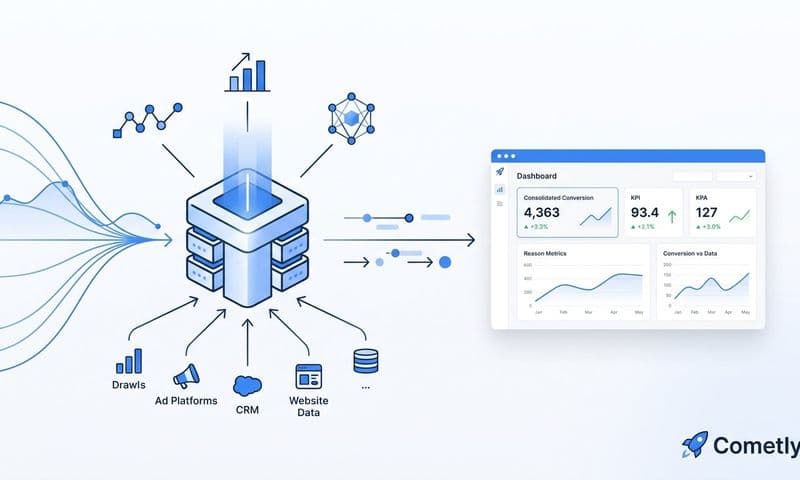
Cometly is a marketing attribution and analytics platform purpose-built for B2B SaaS companies, connecting ad platforms, CRM data, and Stripe revenue to show which campaigns drive real pipeline and closed deals.
 9 Best Marketing Attribution Platforms to Compare in 2026
Where This Tool Shines
Most ad platforms report performance in a bubble. Cometly breaks that bubble open. It connects your ad spend data directly to CRM pipeline and Stripe revenue, so you can see which campaigns generated actual closed-won deals rather than just clicks or form fills. That distinction matters enormously when you are running long sales cycles with multiple decision-makers involved.
The AI ads manager layer makes it particularly useful for growth teams who want more than raw data. It surfaces actionable recommendations on which campaigns to scale and which to cut, based on revenue-level outcomes rather than vanity metrics. For teams frustrated by platform-reported ROAS that never quite matches CRM reality, Cometly is built to close that gap.
Key Features
Multi-Touch Attribution with Server-Side Tracking: Captures every touchpoint with server-side tracking and Conversion API integration, reducing signal loss from iOS restrictions and browser limitations.
CRM and Revenue Integration: Connects ad spend directly to HubSpot, Salesforce, and Stripe so pipeline and closed revenue are visible alongside campaign data.
AI Ads Manager: Identifies high-performing campaigns and recommends specific actions to scale winners and eliminate wasted spend.
Customer Journey Analytics: Visualizes every touchpoint from first ad click to closed deal, giving full visibility into multi-step B2B buyer journeys.
70+ Native Integrations: Includes Meta, Google, LinkedIn, HubSpot, Salesforce, Stripe, and dozens more for a true single source of truth.
Best For
B2B SaaS marketing teams and growth leaders who need accurate revenue-level attribution, not just lead tracking. Particularly strong for teams running paid campaigns across multiple channels who need to justify ad spend to leadership with real pipeline and revenue data.
Pricing
Contact Cometly for pricing. The platform operates on a SaaS subscription model tailored to team size and data volume.
2. Google Analytics 4
Best for: Teams that need a free analytics foundation with native Google Ads integration.
Google Analytics 4 is Google's free web and app analytics platform featuring event-based tracking, cross-channel attribution reporting, and deep native integration with Google Ads.
 11 Best Marketing Analytics Tools to Track and Optimize Campaign Performance in 2026
Where This Tool Shines
GA4 is the most widely adopted analytics platform in the world, and its event-based tracking model gives marketers far more flexibility than the old session-based Universal Analytics approach. For teams running Google Ads as their primary paid channel, the native integration is genuinely powerful: you can see campaign performance, conversion paths, and audience behavior in one place without any complex setup.
The Exploration reports and Attribution section add meaningful depth for teams willing to invest time in configuration. Cross-channel attribution modeling is available natively, though it skews toward Google-owned channels by nature. For a free tool, the ceiling is surprisingly high.
Key Features
Event-Based Tracking Model: Replaces session-based tracking with flexible event measurement that supports custom conversion definitions.
Native Google Ads Integration: Syncs campaign data, audiences, and conversions directly between GA4 and Google Ads.
Cross-Channel Attribution: Attribution models available in the Attribution section to compare data-driven, last-click, and other models.
Exploration Reports: Custom funnel analysis, path exploration, and audience overlap reports for deeper behavioral insights.
GA4 360 Enterprise Tier: Unlocks higher data limits, BigQuery exports, and SLA-backed support for enterprise teams.
Best For
Teams primarily running Google Ads that need a free, solid analytics foundation. Also a strong starting point for smaller marketing teams before investing in a dedicated attribution platform. Less suited for B2B teams needing CRM-connected revenue attribution.
Pricing
Free for standard use. GA4 360 enterprise pricing is available for organizations with higher data volume and compliance needs.
3. Triple Whale
Best for: Shopify-based ecommerce and DTC brands needing first-party attribution and creative performance insights.
Triple Whale is an ecommerce-focused advertising analytics platform built specifically for Shopify brands, combining first-party pixel tracking with creative analytics and customer lifetime value reporting.
 9 Best Advertising Analytics Platforms in 2026
Where This Tool Shines
Triple Whale was built to solve a specific problem that hit ecommerce brands hard: iOS attribution gaps. Its proprietary first-party pixel captures purchase data at the source, giving brands a more accurate picture of which ads are actually driving revenue when platform pixels fall short. For Shopify merchants juggling Meta, TikTok, and Google simultaneously, the blended ROAS dashboard is a practical time-saver.
The creative analytics dashboard is a standout feature for performance marketers who run high volumes of ad creative. It connects ad-level creative data to revenue outcomes, helping teams identify which hooks, formats, and offers actually convert rather than just generate impressions.
Key Features
Proprietary First-Party Pixel: Captures purchase attribution data directly to address iOS signal loss and improve accuracy.
Creative Analytics Dashboard: Ad-level performance insights connecting creative elements to revenue and ROAS outcomes.
Cohort Analysis and LTV Reporting: Tracks customer lifetime value and purchase behavior over time for retention-focused insights.
Blended ROAS Dashboard: Unified performance view across all paid channels in a single dashboard.
Shopify-Native Integration: Pulls revenue data directly from Shopify for accurate, real-time reporting.
Best For
Shopify-based DTC and ecommerce brands running multi-channel paid campaigns. Not well-suited for B2B SaaS companies or businesses with long sales cycles and offline conversion events.
Pricing
Tiered plans based on store revenue. Contact Triple Whale for current pricing details.
4. Northbeam
Best for: Mid-market and enterprise brands running large cross-channel ad budgets that need media mix modeling.
Northbeam is a machine learning attribution and media mix modeling platform designed for brands managing significant cross-channel ad spend who need statistical budget allocation insights.
 8 Best Warehouse Attribution Solutions for E-commerce in 2026
Where This Tool Shines
Northbeam operates at the intersection of multi-touch attribution and media mix modeling, which makes it particularly valuable for brands where no single attribution approach tells the full story. The machine learning layer models attribution across channels in a way that goes beyond simple rule-based models, and the spend forecasting feature helps teams project performance at different budget levels before committing to a plan.
For enterprise marketing teams that need to present budget recommendations to leadership backed by statistical modeling rather than gut feel, Northbeam provides the analytical rigor to support those conversations. The tradeoff is complexity: this platform rewards teams with dedicated analysts who can interpret and act on the outputs.
Key Features
Machine Learning Attribution: Models attribution across paid channels using ML rather than static rule-based logic.
Media Mix Modeling: Statistical modeling for budget allocation insights across the full channel mix.
Spend Forecasting: Projects expected performance outcomes at different budget levels to support planning decisions.
Custom Attribution Windows: Configurable attribution windows and model comparison for flexible analysis.
Unified Cross-Channel Reporting: Single dashboard consolidating performance data across all paid channels.
Best For
Mid-market and enterprise brands with substantial cross-channel ad budgets and in-house analytics resources. The complexity and pricing make it less accessible for smaller teams or early-stage companies.
Pricing
Enterprise pricing model. Contact Northbeam directly for a quote based on your ad spend and channel mix.
5. HubSpot Marketing Hub
Best for: B2B teams already on HubSpot CRM who want built-in attribution without a separate tool.
HubSpot Marketing Hub is a CRM-native marketing platform with built-in multi-touch attribution reporting that connects ad interactions directly to contacts, deals, and revenue inside the HubSpot ecosystem.
 9 Best Attribution Software for B2B SaaS in 2026
Where This Tool Shines
The biggest advantage HubSpot Marketing Hub offers is closed-loop reporting without the integration overhead. Because the CRM, marketing tools, and attribution reporting all live in the same platform, connecting an ad click to a closed deal is straightforward. For B2B teams that are already running their entire sales and marketing operation inside HubSpot, this native attribution layer removes a significant data gap.
Revenue attribution by campaign, channel, and content asset gives marketing leaders a way to demonstrate impact in pipeline terms, which resonates well in B2B environments where marketing is expected to justify spend against deal outcomes rather than traffic metrics.
Key Features
Multi-Touch Attribution Reports: Available on Professional and Enterprise tiers with multiple attribution model options.
Closed-Loop Reporting: Connects ad interactions to contact creation, deal stages, and revenue within HubSpot CRM.
Native CRM Data Access: Attribution reports draw directly from HubSpot contact and deal records without manual data exports.
Ad Management Integration: Manage and report on Google, Facebook, and LinkedIn ads from within the HubSpot interface.
Revenue Attribution by Channel: Breaks down pipeline and revenue contribution by campaign, channel, and content type.
Best For
B2B companies already using HubSpot as their primary CRM who want attribution reporting without adding another vendor. Less compelling as a standalone attribution tool if you are not already invested in the HubSpot ecosystem.
Pricing
Professional tier starts around $800 per month. Enterprise tier pricing is higher. Attribution reporting is not available on the Starter tier.
6. Rockerbox
Best for: Brands with diverse channel mixes that need deduplicated attribution across paid, organic, and offline.
Rockerbox is a unified marketing measurement platform that combines multi-touch attribution and media mix modeling with deduplication logic to eliminate double-counting across channels.
 9 Best Attribution Tools for Small Business Pricing in 2026
Where This Tool Shines
Double-counting is one of the most persistent problems in multi-channel attribution. When Meta, Google, and email all claim credit for the same conversion, your reported ROAS becomes meaningless. Rockerbox's deduplication engine addresses this directly, giving brands a cleaner view of what each channel is actually contributing rather than what each platform claims to have driven.
The breadth of channel support is another strength. Rockerbox handles paid, organic, email, and offline channels in a single reporting view, which makes it particularly useful for brands that run a genuinely diverse marketing mix and need a neutral third-party perspective on performance.
Key Features
Deduplicated Attribution: Eliminates conversion double-counting across channels for accurate cross-channel performance data.
Full Channel Coverage: Tracks paid, organic, email, and offline channels in a unified reporting environment.
Multi-Touch Attribution and MMM: Combines rule-based multi-touch attribution with media mix modeling for layered measurement.
Custom Channel Groupings: Configure attribution windows and channel groupings to match your specific marketing structure.
BI Tool Data Export: Exports data to Looker, Tableau, and other BI platforms for advanced custom analysis.
Best For
Mid-market brands running complex, multi-channel campaigns across paid, organic, and offline channels. Particularly valuable for teams where conversion double-counting has made it difficult to trust platform-reported data.
Pricing
Custom pricing based on ad spend volume and number of channels tracked. Contact Rockerbox for a quote.
7. Supermetrics
Best for: Data analysts and marketing ops teams who need to consolidate ad data into custom BI dashboards.
Supermetrics is a data connector platform that pulls advertising and marketing data from 100+ sources into spreadsheets, Looker Studio, BigQuery, and other BI destinations for custom reporting and analysis.
Where This Tool Shines
Supermetrics is not an attribution platform in the traditional sense. It is a data pipeline tool, and it excels at that specific job. If your team already has a preferred BI environment and you want to consolidate ad performance data from Meta, Google, LinkedIn, TikTok, and other platforms into a single destination without writing API code, Supermetrics is the most practical solution available.
The no-code connector setup makes it accessible to marketing ops professionals who are not engineers, while the BigQuery and Snowflake destinations give data teams the raw material they need for more sophisticated analysis. Think of it as the plumbing layer that feeds your reporting infrastructure.
Key Features
100+ Data Source Connectors: Covers Meta, Google, LinkedIn, TikTok, and dozens of other ad platforms and marketing tools.
Flexible Destinations: Sends data to Google Sheets, Looker Studio, BigQuery, Snowflake, and other BI tools.
Automated Data Refresh: Scheduled data syncs keep dashboards current without manual exports.
Shared Query Templates: Team collaboration features for standardizing reporting across multiple accounts or clients.
No-Code Setup: Connector configuration requires no engineering resources, making it accessible to marketing teams.
Best For
Marketing analysts, data teams, and agencies that need a reliable data pipeline to power custom dashboards. Not a replacement for a dedicated attribution platform since it does not provide attribution modeling or AI recommendations natively.
Pricing
Tiered plans by destination and data source count, starting around $29 per month for basic plans. Pricing scales with the number of connectors and destinations required.
8. AdRoll
Best for: SMBs that want ad management and cross-channel analytics combined in one accessible platform.
AdRoll is an all-in-one ad management and analytics platform combining retargeting, prospecting, and cross-channel performance reporting in a single tool designed for small and mid-sized businesses.
Where This Tool Shines
AdRoll's core appeal is simplicity. Instead of managing retargeting campaigns in one tool and pulling performance reports from another, AdRoll brings ad execution and basic analytics into a single interface. For SMBs that do not have dedicated analytics resources, this consolidation reduces operational overhead and makes it easier to act on performance data quickly.
The free plan lowers the barrier to entry further, making it one of the few platforms on this list where a small team can get started without a budget commitment. The tradeoff is analytical depth: AdRoll's reporting capabilities are more limited than dedicated attribution platforms, which makes it less suitable as a team's primary measurement tool as it scales.
Key Features
Built-In Retargeting and Prospecting: Ad campaign management for display, social, and email channels within the platform.
Cross-Channel Performance Dashboard: Unified view of campaign performance across display, social, and email.
Attribution Reporting: View-through and click-through attribution options for understanding conversion paths.
Audience Segmentation: Retargeting audience tools for segmenting site visitors and customer lists.
Free Plan Access: Entry-level plan available for teams getting started with retargeting and basic analytics.
Best For
Small and mid-sized businesses that want a combined ad management and reporting tool without the complexity or cost of enterprise platforms. Growth-stage teams will likely outgrow the analytics depth over time.
Pricing
Free plan available. Paid plans scale with ad spend volume. Contact AdRoll for current pricing details.
9. Ruler Analytics
Best for: B2B companies with phone-heavy sales processes that need to connect offline leads back to ad campaigns.
Ruler Analytics is a B2B-focused attribution platform specializing in connecting phone call conversions and offline leads back to the originating ad campaigns and channels across the full buyer journey.
Where This Tool Shines
Most attribution platforms handle digital touchpoints well but fall short when a prospect picks up the phone. Ruler Analytics was built specifically to close that gap. Its call tracking capability attributes inbound phone calls to the specific ad campaign, keyword, or channel that drove them, which is critical for B2B businesses where phone consultations and demos are common conversion points.
The offline conversion data loop is another practical strength. Ruler Analytics sends call and form fill conversion data back to Google Ads and Meta, improving the quality of signals those platforms use for bidding optimization. For B2B teams running lead generation campaigns, this closed loop can meaningfully improve automated bidding performance over time.
Key Features
Call Tracking Attribution: Attributes inbound phone calls to specific ad campaigns, keywords, and channels.
Form Fill and Live Chat Tracking: Captures all digital conversion events alongside phone leads for complete coverage.
Offline Conversion Data Sync: Sends phone and offline conversion data back to Google Ads and Meta for bidding optimization.
Multi-Touch Attribution: Tracks the full buyer journey across multiple touchpoints before a conversion occurs.
CRM Integration: Connects marketing source data with deal records in your CRM for closed-loop reporting.
Best For
B2B companies where phone calls are a significant conversion channel, including professional services, agencies, and SaaS businesses with high-touch sales processes. Less relevant for purely digital, self-serve conversion flows.
Pricing
Tiered plans starting around a few hundred dollars per month. Contact Ruler Analytics for specific pricing based on call volume and features required.
Which Platform Is Right for Your Team?
The right advertising analytics platform depends heavily on your business model, sales motion, and the channels you run. Here is a quick guide to help you match the right tool to your situation.
If you are a B2B SaaS team that needs to connect ad spend to pipeline and closed revenue, Cometly is the strongest fit. Its combination of server-side tracking, CRM and Stripe integration, and AI-powered recommendations gives growth teams the revenue-level visibility that platform-native reporting simply cannot provide.
If you are an ecommerce brand on Shopify dealing with iOS attribution gaps, Triple Whale is purpose-built for your needs. For enterprise teams running large budgets across many channels, Northbeam's media mix modeling adds statistical rigor to budget planning decisions. If you are already deep in the HubSpot ecosystem, Marketing Hub's native attribution removes the need for an additional vendor.
For teams that need a reliable data pipeline to power custom BI dashboards, Supermetrics is the practical choice. SMBs looking for a low-cost entry point with combined ad management and reporting will find AdRoll accessible. And if phone-based lead generation is central to your B2B sales process, Ruler Analytics fills a gap that most other platforms leave open.
Before committing to any platform, ask yourself three questions: Does it connect ad spend to actual revenue, not just leads? Does it handle the specific channels and conversion types your business relies on? And does the team have the capacity to act on the insights it generates?
For B2B SaaS teams ready to move beyond last-click reporting and platform-siloed data, Cometly offers a purpose-built solution that connects every touchpoint to revenue outcomes. Get your free demo today and start capturing every touchpoint to maximize your conversions.