Most marketing teams are running two separate conversations. One team is asking "which ad drove that sale?" while another is asking "why are users dropping off on page three?" These are both critical questions, but they often require completely different tools to answer.
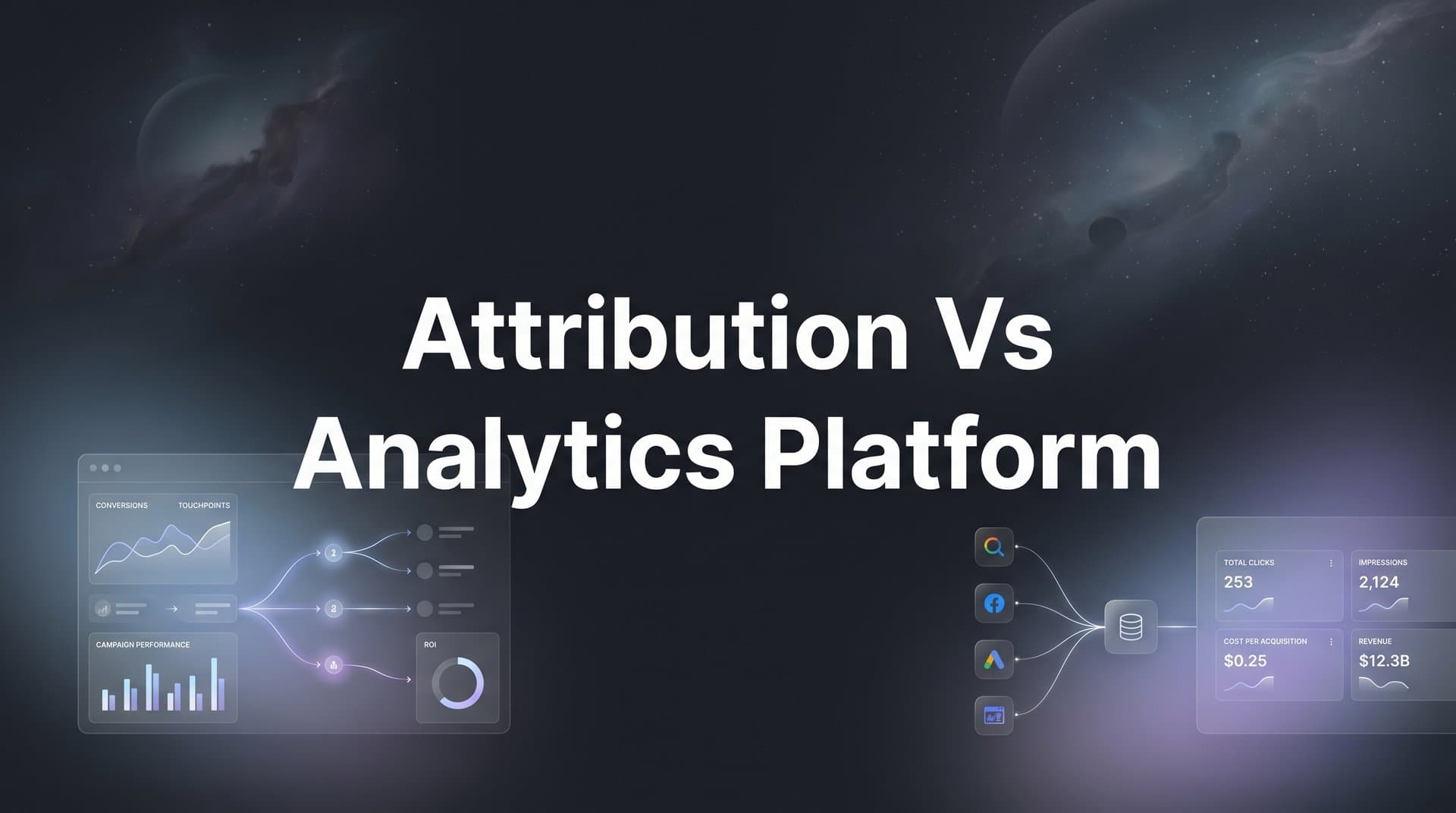
Attribution platforms trace revenue back to its source, connecting ad spend to actual conversions across every channel. Analytics platforms map user behavior, revealing how people move through your site or product. In 2026, the line between these two categories is blurring fast, with many platforms now attempting to answer both questions under one roof.
This guide covers the top attribution and analytics platforms available today, evaluated on cross-platform tracking accuracy, integration depth, AI and automation features, pricing transparency, and suitability for paid advertising teams. Whether you need a pure attribution solution, a behavioral analytics suite, or a hybrid platform that bridges the gap, you'll find the right fit here. For broader context, explore our deeper dives into attribution marketing tools and analytics in marketing.
1. Cometly
Best for: Paid advertising teams that need accurate revenue attribution across every channel and ad platform.
Cometly is an AI-powered marketing attribution and analytics platform that connects your ad platforms, CRM, and website to show exactly which ads and channels are driving revenue.
 9 Best Attribution and Analytics Platforms for Smarter Marketing in 2026
Where This Tool Shines
Cometly's core strength is connecting the full customer journey from first ad click to closed revenue, without the gaps that plague platform-native reporting. It captures every touchpoint and feeds that enriched data back to ad platforms like Meta and Google, which means the algorithms powering your campaigns get smarter over time.
The AI layer is genuinely useful here. Rather than just presenting data, Cometly surfaces actionable recommendations on which ads to scale and which to cut. The AI Chat feature lets you ask natural-language questions about your data, which makes complex analysis accessible to marketers who aren't data analysts by trade.
Key Features
Multi-Touch Attribution: Compare multiple attribution models side by side to understand how credit is distributed across your customer journey.
AI-Powered Recommendations: Identifies high-performing ads and campaigns across every channel so you can scale with confidence.
Server-Side Tracking: Bypasses browser limitations and iOS restrictions to deliver more accurate conversion data than pixel-only solutions.
Conversion Sync: Sends enriched, conversion-ready events back to Meta, Google, and other ad platforms to improve targeting and optimization.
AI Chat: Ask natural-language questions about your marketing data and get instant, clear answers without writing a single query.
Best For
Cometly is built for digital marketers, growth teams, and agencies running paid campaigns across multiple platforms who need a single source of truth for revenue attribution. It's especially valuable for teams frustrated by the discrepancies between what ad platforms report and what actually shows up in revenue.
Pricing
Custom pricing based on ad spend and business needs. A demo is available on request, which is the best starting point to get an accurate quote for your specific situation.
2. Triple Whale
Best for: E-commerce brands on Shopify that want first-party attribution and creative performance analytics in one place.
Triple Whale is an e-commerce-focused attribution and analytics platform built around deep Shopify integration and first-party pixel tracking.
 7 Best Funnel.io Alternatives for Marketing Data Analytics in 2026
Where This Tool Shines
Triple Whale was purpose-built for direct-to-consumer brands selling on Shopify, and that focus shows. The Shopify-native integration pulls in real-time profit data, so you're not just looking at revenue but actual margin after ad spend, product cost, and shipping.
The creative analytics module is a standout. It connects ad creative performance directly to downstream revenue, helping teams understand which video hooks, images, and copy angles are actually moving product rather than just generating clicks.
Key Features
First-Party Pixel: Cookieless tracking that captures customer journeys without relying on third-party cookies or platform-reported data.
Creative Analytics: Measures ad creative performance tied directly to revenue, not just engagement metrics.
Shopify Integration: Real-time profit tracking that pulls in COGS, shipping, and ad spend for true profitability reporting.
Customer Journey Mapping: Visualizes how customers move across channels before converting.
Best For
Shopify-based DTC brands running paid social and search who want a unified view of profitability and creative performance. Less suited for B2B or non-Shopify businesses.
Pricing
Plans start around $100/month and scale based on revenue volume and feature tier. Most serious e-commerce brands will land in a mid-to-higher tier as their business grows.
3. Northbeam
Best for: Data-driven DTC brands that want a blended measurement approach combining multi-touch attribution and media mix modeling.
Northbeam is an advanced attribution platform that blends multi-touch attribution with media mix modeling for a more complete picture of marketing effectiveness.
 8 Best Warehouse Attribution Solutions for E-commerce in 2026
Where This Tool Shines
Where most attribution tools rely solely on click-based data, Northbeam layers in media mix modeling to account for channels that are harder to track directly, like TV, podcasts, or upper-funnel display. This blended methodology gives brands a more realistic view of how their entire media mix is contributing to growth.
Northbeam also offers granular creative-level insights, so teams can identify which specific ads are driving efficiency gains across channels, not just which campaigns or ad sets are performing.
Key Features
Blended MTA and MMM: Combines click-based attribution with statistical modeling to account for both trackable and untrackable channels.
Custom Attribution Windows: Flexible configuration of lookback windows and attribution models to match your sales cycle.
Creative-Level Insights: Performance data broken down to individual ad creatives across channels.
Cross-Channel Optimization: Spend recommendations based on modeled performance across your full media mix.
Best For
DTC brands with meaningful ad budgets spread across multiple channels, particularly those investing in both digital and offline media who need a measurement approach that goes beyond last-click or even standard MTA.
Pricing
Custom pricing designed for brands with significant ad spend. Best suited for businesses that have outgrown simpler attribution tools and need enterprise-level measurement.
4. Google Analytics 4
Best for: Teams that want a free, robust web and app analytics foundation with built-in attribution reporting and Google Ads integration.
Google Analytics 4 is Google's event-based analytics platform offering cross-platform tracking, built-in attribution reports, and deep integration with the Google ecosystem.
 11 Best Marketing Analytics Tools to Track and Optimize Campaign Performance in 2026
Where This Tool Shines
GA4's biggest advantage is its price point and ecosystem integration. For teams already running Google Ads, the bidirectional data flow between GA4 and Google Ads provides a level of optimization signal that's hard to replicate elsewhere at no additional cost.
The event-based data model is significantly more flexible than the old session-based Universal Analytics approach, allowing teams to track virtually any user interaction and build custom reports around what actually matters to their business.
Key Features
Event-Based Tracking: Flexible data model that captures any user interaction across web and app surfaces.
Data-Driven Attribution: Built-in machine learning attribution model that distributes conversion credit based on actual path data.
Cross-Platform Measurement: Unified tracking across websites and mobile apps in a single property.
BigQuery and Looker Studio Integration: Export raw event data for advanced analysis or build custom dashboards without additional tooling.
Best For
Teams of all sizes who need a solid analytics foundation, particularly those heavily invested in Google Ads. GA4 is a strong starting point but often needs to be supplemented with a dedicated attribution platform for cross-channel accuracy.
Pricing
The standard version is free. GA4 360, the enterprise tier, carries custom pricing and is typically reserved for large organizations with complex data needs.
5. Adobe Analytics
Best for: Enterprise organizations that need deeply customizable analytics with advanced segmentation and integration across Adobe Experience Cloud.
Adobe Analytics is an enterprise-grade analytics platform with highly customizable reporting, real-time data processing, and tight integration across the Adobe ecosystem.
 9 Best AI Marketing Analytics Tools in 2026
Where This Tool Shines
Adobe Analytics gives large organizations a level of data customization that few platforms can match. The ability to define custom variables, create complex segments, and build multi-dimensional reports makes it a powerful tool for teams with sophisticated analytical needs and dedicated data resources.
For organizations already using Adobe Target, Adobe Campaign, or the broader Experience Platform, the integration depth creates a unified data environment that supports personalization, testing, and campaign execution from a single ecosystem.
Key Features
Custom Variables and Data Layers: Highly flexible data collection that can be tailored to virtually any business model or reporting requirement.
Advanced Segmentation: Build complex audience segments and cohorts for deep behavioral analysis.
Real-Time Processing: Data is available for reporting within seconds, supporting time-sensitive decision making.
Adobe Experience Cloud Integration: Native connections to Adobe Target, Campaign, and Experience Platform for a unified marketing stack.
Best For
Large enterprises with dedicated analytics teams, complex data environments, and existing investment in the Adobe ecosystem. The learning curve and cost make it less practical for smaller organizations.
Pricing
Enterprise pricing with annual contracts and custom quotes. Typically one of the more significant investments in a marketing technology stack.
6. Hyros
Best for: High-ticket advertisers, info-product businesses, and service companies that need long attribution windows and call conversion tracking.
Hyros is an ad tracking and attribution platform known for extended attribution windows, call tracking capabilities, and AI-powered optimization suggestions.
 7 Best Northbeam Alternatives for Small Business in 2026
Where This Tool Shines
Hyros is built for businesses with longer sales cycles where standard 7 or 28-day attribution windows miss a significant portion of conversions. The extended tracking windows mean that a customer who clicked an ad three months ago and then purchased after a sales call can still be properly attributed to the right source.
The call and phone conversion tracking is a genuine differentiator. For businesses where a meaningful portion of revenue comes through inbound calls or scheduled consultations, this fills a gap that most digital attribution tools leave wide open.
Key Features
Long-Window Attribution: Extended tracking windows that capture conversions that occur well beyond standard attribution periods.
Call Conversion Tracking: Attributes phone and call-based conversions back to the originating ad source.
AI Optimization Suggestions: Surfaces recommendations for improving ad performance based on tracked conversion data.
Ad Platform and CRM Integration: Connects with major ad platforms and CRM tools to unify tracking across the sales process.
Best For
High-ticket B2C and B2B advertisers, coaching and consulting businesses, and info-product companies where long sales cycles and phone-based conversions are common parts of the customer journey.
Pricing
Plans start around $99/month and scale with ad spend volume. Pricing tiers are based on the number of tracked visitors and events.
7. Mixpanel
Best for: Product and growth teams that need deep behavioral analytics, funnel analysis, and retention reporting focused on in-product user actions.
Mixpanel is a product and behavioral analytics platform with powerful event tracking, funnel analysis, and retention reporting built for understanding how users interact with your product.
 9 Best AI Marketing Analytics Tools in 2026
Where This Tool Shines
Mixpanel excels at answering the "how are users behaving?" question in granular detail. The self-serve querying interface makes it accessible for non-technical team members to build their own reports, while the underlying data model is flexible enough to handle complex product analytics use cases.
Retention and cohort analysis are particularly strong. Teams can quickly understand which acquisition sources produce users who actually stick around, which is a critical insight for any subscription or product-led growth business.
Key Features
Event-Based Analytics: Flexible event tracking with self-serve querying that doesn't require SQL or engineering support for most analyses.
Funnel Analysis: Visualize where users drop off in any conversion flow and measure the impact of changes over time.
Cohort Analysis: Group users by behavior or acquisition source and track how they retain and convert over time.
A/B Testing Integration: Connect experiment results to downstream behavioral and retention outcomes.
Best For
SaaS companies, mobile apps, and product-led growth teams that need deep visibility into in-product behavior. Less focused on ad attribution and more on understanding what happens after acquisition.
Pricing
Free tier available with generous event limits. The Growth plan starts at $20/month, with Enterprise plans priced on custom terms based on data volume and team size.
8. Rockerbox
Best for: Mid-market to enterprise brands that need unified marketing measurement combining multi-touch attribution, media mix modeling, and incrementality testing.
Rockerbox is a unified marketing measurement platform that brings together multi-touch attribution, media mix modeling, and incrementality testing for cross-channel visibility.
Where This Tool Shines
Rockerbox's defining strength is de-duplication. Many brands running multi-channel campaigns end up with every platform claiming credit for the same conversion, making it nearly impossible to understand true channel contribution. Rockerbox resolves this by creating a single, de-duplicated view of the customer journey across all channels.
The addition of incrementality testing gives marketers a way to validate what their attribution models are telling them. Rather than relying solely on modeled data, teams can run controlled experiments to measure the true causal impact of specific channels on revenue.
Key Features
De-Duplicated Attribution: Eliminates double-counting across channels to produce an accurate picture of each touchpoint's contribution.
Media Mix Modeling: Statistical modeling that accounts for the impact of channels that are difficult to track at the individual level.
Incrementality Testing: Controlled experiments to measure the true causal lift of specific channels or campaigns.
Offline and Digital Unification: Brings together data from both online and offline channels into a single measurement framework.
Best For
Mid-market and enterprise marketing teams running significant spend across multiple channels who need a rigorous, multi-methodology approach to measurement rather than relying on a single attribution model.
Pricing
Custom pricing designed for mid-market to enterprise brands. Best suited for organizations with the budget and analytical maturity to take full advantage of the platform's measurement depth.
9. Amplitude
Best for: Product-led growth companies that need to connect acquisition source data with in-product behavior across the full user lifecycle.
Amplitude is a digital analytics platform that ties acquisition data to in-product behavior, making it ideal for teams that care about what happens long after a user first converts.
Where This Tool Shines
Amplitude's core strength is connecting the acquisition story to the product story. You can see not just where a user came from, but how their behavior differs based on acquisition source, which features they engage with, and how likely they are to expand or churn. This creates a feedback loop between marketing and product that most analytics tools can't support.
The experimentation and feature flagging capabilities make Amplitude a genuine platform for growth teams that run continuous tests across acquisition, activation, and retention, not just top-of-funnel campaigns.
Key Features
Behavioral Cohorts: Segment users by any combination of actions and attributes to understand how different groups behave over time.
Experimentation: Built-in feature flagging and A/B testing tied directly to behavioral and conversion outcomes.
Acquisition Source Tracking: Connects UTM and campaign data to in-app actions and downstream retention metrics.
Predictive Analytics: Machine learning models that surface anomalies and predict user behavior patterns before they become obvious in the data.
Best For
SaaS companies, mobile apps, and product-led growth teams where understanding the full user lifecycle from acquisition through retention and expansion is the primary analytical priority.
Pricing
A free Starter plan is available. Growth and Enterprise plans are priced on custom terms based on data volume, with pricing available on request from the Amplitude team.
Which Platform Is Right for Your Team?
The honest answer is that the right choice depends on what question keeps you up at night. Are you losing sleep because you can't tell which ad campaigns are actually driving revenue? Or because you don't understand why users are churning after their first week in your product? The answer points you in a clear direction.
If your primary goal is connecting ad spend to revenue across multiple platforms, Cometly is the strongest starting point. It's built specifically for paid advertising teams who need accurate, cross-channel attribution with the AI layer to turn that data into action. The server-side tracking and Conversion Sync features address the data accuracy problems that have made platform-native reporting increasingly unreliable.
For e-commerce brands on Shopify, Triple Whale delivers a purpose-built solution that combines attribution with real-time profitability data. If you're a DTC brand with a more complex media mix that includes offline channels, Northbeam or Rockerbox offer the blended measurement methodologies that can handle that complexity.
For teams whose primary need is behavioral analytics rather than revenue attribution, Mixpanel and Amplitude are both excellent choices, with Amplitude being the stronger fit for product-led growth companies that need to track the full user lifecycle.
The broader trend worth noting: the line between attribution and analytics is continuing to blur. Platforms like Cometly are expanding their analytics capabilities, while traditional analytics tools are adding more attribution features. The best stack for most teams in 2026 is either a hybrid platform that handles both, or a dedicated attribution tool paired with a behavioral analytics solution.
Ready to stop guessing which ads are driving your revenue? Get your free demo of Cometly and see how AI-powered attribution can give your team the clarity and confidence to scale what's actually working.