Marketing teams today run campaigns across dozens of channels, but most struggle to answer one simple question: which efforts actually drive revenue? The gap between ad spend and closed deals remains a black box for many organizations.
Marketing analytics platforms solve this by connecting your advertising data, website behavior, and CRM outcomes into a unified view. The right platform helps you stop guessing and start scaling what works.
We evaluated platforms based on attribution accuracy, ease of integration, real-time reporting capabilities, and value for paid advertising teams. Here are the top marketing analytics platforms for 2026.
1. Cometly
Best for: Paid advertising teams needing accurate multi-touch attribution and AI-powered optimization recommendations
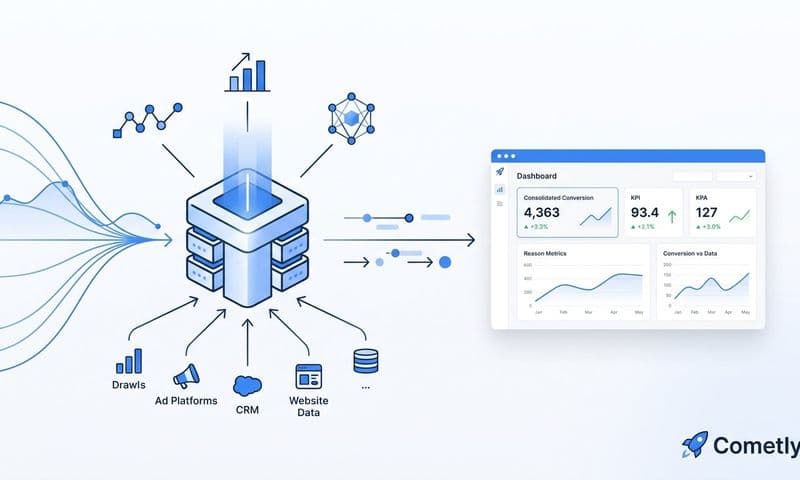
Cometly is a marketing attribution and analytics platform that connects ad platforms, CRM, and website data to show exactly which ads and channels drive revenue.
 9 Best Marketing Analytics Platforms to Track What Actually Drives Revenue in 2026
Where This Tool Shines
Cometly excels at solving the attribution puzzle that plagues most paid advertising teams. While other platforms stop at surface-level conversion tracking, Cometly captures every touchpoint from initial ad click through CRM events, giving you a complete view of the customer journey.
The platform's server-side tracking addresses the accuracy issues that have plagued marketers since iOS 14 and browser restrictions limited pixel-based tracking. This means you get reliable data even when client-side tracking fails.
Key Features
Multi-Touch Attribution: Track every marketing touchpoint across all channels to understand the full customer journey.
AI Ads Manager: Get AI-powered recommendations to identify high-performing ads and campaigns across every ad channel.
Server-Side Tracking: Capture accurate conversion data that bypasses browser restrictions and ad blockers.
Conversion Sync: Feed enriched, conversion-ready events back to Meta, Google, and other ad platforms to improve targeting and optimization.
Real-Time Analytics Dashboard: Monitor campaign performance and attribution data as it happens, not hours or days later.
Best For
Cometly works best for digital marketing teams and agencies running significant paid advertising campaigns across multiple platforms. If you're spending serious money on Meta, Google, TikTok, or LinkedIn ads and need to prove which campaigns actually drive revenue, this platform delivers the clarity you need.
Pricing
Custom pricing based on ad spend volume. Contact their sales team for a quote tailored to your advertising budget.
2. Google Analytics 4
Best for: Web analytics fundamentals and teams heavily invested in Google's advertising ecosystem
Google Analytics 4 is a free web analytics platform with event-based tracking, machine learning insights, and deep Google Ads integration.
 11 Best Marketing Analytics Tools to Track and Optimize Campaign Performance in 2026
Where This Tool Shines
GA4 represents Google's answer to a privacy-first analytics world. The event-based data model offers more flexibility than the old session-based approach, and the machine learning predictions help identify users likely to convert or churn.
For teams running Google Ads, the integration is seamless. You can import conversions directly into your ad campaigns and use GA4 audiences for targeting. The price point cannot be beaten for basic web analytics needs.
Key Features
Event-Based Data Model: Track any user interaction as an event rather than being limited to predefined categories.
Predictive Metrics: Use machine learning to identify purchase probability, churn probability, and predicted revenue.
Cross-Platform Tracking: Connect web and app data to understand user behavior across devices.
BigQuery Integration: Export raw data to BigQuery for advanced analysis and custom reporting.
Free Tier: Full platform access at no cost for most businesses below enterprise scale.
Best For
GA4 suits businesses looking for solid web analytics without budget constraints. It works particularly well for content-driven sites, ecommerce stores, and companies already using Google Ads who want tighter integration between analytics and advertising.
Pricing
Free for standard implementation. GA4 360 enterprise pricing starts around $50,000 per year for organizations needing higher data limits and advanced support.
3. HubSpot Marketing Analytics
Best for: Inbound marketing teams already using HubSpot CRM who need campaign tracking and revenue attribution
HubSpot Marketing Analytics is a marketing analytics solution built into HubSpot's CRM platform, offering campaign tracking and revenue attribution for inbound marketing teams.
 9 Best Marketing Analytics Software Subscription Plans in 2026
Where This Tool Shines
HubSpot's analytics become powerful because they live inside the same platform as your contacts, deals, and marketing campaigns. This native integration eliminates the data connection headaches that plague marketers using separate systems.
The multi-touch revenue attribution connects marketing activities directly to closed deals in your CRM. You can finally answer which blog posts, emails, and campaigns contributed to actual revenue, not just leads.
Key Features
Native CRM Integration: Analytics data lives alongside your contact records and deal pipeline without requiring third-party connections.
Multi-Touch Revenue Attribution: Track which marketing touchpoints contributed to closed revenue across the entire customer journey.
Custom Report Builder: Create dashboards tailored to your specific metrics and KPIs without technical expertise.
Campaign Performance Tracking: Monitor email campaigns, landing pages, and content performance in one unified view.
Contact-Level Journey Analytics: See every interaction a specific contact has had with your marketing before they converted.
Best For
HubSpot analytics make the most sense for inbound-focused marketing teams already committed to the HubSpot ecosystem. If you're running content marketing, email campaigns, and lead nurturing through HubSpot, the analytics become a natural extension of your existing workflow.
Pricing
Included with Marketing Hub subscriptions. Marketing Hub Professional starts at $800 per month and includes robust analytics capabilities.
4. Adobe Analytics
Best for: Enterprise organizations with complex data needs and large-scale digital properties
Adobe Analytics is an enterprise analytics platform with advanced segmentation, real-time processing, and predictive capabilities for large organizations.
 9 Best AI Marketing Analytics Tools in 2026
Where This Tool Shines
Adobe Analytics handles data at a scale that would overwhelm most platforms. Large retailers, financial services companies, and media organizations use it to process billions of events while maintaining granular segmentation capabilities.
The real-time data processing means you can monitor major campaigns or product launches as they happen. The platform's integration with Adobe Experience Cloud creates a complete enterprise marketing stack for organizations already invested in Adobe's ecosystem.
Key Features
Advanced Segmentation: Build complex audience segments based on behavior, demographics, and custom variables.
Real-Time Data Processing: Monitor analytics data as events occur rather than waiting for batch processing.
Customer Journey Analysis: Visualize multi-step user flows and identify where customers drop off or convert.
Predictive Analytics: Use machine learning models to forecast trends and identify anomalies in your data.
Adobe Experience Cloud Integration: Connect seamlessly with Adobe's suite of marketing, advertising, and content tools.
Best For
Adobe Analytics serves enterprise organizations with significant digital properties and complex analytics requirements. Companies with dedicated analytics teams who need enterprise-grade data processing, governance, and customization find the platform worth the investment.
Pricing
Enterprise pricing with annual contracts typically starting above $100,000 per year depending on data volume and feature requirements.
5. Mixpanel
Best for: Product teams analyzing user behavior, retention patterns, and conversion funnel performance
Mixpanel is a product analytics platform focused on user behavior analysis, retention tracking, and conversion funnel optimization.
 9 Best AI Marketing Analytics Tools in 2026
Where This Tool Shines
Mixpanel excels at answering product-specific questions that web analytics platforms struggle with. Instead of tracking page views, you track the actual actions users take inside your product.
The funnel analysis makes it easy to spot exactly where users drop off in multi-step processes. Retention reports show which features keep users coming back, helping product teams prioritize what actually drives engagement.
Key Features
User Behavior Tracking: Track specific actions users take within your product rather than just page views.
Funnel Analysis: Visualize multi-step conversion funnels and identify where users abandon the process.
Retention Reports: Measure how often users return and which features drive long-term engagement.
A/B Testing Analysis: Compare user behavior across experiment variants to measure impact.
Self-Serve Queries: Non-technical team members can explore data and answer questions without writing code.
Best For
Mixpanel fits product-led companies and SaaS businesses that need to understand how users interact with their software. Product managers, growth teams, and UX designers use it to make data-driven decisions about feature development and user experience improvements.
Pricing
Free tier available for up to 20 million monthly events. Growth plan starts at $20 per month with usage-based pricing as volume increases.
6. Amplitude
Best for: Product-led growth companies needing behavioral analytics at scale with strong experimentation capabilities
Amplitude is a product analytics platform for understanding user behavior at scale, with strong experimentation and data governance features.
 9 Best Marketing Analytics Platforms to Track What Actually Drives Revenue in 2026
Where This Tool Shines
Amplitude handles behavioral analytics at massive scale while maintaining query speed. Companies with millions of users can still get instant answers to complex behavioral questions.
The behavioral cohorting lets you group users based on what they actually do, not just demographic attributes. The warehouse-native architecture means your data stays in your own infrastructure while Amplitude queries it, addressing data governance concerns for regulated industries.
Key Features
Behavioral Cohorting: Create user segments based on sequences of actions and engagement patterns.
Customer Journey Mapping: Visualize the paths users take through your product to reach key outcomes.
Experimentation Platform: Run and analyze A/B tests directly within the analytics interface.
Data Governance Tools: Maintain data quality with validation rules, taxonomy management, and access controls.
Warehouse-Native Architecture: Query your data where it lives rather than copying it to another platform.
Best For
Amplitude serves product-led growth companies, digital products with large user bases, and organizations with strict data governance requirements. Teams that run frequent experiments and need to understand complex user behavior patterns get the most value.
Pricing
Free tier available for starter plans. Growth and Enterprise tiers use custom pricing based on monthly tracked users and feature requirements.
7. Triple Whale
Best for: Direct-to-consumer ecommerce brands running paid social campaigns through Shopify
Triple Whale is an ecommerce analytics platform built for DTC brands, featuring Shopify-native attribution and creative performance analysis.
 7 Best Funnel.io Alternatives for Marketing Data Analytics in 2026
Where This Tool Shines
Triple Whale speaks the language of ecommerce operators. The dashboard shows metrics that matter to online retailers like blended ROAS, contribution margin, and customer acquisition cost by channel.
The creative analytics feature helps paid social teams understand which ad creatives drive purchases, not just clicks. For Shopify merchants juggling multiple ad platforms, the unified view eliminates hours of manual reporting.
Key Features
Shopify-Native Integration: Pull order data, product performance, and customer information directly from your Shopify store.
First-Party Pixel Tracking: Capture conversion data that bypasses iOS limitations affecting standard pixel tracking.
Creative Analytics: Track performance by specific ad creative to identify winning images and videos.
Profit Tracking: Calculate true profitability by factoring in product costs, shipping, and advertising spend.
Influencer Attribution: Track sales generated by influencer partnerships and affiliate programs.
Best For
Triple Whale serves direct-to-consumer brands selling through Shopify who run significant paid social campaigns. Ecommerce marketing teams who need to quickly understand profitability across channels find the platform saves hours of spreadsheet work.
Pricing
Plans start at $129 per month with pricing tiers based on monthly order volume and feature access.
8. Northbeam
Best for: Media buyers focused on incrementality measurement and optimizing cross-channel ad spend
Northbeam is an attribution platform for media buyers focused on incrementality measurement and cross-channel spend optimization.
Where This Tool Shines
Northbeam goes beyond standard attribution by measuring incrementality, answering whether your ads actually caused sales or just captured demand that would have happened anyway. This distinction matters when you're spending millions on advertising.
The machine learning attribution models adapt to your specific business rather than applying generic rules. Clean room partnerships with major platforms provide data access that standard integrations cannot match.
Key Features
Machine Learning Attribution: Adaptive models that learn from your specific customer behavior patterns.
Incrementality Testing: Measure whether ad spend actually drives incremental sales beyond baseline performance.
Cross-Channel Optimization: Recommendations for reallocating budget across channels based on true performance.
Clean Room Partnerships: Access enriched data from platforms through privacy-compliant data sharing agreements.
Media Mix Modeling: Understand long-term effects of brand marketing alongside direct response campaigns.
Best For
Northbeam targets performance marketing teams and agencies managing substantial advertising budgets across multiple channels. Companies spending six or seven figures monthly on paid advertising who need sophisticated attribution find the platform worth the investment.
Pricing
Custom pricing based on monthly ad spend volume. Contact their team for quotes tailored to your advertising budget.
9. Supermetrics
Best for: Marketing teams building custom reporting stacks who need automated data aggregation
Supermetrics is a data aggregation tool that pulls marketing data from over 100 platforms into spreadsheets, BI tools, and data warehouses.
Where This Tool Shines
Supermetrics solves the data connection problem without requiring engineering resources. Instead of building custom API integrations, you can pull data from any major marketing platform into the tools you already use.
The spreadsheet integration makes it accessible for marketers who live in Excel or Google Sheets. For more technical teams, the data warehouse connectors enable sophisticated analysis in tools like BigQuery, Snowflake, or Databricks.
Key Features
100+ Data Source Connectors: Pull data from major advertising, analytics, and social media platforms.
Automated Reporting: Schedule data refreshes so reports update automatically without manual exports.
Spreadsheet Integration: Send marketing data directly to Google Sheets or Excel for familiar analysis.
Data Warehouse Support: Load data into BigQuery, Snowflake, Azure, or other cloud data warehouses.
Custom Metrics and Calculations: Transform and combine data from multiple sources with custom formulas.
Best For
Supermetrics serves marketing teams that need centralized data but want to choose their own analysis and visualization tools. Agencies managing multiple client accounts and companies building custom marketing data warehouses find it invaluable for eliminating manual data exports.
Pricing
Pricing starts at $39 per month per data source with volume discounts for multiple connectors. Enterprise plans available for larger organizations.
Making the Right Choice
Choosing the right marketing analytics platform depends on your specific needs and existing infrastructure. For teams running paid campaigns across multiple platforms who need accurate attribution and AI-powered optimization recommendations, Cometly offers the most complete solution for tracking what actually drives revenue.
Google Analytics 4 remains the go-to free option for web analytics fundamentals, particularly for teams heavily invested in Google's advertising ecosystem. HubSpot works well for inbound-focused teams already using their CRM who want native integration between marketing activities and revenue outcomes.
Enterprise organizations with complex data needs and large-scale digital properties often turn to Adobe Analytics for its advanced segmentation and real-time processing capabilities. Product-led companies typically choose between Mixpanel and Amplitude based on their scale and experimentation needs, with Amplitude offering stronger governance for regulated industries.
Ecommerce brands running heavy paid social should evaluate Triple Whale for Shopify-native attribution and creative performance analysis. Media buyers managing substantial advertising budgets will find Northbeam's incrementality measurement valuable for understanding true ad effectiveness. And teams building custom reporting stacks will find Supermetrics invaluable for aggregating data from dozens of platforms without engineering resources.
Start by identifying your primary use case. Are you trying to prove marketing ROI to executives? Optimize product features based on user behavior? Scale profitable ad campaigns? Your answer determines which platform fits best. Then request demos from the platforms that align with your needs and evaluate them against your specific data sources and reporting requirements.
Ready to elevate your marketing game with precision and confidence? Discover how Cometly's AI-driven recommendations can transform your ad strategy. Get your free demo today and start capturing every touchpoint to maximize your conversions.