You set up GA4 carefully. You configured your conversion events, connected your Google Ads account, and started watching the data roll in. But when your sales team closes a deal and you try to trace it back to the campaign that started the conversation, the numbers just do not add up. Sound familiar?
This is one of the most common frustrations among B2B SaaS marketing teams today. GA4 is a genuinely powerful analytics platform, and Google has invested significantly in building it out. But powerful does not mean purpose-built. GA4 was designed to serve a broad range of businesses, from e-commerce sites to media publishers, and that generalist foundation creates real structural gaps when you try to use it for B2B paid media attribution.
Understanding GA4 attribution limitations is not about finding fault with Google's product. It is about being honest with yourself about what the tool can and cannot do, so you can build a measurement stack that actually reflects your marketing impact. For teams running paid campaigns across multiple channels with sales cycles that stretch weeks or months, those limitations have direct consequences: misallocated budget, undervalued campaigns, and optimization signals that send ad algorithms in the wrong direction.
This article breaks down exactly where GA4 attribution falls short for B2B SaaS teams, why those gaps exist at a structural level, and what a more complete measurement approach looks like in practice.
How GA4 Assigns Credit to Your Marketing Channels
Before you can understand where GA4 attribution breaks down, it helps to understand how it works when things are running as intended. GA4 uses a data-driven attribution model by default for conversion events tied to Google Ads reporting. In theory, this model analyzes the paths users take before converting and assigns fractional credit to each touchpoint based on statistical patterns.
In practice, that model has a prerequisite most B2B SaaS companies cannot meet: it requires a meaningful volume of conversion data to generate statistically reliable patterns. When your conversion volume falls below that threshold, GA4 silently falls back to last-click attribution. You may not receive any notification that this has happened. You simply start making decisions based on last-click logic while believing you are working with a more sophisticated model.
For a B2B SaaS company where demo requests or trial signups number in the dozens per month rather than the thousands, this fallback is not an edge case. It is the default operating reality. And last-click attribution systematically over-credits the final touchpoint, typically branded search or direct traffic, while undercrediting the awareness and consideration campaigns that created the demand in the first place.
GA4 attribution is also session-based and browser-scoped. It tracks behavior within a browser session on a specific device, and it cannot natively stitch together journeys that span multiple devices or browsers. In B2B sales cycles, a prospect might first encounter your brand through a LinkedIn ad on their phone during a commute, research your product on their work laptop later that week, and then convert after a colleague shares a link. GA4 sees these as separate, unconnected sessions.
The lookback window compounds this further. GA4 supports acquisition attribution lookback windows of up to 90 days. For many B2B SaaS companies, that window is simply not long enough. Enterprise deals and even mid-market sales cycles frequently extend well beyond three months from first ad exposure to closed-won revenue. Any touchpoints that occurred before the 90-day cutoff are invisible to GA4's attribution logic, regardless of how influential they were in building awareness or driving intent.
These are not configuration errors. They are documented platform constraints that shape every attribution report GA4 produces for your business.
Where GA4 Attribution Breaks Down for B2B SaaS Teams
The session-based, browser-scoped architecture of GA4 creates predictable failure points for B2B marketing teams. The most significant is the disconnect between web behavior and CRM data.
When a prospect visits your pricing page in response to a Google Ads campaign, then enters a sales cycle that takes six weeks to close, GA4 has no native mechanism to connect that closed deal back to the original campaign touchpoints. GA4 measures web events. Your CRM holds revenue outcomes. Without a deliberate integration, those two data sources exist in separate silos, and the attribution credit for that deal simply disappears into the gap between them.
Connecting GA4 to CRM platforms like Salesforce or HubSpot at the contact and deal level typically requires BigQuery exports and custom data engineering work. That is a significant technical investment that sits well outside the capacity of most marketing teams, and it still does not solve the fundamental issue that GA4 was not designed to ingest CRM pipeline stages as attribution signals.
GA4 also relies heavily on cookies and browser-side JavaScript tracking. This creates a different kind of vulnerability. Safari's Intelligent Tracking Prevention limits the lifespan of first-party cookies, in some configurations capping them at seven days. Firefox's Enhanced Tracking Protection restricts cross-site tracking behavior. Ad blockers, which are particularly common among the technical audiences that B2B SaaS companies often target, can prevent the GA4 tag from firing entirely.
The result is a persistent data gap. A meaningful portion of your most valuable prospects, the technically sophisticated buyers who use ad blockers and privacy-focused browsers, are effectively invisible to GA4. Their sessions go untracked, their touchpoints go unrecorded, and the campaigns that reached them receive no attribution credit.
There is a third layer of complexity specific to B2B conversion events. GA4's event model is flexible, but that flexibility requires configuration. Out of the box, GA4 does not automatically capture the conversion signals that matter most in B2B: demo requests, trial activations, sales-qualified lead status changes, or phone call inquiries. Each of these requires custom event setup, and even with careful configuration, offline conversion events that happen outside the browser environment remain difficult to capture reliably without additional tooling.
The practical consequence is that many B2B SaaS teams are optimizing their paid campaigns based on attribution data that is structurally incomplete, not because of poor setup, but because of what GA4 was built to do.
The Multi-Touch Attribution Gap in GA4
B2B buying decisions rarely happen in a straight line. A prospect might see a LinkedIn thought leadership ad, later click a Google Search ad, attend a webinar, read a comparison article through organic search, and then convert after a direct email outreach. Each of those touchpoints played a role. Understanding which ones drove the most influence at which stage is exactly the kind of insight that helps marketers allocate budget intelligently.
GA4 does not support configurable multi-touch attribution models within its standard reporting interface. There is no linear attribution option that distributes credit evenly across all touchpoints. There is no time-decay model that weights recent interactions more heavily. There is no position-based model that emphasizes first and last touches. The only algorithmic option is the data-driven model, which operates as a statistical black box without transparent credit distribution logic that marketers can inspect or adjust.
This creates a specific problem for cross-channel analysis. When a single prospect has been touched by LinkedIn campaigns, Google Search ads, and direct traffic across multiple sessions, GA4 struggles to distribute credit in a way that reflects the actual influence of each channel. The tendency is to over-credit the last known digital touchpoint, typically the session closest to the conversion event, while the earlier awareness and consideration touchpoints that shaped the buying decision receive little or no credit.
For marketers trying to justify LinkedIn spend or upper-funnel brand campaigns, this is a real problem. If GA4 consistently shows those channels as low performers because it cannot properly attribute their contribution to downstream conversions, budget decisions get made on incomplete information. Awareness campaigns get cut. Retargeting and branded search get over-invested. The growth trajectory suffers even as the attribution data looks clean.
The absence of a unified customer identity across touchpoints makes this worse. GA4 does offer a User ID feature that can stitch cross-device journeys together, but it requires users to be logged in and for the implementation to pass a consistent identifier. Most B2B SaaS marketing sites do not have authenticated experiences for anonymous visitors at the top of the funnel. The practical result is that cross-device journey stitching is rarely available for the prospects who matter most in early-stage attribution.
Without a complete view of the multi-touch journey, marketers are left making channel allocation decisions based on a partial picture. The channels that are easiest to track get the most credit, and the channels that operate earlier in the funnel or across multiple touchpoints get systematically undervalued.
Privacy Changes and Data Gaps That Compound the Problem
The structural limitations of GA4 attribution do not exist in isolation. They are being amplified by a broader shift in the privacy landscape that is reducing the signal available to browser-based tracking tools across the board.
Browser-level privacy restrictions from Safari and Firefox have significantly reduced the data GA4 receives from paid social channels. When a user clicks a Facebook or Instagram ad and lands on your site, the cross-site tracking restrictions in Safari and Firefox limit GA4's ability to connect that paid social click to subsequent behavior on your site. The result is that attribution data for Meta campaigns inside GA4 is often unreliable, undercounting the actual contribution of paid social to your pipeline.
iOS privacy updates have added another layer of signal loss. App Tracking Transparency requirements have reduced the fidelity of mobile ad data flowing into analytics tools that depend on browser-side cookies and JavaScript. For B2B marketers running mobile-targeted paid social campaigns, this means a growing share of conversions influenced by those campaigns simply do not appear in GA4 attribution reports.
Google's response to these privacy changes is Consent Mode, which allows GA4 to model conversions for users who decline cookie consent. Modeled data fills in the gaps statistically, but it is an estimate, not a measurement. For a B2B SaaS company making budget allocation decisions across channels, the difference between a modeled estimate and an actual measurement is not a minor footnote. It is the foundation of every optimization decision you make.
Here is the deeper issue: first-party data collected server-side is the most reliable signal available to modern marketers precisely because it bypasses the browser-level restrictions that degrade cookie-based tracking. But GA4 does not natively leverage server-side first-party data for attribution purposes. The most durable data source available sits largely unused within the GA4 attribution framework, while the less reliable browser-side signals continue to drive the reports marketers rely on.
The cumulative effect of these privacy changes is a widening gap between what actually happened in your marketing funnel and what GA4 is able to report. That gap is not going to narrow as privacy standards continue to evolve. It is going to grow.
What a Purpose-Built Attribution Solution Does Differently
The limitations described above are not problems that better GA4 configuration can solve. They are structural constraints rooted in what GA4 was designed to do. Addressing them requires a different kind of tool, one built specifically for the attribution challenges B2B SaaS marketers face.
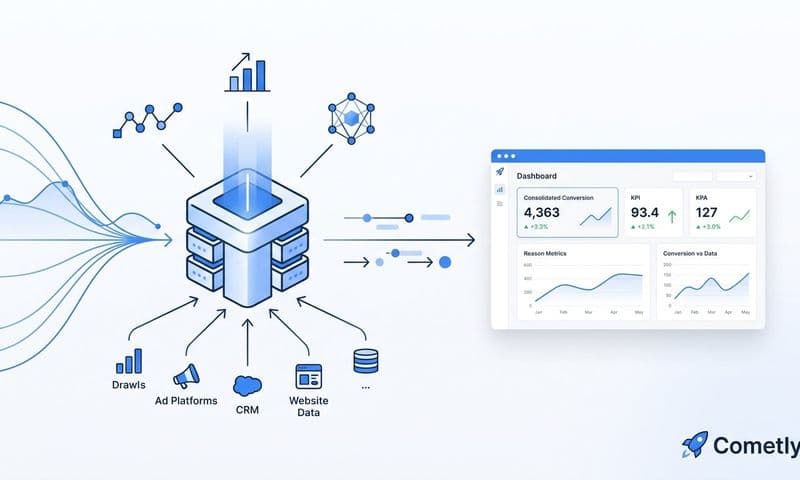
Dedicated attribution platforms approach the problem differently from the ground up. Instead of tracking sessions within a browser, they connect ad platform data, CRM pipeline stages, and website behavior into a single customer journey view. This means a marketer can see which campaigns influenced deals at every stage, from the first paid ad impression through to a closed-won opportunity in the CRM, without custom data engineering or BigQuery exports.
Server-side tracking and Conversion API integrations are central to how purpose-built attribution tools close the data gaps that undermine GA4 accuracy. By capturing conversion signals server-side rather than relying on browser-based JavaScript and cookies, these tools bypass the ad blockers, Safari ITP restrictions, and cookie expiration issues that cause GA4 to undercount conversions. The result is a more complete and accurate picture of which campaigns are actually driving results, including for the technical audiences who are most likely to use privacy tools.
The multi-touch attribution gap is also addressed differently. Purpose-built platforms can distribute credit across touchpoints using multiple attribution models, including linear, time-decay, and position-based approaches, and compare those models side by side. This gives marketers the ability to understand how different attribution perspectives tell different stories about channel performance, rather than being locked into a single black-box model.
AI-powered attribution adds another layer of value that manual analysis cannot replicate. By surfacing patterns across channels, campaigns, and audience segments at scale, AI-driven recommendations help growth teams identify which combinations of touchpoints are most predictive of high-value conversions. That translates into actionable guidance on where to scale spend and where to reallocate budget, based on actual revenue impact rather than proxy metrics like click-through rate or cost per lead.
Platforms like Cometly are built specifically for this use case. Cometly connects your ad platforms, CRM, and website behavior into a unified attribution view, tracks the full customer journey from first ad click to closed-won revenue, and feeds enriched conversion data back to Meta and Google through server-side events. This last point matters more than it might initially seem: when ad platform algorithms receive better conversion signals, their targeting and optimization improves, creating a compounding performance benefit that extends well beyond the attribution reports themselves.
Building a Measurement Stack That Goes Beyond GA4
None of this means you should abandon GA4. It remains a valuable tool for understanding on-site behavior, analyzing funnel drop-off points, and monitoring content performance. The mistake is not using GA4. The mistake is using GA4 as the primary source of truth for paid media attribution decisions in a B2B SaaS context.
The most effective approach gives each tool a defined role. GA4 handles on-site engagement data: page views, session behavior, goal completions, and funnel analysis. A dedicated attribution platform handles the full customer journey from ad click through CRM pipeline to closed revenue, connecting the dots that GA4 cannot reach. When each tool does what it was designed to do, the combined picture is far more accurate than either tool alone.
This kind of measurement stack also solves the ad platform optimization problem. When enriched, conversion-ready events flow back to Meta and Google through server-side integrations, those platforms receive the high-quality signals their algorithms need to optimize toward the outcomes that actually matter to your business. Rather than optimizing toward top-of-funnel events like page visits or form fills, the ad platforms can optimize toward pipeline-stage conversions and revenue events. The result is better targeting, more efficient spend, and improved return on ad investment over time.
The practical starting point is straightforward. Audit what your current GA4 setup can and cannot tell you. Identify the specific gaps: are you missing CRM-connected revenue attribution? Are you losing signal from privacy-restricted browsers? Are your upper-funnel campaigns being systematically undervalued because of last-click fallback? Each of those gaps points to a specific capability that a purpose-built attribution platform can address.
B2B SaaS marketing teams that build this kind of layered measurement approach gain something more durable than better reports. They gain the ability to make budget decisions with confidence, to defend channel investments with data that reflects actual revenue influence, and to continuously improve ad platform performance through better conversion signals. That combination is a meaningful competitive advantage in markets where every growth dollar needs to work harder.
The Bottom Line on GA4 Attribution
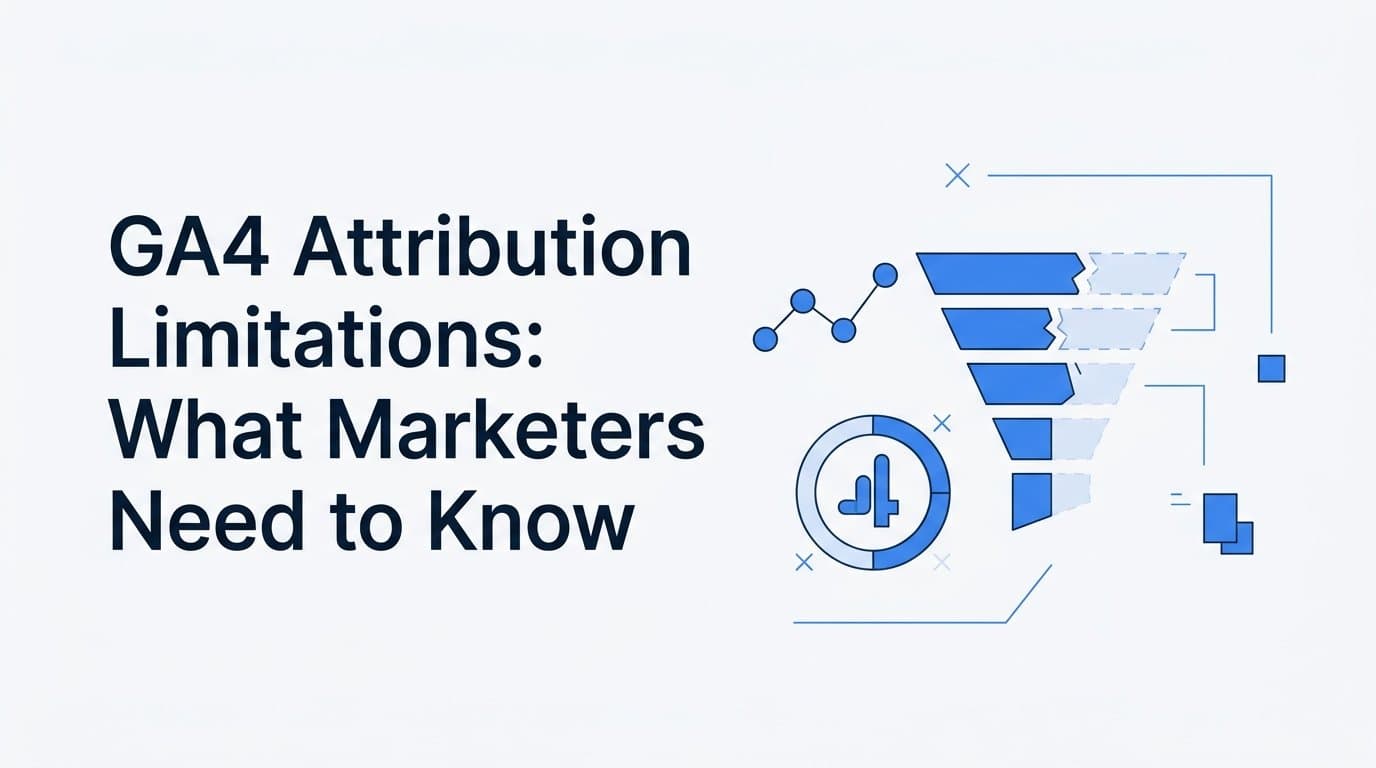
GA4 attribution limitations are not the result of poor implementation or misconfiguration. They are structural constraints built into a general-purpose analytics tool that was never designed to solve the specific challenges of B2B SaaS paid media attribution. The 90-day lookback window, the browser-scoped session tracking, the CRM disconnect, the reliance on modeled data, and the absence of configurable multi-touch models are all features of the platform, not bugs in your setup.
For B2B SaaS teams managing long sales cycles, multi-channel campaigns, and revenue outcomes that live in a CRM, these limitations create real blind spots. Campaigns that drive genuine pipeline influence go undervalued. Budget flows toward the channels that are easiest to track rather than the ones that drive the most revenue. Ad platform algorithms optimize toward incomplete signals and deliver suboptimal results as a consequence.
The marketers who close this gap are the ones who build measurement stacks that pair GA4's behavioral analytics with a dedicated attribution platform that tracks the full journey from first touch to closed revenue. They stop asking GA4 to do something it was not built to do, and they start using tools that were built for exactly the problem they are trying to solve.
If you are ready to move beyond the limitations of browser-based attribution and connect every touchpoint from first ad click to closed-won revenue, Get your free demo of Cometly today and see what your marketing data looks like when it actually reflects the full customer journey.