If you rely on Ruler Analytics to connect your marketing activity to revenue, you already understand the value of multi-touch attribution. But many B2B SaaS marketing teams find themselves hitting limitations: pricing that does not scale cleanly, gaps in ad platform integrations, or a lack of AI-driven insights that modern growth teams need to move fast.
The search for Ruler Analytics alternatives is not about finding something cheaper. It is about finding something better suited to how B2B SaaS companies actually acquire customers today, through complex multi-channel funnels, long sales cycles, and revenue data that lives inside tools like Stripe and HubSpot.
This guide breaks down the seven strongest alternatives, what each one does well, and how to evaluate which fits your specific attribution needs. Whether you are a marketing director trying to prove pipeline impact, a growth leader optimizing paid spend, or a RevOps team looking for a single source of truth, the right attribution platform changes how you make decisions.
We cover platforms built for different use cases, from full-funnel B2B SaaS attribution to lightweight call tracking solutions, so you can match the tool to your actual workflow. Each section includes the core challenge it solves, how the platform works, and practical steps to evaluate or implement it.
1. Cometly: Full-Funnel Attribution Built for B2B SaaS
The Challenge It Solves
Most B2B SaaS marketing teams struggle with a fundamental data fragmentation problem. Your ad spend data lives in Meta, Google, and LinkedIn. Your lead and deal data lives in HubSpot or Salesforce. Your revenue data lives in Stripe. Without a platform that connects all three layers, you are making budget decisions based on incomplete information, optimizing for leads when you should be optimizing for closed-won revenue.
The Strategy Explained
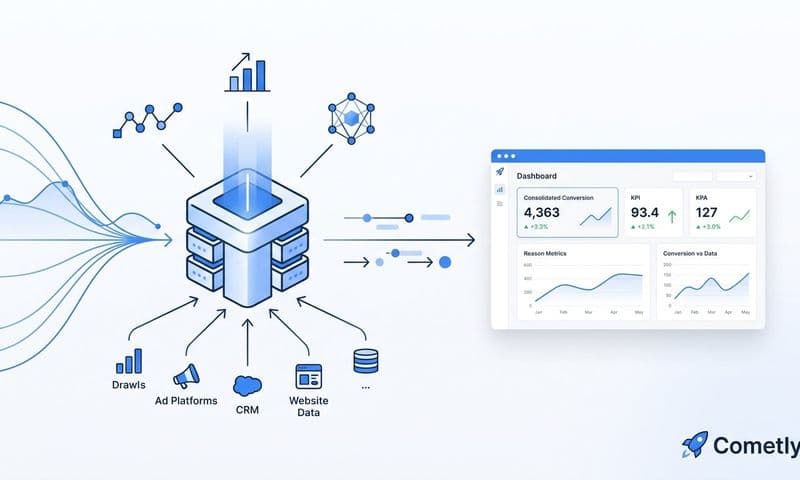
Cometly is purpose-built to solve exactly this problem. It connects your ad platforms, CRM, and billing tools to give you a single source of truth for marketing performance. Server-side tracking and Conversion API (CAPI) integration mean your data does not degrade with browser privacy changes or ad blockers. Instead of relying on pixel-based tracking that loses signal as third-party cookies become less reliable, Cometly captures events server-side and sends enriched conversion data back to Meta, Google, and other ad platforms.
 7 Best Ruler Analytics Alternatives for B2B SaaS Marketing Attribution
The AI ads manager goes beyond reporting. It surfaces which campaigns and creatives are actually driving pipeline and revenue, so you can scale what works and cut what does not. With 70+ native integrations including Stripe, HubSpot, LinkedIn, and Google Ads, the platform maps the entire customer journey from first ad click to closed-won deal.
Implementation Steps
1. Connect your ad platforms (Meta, Google, LinkedIn) and enable server-side tracking through Cometly's Conversion API integration to restore data accuracy lost to browser-based tracking limitations.
2. Integrate your CRM (HubSpot or Salesforce) so deal stages and closed-won revenue flow into Cometly and can be attributed back to specific campaigns and touchpoints.
3. Connect Stripe to map actual revenue to the marketing sources that generated each customer, giving you true ROI visibility rather than cost-per-lead estimates.
4. Use the AI ads manager to review channel-level and creative-level performance recommendations, then reallocate budget toward the campaigns that drive revenue, not just clicks.
Pro Tips
Set up Cometly's multi-touch attribution models early and compare how first-touch, last-touch, and linear attribution tell different stories about your funnel. The differences often reveal which channels deserve more credit than they currently receive in your reporting. Teams that do this in the first week typically find budget reallocation opportunities they had been missing for months.
2. HubSpot Marketing Hub: Attribution Inside Your CRM
The Challenge It Solves
For teams already running their entire go-to-market motion inside HubSpot, switching to a separate attribution tool can feel like adding complexity rather than reducing it. The challenge is getting attribution reporting without introducing another data silo, especially when your contact records, deal stages, and email sequences all live in one place.
The Strategy Explained
HubSpot's built-in multi-touch attribution reporting, available at higher Marketing Hub tiers, tracks contact-level interactions across emails, landing pages, forms, and blog content. It assigns revenue credit across touchpoints using several attribution models, including first-touch, last-touch, linear, and time-decay. Because the attribution data lives inside the same system as your CRM, you can connect marketing activity to contacts and deals without a complex integration layer.
 7 Best Ruler Analytics Alternatives for B2B SaaS Marketing Attribution
The limitation worth understanding is that HubSpot's attribution is strongest within its own ecosystem. If your paid ad strategy spans Meta, LinkedIn, and Google with significant spend, the cross-channel granularity you need for ad optimization is often not deep enough. Many teams use HubSpot as their CRM while layering a dedicated attribution platform on top to get the paid media visibility they need.
Implementation Steps
1. Upgrade to a Marketing Hub tier that includes multi-touch attribution reporting and confirm that your deal pipeline is properly configured with closed-won stages tied to revenue values.
2. Audit which channels and touchpoints HubSpot is currently tracking and identify gaps, particularly around paid ad click-level data from platforms like LinkedIn and Meta.
3. Evaluate whether HubSpot's attribution coverage is sufficient for your reporting needs or whether a dedicated attribution platform should be connected via HubSpot's CRM integration to fill the gaps.
Pro Tips
HubSpot attribution works best as a starting point for teams early in their attribution journey. If you find yourself needing ad-level granularity, creative performance data, or revenue attribution that goes beyond HubSpot's native tracking, that is a clear signal to evaluate a dedicated platform built for cross-channel paid media attribution.
3. Triple Whale: Attribution for High-Volume Ad Spend
The Challenge It Solves
Teams managing large paid ad budgets across multiple channels often need faster creative performance feedback than most attribution platforms provide. The challenge is understanding which specific ads and creatives are generating returns, not just which campaigns, so you can iterate creative strategy with real data rather than intuition.
The Strategy Explained
Triple Whale is a pixel-based attribution and analytics platform that gained significant traction in the ecommerce and direct-to-consumer space. It offers blended ROAS reporting, creative analytics, and a unified dashboard that pulls performance data from multiple ad platforms. Its creative analytics layer is a standout feature for teams that test a high volume of ad variations and need to identify winning creatives quickly.
 7 Best Ruler Analytics Alternatives for B2B SaaS Marketing Attribution
For B2B SaaS teams evaluating Triple Whale as a Ruler Analytics alternative, the key consideration is fit. Triple Whale's data model is optimized for shorter purchase cycles and direct revenue attribution. It lacks the CRM integration depth and long-cycle deal tracking that B2B SaaS teams typically need. If your sales cycle spans weeks or months and your revenue data lives in a CRM rather than a Shopify store, you may find Triple Whale's attribution model does not map cleanly to your funnel. Teams in this situation often find a Triple Whale alternative built for B2B workflows is a better fit.
Implementation Steps
1. Assess your sales cycle length and where your revenue data lives. If deals close in days and revenue is tracked in an ecommerce platform, Triple Whale may work. If deals close in weeks and revenue lives in a CRM, evaluate whether the platform can connect those data points.
2. Test the creative analytics dashboard against your current ad volume. Triple Whale's value increases with higher creative testing frequency, so teams running fewer ad variations may not get full value from the platform.
3. Identify which CRM and billing integrations you need and confirm they are supported before committing to implementation.
Pro Tips
Triple Whale is worth evaluating if creative performance analytics is your primary need and your funnel is relatively short. For B2B SaaS teams with complex multi-stage pipelines, prioritize platforms that offer native CRM integration and deal-level revenue attribution as core features rather than add-ons.
4. Wicked Reports: Long-Cycle B2B Attribution Focus
The Challenge It Solves
B2B companies running multi-step email nurture sequences alongside paid ads face a specific attribution challenge: how do you credit a conversion that happened after a prospect clicked a Facebook ad three months ago, then opened six emails, then clicked a retargeting ad before finally booking a call? Standard attribution tools often miss the early touchpoints entirely.
The Strategy Explained
Wicked Reports is designed for businesses with longer sales cycles and complex nurture sequences. It connects email marketing platforms and paid ad data to revenue outcomes, with a data model that preserves early-funnel touchpoints over extended time windows. This makes it more suitable for B2B companies and info-product businesses where the time between first touch and purchase can span months.
 7 Best Ruler Analytics Alternatives for B2B SaaS Marketing Attribution
The platform focuses on connecting marketing activity to actual revenue rather than proxy metrics like leads or clicks. For teams that rely heavily on email marketing as a nurture channel alongside paid acquisition, Wicked Reports offers a more complete picture than platforms that only track ad clicks. If you are evaluating it as a Ruler Analytics alternative, a useful starting point is reviewing how a dedicated Wicked Reports alternative compares on the specific dimensions that matter most to your team.
Implementation Steps
1. Map your typical customer journey from first touch to closed deal, noting which channels and touchpoints occur and over what time window. This defines the attribution window you need the platform to support.
2. Connect your email marketing platform and paid ad accounts to confirm that Wicked Reports can track touchpoints across both channels within your required attribution window.
3. Compare attribution model outputs against your current reporting to identify where Wicked Reports assigns credit differently and whether those differences align with your understanding of the funnel.
Pro Tips
Long attribution windows are only valuable if the platform can actually track touchpoints accurately across that entire window. Before committing, test how well the platform captures early-funnel ad clicks and email interactions for contacts that converted months later. Gaps in early-funnel tracking undermine the core value proposition.
5. Dreamdata: Revenue Attribution for B2B Go-to-Market Teams
The Challenge It Solves
Enterprise B2B deals rarely involve a single buyer. When multiple stakeholders from the same account research your product, attend a webinar, read a case study, and then a different person books a demo, contact-level attribution misses most of the story. The challenge is building an account-level view of the buying journey that reflects how B2B deals actually happen.
The Strategy Explained
Dreamdata is a B2B revenue attribution platform built around account-level journey tracking. Rather than attributing revenue to the touchpoints of a single contact, it maps interactions across entire buying committees, giving you a more accurate picture of how your marketing influences complex deals. It integrates with HubSpot and Salesforce to pull deal and pipeline data, then maps marketing touchpoints across all contacts associated with an account.
 8 Best SaaS Pipeline Attribution Software Tools in 2026
This account-based approach makes Dreamdata particularly relevant for companies selling to mid-market or enterprise buyers where multiple stakeholders are involved in the purchase decision. The platform provides pipeline and revenue attribution reports that connect marketing activity to deal outcomes at the account level, which is a meaningful step beyond contact-level attribution for teams operating in these markets.
Implementation Steps
1. Confirm that your CRM (HubSpot or Salesforce) has account-level deal data structured correctly, with contacts properly associated to accounts and deal stages mapped to revenue values.
2. Connect Dreamdata to your CRM and ad platforms, then review how it identifies and groups touchpoints across multiple contacts within the same account.
3. Compare account-level attribution outputs to your existing contact-level reports to understand how the different views change your interpretation of which channels and campaigns drive pipeline.
Pro Tips
Dreamdata's account-level model delivers the most value when your CRM data is clean and contacts are consistently associated to the correct accounts. Messy CRM hygiene significantly reduces attribution accuracy. Before implementation, audit your CRM for duplicate contacts, missing account associations, and inconsistent deal stage usage.
6. Northbeam: Multi-Touch Attribution with Media Mix Modeling
The Challenge It Solves
Teams managing significant paid media budgets across multiple channels face a difficult question: how do you allocate next quarter's budget across channels when each platform's native reporting tells a different story? Platform-reported ROAS is notoriously unreliable for cross-channel decisions because every platform claims credit for the same conversions.
The Strategy Explained
Northbeam combines multi-touch attribution with statistical media mix modeling (MMM). The multi-touch layer tracks individual user journeys across channels, while the MMM layer uses statistical modeling to estimate channel-level contribution to revenue at a higher level. The combination is designed to give teams a more robust basis for budget allocation decisions than either approach alone.
 7 Best Ruler Analytics Alternatives for B2B SaaS Marketing Attribution
Northbeam has been widely adopted by larger ecommerce and direct-to-consumer brands, and is increasingly evaluated by B2B teams managing substantial multi-channel paid media budgets. The platform uses first-party data as its foundation, which aligns with the industry-wide shift away from third-party cookie reliance. For B2B SaaS teams, the key evaluation question is whether the platform's attribution model and CRM integrations support the longer deal cycles and pipeline-based revenue tracking that B2B funnels require.
Implementation Steps
1. Assess your monthly paid media budget and channel mix. Northbeam's statistical modeling delivers more reliable outputs with higher spend volumes and broader channel diversity, so smaller budgets may not generate enough data for the MMM layer to be meaningful.
2. Review the platform's CRM integration capabilities and confirm that deal-level revenue data can flow into the attribution model, not just lead or conversion events.
3. Run a parallel reporting period comparing Northbeam's channel attribution outputs to your existing platform-reported data to understand where the models diverge and which view better reflects your actual business outcomes.
Pro Tips
Media mix modeling works best as a strategic planning tool rather than a day-to-day optimization layer. Use Northbeam's MMM outputs to inform quarterly budget allocation decisions, and pair it with a more granular attribution platform for campaign and creative-level optimization. The two approaches answer different questions and are most powerful when used together.
7. CallRail: Attribution for Lead Generation with Phone Touchpoints
The Challenge It Solves
Not every B2B conversion happens through a form submission. For companies where phone calls are a significant part of the lead generation process, standard digital attribution tools miss an entire category of conversion events. The challenge is connecting inbound calls back to the specific marketing sources and campaigns that generated them.
The Strategy Explained
CallRail is a call tracking and lead attribution platform that assigns unique phone numbers to different marketing sources, allowing you to trace which campaigns, keywords, and channels drive inbound calls. It also tracks form submissions, giving you a combined view of phone and digital lead sources. The platform is widely used by agencies and businesses where phone-based lead generation is central to the sales process.
For B2B SaaS teams evaluating CallRail as a Ruler Analytics alternative, it is important to understand its scope. CallRail excels at top-of-funnel lead source attribution but does not provide full revenue attribution through the sales pipeline. It tells you which campaigns drove calls and form fills, but connecting those leads to closed-won revenue requires integration with your CRM and additional attribution logic. Think of CallRail as a useful touchpoint layer for lead-gen teams rather than a complete revenue attribution solution.
Implementation Steps
1. Identify which marketing channels currently drive inbound phone calls and confirm that call volume is high enough to make call tracking a meaningful part of your attribution strategy.
2. Set up dynamic number insertion (DNI) on your website so that visitors from different traffic sources see different phone numbers, enabling accurate source attribution for each call.
3. Connect CallRail to your CRM to pass lead source data from calls and form submissions into contact records, then use a separate attribution platform to track those leads through the pipeline to revenue.
Pro Tips
CallRail works best as one layer in a broader attribution stack rather than a standalone solution. If phone calls are a meaningful conversion path for your team, integrate CallRail's lead source data with a full-funnel attribution platform so that phone-originated leads receive the same revenue attribution visibility as leads that come through digital form submissions.
Putting It All Together: Your Attribution Platform Decision
Choosing the right attribution platform is one of the highest-leverage decisions a B2B SaaS marketing team can make. The wrong tool leaves you guessing which channels drive pipeline. The right one gives you the confidence to scale spend, cut waste, and report revenue impact with precision.
Here is a practical framework for narrowing down your choice from this list:
If you want full-funnel B2B SaaS attribution with AI-driven recommendations: Cometly is purpose-built for this workflow, connecting ad platforms, CRM, and Stripe revenue through server-side tracking and Conversion API integrations.
If your team lives inside HubSpot and needs a starting point: HubSpot Marketing Hub's built-in attribution is a reasonable first layer, with the understanding that you may outgrow it as your paid media complexity increases.
If account-level buying committees are central to your deals: Dreamdata's account-based attribution model maps the full buying committee journey in a way that contact-level platforms cannot.
If phone calls are a significant lead source: CallRail solves the call tracking gap but should be paired with a full-funnel platform for complete revenue attribution.
If your team runs paid ads across multiple channels, has a CRM storing deal data, and wants to connect every touchpoint from first click to closed-won revenue, Cometly is built exactly for that workflow. Its server-side tracking, Conversion API integrations, and AI-powered ad recommendations give you the data accuracy and decision speed that modern growth teams need.
The attribution clarity you get in the first week typically changes how your team allocates budget for the rest of the quarter. Ready to see how Cometly compares in your actual environment? Get your free demo and start capturing every touchpoint to maximize your conversions.