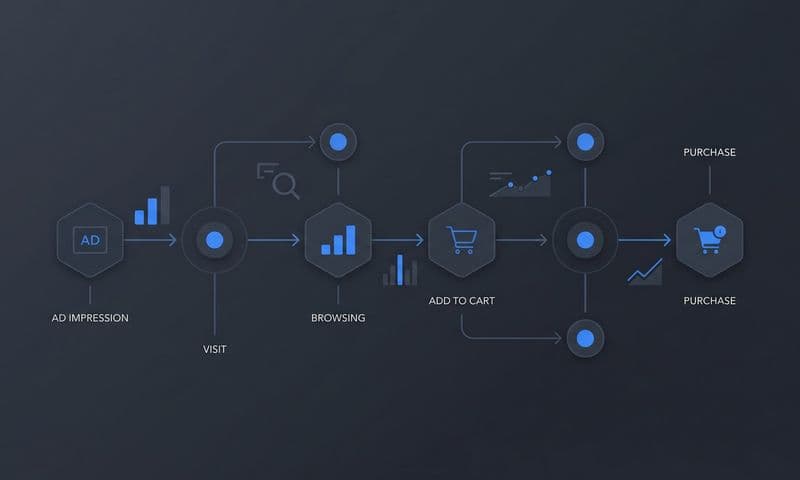
If you run a BigCommerce store and invest in paid advertising, basic analytics will only take you so far. You need to know which campaigns, channels, and touchpoints actually drive purchases and revenue, not just which pages get the most visits. BigCommerce has a solid built-in reporting suite, but it stops short of showing you the full customer journey across ad platforms, CRMs, and the various touchpoints that influence a sale. That gap costs marketing teams real money in misallocated budget.
Layer in the signal loss caused by browser privacy changes, iOS updates, and cookie restrictions, and the challenge becomes even more acute. Server-side tracking and Conversion API integrations have shifted from nice-to-have to essential for any team running paid media at scale.
This list covers the top BigCommerce tracking solutions available in 2026, evaluated on attribution depth, integration quality, ease of setup, and the quality of insights they surface. Whether you are running Google Ads, Meta campaigns, or a complex multi-channel mix, at least one of these tools will give you the visibility you need to make smarter decisions and scale with confidence.
1. Cometly
Best for: B2B SaaS and ecommerce teams that need full-funnel attribution from first ad click to closed revenue.
Cometly is a full-funnel marketing attribution platform that connects your BigCommerce ad spend directly to pipeline and revenue, giving you a single source of truth across every channel.
 9 Best Attribution Platforms for Agencies in 2026
Where This Tool Shines
Cometly goes beyond surface-level click and conversion data. It tracks every touchpoint in the customer journey, from the first ad impression through to closed revenue, using server-side conversion tracking and Conversion API integration to recover signal that client-side pixels routinely miss. For teams tired of relying on last-click attribution that credits the final touch and ignores everything that came before, this is a meaningful upgrade.
The AI ads manager adds a layer of intelligence that most attribution tools lack. Rather than just showing you what happened, it identifies which campaigns and creatives are genuinely driving revenue and surfaces recommendations on where to scale and where to pull back. For BigCommerce merchants running paid media across multiple platforms, that kind of clarity translates directly into better budget decisions.
Key Features
Multi-Touch Attribution: Tracks every touchpoint across 70+ ad platform and CRM integrations, giving you a complete picture of what influenced each conversion.
Server-Side Conversion Tracking: Bypasses browser limitations and iOS restrictions by sending conversion events server-side, improving match quality and data accuracy.
Conversion API (CAPI) Integration: Native CAPI support for Meta, Google, and more, feeding enriched, conversion-ready events back to ad platform algorithms to improve targeting and optimization.
AI Ads Manager: Identifies high-performing campaigns and recommends scaling decisions based on actual revenue data, not platform-reported metrics.
Customer Journey Analytics: Visualizes every touchpoint from first click to closed revenue so you can understand the paths that actually convert.
Best For
Cometly is best suited for growth-focused marketing teams and agencies managing meaningful paid media budgets across multiple channels. If you need to connect ad spend to actual store revenue and want AI-powered recommendations to guide your scaling decisions, this is the platform built for that job.
Pricing
Paid plans are available. Visit cometly.com for current pricing tiers and to explore demo options.
2. Google Analytics 4
Best for: BigCommerce stores that need a free baseline for on-site behavioral data and Google Ads attribution.
Google Analytics 4 is Google's free event-based analytics platform with native BigCommerce integration for funnel analysis and channel reporting.
 11 Best Marketing Analytics Tools to Track and Optimize Campaign Performance in 2026
Where This Tool Shines
GA4 is the logical starting point for any BigCommerce store. Its native integration with BigCommerce means setup is relatively straightforward, and the event-based data model gives you flexibility to track custom interactions that matter to your business. For understanding on-site behavior, funnel drop-off, and how Google Ads campaigns perform, it remains the most accessible tool in the market.
That said, GA4 has real limitations for multi-channel advertisers. Cross-channel attribution depth is modest compared to dedicated attribution platforms, and the platform increasingly relies on modeled data to fill gaps created by consent restrictions and cookie changes. It works well as a foundation but rarely works well as a standalone attribution solution for teams running complex paid media programs.
Key Features
Free Event-Based Tracking: Captures user interactions across your BigCommerce storefront with automatic integration and no per-event costs.
Funnel Exploration Reports: Visualizes where visitors drop off in the purchase journey so you can identify and address conversion bottlenecks.
Google Ads Native Connection: Syncs directly with Google Ads and Search Console for closed-loop performance reporting within the Google ecosystem.
Audience Building: Creates remarketing audiences based on behavioral segments for use across Google's ad network.
Consent Mode and Modeled Data: Uses machine learning to model conversions when consent is not granted, helping maintain measurement continuity in privacy-restricted environments.
Best For
GA4 is ideal for smaller BigCommerce stores or teams that primarily run Google Ads and need a free, reliable analytics baseline. It is also a strong complement to more advanced attribution platforms rather than a replacement for them.
Pricing
Free for standard use. GA4 360, the enterprise tier, is available at custom pricing for organizations that need higher data limits and SLA guarantees.
3. Triple Whale
Best for: DTC ecommerce brands that want a unified dashboard combining Meta, Google, TikTok, and email data in one place.
Triple Whale is a unified ecommerce analytics platform that combines proprietary pixel tracking with server-side technology to deliver a single view of ad performance across channels.
 9 Best BigCommerce Tracking Solutions in 2026
Where This Tool Shines
Triple Whale built its reputation in the DTC Shopify space, but its core value proposition translates to BigCommerce merchants running high-volume paid campaigns. The platform's Blended ROAS metric is particularly useful: rather than looking at each ad platform's self-reported numbers in isolation, you get a combined view of what your total ad investment is actually returning across all channels.
The Sonar server-side tracking layer helps recover signal lost to browser restrictions and iOS changes, which directly improves the accuracy of the data you are making decisions on. For creative-heavy brands running lots of ad variations, the creative analytics reporting makes it easier to identify which specific assets are driving revenue rather than just impressions or clicks.
Key Features
Proprietary First-Party Pixel with Sonar: Combines client-side and server-side tracking to maximize conversion signal recovery across all ad platforms.
Blended ROAS: Aggregates ad spend and revenue data across all channels into a single return metric for a more honest view of overall ad performance.
Creative Analytics: Reports on ad-level performance so you can identify which creatives are genuinely driving conversions and revenue.
Multi-Platform Data Unification: Pulls in data from Meta, Google, TikTok, and Klaviyo into a single dashboard view.
Cohort Analysis and LTV Reporting: Tracks customer lifetime value and cohort behavior over time to inform acquisition strategy.
Best For
Triple Whale is a strong fit for DTC-oriented BigCommerce brands running significant paid media budgets across Meta, Google, and TikTok who want a unified performance view without building a custom analytics stack.
Pricing
Plans start at approximately $129/month. Verify current pricing and plan details at triplewhale.com.
4. Northbeam
Best for: Scaling ecommerce brands with complex media mixes that need machine learning attribution and channel-level creative insights.
Northbeam is an advanced multi-touch attribution platform that uses machine learning to blend first-party data with modeled insights for precise channel and creative-level reporting.
 9 Best Attribution Software with API Access in 2026
Where This Tool Shines
Northbeam is built for brands that have outgrown simpler attribution tools and need to understand their media mix at a granular level. The ability to view multiple attribution models side by side, rather than committing to a single model, is genuinely useful for teams that want to understand how different models tell different stories about the same data. That perspective leads to better budget allocation decisions.
The machine learning layer does meaningful work here. Rather than relying purely on deterministic click-path data, Northbeam blends first-party signals with modeled insights to fill gaps created by signal loss. For brands spending heavily across channels where direct attribution is difficult, that modeling capability is a real differentiator.
Key Features
Machine Learning Attribution Models: Uses ML to build attribution models that go beyond click-path data, incorporating modeled signals for more complete measurement.
Multi-Model Comparison: Displays multiple attribution models side by side so you can understand how model choice affects your view of channel performance.
Channel and Creative-Level Reporting: Breaks attribution down to the individual ad and creative level, not just the channel level.
Media Mix Modeling: Supports budget allocation decisions with media mix modeling capabilities for teams managing large, diversified ad budgets.
Custom Attribution Windows: Configurable lookback periods and attribution windows to match your specific sales cycle and business model.
Best For
Northbeam is designed for mid-market and enterprise BigCommerce brands with meaningful ad spend and a complex multi-channel media mix. If you are at the stage where understanding creative-level attribution and running media mix modeling matters, this platform is worth evaluating.
Pricing
Custom pricing based on ad spend volume. Contact Northbeam directly at northbeam.io for a quote.
5. Elevar
Best for: BigCommerce stores that need accurate server-side tracking infrastructure and Conversion API setup for Meta and Google.
Elevar is a server-side tracking and Conversion API infrastructure platform that ensures your BigCommerce store sends accurate, deduplicated conversion events to every ad platform.
 9 Best Conversion API Tools for Marketers in 2026
Where This Tool Shines
Elevar occupies a specific and important niche: it is not an analytics dashboard, it is the tracking infrastructure layer that makes your analytics accurate. If your client-side pixels are missing conversions due to ad blockers, browser restrictions, or iOS changes, Elevar's server-side setup restores that signal by sending events directly from your server to Meta, Google, TikTok, and other platforms.
The event deduplication capability is particularly important. Without it, running both client-side and server-side tracking simultaneously can lead to double-counted conversions, which distorts your ad platform optimization and inflates reported ROAS. Elevar handles that deduplication automatically, which is one reason it has built a strong reputation among agencies managing multiple ecommerce clients.
Key Features
Server-Side Conversion API Setup: Configures CAPI connections for Meta, Google Enhanced Conversions, and TikTok to restore signal lost to browser-based tracking limitations.
Data Layer Auditing: Validates your event schema for accuracy before data is sent to ad platforms, catching errors that would otherwise corrupt your optimization signals.
Event Deduplication: Prevents over-reporting by automatically deduplicating events when both client-side and server-side tracking are running in parallel.
BigCommerce Native Integration: Built-in support for BigCommerce's event schema for clean, reliable data layer implementation.
Consent Management Compatibility: Works with consent management platforms to ensure tracking remains compliant with privacy requirements.
Best For
Elevar is ideal for BigCommerce merchants and agencies that want to fix the accuracy of their conversion tracking before layering on attribution tools. Think of it as the foundation that makes everything else more reliable.
Pricing
Plans start at approximately $50/month. Verify current pricing at getelevar.com.
6. Rockerbox
Best for: Omnichannel BigCommerce brands running both digital and offline channels who need unified attribution in a marketing data warehouse.
Rockerbox is a multi-touch attribution platform that unifies digital and offline channel data into a single marketing data warehouse for complete customer acquisition visibility.
 9 Best Mixpanel Alternatives for Attribution in 2026
Where This Tool Shines
Most attribution tools are built around digital channels. Rockerbox goes further by pulling in offline channels like TV, podcast, and direct mail alongside digital data, which makes it uniquely valuable for brands running omnichannel acquisition programs. If you are trying to understand how a podcast sponsorship or a direct mail campaign contributes to conversions alongside your paid social and search spend, Rockerbox is one of the few platforms that can show you that picture in one place.
The marketing data warehouse approach is also worth noting. Rather than just providing a reporting interface, Rockerbox stores your first-party and platform-reported data in a structured way that makes it accessible for custom BI reporting. For data-mature teams that want to build their own dashboards or run custom analyses, that flexibility is a meaningful advantage.
Key Features
Unified Digital and Offline Attribution: Combines digital channel data with offline channels including TV, podcast, and direct mail for a complete acquisition picture.
Marketing Data Warehouse: Stores first-party and platform-reported data in a structured format accessible for custom reporting and BI tool integration.
Multiple Attribution Model Views: Supports first-touch, last-touch, linear, and other attribution models so you can compare perspectives on channel contribution.
Incrementality Testing: Provides tools to measure the true incremental impact of campaigns beyond what attribution models alone can show.
Custom Reporting and Data Export: Exports data to BI tools for teams that need to build custom dashboards beyond the native interface.
Best For
Rockerbox is best suited for established BigCommerce brands with diversified acquisition programs that span both digital and offline channels, particularly those with in-house data or analytics teams who want to work with raw attribution data.
Pricing
Custom pricing. Contact Rockerbox directly at rockerbox.com for a quote tailored to your channel mix and data volume.
7. Heap
Best for: CRO and UX teams that want to understand on-site behavior and conversion drop-off without pre-configuring event tracking.
Heap is a behavioral analytics platform that automatically captures every user interaction on your BigCommerce storefront, enabling retroactive funnel and conversion analysis.
Where This Tool Shines
Heap's defining characteristic is its retroactive data capture. Most analytics tools require you to define which events you want to track before they start collecting data, which means any event you forgot to configure is simply missing from your historical record. Heap captures everything automatically from the moment it is installed, which means you can go back and analyze user behavior around events you did not even know you would care about.
For BigCommerce stores focused on improving on-site conversion rates, that retroactive capability is genuinely powerful. You can build funnels, identify drop-off points, and segment user behavior without needing a developer to instrument new tracking every time you have a new question. It is worth noting that Heap is a behavioral analytics tool, not a paid media attribution platform, so it works best as a complement to attribution tools rather than a replacement.
Key Features
Automatic Retroactive Event Capture: Records every user interaction from install without requiring pre-defined event configuration, enabling analysis of any behavior after the fact.
Funnel Analysis: Builds conversion funnels across any sequence of events to identify exactly where visitors are dropping off in the purchase journey.
Session Replay and Heatmap Integrations: Connects with session replay and heatmap tools to add visual context to behavioral data.
Cohort Analysis: Segments users by behavior over time to understand how different acquisition cohorts engage with your storefront.
Integration with Attribution Tools: Connects with attribution and marketing platforms via Segment or direct API to enrich behavioral data with acquisition context.
Best For
Heap is ideal for BigCommerce product and CRO teams that want deep on-site behavioral data without the overhead of manual event instrumentation. It pairs well with paid media attribution tools to answer the "what happened after they landed" question.
Pricing
A free tier is available. Paid plans are custom-priced based on usage. Verify current plan details at heap.io.
8. Segment (Twilio Segment)
Best for: Data-mature BigCommerce teams that want a central event routing hub to ensure consistent data flows across every tool in their stack.
Segment is a customer data platform that collects BigCommerce store events and routes them to every analytics, attribution, and marketing tool in your stack with a clean, consistent schema.
Where This Tool Shines
Segment is infrastructure, not a reporting tool. Its value is in solving a problem that grows more painful as your marketing stack expands: every tool you add creates another integration to maintain, another event schema to manage, and another source of inconsistency in your data. Segment solves this by acting as the single collection point for your BigCommerce events and then routing that data to wherever it needs to go, whether that is your attribution platform, your email tool, your data warehouse, or your CRM.
For teams that have built out a mature analytics stack, Segment is often the connective tissue that makes everything else work reliably. It is particularly valuable when you want to add or swap out tools without re-instrumenting your entire tracking setup from scratch.
Key Features
Central Data Pipeline: Routes BigCommerce events to 400+ downstream tools from a single integration point, eliminating the need for separate tool-by-tool implementations.
Consistent Event Schema: Ensures every tool in your stack receives the same clean, standardized event data, reducing discrepancies between platforms.
Audience Building and Identity Resolution: Resolves user identities across devices and sessions and builds audiences for use across marketing tools.
Real-Time Data Streaming: Streams events in real time with transformation capabilities to modify or enrich data before it reaches downstream tools.
Data Governance Controls: Provides controls for managing which data is collected and where it is sent, supporting privacy compliance requirements.
Best For
Segment is the right choice for BigCommerce teams running a multi-tool analytics and marketing stack who want clean, reliable data flowing to every platform without maintaining a web of individual integrations.
Pricing
Free for up to 1,000 monthly tracked users. Paid plans scale with usage volume. Verify current pricing at segment.com.
9. Klaviyo
Best for: BigCommerce stores where email and SMS are primary revenue channels and precise owned-channel attribution matters.
Klaviyo is an email and SMS marketing platform with a deep native BigCommerce integration that attributes revenue directly to individual flows, campaigns, and segments.
Where This Tool Shines
Klaviyo's BigCommerce integration is one of the tightest in the ecosystem. It pulls in order data, product catalog information, and customer behavior automatically, which means revenue attribution to your email and SMS activity is built in rather than bolted on. You can see exactly how much revenue each abandoned cart flow, post-purchase sequence, or promotional campaign generated, down to the individual email level.
For stores where email is a significant revenue driver, that level of owned-channel measurement is essential. It is worth being clear about what Klaviyo does not do: it does not cover paid media attribution. If you need to understand how your Meta or Google campaigns contribute to revenue, you will need a dedicated attribution platform alongside it. But for measuring the impact of your email and SMS programs with precision, Klaviyo is the standard.
Key Features
Native BigCommerce Revenue Attribution: Automatically attributes store revenue to individual email and SMS messages, flows, and campaigns without manual configuration.
Per-Flow and Per-Campaign Reporting: Breaks down revenue, conversion rate, and engagement metrics at the individual flow and campaign level.
Behavioral Flow Tracking: Tracks abandoned cart, browse abandonment, and post-purchase behaviors to trigger and measure automated sequences.
Predictive Analytics: Forecasts customer lifetime value and churn risk to help prioritize retention and re-engagement efforts.
Segment-Level Performance Reporting: Reports on revenue and engagement by audience segment, tied directly to actual BigCommerce order data.
Best For
Klaviyo is essential for BigCommerce stores that rely heavily on email and SMS for customer acquisition and retention. It is also a strong complement to paid media attribution tools for teams that want complete visibility across both owned and paid channels.
Pricing
Free up to 250 contacts. Paid plans scale with contact list size. Verify current pricing at klaviyo.com.
Which BigCommerce Tracking Solution Is Right for You?
The right tool depends entirely on what question you are trying to answer and where your measurement gaps are most painful right now.
If you need full-funnel attribution that connects ad spend to actual revenue across every channel, Cometly is the strongest option on this list. Its combination of multi-touch attribution, server-side tracking, CAPI integration, and AI-powered recommendations makes it the most complete solution for growth-focused teams running paid media at scale.
If you are primarily running Google Ads and need a free analytics baseline, start with GA4. If your focus is DTC-style paid social across Meta, Google, and TikTok, Triple Whale delivers a unified view built for that use case. For brands with complex omnichannel programs that include offline channels, Rockerbox is worth a close look.
If your core problem is tracking accuracy rather than attribution depth, Elevar fixes the infrastructure layer before you layer on reporting tools. For teams with a mature multi-tool stack, Segment provides the central data routing that keeps everything consistent. And if email and SMS are primary revenue drivers for your store, Klaviyo gives you the owned-channel measurement precision you need.
Most high-performing BigCommerce teams end up combining two or three of these tools: a tracking infrastructure layer, a full-funnel attribution platform, and a channel-specific tool for owned media. Getting that combination right is what separates teams that scale confidently from teams that guess.
Ready to stop guessing and start seeing exactly which ads and channels drive your revenue? Get your free demo of Cometly and start capturing every touchpoint in your customer journey today.