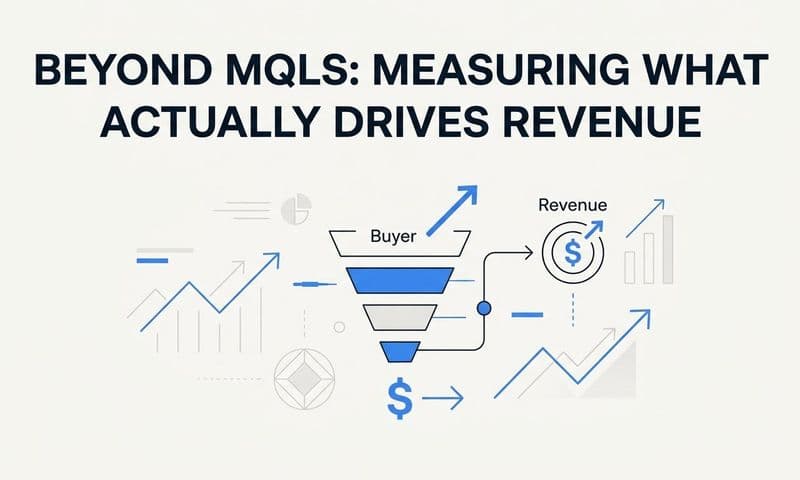
If you are running paid ads across multiple channels and still relying on last-click data or platform-native reports, you are making budget decisions with incomplete information. Campaign attribution tracking solutions exist to solve exactly that problem: connecting every touchpoint in your buyer journey to the revenue it actually influenced.
For B2B SaaS companies especially, the path from first ad click to closed-won deal can span weeks, involve multiple channels, and touch several decision-makers. Without a dedicated attribution solution, you are essentially flying blind on which campaigns are worth scaling and which are quietly draining budget.
This list covers the best campaign attribution tracking solutions available in 2026. Each tool has been evaluated on attribution model depth, integration ecosystem, server-side tracking capabilities, and how well it serves marketing teams that need to connect ad spend to pipeline and revenue. Whether you are a growth marketer, a demand gen lead, or a SaaS founder trying to understand your CAC, there is a solution here built for your needs.
1. Cometly
Best for: B2B SaaS teams that need end-to-end attribution from first ad click to closed-won revenue
Cometly is a marketing attribution and analytics platform built specifically for B2B SaaS companies that connects every ad click to pipeline and closed-won revenue through multi-touch attribution, server-side tracking, and AI-powered campaign recommendations.
 9 Best Attribution Platforms for Agencies in 2026
Where This Tool Shines
Most attribution tools were built with ecommerce in mind, where a conversion happens in a single session. Cometly was designed from the ground up for the B2B SaaS reality: long sales cycles, multiple stakeholders, and conversions that look like demo bookings and closed deals rather than shopping cart checkouts.
The platform creates a genuine single source of truth by pulling together ad platform data, CRM records, and Stripe revenue data into one unified view. You can see exactly which campaigns influenced pipeline, which ones contributed to closed-won revenue, and where budget is being wasted on touchpoints that never convert.
Key Features
Multi-Touch Attribution: Tracks every interaction across all major ad channels and assigns credit based on actual influence across the full buyer journey.
Server-Side Conversion Tracking: Uses server-side tracking and Conversion API integration to capture conversion data accurately even as browser-based tracking becomes less reliable.
AI Ads Manager: Analyzes campaign performance across every ad channel and surfaces recommendations on which campaigns to scale and which to cut, removing guesswork from budget decisions.
Pipeline and Revenue Attribution: Connects ad spend directly to CRM pipeline events and Stripe revenue data so you can calculate true CAC and ROAS at the campaign level.
Customer Journey Analytics: Visualizes the complete path from first ad click to closed deal, showing every touchpoint along the way including organic, paid, and direct interactions.
70+ Native Integrations: Connects with major ad platforms, CRMs, and analytics tools out of the box, reducing implementation overhead significantly.
Best For
Cometly is the strongest fit for B2B SaaS marketing teams, growth leaders, and demand gen managers who need to connect ad spend to pipeline and revenue rather than just surface-level conversion metrics. It is particularly valuable for teams managing multi-channel paid programs where understanding channel contribution is critical to budget decisions.
Pricing
Plans scale based on team size and tracked events. Full pricing details are available at cometly.com.
2. Triple Whale
Best for: DTC and ecommerce brands needing first-party attribution and creative analytics
Triple Whale is an ecommerce-focused attribution and analytics platform known for its first-party pixel, blended ROAS reporting, and creative performance analytics.
 9 Best Campaign Attribution Tracking Solutions for B2B SaaS in 2026
Where This Tool Shines
Triple Whale built its reputation by solving the post-iOS attribution problem for ecommerce brands. Its first-party pixel captures conversion data that platform-native tracking often misses, giving DTC brands a more accurate picture of what is actually driving purchases.
The creative analytics dashboard is a standout feature for teams running high volumes of ad creative. You can see performance broken down at the individual ad level, making it much easier to identify winning creative concepts and retire underperformers before they drain budget.
Key Features
First-Party Pixel: Captures accurate conversion data using first-party methods, reducing the attribution gaps created by iOS privacy changes.
Blended ROAS Reporting: Provides a channel-level and overall blended ROAS view that accounts for contribution across overlapping touchpoints.
Creative Analytics Dashboard: Breaks down ad performance at the creative level, helping teams identify which visuals and copy formats are generating the best results.
Summary Dashboard: Consolidates key ecommerce KPIs into a single view, reducing the need to switch between platform dashboards.
Cohort and LTV Analysis: Provides customer lifetime value and cohort retention data for teams focused on long-term revenue growth.
Best For
Triple Whale is purpose-built for DTC and ecommerce brands. It is less suited for B2B SaaS companies with long sales cycles or pipeline-based conversion models. If your conversions happen at the point of purchase rather than across a multi-month sales process, Triple Whale is worth evaluating seriously.
Pricing
Tiered pricing is based on monthly revenue processed. Details are available at triplewhale.com.
3. Rockerbox
Best for: Marketing ops teams managing multiple data sources that need a unified attribution layer
Rockerbox is a unified marketing measurement platform that normalizes data across paid, organic, and direct channels into a single attribution layer.
 9 Best Campaign Attribution Tracking Solutions for B2B SaaS in 2026
Where This Tool Shines
Rockerbox excels at the unglamorous but critical work of data normalization. If your marketing stack includes a mix of paid search, paid social, email, affiliate, and organic channels, Rockerbox pulls all of that data into a consistent format so you can compare performance across sources without manually reconciling reports.
For teams with more advanced data infrastructure, Rockerbox integrates directly with data warehouses, making it a strong choice for organizations that want attribution data flowing into their broader analytics environment rather than living in a standalone dashboard.
Key Features
Cross-Channel Data Normalization: Standardizes conversion and touchpoint data across all marketing sources into a single, consistent attribution layer.
Rule-Based and Algorithmic Attribution: Offers both manual rule-based models and algorithmic attribution options, giving teams flexibility based on their measurement maturity.
Data Warehouse Integration: Sends attribution data directly to Snowflake, BigQuery, and other warehouse destinations for advanced analytics use cases.
Deduplicated Conversion Reporting: Removes duplicate credit across overlapping channels to provide a cleaner picture of actual conversion influence.
Channel Contribution Analysis: Shows the relative contribution of each channel to conversions, supporting more informed budget allocation decisions.
Best For
Rockerbox is a strong fit for mid-market and enterprise marketing teams with complex channel mixes and existing data infrastructure. Marketing operations professionals who spend significant time reconciling data across platforms will find the normalization layer particularly valuable.
Pricing
Custom pricing for mid-market and enterprise customers. Details are available at rockerbox.com.
4. Northbeam
Best for: High-volume advertisers needing ML attribution combined with media mix modeling and spend forecasting
Northbeam is an ML-driven attribution platform that combines multi-touch attribution with media mix modeling and spend forecasting for high-volume advertisers.
 9 Best Attribution Software for Agencies in 2026
Where This Tool Shines
Northbeam goes beyond standard attribution by layering media mix modeling on top of multi-touch data. This combination gives budget-heavy advertisers a more statistically robust view of channel efficiency, particularly useful when running significant spend across many channels simultaneously.
The spend pacing and forecasting tools are a practical differentiator. Rather than just reporting on what happened, Northbeam helps teams project forward and manage budget pacing in real time, which is valuable for teams managing large monthly ad budgets with strict targets.
Key Features
ML Attribution with Media Mix Modeling: Combines individual touchpoint attribution with statistical media mix modeling for a more complete measurement picture.
Spend Pacing and Forecasting: Tracks budget pacing in real time and projects future spend and performance based on current trajectory.
Creative Performance Reporting: Breaks down performance at the creative level across channels to identify top-performing ad concepts.
Channel Efficiency Scoring: Assigns efficiency scores to channels based on contribution relative to spend, making reallocation decisions more straightforward.
Custom Attribution Windows: Allows configuration of attribution windows and model parameters to match your specific sales cycle and conversion patterns.
Best For
Northbeam is best suited for brands with substantial ad budgets running across many channels simultaneously. It serves both DTC brands and some SaaS use cases, particularly where media mix modeling adds value to the measurement approach.
Pricing
Custom enterprise pricing. Details are available at northbeam.io.
5. HubSpot Marketing Hub
Best for: B2B teams already using HubSpot CRM who want native attribution tied to deal revenue
HubSpot Marketing Hub includes native marketing attribution reporting built directly into the HubSpot CRM platform to connect contact touchpoints to deal revenue.
 9 Best Campaign Attribution Tracking Solutions for B2B SaaS in 2026
Where This Tool Shines
The core advantage of HubSpot's attribution reporting is that it lives inside the same system as your contact and deal data. There is no need to build a connector between your attribution tool and your CRM because they are the same platform. For teams already operating in HubSpot, this eliminates a significant data integration challenge.
HubSpot's attribution models cover the standard set: first-touch, last-touch, linear, and time-decay. Revenue attribution reports tie directly to closed-won deal values in the CRM, which gives marketers a clean way to demonstrate pipeline contribution to leadership without exporting and reconciling data manually.
Key Features
Native CRM Attribution: Attribution reporting is built directly into HubSpot CRM contact and deal records, with no third-party connector required.
Multiple Attribution Models: Supports first-touch, last-touch, linear, and time-decay models, allowing teams to compare credit distribution across models.
Revenue Attribution Reports: Connects marketing touchpoints to closed-won deal values for direct marketing-to-revenue reporting.
Campaign Performance Reporting: Tracks performance across email, ads, and content assets within the HubSpot ecosystem.
Contact-Level Journey Tracking: Shows the full touchpoint history for individual contacts, useful for understanding how specific personas engage before converting.
Best For
HubSpot Marketing Hub attribution is most compelling for B2B teams that are already fully committed to the HubSpot ecosystem. As a standalone attribution solution for teams not using HubSpot CRM, it is less competitive than purpose-built attribution platforms.
Pricing
Attribution features are available on Professional ($800/month) and Enterprise ($3,600/month) tiers.
6. Ruler Analytics
Best for: B2B companies where phone calls, form fills, and live chat are primary conversion events
Ruler Analytics is a B2B-focused marketing attribution platform that specializes in connecting offline conversions including phone calls, form fills, and live chat to marketing touchpoints and CRM revenue.
 8 Best Attribution Tools with Onboarding Support in 2026
Where This Tool Shines
Ruler Analytics fills a gap that most attribution platforms overlook: offline and assisted conversions. If your sales process involves inbound phone calls, live chat conversations, or manual form submissions rather than direct digital purchases, standard attribution tools often lose the thread at that conversion point. Ruler Analytics tracks the full journey including those offline moments.
The platform pushes conversion data back to the CRM at the source level, meaning you can see not just that a lead converted, but which specific channel and campaign drove that lead before they picked up the phone or filled out a form.
Key Features
Call Tracking and Attribution: Tracks inbound phone calls and attributes them back to the specific marketing touchpoints that drove the caller.
Multi-Touch Attribution Across Online and Offline: Stitches together digital touchpoints with offline conversion events for a complete journey view.
CRM Revenue Integration: Passes source-level attribution data into CRM records so revenue can be traced back to originating channels.
Form and Live Chat Conversion Tracking: Captures conversions from form submissions and live chat interactions alongside call and digital touchpoints.
Revenue Attribution by Channel: Reports on revenue influence at the channel and campaign level, incorporating both online and offline conversion data.
Best For
Ruler Analytics is an excellent fit for B2B companies in professional services, agencies, and industries where phone calls and form fills drive a significant portion of qualified pipeline. It works well alongside Salesforce and HubSpot CRM environments.
Pricing
Tiered plans based on tracked calls and conversions. Details are available at ruleranalytics.com.
7. Attribution
Best for: SaaS companies with complex, multi-stakeholder buyer journeys needing people-based attribution
Attribution is a people-based multi-touch attribution platform designed for SaaS companies with complex buyer journeys involving multiple touchpoints and stakeholders.
Where This Tool Shines
Attribution's key differentiator is its people-based tracking approach. Rather than tracking sessions or cookies, it stitches together anonymous pre-conversion touchpoints with known user data after conversion. This is particularly valuable for SaaS companies where a prospect might interact with ads across multiple devices and sessions before ever identifying themselves.
For companies with longer consideration cycles, the ability to see a complete journey that spans weeks or months of anonymous browsing before a trial signup or demo request is genuinely useful. It helps marketing teams understand which early-funnel touchpoints are doing the work of building awareness and intent.
Key Features
People-Based Journey Stitching: Connects anonymous pre-conversion touchpoints with identified user records post-conversion for a complete attribution picture.
Multi-Touch Attribution Across All Channels: Tracks and assigns credit across paid, organic, referral, and direct channels throughout the full journey.
Ad Platform and CRM Integration: Integrates with major ad platforms and CRM systems to connect marketing data with conversion and revenue outcomes.
Custom Attribution Model Configuration: Allows teams to configure attribution models to reflect their specific funnel structure and conversion logic.
Funnel-Stage Reporting: Reports on attribution at each stage of the SaaS funnel, from awareness through trial to paid conversion.
Best For
Attribution is best suited for SaaS companies with longer consideration cycles and multi-touch buyer journeys where anonymous-to-known journey stitching adds meaningful measurement value. Teams that need granular funnel-stage attribution reporting will find the platform well-matched to their needs.
Pricing
Custom pricing based on tracked users and events. Details are available at attribution.com.
8. Google Analytics 4
Best for: Teams needing a free baseline attribution layer with native Google Ads integration
Google Analytics 4 is Google's free web analytics platform featuring a data-driven attribution model powered by machine learning, with broad integration across the Google advertising ecosystem.
Where This Tool Shines
GA4's data-driven attribution model is a meaningful upgrade from the last-click default that dominated Universal Analytics. It uses machine learning to distribute credit across touchpoints based on actual conversion path data, which gives teams a more realistic view of how different channels contribute to conversions.
For teams running Google Ads and Search campaigns, the native integration between GA4 and the Google ecosystem is hard to beat at the price point of free. You can see cross-channel conversion paths, configure custom conversion events, and access attribution comparison reports without paying for a separate platform.
Key Features
Data-Driven Attribution Model: Uses machine learning to distribute conversion credit across touchpoints based on observed conversion path patterns.
Free Standard Tier: The standard version is free, making it accessible to teams at any budget level as a baseline measurement layer.
Native Google Ecosystem Integration: Connects directly with Google Ads, Search Console, and other Google products without additional configuration.
Cross-Channel Conversion Path Reporting: Shows the sequence of channels that appeared in converting paths, useful for understanding channel interaction patterns.
Event-Based Tracking Model: Flexible event-based architecture allows custom conversion definitions across a wide range of user actions.
Best For
GA4 works best as a baseline or complementary attribution layer rather than a standalone B2B attribution solution. Teams heavily invested in Google Ads will get the most value from the native integration. For CRM revenue attribution and multi-stakeholder B2B journeys, GA4 has meaningful limitations that purpose-built platforms address more effectively.
Pricing
Free standard tier. Google Analytics 360 is available for enterprise needs at custom pricing.
9. Dreamdata
Best for: B2B teams running account-based marketing who need buying committee attribution tied to pipeline
Dreamdata is a B2B revenue attribution platform built for account-based marketing teams that maps touchpoints across entire buying committees to pipeline and revenue outcomes.
Where This Tool Shines
Dreamdata addresses one of the most underserved problems in B2B attribution: the fact that buying decisions at target accounts involve multiple people, not a single contact. Most attribution tools track individual user journeys. Dreamdata maps touchpoints across every member of a buying committee and attributes pipeline and revenue at the account level.
For teams running ABM programs, this account-level view is critical. You can see which campaigns and channels are influencing your target accounts, understand how different stakeholders in the buying committee are engaging, and connect that activity to actual pipeline and closed-won revenue in your CRM.
Key Features
Account-Based Attribution: Maps touchpoints across all contacts in a buying committee rather than tracking individual user journeys in isolation.
Pipeline Influence Reporting: Shows which campaigns and channels are influencing open and closed pipeline at the account level.
CRM and Ad Platform Integration: Integrates with Salesforce, HubSpot, and major ad platforms to connect marketing activity with CRM revenue data.
Account-Level Journey Visualization: Displays the complete touchpoint history for each target account, including all contacts and their individual interactions.
ABM Performance Reporting: Reports on program performance by target account segment, making it straightforward to evaluate ABM investment against pipeline outcomes.
Best For
Dreamdata is an excellent fit for B2B marketing teams running structured ABM programs with defined target account lists. It is particularly strong for companies selling to enterprise or mid-market accounts where multiple stakeholders are involved in the purchase decision and individual-level attribution misses the full picture.
Pricing
Tiered plans available. Details are available at dreamdata.io.
Which Attribution Solution Is Right for You
The right campaign attribution tracking solution depends on three things: the length of your sales cycle, the complexity of your channel mix, and how closely your attribution data needs to sit next to actual revenue numbers.
For B2B SaaS teams focused on connecting ad spend to pipeline and closed-won revenue, Cometly is the strongest starting point. It was built specifically for this use case, with server-side tracking, CRM and Stripe integration, and AI-powered recommendations that go beyond reporting into actionable guidance. If you need a single platform that bridges your ad platforms and your revenue data, it is the most purpose-built option on this list.
If your team is already fully committed to HubSpot, the native attribution reporting in HubSpot Marketing Hub is worth evaluating before adding another tool to your stack. It removes integration complexity for teams where the CRM is the system of record.
For B2B companies running structured ABM programs with defined target account lists, Dreamdata's account-based attribution approach addresses measurement gaps that contact-level tools miss entirely.
Ecommerce and DTC brands will find more practical value in Triple Whale or Northbeam, both of which were built with direct-purchase conversion models in mind. If your sales cycle is short and your conversions happen at checkout, those platforms are better matched to your needs than B2B-focused tools.
Regardless of which platform you choose, the core goal is the same: replace fragmented, platform-native reporting with a single, accurate view of which campaigns are actually driving revenue. The sooner you have that clarity, the sooner you can stop funding underperforming campaigns and start scaling what works.
Ready to connect your ad spend directly to pipeline and revenue? Get your free demo and see how Cometly gives B2B SaaS teams the attribution clarity they need to make smarter budget decisions.