Most B2B buyers who land on your website are not ready to buy. They are researching, comparing options, building a business case internally, or waiting for budget approval. They leave your site, move on with their day, and unless you have a way to stay in front of them, that initial interest quietly fades. This is not a failure of your product or your messaging. It is simply how B2B buying works.
B2B retargeting ads exist precisely to solve this problem. Rather than treating every website visitor who does not convert as a lost opportunity, retargeting lets you re-engage those prospects with relevant messaging as they continue their buying journey. You stay visible, stay relevant, and stay top of mind until the timing is right for them to take the next step.
But effective B2B retargeting is not as simple as dropping a pixel on your homepage and running the same ad to everyone who visited last month. The buying cycles are longer, the audiences are more complex, and the measurement challenges are more significant than in B2C. When done well, retargeting becomes one of the most efficient ways to move warm prospects through a long sales cycle. When done poorly, it drains budget on audiences that were never going to convert anyway.
This article breaks down how B2B retargeting ads actually work, how to structure your audiences by funnel stage, what makes ad creative resonate in a B2B context, and how to measure retargeting performance in a way that connects to real pipeline and revenue outcomes.
Why B2B Buyers Rarely Convert on the First Touch
Think about the last significant software purchase your company made. There were probably multiple people involved in the decision. Someone identified the need, someone evaluated the options, someone approved the budget, and someone negotiated the contract. That process likely took weeks or months, not hours.
This is the fundamental reality of B2B buying. Unlike a consumer purchasing a product on impulse, a B2B buyer is typically navigating internal politics, justifying ROI to finance, getting sign-off from IT, and managing competing priorities. A single visit to your website, no matter how compelling your landing page, rarely results in an immediate decision to move forward.
Most website visitors leave without taking action, and this is not necessarily a sign that they are uninterested. Many are in early research mode, gathering information before they are ready to have a conversation. Others may be interested but need to bring a colleague into the process before they can commit to a demo or a trial. The intent is there. The timing is not.
This is where retargeting ads change the equation. Instead of relying on a prospect to remember your brand and find their way back to your site on their own, retargeting keeps your messaging in front of them across the channels they use every day. When they are ready to move forward, your brand is already familiar, already credible, and already associated with solving the problem they are trying to address.
Retargeting also allows you to evolve your messaging as a prospect moves through their buying journey. Someone who read a blog post about a problem your product solves needs different messaging than someone who spent time on your pricing page. The ability to match your ad content to where a prospect is in their decision process is one of the most powerful advantages retargeting offers in a B2B context. Understanding the full B2B SaaS marketing funnel helps you map the right message to the right stage.
The alternative is cold outreach to people who have already shown interest, or worse, losing them entirely to a competitor who stayed visible while you did not. Retargeting is not about being aggressive or intrusive. It is about being present and relevant at the right moments across a buying journey that unfolds over time.
The Mechanics Behind B2B Retargeting Campaigns
Understanding how retargeting works technically helps you make better decisions about how to set it up and maintain it. There are two primary approaches: pixel-based retargeting and list-based retargeting. Most B2B teams use both in combination.
Pixel-based retargeting works by placing a small piece of tracking code on your website. When a visitor lands on a page, the pixel fires and stores a cookie in their browser, adding them to a retargeting audience on your ad platform. This happens automatically and allows you to build audiences based on specific page visits, such as everyone who viewed your pricing page or your demo request page.
List-based retargeting takes a different approach. Instead of tracking anonymous website visitors, you upload a list of known contacts directly to an ad platform. LinkedIn, Meta, and Google all support this. The platform matches your list against their user database and serves ads to the people it can identify. This is particularly useful for account-based marketing strategies where you want to target specific companies or contacts already in your CRM.
Here is where it gets important for B2B marketers. Traditional browser-based pixel tracking is becoming less reliable. Safari's Intelligent Tracking Prevention, Firefox's Enhanced Tracking Protection, and the broader shift toward privacy-first browsing have all reduced the accuracy of cookie-based audiences. If a prospect visits your site in Safari with tracking blocked, your pixel may not fire at all.
Server-side tracking addresses this gap. Instead of relying on a browser cookie, server-side integrations like Meta's Conversion API and Google's Enhanced Conversions send event data directly from your server to the ad platform. This bypasses browser restrictions entirely, resulting in more complete audience data and better match rates. For B2B teams running retargeting at scale, server-side tracking is no longer optional. It is foundational to maintaining audience quality.
When it comes to platforms, each serves a distinct role in a B2B retargeting strategy. LinkedIn is the primary channel for reaching decision-makers in a professional context. Its targeting by job title, seniority, company size, and industry makes it uniquely suited for B2B, even though cost-per-click tends to be higher than other platforms. Meta offers scale and cross-device reach, making it effective for keeping your brand visible to prospects outside of work hours. Google Display fills in the gaps by reaching prospects across millions of websites throughout their browsing day.
The strongest B2B retargeting programs do not rely on a single platform. They use each channel strategically based on funnel stage, audience size, and the type of message being delivered.
Segmenting Retargeting Audiences by Funnel Stage
One of the most common mistakes in B2B retargeting is treating all website visitors as a single audience. Lumping together someone who spent thirty seconds on your homepage with someone who spent ten minutes reading your pricing page and comparing plans is a recipe for wasted budget and irrelevant messaging.
Effective retargeting starts with audience segmentation based on behavior and intent signals. Here is how to think about it across the three stages of the funnel.
Top-of-Funnel Retargeting: This audience includes first-time visitors, blog readers, and anyone who engaged with your content but has not yet shown strong purchase intent. They know your brand exists, but they may not fully understand what you do or why it matters to them. The goal here is not to push for a demo or a free trial. It is to reinforce your brand, deepen their understanding of the problem you solve, and build enough trust that they will return when they are ready to evaluate options. Content-driven ads, educational resources, and thought leadership work well at this stage.
Mid-Funnel Retargeting: This is where intent signals get stronger. Prospects who visited your pricing page, watched a product demo video, or started a free trial but did not complete it have told you something important about their level of interest. They are actively evaluating. Your messaging here should shift from awareness to consideration. Lead with outcomes and ROI. Address common objections. Make the next step clear and low-friction, whether that is a free trial, a personalized demo, or a conversation with your sales team.
Bottom-of-Funnel Retargeting: This audience consists of leads already in your CRM or active pipeline. They know your product, they have likely spoken with someone on your team, and they are in the process of making a decision. Retargeting at this stage is about accelerating deal velocity rather than generating awareness. Highly personalized ads, social proof content, and direct calls to action work well here. Account-based retargeting, where you upload a list of target accounts and serve ads specifically to employees at those companies, is especially effective for enterprise deals where multiple stakeholders need to reach alignment. Pairing this approach with strong B2B SaaS marketing strategies helps ensure your retargeting efforts reinforce the broader go-to-market motion.
The key principle across all three stages is that your audience segmentation should reflect where each prospect is in their decision process, and your messaging should match that stage precisely. The more relevant the ad, the more efficiently your budget works.
Building Retargeting Ad Creative That Resonates in B2B
Even the best audience segmentation will underperform if the creative does not connect. B2B ad creative operates under different constraints than B2C. You are not trying to trigger an emotional impulse purchase. You are trying to advance a rational, multi-stakeholder decision process. That requires a different creative approach.
The most important principle is to match your message to intent. Someone who visited your pricing page is already thinking about cost and value. An ad that leads with ROI, includes a clear comparison of what they get at each tier, and offers a direct path to speak with someone makes sense for that audience. Showing that same person a general brand awareness ad about the problem you solve is a missed opportunity. They are past that stage.
In terms of creative principles that work in B2B retargeting, a few stand out consistently. Lead with outcomes rather than features. Decision-makers care about what your product will do for their business, not how it works under the hood. Use social proof where it is available: customer logos, recognizable brand names, and specific results from real customers add credibility that generic claims cannot. Keep copy concise and direct. B2B buyers are busy, and they are scanning, not reading. Your value proposition should be clear within the first few seconds of engagement.
Frequency and fatigue management is a practical reality that many B2B teams underestimate. Serving the same ad to the same person ten times in a week does not increase conversions. It creates annoyance and negative brand associations. Set frequency caps appropriate to your platform and audience size, and rotate creative regularly to keep messaging fresh. For LinkedIn campaigns specifically, understanding LinkedIn ads frequency cap settings is essential to avoiding audience burnout. As a general rule, the smaller your audience, the more aggressive your frequency management needs to be.
Equally important is maintaining exclusion lists. Converted customers should be removed from prospect retargeting pools immediately. Serving a demo-request ad to someone who is already a paying customer is not just wasteful. It signals that your marketing infrastructure is not well-coordinated, which can undermine trust. Clean audience hygiene is as important as creative quality.
Measuring Retargeting Performance Beyond Click-Through Rate
Here is a measurement challenge that trips up many B2B marketing teams: retargeting ads rarely get credit for the conversions they influence. A prospect might see your retargeting ad on LinkedIn three times over two weeks, then click a Google search ad to request a demo. Under last-click attribution, Google gets all the credit. LinkedIn gets none. The retargeting campaign looks like it is not working, even though it played a meaningful role in keeping the prospect engaged throughout their evaluation.
This is why last-click attribution systematically undervalues retargeting in B2B contexts. Retargeting is designed to assist conversions, not necessarily to close them directly. It keeps prospects warm and moving through the funnel. To see its true contribution, you need multi-touch attribution models that distribute credit across all the touchpoints in a buyer's journey.
Linear attribution gives equal credit to every touchpoint. Time-decay models weight touchpoints closer to conversion more heavily. Data-driven attribution uses machine learning to assign credit based on actual patterns in your conversion data. Each has trade-offs, but all of them give a more accurate picture of retargeting's role than last-click alone.
The metrics that matter most for B2B retargeting go well beyond click-through rate and cost-per-click. The questions you should be asking are: How much pipeline has been influenced by retargeting touchpoints? What is the cost per qualified opportunity generated from retargeted audiences? Are retargeted leads closing faster than non-retargeted leads? Which retargeting segments are contributing to closed-won revenue?
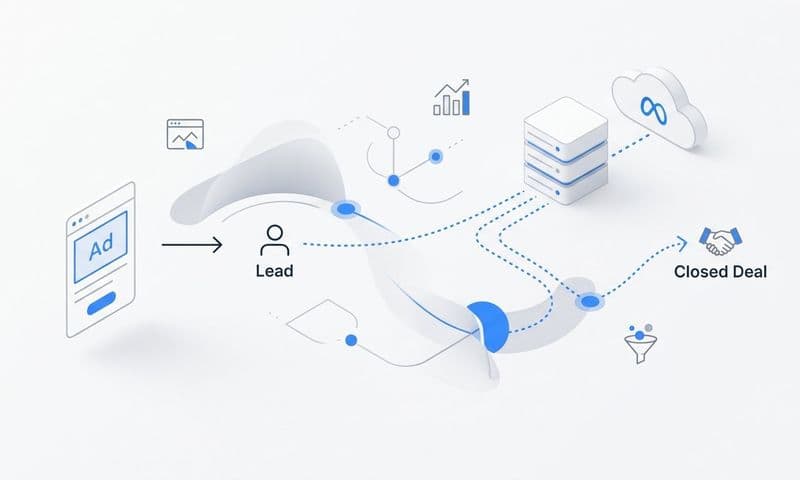
Answering these questions requires connecting your ad platform data to your CRM and revenue data. This is where many B2B teams hit a wall. Ad platforms report on clicks and conversions. CRMs track leads and deals. Without a system that bridges the two, you are left making budget decisions based on incomplete data. A well-structured B2B marketing dashboard that unifies these data sources is often the missing piece that makes retargeting measurement actionable.
Platforms like Cometly are built specifically to close this gap. By connecting your ad platforms, CRM, and website data into a single attribution view, Cometly lets you trace a retargeting impression all the way through to a closed-won deal. You can see which audiences are contributing to pipeline, which creatives are influencing revenue, and where retargeting fits within the broader customer journey. That is the level of measurement clarity that makes it possible to invest in retargeting with confidence rather than guesswork.
Turning Retargeting Data Into Smarter Campaign Decisions
Measurement is only valuable if it informs action. Once you have a clear view of which retargeting segments are driving pipeline and which are consuming budget without contributing to revenue, you have the information you need to optimize with precision.
Start with audience performance. If your pricing page retargeting audience is generating a significantly higher rate of qualified opportunities than your general site visitor audience, that tells you where to concentrate your investment. Shift budget toward the segments that are producing pipeline, and either reduce spend or restructure messaging for the segments that are not performing. Attribution data makes these decisions concrete rather than intuitive.
Server-side integrations play a critical role in improving the quality of your retargeting audiences over time. When you send enriched conversion events back to ad platforms through Conversion APIs, you are giving those platforms better signals about what a high-value conversion actually looks like. This improves the algorithmic optimization of your retargeting campaigns. Instead of optimizing for generic form fills, the platform learns to prioritize users who match the profile of prospects that actually become customers. Using ad tracking tools with accurate data is what makes this signal enrichment possible at scale. The quality of your audience data directly affects the quality of your campaign performance.
Building a continuous improvement loop is what separates retargeting programs that plateau from ones that compound in effectiveness. Use performance data to refine your audience segments regularly. Update creative based on what messaging is resonating at each funnel stage. Adjust bidding strategies based on which touchpoints are influencing revenue versus which are generating surface-level engagement. Test new audience combinations, such as layering job title targeting on top of behavioral segments, to find higher-intent pockets within your retargeting pool.
The teams that get the most from B2B retargeting are not the ones with the biggest budgets. They are the ones with the clearest view of what their data is telling them, and the discipline to act on it systematically. Every campaign cycle is an opportunity to learn something that makes the next one more efficient.
Putting It All Together
B2B retargeting ads are not a set-it-and-forget-it tactic. They are a strategic layer of your marketing program that, when executed correctly, keeps high-intent prospects engaged across a buying journey that might span weeks or months. The difference between retargeting campaigns that drain budget and ones that contribute meaningfully to pipeline comes down to three things: accurate tracking, audience quality, and attribution clarity.
Accurate tracking means going beyond browser-based pixels to server-side event data that holds up in a privacy-first environment. Audience quality means segmenting by intent and behavior rather than treating all visitors as a single pool. Attribution clarity means connecting retargeting touchpoints to real CRM and revenue outcomes so you can see what is actually working, not just what is generating clicks.
When all three are in place, retargeting becomes one of the most efficient ways to accelerate deal velocity and reduce the cost of converting warm prospects into customers. When any one of them is missing, you are flying blind and spending money on audiences and creatives that may never contribute to revenue.
Cometly is built for exactly this challenge. It connects your ad platforms, CRM, and website data into a single attribution view so you can see which retargeting touchpoints are influencing pipeline, which audiences are contributing to closed-won revenue, and where to invest next. From server-side conversion tracking to multi-touch attribution and AI-driven campaign recommendations, Cometly gives B2B SaaS marketers the clarity they need to make retargeting work as a growth driver, not just a visibility play.
Ready to see which of your retargeting efforts are actually driving revenue? Get your free demo and start connecting every ad touchpoint to the pipeline and revenue outcomes that matter.