Your marketing dashboard shows 500 conversions. Your CRM shows 750. Your ad platforms report different numbers entirely. Meanwhile, your CFO is asking which campaigns actually drove revenue, and you're piecing together answers from fragmented data that may or may not reflect reality.
This is the consent-based tracking era—where users control what data you can collect, regulations dictate how you ask for permission, and traditional measurement methods crumble under the weight of declined tracking requests. For many marketers, it feels like flying blind.
But here's what the most successful marketers have realized: consent-based tracking isn't the problem. It's the forcing function that separates marketers who truly understand their customer journeys from those who were just riding the wave of unrestricted data collection. When you build attribution strategies designed for this privacy-first reality, you don't just comply with regulations—you gain clearer, more trustworthy insights than competitors still clinging to broken measurement models.
The Foundation: How Consent-Based Tracking Actually Works
Think of consent-based tracking as a gatekeeper between your marketing tools and your website visitors. Before any tracking pixel fires, before any cookie gets set, before any data flows into your analytics platform—the system must first receive explicit permission from the user.
The technical mechanics are straightforward but critical. When someone lands on your site, a Consent Management Platform (CMP) displays a banner or modal asking for permission to collect data. Until the user makes a choice, your tracking scripts remain dormant. No data collection happens. No pixels fire. No attribution begins.
Once the user grants consent, the floodgates open. Your tracking pixels activate, cookies get set, and data starts flowing to your analytics platforms, ad networks, and attribution tools. The user's journey—from ad click to conversion—becomes visible and measurable. Understanding what a tracking pixel is and how it works is essential for grasping these mechanics.
But when consent is denied? That visitor becomes invisible to your traditional tracking infrastructure. Your Facebook pixel can't fire. Your Google Analytics tag stays silent. From your measurement perspective, it's as if they never existed—even though they might convert and become a paying customer.
Consent models come in two primary flavors. Opt-in consent requires users to actively agree before any tracking begins—this is the GDPR standard across the European Union. Opt-out consent assumes permission unless users explicitly decline—though this approach is increasingly rare and faces regulatory scrutiny.
Modern CMPs go deeper with granular consent categories. Users might allow necessary cookies for site functionality but decline marketing cookies. They might permit analytics but reject personalized advertising. Each category controls different tracking scripts, creating a complex matrix of partial consent scenarios.
The data flow difference is profound. With full consent, you see the complete customer journey: which ad they clicked, what pages they visited, how long they engaged, and ultimately whether they converted. Without consent, you might only know they converted—if you're lucky enough to capture that through server-side methods—but the entire journey leading to that conversion remains hidden.
This creates a fundamental challenge: your attribution models depend on connecting touchpoints across the customer journey. When consent gaps create invisible segments of that journey, your attribution accuracy suffers. You might see a conversion attributed to a generic source when in reality, a specific ad campaign drove that customer—but you can't see it because they declined tracking.
Why Privacy Regulations Made This Non-Negotiable
The shift to consent-based tracking didn't happen because marketers suddenly decided to collect less data. It happened because governments worldwide decided users deserved control over their personal information—and backed that decision with regulations carrying serious consequences.
GDPR launched in May 2018, fundamentally changing how businesses operating in the European Union handle personal data. The regulation requires explicit, informed consent before collecting data for marketing purposes. Vague pre-checked boxes don't count. Burying consent in terms of service doesn't work. Users must actively, knowingly agree—and they can withdraw that consent anytime.
California followed with CCPA in January 2020, giving residents the right to know what data businesses collect and opt out of its sale. The enhanced version, CPRA, took effect in 2023 with even stricter requirements. Brazil implemented LGPD, South Africa enacted POPIA, and similar regulations continue emerging globally. Marketers must now explore privacy compliant tracking alternatives to maintain measurement capabilities.
The consequences for non-compliance aren't theoretical. GDPR violations can trigger fines up to €20 million or 4% of global annual revenue—whichever is higher. Companies have faced penalties for unclear consent mechanisms, for tracking users who declined consent, and for making consent a condition of service access.
Beyond regulatory fines, non-compliance creates platform-level risks. Ad platforms like Meta and Google enforce their own privacy policies. If your tracking setup violates user consent preferences, you risk ad account restrictions, campaign disapprovals, or complete account suspension. When your business depends on paid advertising, these platform penalties can be more immediately damaging than regulatory fines.
Browser makers didn't wait for regulations to act. Safari's Intelligent Tracking Prevention (ITP) began blocking third-party cookies and limiting first-party cookie lifespans in 2017. Firefox's Enhanced Tracking Protection followed. These technical enforcement mechanisms make non-consensual tracking increasingly difficult regardless of your compliance intentions. Marketers should be preparing for iOS17 Link Tracking Shield and similar browser-level restrictions.
Chrome's approach has evolved more gradually, but the direction is clear. Google announced plans to phase out third-party cookies, developing Privacy Sandbox as an alternative. While timelines have shifted, the trajectory toward privacy-preserving technologies continues.
The regulatory landscape isn't stabilizing—it's intensifying. More jurisdictions are implementing privacy laws, existing regulations are being strengthened, and enforcement is becoming more aggressive. Treating consent-based tracking as optional or temporary is no longer viable. It's the permanent foundation of digital marketing measurement.
The Attribution Challenge: Measuring What You Can't See
Here's where consent-based tracking creates its most painful problem: attribution depends on visibility, and consent requirements create systematic blind spots in your customer journey data.
Traditional pixel-based attribution worked beautifully in the unrestricted tracking era. A user clicked your Facebook ad, your pixel fired and recorded that click. They visited three more times over the next week, each visit tracked. Finally, they converted, and your attribution model connected all those touchpoints to understand which channels contributed to the conversion.
Now imagine that same customer journey, but the user declined tracking consent on their first visit. Your pixel never fired. Those three return visits? Invisible. When they finally converted, your attribution system has no idea they came from that Facebook ad. The conversion might get attributed to "direct" traffic or the last touchpoint you could see—creating a completely inaccurate picture of what drove that customer.
Multiply this scenario across thousands of customers, and your attribution data becomes increasingly unreliable. You might be scaling campaigns that aren't actually driving results while cutting budgets from channels that are performing—because consent gaps prevent you from seeing the true performance. This is why fixing conversion tracking gaps has become a critical priority for performance marketers.
The iOS 14.5 update in April 2021 compounded this challenge dramatically. App Tracking Transparency (ATT) required apps to ask permission before tracking users across other companies' apps and websites. Most users declined. Suddenly, mobile app tracking—a massive source of attribution data—largely disappeared.
For marketers running mobile app campaigns or tracking mobile web conversions, the impact was immediate and severe. Facebook reported that their Ads Manager conversion tracking dropped significantly. Google's mobile attribution became less precise. The detailed mobile user journey data that powered attribution models simply evaporated. Understanding Facebook attribution tracking limitations is now essential for any marketer running Meta campaigns.
This creates the discrepancy problem that frustrates marketers daily. Your ad platforms report conversions based on their limited, consent-restricted view of the customer journey. Your analytics platform reports different numbers based on its own consent-limited data. Your CRM shows the actual conversions that happened in your business—often significantly more than either platform reported.
The gap between platform-reported conversions and actual business results can be substantial. Some marketers report discrepancies of 30-50% or more, depending on their audience's consent rates and the tracking methods they're using. When you can't trust your attribution data, every optimization decision becomes a guess.
The Modeling Dilemma
Ad platforms have responded with modeled conversions—statistical estimates that attempt to fill consent-created data gaps. Google uses conversion modeling, Facebook employs aggregated event measurement, and other platforms have similar approaches.
These models help, but they're estimates based on the data platforms can see. When consent rates are low or user behavior differs between consented and non-consented segments, the models' accuracy suffers. You're making budget decisions based on statistical projections rather than actual measurement—a fundamental shift from how attribution used to work.
Server-Side Tracking: Bridging the Consent Gap
While client-side pixels struggle with consent restrictions and browser limitations, server-side tracking offers a more resilient approach to measurement in the privacy-first era.
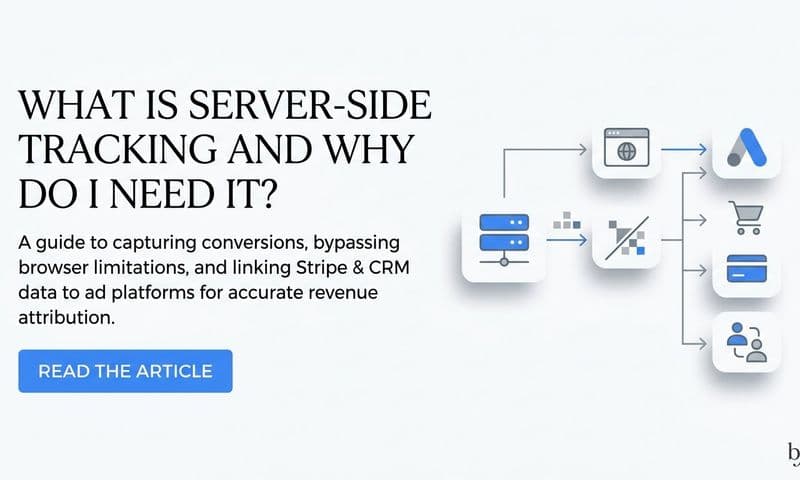
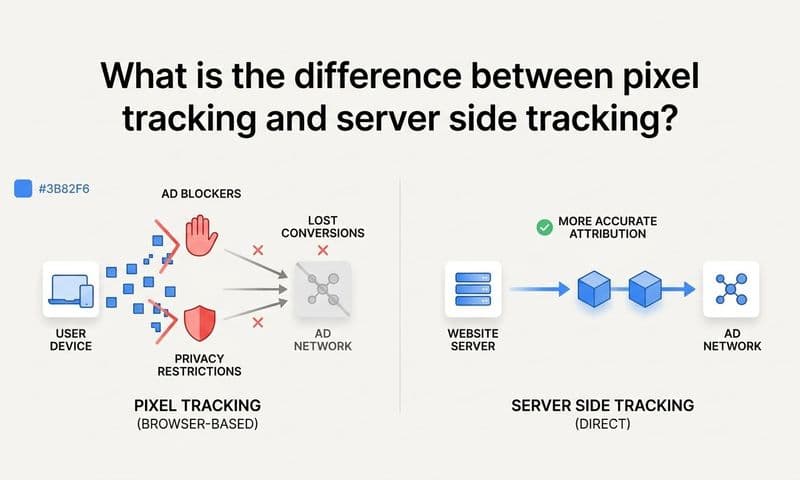
The fundamental difference is where data collection happens. Client-side tracking relies on JavaScript code running in the user's browser—code that's subject to browser restrictions, ad blockers, and consent requirements before it can execute. Server-side tracking collects data directly on your server, before the user's browser enters the equation. Learning why server-side tracking is more accurate helps explain this architectural advantage.
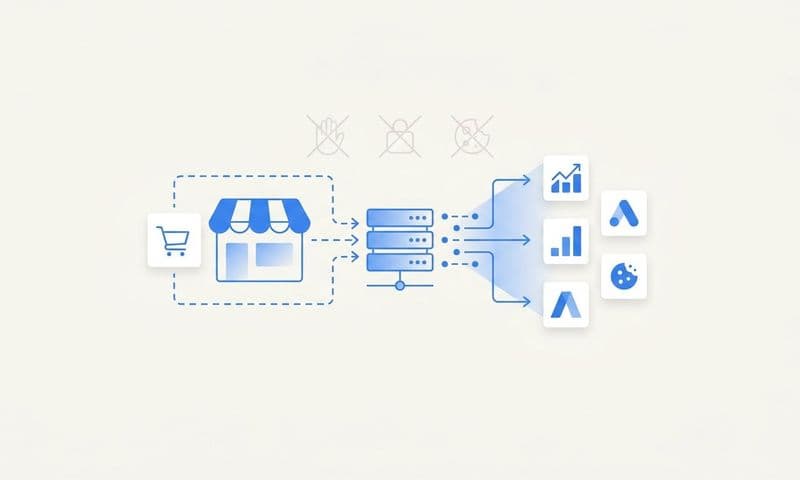
Here's how it works in practice. When someone completes a conversion on your site—makes a purchase, submits a lead form, signs up for a trial—your server records that event directly. This first-party data collection happens regardless of whether the user has tracking pixels enabled in their browser. Your server then sends that conversion data to your ad platforms and analytics tools through server-to-server connections.
This approach doesn't eliminate consent requirements—you still need permission to collect and use personal data. But it's more reliable because it doesn't depend on client-side scripts that users can block or browsers can restrict. The data collection happens in an environment you control.
Server-side tracking is particularly powerful for capturing the events that matter most: actual conversions. While you might miss some journey touchpoints when users decline client-side tracking, you can still record when they convert. This creates a more accurate picture of conversion volume, even if attribution to specific touchpoints becomes more challenging.
The first-party data tracking advantage is significant. When you collect data directly on your server, you're not relying on third-party cookies that browsers increasingly block. You're building a first-party data asset that's more durable, more privacy-compliant, and more valuable for long-term measurement.
Connecting CRM events amplifies this approach. When someone converts on your website and becomes a customer in your CRM, that CRM event represents ground truth—an actual business outcome regardless of tracking limitations. Server-side implementations can capture these CRM conversions and feed them back to ad platforms, giving algorithms real conversion data to optimize against.
This CRM connection is particularly valuable for businesses with longer sales cycles or offline conversion components. A lead might come through your website, get nurtured through email, and convert in a sales call weeks later. Client-side pixels can't track that complete journey, but server-side tracking can connect your website data to your CRM data to your offline conversions—creating attribution that reflects actual business results. A comprehensive server-side tracking implementation guide can help you set this up correctly.
The technical implementation requires more setup than dropping a pixel on your site. You need server infrastructure to handle data collection, APIs to connect your systems, and processes to ensure data flows correctly. But this complexity brings resilience—your measurement infrastructure becomes less dependent on browser behavior and user consent for basic conversion tracking.
The Limitations to Understand
Server-side tracking isn't a magic solution that eliminates all consent challenges. You still need user permission to collect personal data, and you still face gaps in journey-level attribution when users decline tracking. What server-side tracking does is make your conversion measurement more complete and your first-party data collection more robust—giving you a foundation to build attribution strategies that work despite consent limitations.
Building a Consent-First Measurement Strategy
The most effective marketers aren't fighting against consent requirements—they're building measurement strategies designed for this reality from the ground up.
Start with consent management that maximizes opt-in rates without being manipulative. Your consent banner isn't just a legal requirement—it's a trust-building opportunity. Users are more likely to grant consent when you're transparent about what data you collect and why it benefits them.
Frame the value exchange clearly. Instead of vague language about "improving your experience," explain specific benefits: "We use tracking to remember your preferences, show you relevant content, and provide personalized recommendations." When users understand the tradeoff, more will consent.
Design matters more than marketers often realize. A well-designed consent interface that's easy to understand and navigate increases opt-in rates. Poorly designed banners that confuse users or make declining easier than accepting will tank your consent rates—and your attribution data quality.
Once you have consent data, build measurement approaches that work with partial visibility. This means combining multiple data sources rather than relying on any single attribution method. Implementing cross-channel tracking implementation becomes essential for connecting fragmented data sources.
Layer consented tracking data with modeled conversions from ad platforms. Use your platform models as one input, but don't treat them as absolute truth. Cross-reference them against your CRM data, your server-side conversion tracking, and your actual business results. When you see discrepancies, investigate them rather than assuming the model is correct.
Implement incrementality testing to validate what's actually driving results. Run controlled experiments where you hold out segments of your audience from specific campaigns, then measure the difference in conversion rates. This approach doesn't depend on tracking individual user journeys—it measures aggregate impact, which works regardless of consent rates.
Feed higher-quality data back to ad platforms to improve their algorithmic optimization. When you capture conversions through server-side tracking and CRM integration, you can send more complete, accurate conversion data to platforms like Meta and Google. This enriched data helps their algorithms optimize more effectively, even when client-side tracking is limited.
The Conversion API for Meta and Enhanced Conversions for Google are built for exactly this purpose. They let you send server-side conversion data that includes customer information, purchase values, and other enrichment that client-side pixels might miss. This feeds the ad platforms' machine learning systems better training data, improving targeting and optimization. Following best practices for tracking conversions accurately ensures you maximize data quality.
The Competitive Advantage
Here's what many marketers miss: while competitors struggle with unreliable attribution and make decisions based on incomplete data, you can build a measurement foundation that provides clearer visibility into what's actually driving revenue.
This isn't about having perfect data—that era is over. It's about having better data than your competition. When you combine consent-compliant tracking, server-side measurement, CRM integration, and statistical approaches, you create attribution that's more accurate and more actionable than relying on broken client-side pixels alone.
The marketers winning in this environment aren't the ones with the most data—they're the ones with the most trustworthy data and the measurement strategies to use it effectively.
Putting It All Together: Your Privacy-Ready Attribution Stack
Building attribution that works in the consent era requires the right combination of tools, processes, and strategic thinking. Here's how to audit your current setup and identify what needs to change.
Start by evaluating your consent management implementation. Is your CMP properly configured to block tracking scripts until consent is granted? Are you respecting user choices across all your tracking tools? Test your site with consent declined—you should see zero tracking pixels firing, zero data flowing to analytics platforms. If data still leaks through, you have compliance gaps that need fixing.
Assess your server-side tracking capabilities. Can you capture conversions directly on your server, independent of client-side pixels? Do you have infrastructure to send that data to ad platforms and analytics tools? If you're still relying entirely on client-side tracking, you're missing conversions and undermining your attribution accuracy. A proper attribution tracking setup addresses these infrastructure requirements.
Examine your CRM integration. Does your attribution system connect to your CRM to capture offline conversions, sales cycle progressions, and actual revenue data? If your attribution stops at the website conversion and doesn't follow the customer through to closed revenue, you're optimizing for the wrong outcomes. Effective customer attribution tracking requires this end-to-end visibility.
Look for attribution tools built for the privacy-first era. The key capabilities to prioritize include server-side tracking support, CRM integration, multiple attribution model comparisons, and the ability to work with partial data. Tools designed for the old unrestricted tracking world will increasingly fail as consent requirements and browser restrictions tighten.
Test your attribution accuracy by comparing platform-reported conversions against your CRM revenue data. Significant discrepancies indicate measurement problems that will lead to poor optimization decisions. The goal isn't perfect alignment—that's unrealistic—but you should understand where the gaps are and why they exist.
Consider the competitive advantage this creates. While many marketers accept degraded attribution as inevitable, you can build measurement infrastructure that provides clearer visibility into campaign performance. When you know with confidence which campaigns drive revenue and which don't, you can scale more aggressively and optimize more effectively than competitors flying blind.
The Path Forward: Turning Privacy Compliance Into Competitive Advantage
Consent-based tracking fundamentally changed digital marketing measurement, but it didn't make accurate attribution impossible—it just made it harder. The marketers who adapt their strategies to this new reality will have clearer, more trustworthy data than those still clinging to broken measurement models.
The key insight is this: you're not trying to recreate the unrestricted tracking era. That's gone. Instead, you're building attribution strategies designed for privacy-first measurement from the ground up—strategies that combine server-side tracking, CRM integration, first-party data, and statistical approaches to create visibility into what's actually driving revenue.
This approach doesn't just help you comply with regulations. It builds more durable measurement infrastructure that's less dependent on third-party cookies, browser behavior, and tracking methods that are increasingly restricted. You're investing in attribution capabilities that will remain effective as privacy requirements continue tightening.
The competitive advantage is real. While competitors struggle with incomplete data and make optimization decisions based on guesswork, you can build confidence in your attribution and scale campaigns that genuinely drive results. In a world where most marketers are flying blind, clear visibility into campaign performance is a massive edge.
Ready to elevate your marketing game with precision and confidence? Discover how Cometly's AI-driven recommendations can transform your ad strategy—Get your free demo today and start capturing every touchpoint to maximize your conversions. With server-side tracking, CRM integration, and attribution models built for the consent era, you'll finally see which campaigns are actually driving revenue—even when traditional tracking falls short.