
When your conversion data is fragmented across ad platforms, your CRM, and your website, ad algorithms get fed the wrong signals and your marketing decisions suffer for it. Conversion sync software solves this by sending accurate, server-side conversion events directly to platforms like Meta and Google, so their optimization engines work with real data instead of incomplete pixel-based signals.
For B2B SaaS teams running paid campaigns, this is not a nice-to-have. Gaps in conversion data mean wasted ad spend, poor audience targeting, and attribution blind spots that make it impossible to know which channels actually drive revenue.
Below are the top conversion sync software tools available in 2026, evaluated on tracking accuracy, ease of integration, attribution depth, and suitability for B2B SaaS workflows. Whether you need full-funnel attribution or a focused Conversion API setup, there is a tool here for your stack.
1. Cometly
Best for: B2B SaaS teams who need attribution and conversion syncing in one platform
Cometly is a marketing attribution and conversion sync platform built specifically for B2B SaaS companies, connecting ad platforms, CRM data, and revenue signals into a single source of truth.
 9 Best Attribution Platforms for Agencies in 2026
Where This Tool Shines
Most conversion sync tools stop at forwarding events to ad platforms. Cometly goes further by connecting those events to actual pipeline and closed-won revenue, so you can see not just which campaigns drove conversions, but which ones drove customers who paid.
The Stripe revenue integration is particularly valuable for SaaS teams. It pulls real subscription revenue into the attribution picture, letting you compare ad spend against actual MRR and LTV rather than just lead counts. Combine that with server-side Conversion API integration for Meta and Google, and you are feeding ad algorithms with some of the richest conversion signals available.
Key Features
Server-Side Conversion API Integration: Sends enriched conversion events directly to Meta CAPI and Google Enhanced Conversions, bypassing browser limitations from ad blockers and privacy changes.
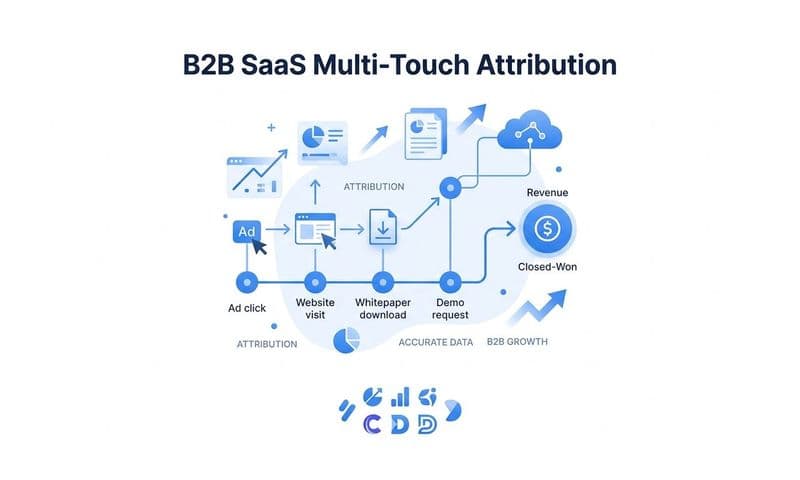
Multi-Touch Attribution: Connects ad spend to pipeline stages and closed-won revenue across the full customer journey, not just the first or last click.
Stripe Revenue Integration: Syncs actual subscription and payment data with ad performance so you can optimize toward revenue, not just leads.
AI Ads Manager: Identifies high-performing ads and campaigns across channels, surfacing actionable recommendations for scaling or pausing spend.
Customer Journey Analytics: Tracks every touchpoint from first ad click through CRM events to closed deal, giving your team a complete view of what actually converts.
70+ Native Integrations: Connects with major CRMs, ad platforms, analytics tools, and data destinations without custom engineering work.
Best For
B2B SaaS marketing teams and growth leaders who want both conversion syncing and attribution depth in one platform. Especially strong for teams using Stripe and running paid campaigns across Meta and Google who need to connect ad spend directly to revenue.
Pricing
Paid plans available. Visit cometly.com for current pricing details and to book a demo.
2. Segment
Best for: Engineering-led teams who need a flexible event routing layer across their entire stack
Segment is a customer data platform by Twilio that collects events from web, mobile, and server sources and routes them to ad platforms, analytics tools, and data warehouses.
 9 Best Conversion Tracking Alternatives to Pixels in 2026
Where This Tool Shines
Segment excels as a centralized event collection layer. If your team has multiple data sources feeding different destinations, Segment can act as the connective tissue, routing the same event to your ad platforms, your data warehouse, and your analytics tools simultaneously.
The destination library is extensive, covering Meta CAPI, Google Enhanced Conversions, and dozens of other ad and analytics platforms. The trade-off is that Segment is a general-purpose CDP, not a purpose-built attribution tool. You get powerful event routing, but deeper attribution analysis typically requires additional tooling on top.
Key Features
Centralized Event Collection: Captures events from web, mobile, and server sources through a single SDK and API, reducing implementation complexity across teams.
Large Destination Library: Routes events to Meta CAPI, Google Enhanced Conversions, and 400+ other destinations including data warehouses like Snowflake and BigQuery.
Audience Segmentation: Builds and syncs audience segments to ad platforms based on behavioral and identity data.
Identity Resolution: Stitches together user identities across devices and sessions to improve match rates when syncing to ad platforms.
Data Transformations: Filters and transforms events in-flight before they reach destinations, giving teams control over what data gets sent where.
Best For
Engineering teams at mid-to-large SaaS companies who need a scalable event infrastructure. Less suited for marketers who want a no-code setup or teams looking for built-in attribution modeling alongside their conversion syncing.
Pricing
Free tier available for low-volume usage. Paid plans scale with monthly tracked users. Details at segment.com.
3. Stape
Best for: Agencies and marketers who want server-side tracking without managing server infrastructure
Stape is a hosted server container solution for Google Tag Manager that enables server-side event tracking and ad platform syncing without requiring teams to manage their own servers.
 9 Best Conversion Sync Software Tools for B2B SaaS in 2026
Where This Tool Shines
Setting up a GTM server container from scratch involves provisioning and maintaining cloud infrastructure, which is a barrier for many marketing teams. Stape removes that friction by hosting the server container for you, so you can get server-side tracking running without DevOps involvement.
It is a particularly practical choice for agencies managing multiple client accounts. The cost is low, the setup is manageable for marketers with GTM experience, and it supports the most important ad platform integrations including Meta CAPI and Google Ads Enhanced Conversions.
Key Features
Hosted GTM Server Container: Eliminates the need to provision or manage cloud infrastructure for server-side tagging.
Ad Platform Support: Includes pre-built server-side tags for Meta CAPI, Google Ads Enhanced Conversions, and other major ad platforms.
Cookie Duration Extension: Extends first-party cookie lifetimes to improve tracking continuity across sessions and reduce data loss from browser restrictions.
Pre-Built Tag Templates: Provides a library of ready-to-use server-side tag templates that reduce setup time for common tracking scenarios.
Affordable Pricing: Low monthly cost based on server requests, making it accessible for smaller teams and agencies managing multiple accounts.
Best For
Digital marketing agencies, freelancers, and small to mid-size marketing teams already using Google Tag Manager who want a cost-effective path to server-side tracking without infrastructure overhead.
Pricing
Starts at a low monthly fee based on server request volume. Pricing details available at stape.io.
4. RudderStack
Best for: Engineering teams who want full control over their event pipeline with a warehouse-native approach
RudderStack is an open-source customer data platform with a warehouse-native architecture that routes events from your product or website to ad platforms and data warehouses.
 9 Best Conversion Sync Software Tools for B2B SaaS in 2026
Where This Tool Shines
RudderStack's warehouse-native model is its biggest differentiator. Rather than treating your data warehouse as just another destination, it treats it as the source of truth. This means you can sync conversion events to ad platforms directly from your warehouse, using the cleanest and most complete version of your data.
For engineering-led SaaS teams who want code-level control over every transformation and routing decision, RudderStack offers a level of flexibility that hosted CDPs typically do not. The open-source option also means you can self-host if data residency or cost is a concern.
Key Features
Open-Source Event Pipeline: Full code-level control over event collection, transformation, and routing, with the option to self-host for complete data ownership.
Warehouse-Native Architecture: Syncs conversion events to ad platforms directly from your data warehouse, using your most accurate and complete data.
Server-Side Event Forwarding: Routes events to Meta CAPI, Google Enhanced Conversions, and other ad platforms without relying on browser-based tags.
200+ Integrations: Connects to a broad range of ad platforms, analytics tools, and data warehouses including Snowflake, BigQuery, and Redshift.
Transformations via JavaScript or Python: Allows teams to modify, filter, or enrich events in transit using familiar programming languages.
Best For
Data and engineering teams at SaaS companies who prioritize control, flexibility, and data warehouse integration over ease of use. Less suited for marketing teams who need a no-code or low-code setup.
Pricing
Open-source self-hosted option available at no cost. Cloud plans are usage-based. Details at rudderstack.com.
5. Converge
Best for: Performance marketers who want a purpose-built server-side conversion tracking platform focused on data quality
Converge is a purpose-built server-side conversion tracking platform designed to send accurate conversion events to Meta, Google, TikTok, Klaviyo, and other ad platforms.
 9 Best Conversion Sync Software Tools for B2B SaaS in 2026
Where This Tool Shines
Converge is built around one core problem: getting clean, accurate conversion data to ad platforms. It puts significant emphasis on event deduplication and data quality monitoring, which are often overlooked in broader CDP or tagging solutions. If you have been dealing with inflated conversion counts or poor match rates, Converge is designed specifically to address those issues.
The no-code setup options make it more accessible to marketing teams than solutions that require engineering resources, and the event health reporting gives you visibility into whether your conversion signals are actually reaching their destinations accurately.
Key Features
Multi-Platform Server-Side Syncing: Sends conversion events to Meta CAPI, Google Enhanced Conversions, TikTok Events API, and other platforms from a single setup.
Automated Event Deduplication: Prevents double-counting when both pixel and server-side events fire for the same conversion, keeping your data clean.
First-Party Data Enrichment: Enhances conversion events with customer data to improve match rates and signal quality on ad platforms.
No-Code Setup Options: Offers pre-built integrations for common platforms, reducing reliance on engineering for initial implementation.
Data Quality Monitoring: Provides event health dashboards so you can identify and resolve tracking gaps or misfires proactively.
Best For
Performance marketing teams focused on improving conversion signal quality across multiple ad platforms. Primarily designed for e-commerce and DTC, though applicable to SaaS teams with customization.
Pricing
Paid plans available based on event volume. Pricing details at runconverge.com.
6. Triple Whale
Best for: Shopify-based e-commerce brands that want first-party pixel tracking combined with server-side conversion syncing
Triple Whale is an attribution and analytics platform that combines first-party pixel tracking with server-side conversion syncing and creative analytics, built primarily for Shopify merchants.
 9 Best Conversion Sync Software Tools for B2B SaaS in 2026
Where This Tool Shines
Triple Whale's first-party pixel collects conversion data independently of ad platform pixels, giving brands a clean baseline that is not subject to ad blocker interference or platform-level attribution discrepancies. That data then gets synced server-side to Meta and Google, improving the quality of signals those platforms use for optimization.
The creative analytics layer is a genuine differentiator for brands running high volumes of ad creative. It surfaces performance data at the individual ad level, making it easier to connect creative decisions to conversion outcomes. That said, Triple Whale is firmly built for e-commerce, and B2B SaaS teams will find limited native support for CRM-based conversion events or offline pipeline data.
Key Features
First-Party Pixel: Collects conversion data independently of ad platform pixels, providing a reliable baseline unaffected by tracking restrictions.
Server-Side Conversion Syncing: Routes conversion events to Meta and Google server-side for improved signal accuracy and match rates.
Creative Analytics: Measures performance at the individual ad creative level, connecting visual and copy decisions to conversion data.
Attribution Model Comparison: Allows teams to compare results across multiple attribution models to understand channel contribution from different perspectives.
Shopify-Native Integration: Deep integration with Shopify for revenue, order, and customer data without custom development work.
Best For
Shopify-based DTC and e-commerce brands with significant Meta and Google ad spend. Not well-suited for B2B SaaS teams who need CRM event syncing, pipeline attribution, or offline conversion tracking.
Pricing
Paid plans starting at a monthly fee based on store revenue. Details at triplewhale.com.
7. Northbeam
Best for: Mid-market performance marketing teams with significant cross-channel ad spend who need media mix modeling
Northbeam is a multi-touch attribution platform with server-side data ingestion and media mix modeling capabilities designed for teams managing large, complex ad budgets across multiple channels.
Where This Tool Shines
Northbeam goes beyond standard conversion syncing by layering machine learning-driven attribution and media mix modeling on top of its server-side data ingestion. For teams spending heavily across paid social, search, and programmatic channels, this gives a more statistically rigorous view of how each channel contributes to outcomes.
The incrementality testing capabilities add another layer of confidence for teams making large budget allocation decisions. Rather than relying solely on attribution model outputs, you can run tests to measure the actual causal impact of specific channels or campaigns.
Key Features
ML-Driven Multi-Touch Attribution: Uses machine learning models to distribute conversion credit across touchpoints based on actual contribution patterns.
Server-Side Data Ingestion: Collects conversion data server-side for improved signal accuracy, reducing reliance on browser-based tracking.
Media Mix Modeling: Provides statistical modeling of channel contribution to support budget allocation decisions at a strategic level.
Cross-Channel Reporting: Consolidates performance data across paid channels with customizable attribution windows for flexible analysis.
Incrementality Testing: Enables controlled experiments to measure the true causal impact of channels or campaigns on conversion outcomes.
Best For
Mid-market and enterprise performance marketing teams with substantial multi-channel ad budgets who need both attribution depth and media mix modeling. Best suited for brands with dedicated analytics resources to act on the insights.
Pricing
Custom pricing based on ad spend. Contact Northbeam directly at northbeam.io for details.
8. Elevar
Best for: Shopify merchants who need accurate server-side conversion tracking with built-in consent management
Elevar is a Shopify-focused server-side conversion tracking and consent management platform that specializes in accurate event tracking for merchants running Meta and Google ads.
Where This Tool Shines
Elevar's tight focus on Shopify means its event tracking is deeply optimized for that platform's data layer and checkout flow. It handles the technical complexity of server-side event deduplication automatically, so merchants do not need to worry about the same conversion being counted twice when both a browser pixel and a server event fire.
The built-in consent management layer is a meaningful addition for merchants operating in regions with strict data privacy requirements. Rather than bolting on a third-party consent tool, Elevar handles consent-aware data collection as part of its core tracking setup.
Key Features
Shopify-Optimized Server-Side Tracking: Purpose-built for Shopify's data layer, ensuring accurate event capture across the full purchase funnel.
Automated Event Deduplication: Prevents double-counting between browser pixel and server-side events without manual configuration.
Consent-Based Data Collection: Integrates consent management into the tracking setup so data collection respects user preferences at the event level.
Pre-Built Ad Platform Integrations: Ready-to-use connections for Meta CAPI and Google Enhanced Conversions reduce setup time for common tracking scenarios.
Data Layer and Event Monitoring: Provides visibility into your data layer setup and flags tracking issues before they affect campaign performance.
Best For
Shopify merchants running paid campaigns on Meta and Google who want accurate server-side tracking with minimal technical overhead. Purpose-built for e-commerce and not designed for B2B SaaS workflows.
Pricing
Paid plans available based on monthly order volume. Details at getelevar.com.
9. Google Tag Manager (Server-Side)
Best for: Teams already in the Google ecosystem who want a free, flexible server-side tagging solution they can fully customize
Google Tag Manager Server-Side is Google's native server-side tagging solution that allows teams to route conversion events from a server container to ad platforms and analytics tools without relying on browser-based tags.
Where This Tool Shines
GTM Server-Side's biggest advantage is that it is free and comes with Google's full support and documentation behind it. For teams already using GTM for browser-side tagging, extending to a server container is a natural next step that does not require adopting an entirely new platform.
The community template library continues to grow, and you can route events to Meta CAPI, Google Ads Enhanced Conversions, and a range of other platforms from the same container. The main trade-off is that setup requires technical knowledge, and hosting the server container on Google Cloud or a similar provider adds ongoing infrastructure costs and maintenance responsibility.
Key Features
Free Server-Side Container: GTM itself is free to use, with costs limited to the hosting infrastructure required to run the server container.
Multi-Platform Event Routing: Routes conversion events to Meta CAPI, Google Ads Enhanced Conversions, and other platforms from a single server-side container.
Reduced Browser-Side Dependency: Moves event firing server-side, reducing the impact of ad blockers and browser privacy changes on conversion data quality.
Community and Built-In Tag Templates: Access to a growing library of server-side tag templates for common ad platform and analytics integrations.
Google Cloud Integration: Designed to run on Google Cloud Run, with straightforward deployment for teams already using Google Cloud infrastructure.
Best For
Technical marketing teams and developers already invested in the Google ecosystem who want maximum flexibility and control over their server-side tagging setup without paying for a third-party hosted solution.
Pricing
GTM is free. Server container hosting costs apply and vary depending on traffic volume. Typically deployed via Google Cloud Run or a similar cloud hosting provider.
Choosing the Right Tool for Your Stack
The right conversion sync software depends on three things: your tech stack, your team's technical resources, and whether you need attribution depth alongside event forwarding.
If you are a B2B SaaS team running paid campaigns and want a single platform that handles both server-side conversion syncing and full-funnel attribution from first click to closed-won revenue, Cometly is the strongest fit on this list. Its Stripe integration, AI-driven ad recommendations, and multi-touch attribution make it purpose-built for the SaaS growth workflow in a way that general-purpose CDPs and e-commerce-focused tools simply are not.
For teams that need a flexible event routing layer on top of existing infrastructure, Segment and RudderStack are both strong options. Segment is better for teams that want a managed solution with a large destination library. RudderStack suits engineering teams who want warehouse-native control and are comfortable with open-source tooling.
If you are primarily focused on getting server-side tracking set up quickly without deep attribution needs, Stape is a cost-effective starting point for GTM users, and Google Tag Manager Server-Side is the right call for teams who want full control and are already on Google Cloud.
Converge, Triple Whale, Northbeam, and Elevar each serve more specific contexts. Converge is strong on data quality for performance marketers. Triple Whale and Elevar are best left for Shopify-based e-commerce brands. Northbeam fits teams with large cross-channel budgets who need media mix modeling alongside their attribution.
For B2B SaaS teams ready to stop guessing and start connecting ad spend to real revenue, Get your free demo of Cometly and see how it captures every touchpoint from first ad click to closed deal.