You open your ad dashboards on a Monday morning, coffee in hand, ready to review last week's performance. Meta says you drove 200 conversions. Google claims 180. But when you pull up your CRM, you see 150 actual sales. Which number do you trust? And more importantly, which campaigns do you scale?
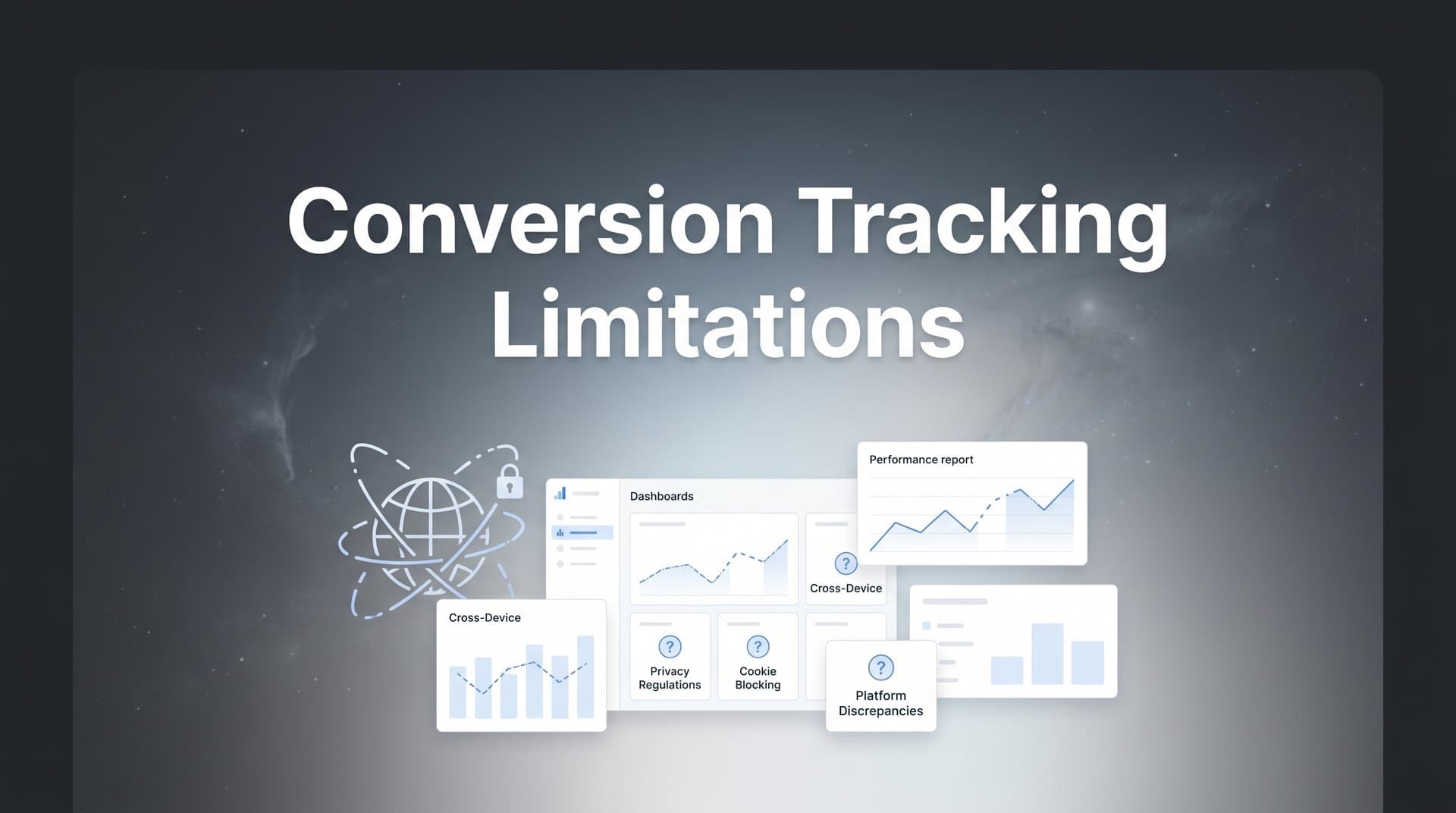
This isn't a glitch. It's not a billing error. It's the everyday reality of conversion tracking limitations: the inherent gaps, blind spots, and inaccuracies that prevent ad platforms from accurately measuring the true impact of your marketing efforts. And in today's privacy-first, multi-device digital landscape, these limitations are only getting worse.
For marketers managing real budgets, this matters enormously. When your tracking data is incomplete, every decision downstream becomes suspect. You might be cutting your best campaigns because they look like underperformers, or pouring money into channels that are simply better at claiming credit. This article breaks down exactly where and why conversion tracking breaks down, what that means for your marketing decisions, and how modern solutions can close the gap.
Why Ad Platforms Can Only See Their Own Corner of the World
Here's the fundamental problem: Meta, Google, TikTok, and LinkedIn each track conversions independently, using their own pixels and tags, within their own ecosystems. They don't talk to each other. They don't share data. And every one of them is incentivized to claim as much credit as possible for the conversions you care about.
Think of it like three salespeople each claiming they closed the same deal. The customer interacted with all three at different points in their journey, but each salesperson is filling out their own report card. The result is that the same conversion gets counted multiple times across platforms, inflating your total reported numbers well beyond what actually happened. Understanding why conversion tracking numbers are wrong is essential for any marketer dealing with this discrepancy.
Beyond the siloing problem, platform-native tracking relies on browser-side pixels and cookies, and that creates a second layer of fragility. A pixel fires in the user's browser, drops a cookie, and waits to see if a conversion happens. But that process depends on the browser cooperating, the user staying on the same device, and the cookie surviving long enough to connect the ad click to the eventual purchase. Each of those assumptions breaks down regularly in real-world conditions.
Then there's the attribution window and self-reporting bias issue. Meta's default attribution window is a 7-day click and 1-day view. Google uses different windows depending on campaign type. When a conversion happens inside that window, the platform takes credit. When it happens outside the window, it's invisible. Two platforms can both claim the same conversion because each one had an interaction within its own window. Neither is technically lying, but the combined picture is deeply misleading. A solid guide to cross-platform conversion tracking can help you navigate these overlapping claims.
The gap between what platforms report and what actually happened is a structural feature of how these systems are designed, not a bug you can patch with a settings change. Understanding this is the first step toward building a tracking strategy that actually reflects reality.
The Privacy Shift That Rewrote the Rules
If platform architecture created the foundation for conversion tracking limitations, the privacy revolution of the last several years has accelerated the problem dramatically.
Apple's App Tracking Transparency framework, introduced with iOS 14.5 in April 2021, was the most disruptive single change in digital advertising in years. For the first time, apps were required to ask users for explicit permission before tracking their activity across other apps and websites. A significant portion of users chose to opt out, and the effect on Meta's advertising data was immediate and substantial. Advertisers suddenly found that a large slice of their mobile audience had become invisible to pixel-based tracking, a challenge explored in depth when examining iOS tracking limitations for advertisers.
Browser-level changes have compounded this. Safari's Intelligent Tracking Prevention limits how long cookies can persist, often reducing tracking windows to as little as 24 hours for some referrals. Firefox blocks third-party trackers by default. Google has been developing its Privacy Sandbox initiative for Chrome, which aims to phase out third-party cookies in favor of privacy-preserving alternatives. The direction of travel across all major browsers is clear: less cross-site tracking, shorter cookie lifespans, and more user control.
Regulatory changes add yet another layer. GDPR, which has been in effect across the EU since 2018, requires explicit consent before tracking users. California's CCPA and CPRA, along with similar laws in other US states, have extended similar requirements to a growing portion of American consumers. In practice, this means that a meaningful segment of your audience, particularly in regulated markets, is simply not trackable through standard pixel-based methods unless they actively consent.
The cumulative effect of these shifts is that the trackable population of users has shrunk considerably compared to a few years ago. The conversions you can see represent a subset of what's actually happening. Many advertisers are losing tracking data from iOS users without even realizing the full extent of the problem. And because platforms still optimize based on the data they can see, they're working with an increasingly incomplete picture of your true customer base.
Five Blind Spots That Silently Drain Your Budget
Even setting aside privacy changes, there are specific scenarios where conversion tracking consistently fails. These aren't edge cases. They're common patterns that affect most advertisers, and they add up to significant misattribution over time.
Cross-device gaps: A user sees your ad on their phone during their commute, clicks through to browse your product, and then completes the purchase on their laptop that evening. From the platform's perspective, those are two separate sessions with no connection between them. The ad that drove the initial interest gets zero credit for the conversion, and you're left with data suggesting your mobile campaigns underperform.
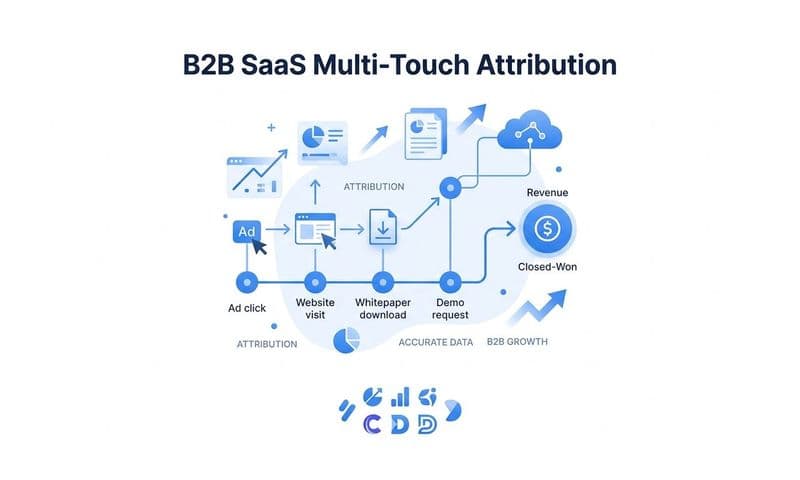
Long sales cycles and attribution window cutoffs: B2B marketers know this problem intimately. A prospect engages with your LinkedIn campaign in week one, downloads a whitepaper in week three, attends a webinar in week six, and finally signs a contract in week ten. Most platform attribution windows close long before that deal is done. The campaign that started the journey gets no credit, and your awareness efforts look like they're generating no return.
Offline and CRM-based conversions: Phone calls, in-store visits, sales-team-closed deals, and post-demo signups are completely invisible to pixel-based tracking unless you actively bridge that gap. If your sales process involves any human touchpoint between the ad click and the closed deal, that conversion is likely being missed entirely by your standard tracking setup. Implementing marketing attribution for phone calls is one way to recover these lost signals.
Ad blockers and technical failures: Browser extensions that block tracking scripts are widely used, particularly among tech-savvy audiences who often represent high-value prospects. When a pixel is blocked, the conversion it would have recorded simply disappears from your data. The impact of lost sales data from tracking blockers is often far greater than marketers estimate.
View-through attribution inflation: Some platforms assign conversion credit to ads that were served but never clicked, based on the assumption that seeing the ad influenced the purchase. This view-through attribution can significantly inflate reported conversions in ways that don't reflect actual cause and effect, making it harder to distinguish genuine performance from statistical noise.
How Incomplete Data Compounds Into Bad Decisions
The real danger of conversion tracking limitations isn't the data gap itself. It's the decisions that get made based on flawed data, and how those decisions compound over time.
When conversion data is incomplete, marketers naturally over-invest in channels that over-report. Last-click attribution and self-attributing networks tend to claim the most credit because they're positioned at the end of the customer journey, where conversions are most visible. Meanwhile, channels that do important work earlier in the funnel, like awareness campaigns, content marketing, or upper-funnel social ads, look like they're contributing nothing. Budget flows toward the channels that appear to perform, even if they're mostly benefiting from work done elsewhere. Understanding how inaccurate conversion tracking distorts your data is critical to breaking this pattern.
The feedback loop problem makes this worse. Ad platform algorithms optimize based on the conversion signals they receive. If you're feeding Meta or Google incomplete or skewed conversion data, their algorithms will use that data to make targeting and bidding decisions. They'll optimize toward the audience segments that appear to convert, which may not actually be your best customers. Over time, the algorithm drifts further from your real high-value audience, and your campaign performance quietly deteriorates.
This is where the budget impact becomes concrete. Scaling decisions based on flawed data mean you could be pouring budget into campaigns that look strong but are simply better at claiming credit. Conversely, you might be pausing or cutting campaigns that are genuinely driving revenue but aren't getting the attribution they deserve because the conversions happen outside the tracking window, on a different device, or after an offline touchpoint.
The longer this pattern continues, the harder it is to course-correct. Bad data leads to bad optimization, which leads to worse performance, which leads to more budget misallocation. Breaking the cycle requires fixing the data at the source.
Closing the Gaps: Server-Side Tracking and Multi-Touch Attribution
The good news is that the same evolution in technology that created these challenges has also produced practical solutions. Two approaches in particular address the core problems: server-side tracking and multi-touch attribution.
Server-side tracking, sometimes called server-to-server tracking or Conversions API, works by sending conversion data directly from your server to the ad platform's server, rather than relying on a pixel firing in the user's browser. Because the data never passes through the browser, it's immune to ad blockers, cookie restrictions, and the privacy features that limit browser-side pixels. The result is more complete, more reliable conversion data that captures events that browser pixels would have missed entirely.
This matters especially in the post-iOS 14 environment. When a user opts out of app tracking on their iPhone, a browser pixel has no way to connect their activity back to an ad. A server-side integration, by contrast, can match conversion events using first-party data tracking for ads, recovering a meaningful portion of the conversions that would otherwise be invisible.
Multi-touch attribution addresses a different but equally important problem. Instead of assigning all credit to a single touchpoint (usually the last click), multi-touch attribution distributes credit across every interaction in the customer journey. This gives you a far more accurate picture of which campaigns are actually contributing to revenue, including the awareness campaigns and mid-funnel touchpoints that last-click attribution systematically ignores.
The third piece of the puzzle is conversion sync: feeding enriched conversion data back to ad platforms to improve their machine learning algorithms. When you send better quality conversion signals to Meta or Google, their algorithms can identify and target more people who look like your actual buyers. Better input data leads to better optimization, which leads to better ad performance. It's a virtuous cycle that starts with getting your tracking right.
Platforms like Cometly are built specifically to deliver all three of these capabilities together. By combining server-side tracking, multi-touch attribution, and conversion sync in a single platform, Cometly captures the touchpoints that pixels miss, connects ad data to real revenue across every channel, and feeds enriched conversion signals back to ad platforms to improve their targeting. The result is a complete, accurate view of your marketing performance that you can actually act on.
Building a Tracking Strategy That Reflects Reality
Understanding the problem is one thing. Building a tracking setup that actually solves it requires a deliberate, layered approach. Here's how to think about it practically.
Start with an audit: Before adding new tools, map out where your current tracking setup breaks down. Where does data drop off? Are your pixels firing consistently? Are offline conversions being connected back to marketing touchpoints? Are your CRM and ad platforms sharing data? Identifying the specific gaps in your setup tells you exactly where to focus your efforts. A thorough approach to fixing conversion tracking gaps starts with knowing precisely where they exist.
Layer in server-side tracking: Once you know where your browser pixels are failing, implement server-side tracking to capture what they miss. This is particularly important for mobile traffic, users in privacy-sensitive markets, and any conversion events that happen outside the browser environment. Server-side tracking should complement your existing pixels, not replace them entirely, so you get the most complete data possible from both sources.
Connect your CRM to your marketing data: If any part of your sales process happens offline or through a human touchpoint, you need to actively bridge that gap. Connecting your CRM to your attribution platform allows you to tie closed deals, phone calls, and post-demo signups back to the specific ads and campaigns that started the journey. This is often where the biggest attribution blind spots live, especially for B2B marketers.
Compare attribution models side by side: First-touch, last-touch, linear, and data-driven attribution models each tell a different story about your marketing performance. No single model is universally correct. Comparing them side by side reveals which campaigns look strong under every model (genuinely high performers) and which only look good under a specific model (potentially misleading). Leveraging marketing attribution platforms for revenue tracking makes this kind of comparison far more practical.
Consolidate into a unified view: The goal is a single source of truth that pulls data from all your ad channels, your website, and your CRM into one place. When you can see the complete customer journey in real time, budget optimization becomes straightforward: invest more in what's actually driving revenue, and less in what's just claiming credit for it.
The Bottom Line on Conversion Tracking
Conversion tracking limitations are not a temporary problem waiting for a simple fix. They are a structural feature of how digital advertising works, and they are deepening as privacy standards evolve, browser restrictions tighten, and user behavior continues to span multiple devices and channels.
But marketers who understand these limitations and address them proactively are operating with a genuine competitive advantage. When your competitors are making budget decisions based on inflated platform numbers and last-click attribution, you can be scaling based on what's actually driving revenue across the full customer journey.
The path forward requires three things working together: server-side tracking to capture what pixels miss, multi-touch attribution to understand the full customer journey, and enriched conversion data fed back to ad platforms to improve their optimization. That combination transforms your tracking from a source of confusion into a genuine strategic asset.
Cometly is built specifically to solve these challenges. It captures every touchpoint from ad clicks to CRM events, connects that data to real revenue, and feeds enriched conversion signals back to Meta, Google, and every other platform you run. The result is the accurate, complete view of your marketing performance that you need to make confident decisions and scale what actually works.
Ready to stop guessing and start scaling with confidence? Get your free demo today and see exactly how Cometly can close your tracking gaps and give you the complete picture your marketing deserves.