You pull up your ad dashboard on a Monday morning, coffee in hand, and see 50 conversions reported for last week. Then you open your CRM. It shows 80 actual sales. The math does not add up, and suddenly you are questioning everything: which campaigns are actually working, where to cut budget, and whether your ROAS numbers mean anything at all.
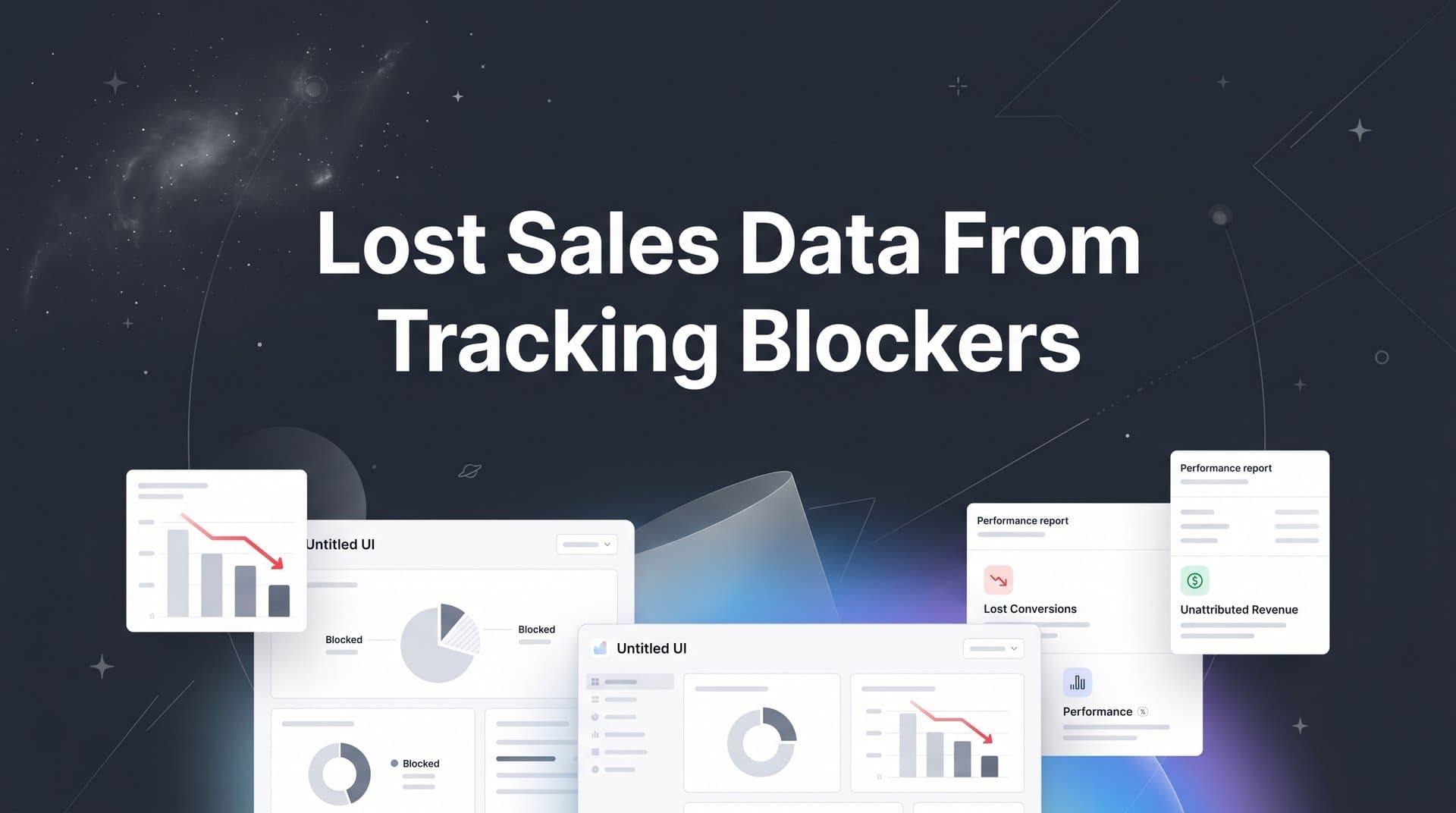
This is not a glitch. It is not a reporting delay. It is the quiet, compounding effect of lost sales data from tracking blockers, and it is happening to marketers across every industry, every ad platform, and every budget size.
Browser privacy features like Safari's Intelligent Tracking Prevention, ad blockers like uBlock Origin, and Apple's App Tracking Transparency framework have fundamentally changed what gets recorded when someone clicks your ad and converts. The pixels that once captured nearly every conversion are now routinely suppressed, blocked, or ignored. The result is a growing gap between what your ad platforms report and what is actually happening in your business.
This guide breaks down exactly how tracking blockers create data loss, why that missing data has a serious downstream impact on your ad spend and scaling decisions, and what practical steps you can take right now to recover that lost visibility. The good news: this is a solvable problem.
How Pixel-Based Tracking Breaks Down in a Privacy-First World
To understand why data goes missing, you need to understand how traditional conversion tracking actually works. When someone clicks your ad and lands on your website, a small piece of JavaScript code called a pixel fires in their browser. That pixel sends a signal back to the ad platform, confirming that a conversion happened. The whole process depends on the user's browser cooperating, and increasingly, it does not.
There are three major categories of tracking blockers creating these gaps today.
Browser-native privacy features: Safari's Intelligent Tracking Prevention (ITP) aggressively limits third-party cookies and caps the lifetime of JavaScript-set first-party cookies, often to just seven days. Firefox's Enhanced Tracking Protection (ETP) blocks known third-party trackers by default. Google Chrome has been working through Privacy Sandbox alternatives to third-party cookies, with timelines that have shifted repeatedly. The common thread: browsers are treating tracking as a privacy risk and restricting it accordingly.
Third-party ad blockers: Extensions like uBlock Origin and AdBlock Plus actively prevent tracking pixels from firing. Ad blocker adoption has grown steadily among desktop users and is increasing on mobile as well. When a pixel is blocked, the conversion event simply never gets sent. If you are experiencing these issues, understanding tracking pixel firing issues can help you diagnose the scope of the problem.
OS-level restrictions: Apple's App Tracking Transparency (ATT) framework, introduced with iOS 14.5 in April 2021, requires apps to explicitly ask users for permission before tracking them across other apps and websites. Opt-in rates have generally been low across the industry, with many users declining when prompted. For advertisers running campaigns that depend on cross-app tracking, particularly on Meta, this created an immediate and significant reduction in the conversion signals flowing back to the platform. The impact on iOS campaigns specifically is covered in depth in our guide on pixel tracking problems on iOS.
The critical point here is that this is not a niche problem affecting a small slice of your audience. The users who block tracking are not a fringe group. They are everyday consumers using mainstream browsers on mainstream devices. As privacy tools become more widespread and default-on, the gap between platform-reported conversions and actual sales has been growing. If you have not audited your tracking setup recently, there is a real chance you are making budget decisions based on data that is missing a meaningful portion of your actual results.
The Chain Reaction That Flawed Conversion Data Triggers
Missing conversion data is not just an analytics inconvenience. It sets off a chain reaction that distorts every decision downstream from it, and the consequences compound over time.
Start with ROAS. If your ad platform reports 50 conversions but you actually had 80, your calculated return on ad spend is significantly understated. Campaigns that are genuinely profitable look mediocre on paper. You might pause them, reduce their budgets, or reallocate spend to other channels that appear stronger by comparison, even if those other channels are only appearing stronger because they happen to have slightly better tracking coverage.
This is where the compounding effect starts. As you shift budget away from what is actually working, you are not just losing efficiency. You are actively investing more in channels that may be performing worse in reality. The gap between your perceived performance and actual performance widens with every budget decision you make on incomplete data. Understanding performance marketing attribution is essential to avoiding these costly misallocations.
The problem goes deeper than your own spreadsheets, though. Ad platforms like Meta and Google use machine learning models trained on conversion signals to optimize ad delivery. These algorithms decide which users to show your ads to, when to show them, and how much to bid. When tracking blockers suppress conversion signals, the algorithms receive incomplete feedback about what is working. Over time, this degrades targeting quality. The platform's model has less data to learn from, which can increase your cost per acquisition and reduce the overall efficiency of your campaigns.
Think of it this way: you are paying the ad platform to find customers for you, but you are only telling it about some of those customers. The algorithm is trying to find more people who look like your converters, but it is working from an incomplete picture of who your converters actually are. The result is a model that is less accurate than it could be, targeting audiences that are noisier than they need to be.
The longer this goes unaddressed, the more entrenched the problem becomes. Budgets shift, algorithms drift, and the marketers who are not measuring this gap often do not realize how much performance they are leaving on the table. Identifying and closing that gap is not just a data hygiene exercise. It is a direct path to better returns on the same ad spend.
Server-Side Tracking: Bypassing the Browser to Recover Lost Events
The fundamental reason pixel-based tracking fails is that it depends on the user's browser to execute the tracking code. Browser-based ad blockers and privacy features intercept that process. The fix, logically, is to move the tracking off the browser entirely. That is exactly what server-side tracking does, and there is a detailed breakdown of why server-side tracking is more accurate than traditional pixel methods.
With server-side tracking, conversion events are captured and sent from your server rather than from the user's browser. When a purchase happens, your backend records that event and sends it directly to the ad platform via an API connection. The user's browser is never involved in the transmission, which means ad blockers and browser privacy features cannot intercept it.
In practice, this means using tools like Meta's Conversions API (CAPI) or Google's Enhanced Conversions. Meta explicitly recommends implementing CAPI alongside the browser pixel to improve data quality and event matching. Our Conversion API implementation tutorial walks through the full setup process step by step. Google's Enhanced Conversions use hashed first-party data such as email addresses and phone numbers to improve conversion measurement accuracy when cookies are unavailable. Both approaches move critical conversion data out of the browser and into a more reliable transmission path.
Here is how it works in a real setup: a user clicks your ad, lands on your site, and completes a purchase. Your server captures the order details, including any available first-party identifiers. Your attribution platform or backend then sends that conversion event directly to Meta's CAPI and Google's Enhanced Conversions API, using those identifiers to match the event back to the original ad click. Even if the browser pixel was blocked entirely, the conversion still gets recorded.
It is worth being clear about what server-side tracking does and does not solve. It significantly reduces data loss from browser-based blocking. It does not, on its own, solve every attribution challenge. Multi-touch customer journeys, where someone interacts with your brand across multiple sessions, devices, and channels before converting, still require an attribution layer that can stitch those touchpoints together into a coherent picture. Server-side tracking is the foundation. Attribution modeling is what turns that foundation into actionable insight.
How Multi-Touch Attribution Reconstructs the Full Customer Journey
Even with server-side tracking in place, some individual touchpoints will still go unrecorded. A user might browse on a device where they are not logged in, or interact with your brand through a channel that does not pass clean identifiers. Multi-touch attribution addresses this by building a picture of the customer journey from multiple data sources rather than relying on any single tracking event.
The key insight is that first-party data is largely immune to browser-based tracking restrictions. When a user submits a form, provides an email address, or is recorded in your CRM after a sales conversation, that data exists in your own systems. It is not dependent on a pixel firing in their browser. Understanding the role of third-party data versus first-party data helps clarify why this shift in data strategy matters so much for modern attribution.
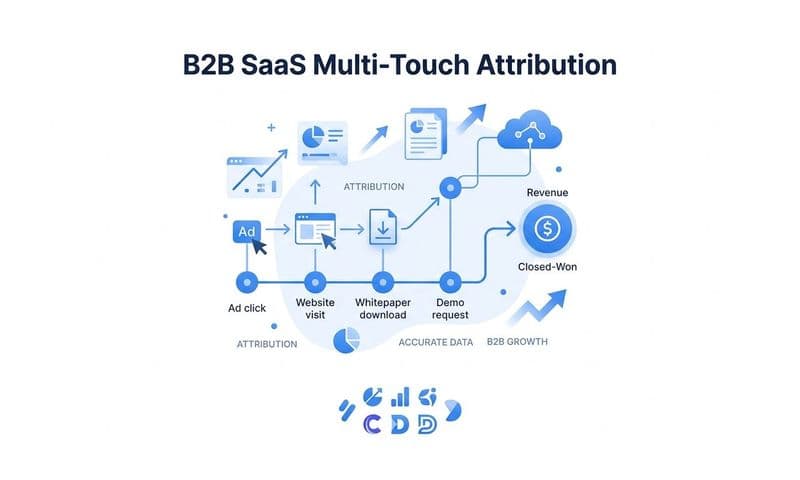
A multi-touch attribution platform connects these anchor points with ad click data, website visit data, and any other available signals to reconstruct the customer journey. Instead of asking "did the pixel fire at the moment of conversion?", it asks "what do we know about this customer's path from first touch to closed deal?" That is a much more resilient question, because it draws on a broader pool of data sources.
Comparing attribution model outputs is also a useful diagnostic tool. If you run first-touch, last-touch, linear, and data-driven models side by side and see dramatic differences in how credit is assigned to certain channels, that is often a signal that those channels have significant tracking gaps. A channel that looks weak under last-touch but strong under first-touch may be generating a lot of top-of-funnel activity that is not being captured by your pixel-based tracking. Recognizing these patterns helps you understand where your data is most incomplete and where to focus your tracking improvement efforts.
Closing the Loop: Sending Better Data Back to Ad Platforms
Recovering your own visibility into conversions is valuable. But there is a second, equally important benefit to fixing your tracking: the data you send back to ad platforms directly improves how their algorithms perform for you.
This is the concept of conversion syncing. Instead of letting ad platforms receive only the incomplete, pixel-based conversion signals that make it through browser restrictions, you actively send them enriched, verified conversion events from your server-side tracking and attribution platform. You are giving the algorithm a complete, accurate picture of who converted, when, and from which campaign.
The positive feedback loop this creates is significant. Better conversion data allows Meta's and Google's algorithms to build more accurate audience models. More accurate models lead to better targeting, which means your ads reach higher-quality traffic. Higher-quality traffic converts at better rates, generating more conversion events to feed back into the system. Over time, the algorithm gets progressively smarter about finding your best customers. This is especially critical for Facebook Ads optimization, where Meta's algorithm relies heavily on the quality and completeness of conversion signals.
The contrast with an unaddressed tracking gap is stark. When algorithms learn from incomplete data, they optimize toward a distorted version of your customer. The targeting drifts. Costs rise. Performance plateaus or declines, and it is not always obvious why.
Here are the practical steps to start closing the loop today.
1. Audit your current tracking gap. Compare your ad platform conversion counts to your CRM or backend order data for the same time period. The difference gives you a baseline estimate of how much data you are currently losing.
2. Implement server-side tracking. Set up Meta's Conversions API and Google's Enhanced Conversions to send conversion events directly from your server, bypassing browser restrictions.
3. Connect your CRM and backend data. Make sure your attribution platform has access to the first-party conversion data that lives in your own systems, not just the data that flows through browser pixels.
4. Use an attribution platform to unify all data sources. A platform like Cometly connects your ad platforms, CRM, and website tracking into a single view, giving you accurate ROAS calculations and full customer journey visibility even when individual tracking events are missing.
5. Sync enriched conversions back to ad platforms. Use your attribution platform's conversion sync capabilities to feed verified, enriched events back to Meta, Google, and other platforms so their algorithms can optimize from accurate data.
Building a Tracking Infrastructure That Outlasts Privacy Changes
Here is the reality every marketer needs to accept: the trend toward more privacy restrictions is not reversing. Browser vendors are tightening tracking controls. Operating systems are adding new permission layers. Regulations in various markets are pushing companies toward greater data minimization. The marketers who build their measurement infrastructure around third-party cookies and client-side pixels are building on a foundation that is actively eroding.
The future-proof tracking stack looks different. It is built on four components that work together.
First-party data collection: Forms, CRM integrations, email captures, and login systems create a persistent record of customer interactions that lives in your own systems. This data is not subject to browser restrictions because it never depended on third-party tracking in the first place.
Server-side event tracking: Conversion events are sent from your server to ad platforms via API, bypassing the browser layer entirely. Evaluating the best server-side tracking tools is a critical step in building this layer of your stack.
Multi-touch attribution platform: A dedicated attribution layer connects data from all your sources, reconstructs customer journeys, and gives you accurate performance metrics across every channel and campaign. A proper attribution tracking setup ensures that no conversion falls through the cracks regardless of how privacy restrictions evolve.
Conversion sync pipelines: Enriched, verified conversion events flow back to ad platforms in real time, keeping their algorithms trained on accurate data and maximizing the efficiency of your ad spend.
The mindset shift that matters most here is treating data accuracy as a competitive advantage rather than a technical checkbox. Teams that invest in this infrastructure now will have something genuinely valuable: the ability to make confident scaling decisions while competitors are flying blind on incomplete data. When you know which campaigns are actually driving revenue, you can allocate budget with precision. When your ad platforms receive complete conversion data, their algorithms work harder for you. That combination compounds over time into a meaningful performance edge.
Your Path Forward on Tracking Recovery
Lost sales data from tracking blockers is not an unavoidable cost of doing business in a privacy-first world. It is a solvable problem, and solving it has direct, measurable impact on your marketing performance.
The path forward is clear. Understand where your data is being lost by auditing the gap between platform-reported conversions and actual sales. Implement server-side tracking to bypass browser restrictions and ensure conversion events reach your ad platforms. Use multi-touch attribution to reconstruct full customer journeys from first-party data and multiple signal sources. Feed enriched conversion data back to ad platforms so their algorithms can optimize from accurate information rather than incomplete pixel data. And build a tracking stack that does not depend on third-party cookies or client-side pixels as its primary foundation.
Each of these steps individually improves your visibility. Together, they create a measurement infrastructure that gives you a genuine edge in making confident, data-driven decisions about where to invest your ad budget.
Cometly is built specifically for this challenge. Its server-side tracking captures conversion events that browser pixels miss. Its multi-touch attribution connects every touchpoint across your ad platforms, CRM, and website into a single, accurate view of the customer journey. Its conversion sync capabilities feed enriched, verified events back to Meta, Google, and other platforms to improve algorithm performance. And its AI-powered recommendations help you identify which campaigns and channels are actually driving revenue, so you can scale what works with confidence.
If you are ready to close the gap between what your ad platforms report and what is actually happening in your business, Get your free demo and see how Cometly helps you capture every touchpoint, recover lost data, and make smarter decisions about every dollar you spend on advertising.