You've just spent $10,000 on Facebook ads this month. Your dashboard shows 150 conversions. Your Shopify analytics says 98. Google Analytics reports 112. Which number do you trust? Which number should you optimize for?
This isn't just a reporting headache. It's a budget killer.
When your conversion data conflicts across platforms, you're essentially flying blind. You scale campaigns that might not actually be profitable. You cut budgets from channels that are secretly driving revenue. Every optimization decision becomes a guess.
The solution? Proper conversion tracking infrastructure. But here's the part most marketers don't expect: accurate tracking requires investment. Not just money, but time, technical resources, and ongoing maintenance.
The good news? The cost of implementing proper tracking is almost always dwarfed by the cost of NOT having it. When you're spending thousands on ads monthly, even a 10% improvement in attribution accuracy can save or generate tens of thousands in optimized budget allocation.
This guide breaks down what conversion tracking actually costs across different approaches, from free native tools to comprehensive attribution platforms. You'll learn which solution makes sense for your ad spend level, what hidden costs to watch for, and how to calculate whether your tracking investment will pay for itself.
Let's start with the real numbers behind accurate marketing attribution.
Breaking Down the Real Costs of Conversion Tracking
Conversion tracking costs fall into three distinct categories, and most marketers only consider the first one.
Platform Fees: This is the obvious cost. Whether you're paying $0 for native platform tools or $500 monthly for an attribution platform, this is what appears on your credit card statement. It's the easiest to budget for because it's predictable and transparent.
Implementation and Technical Setup: This is where costs get tricky. Even "free" tracking solutions require someone to install pixels, configure events, test conversions, and troubleshoot issues. If you have an in-house developer, you might not see a direct invoice, but you're paying for their time. Developer rates typically range from $50-150 per hour, and initial tracking setup can take anywhere from 4 to 40 hours depending on complexity. Understanding the full conversion tracking implementation cost helps you budget accurately from the start.
Ongoing Maintenance and Optimization: Tracking infrastructure isn't set-it-and-forget-it. Platforms update their APIs. iOS releases new privacy features. Your website redesign breaks your pixel implementation. Someone needs to monitor data quality, update conversion events, and ensure everything stays accurate. Budget 2-5 hours monthly minimum for basic maintenance.
Now for the costs most marketers completely overlook.
Data Discrepancy Costs: When your attribution is off by even 20%, you're making optimization decisions based on flawed data. You might pause a campaign that's actually profitable or scale one that's burning money. For a business spending $50,000 monthly on ads, a 20% attribution error could mean $10,000 in misallocated budget every single month. This is why inaccurate conversion tracking data is so costly.
Opportunity Cost of Slow Optimization: Accurate real-time data lets you make faster decisions. When you trust your conversion data, you can scale winners quickly and cut losers immediately. Delayed or uncertain attribution means slower reaction times, which means leaving money on the table while competitors move faster.
Team Time Spent Reconciling Data: How many hours does your team spend each week trying to figure out which platform's numbers are "right"? Exporting data from five different dashboards, building spreadsheets to reconcile conversions, and debating which attribution model to trust? That's expensive time that could be spent on strategy and creative.
Here's the critical insight: your ad spend volume determines which tracking approach makes financial sense. If you're spending $2,000 monthly on ads, investing $500 monthly in attribution software probably doesn't pencil out. But if you're spending $100,000 monthly, NOT investing in proper tracking is costing you far more than any platform fee.
The question isn't whether conversion tracking costs money. It's whether you're investing strategically or paying the hidden costs of inaccurate data.
Free and Low-Cost Options: When Native Platform Tracking Works
Every major ad platform offers free conversion tracking tools. Meta Pixel, Google Ads conversion tracking, TikTok Pixel, LinkedIn Insight Tag—these cost exactly $0 to implement from a platform fee perspective.
For businesses just starting with paid advertising or spending under $5,000 monthly, native platform tracking often makes perfect sense. You get basic conversion data, you can optimize campaigns within each platform, and you're not paying monthly fees for features you don't yet need. Our conversion tracking setup for beginners guide covers exactly how to get started.
Google Tag Manager deserves special mention here. It's completely free and acts as a management layer for all your tracking pixels and conversion tags. Instead of having developers manually edit website code every time you need to add or modify a tracking tag, GTM gives marketers a visual interface to manage everything themselves.
This dramatically reduces the "developer time" cost of tracking implementation. What might take a developer 2 hours to code and deploy can take a marketer 15 minutes in GTM. For small teams without dedicated development resources, GTM is often the difference between functional tracking and no tracking at all.
But free tools come with significant limitations you need to understand.
Cross-Platform Attribution Gaps: Meta Pixel tells you about conversions from Facebook and Instagram ads. Google Ads tracking tells you about conversions from search campaigns. But neither tells you when a customer saw your Facebook ad, then later clicked a Google ad, then converted. You're missing the full journey, which means you can't accurately credit channels that work together. A cross-platform conversion tracking solution addresses this limitation.
iOS Tracking Challenges: Apple's privacy changes have severely limited browser-based pixel tracking. Native pixels often miss conversions from iOS users or attribute them incorrectly. For many businesses, iOS users represent 40-60% of mobile traffic. If your tracking can't see half your conversions accurately, your optimization decisions are based on incomplete data.
First-Party Data Limitations: Free platform pixels typically can't connect conversion data to your CRM, email platform, or other first-party data sources. You know someone converted, but you can't easily tie that conversion to their lifetime value, subscription status, or other business-critical metrics.
Native platform tracking works well when you're running ads on one or two platforms, your sales cycle is simple and immediate, and you're primarily optimizing for direct response conversions. It stops working when you scale to multiple channels, need to understand customer journeys, or want to optimize for revenue instead of just conversions.
Think of free tracking tools as the foundation. They'll get you started, but as your advertising sophistication grows, you'll need to build on top of that foundation.
Mid-Range Solutions: Investing in Better Data Accuracy
Once you're spending $10,000-50,000 monthly on ads across multiple platforms, the limitations of free tracking start costing real money. This is where mid-range attribution solutions become not just helpful but financially justified.
Server-side tracking represents the first major upgrade most businesses make. Unlike browser-based pixels that rely on cookies and can be blocked by privacy settings, server-side tracking sends conversion data directly from your server to ad platforms. This bypasses many iOS limitations and provides significantly more accurate data. Understanding the server-side tracking setup cost helps you plan this upgrade effectively.
Implementation costs for server-side tracking vary widely. If you have technical resources in-house, you might implement it yourself using platform documentation and open-source tools. Expect 20-40 hours of developer time for initial setup, testing, and troubleshooting. At $100 per hour, that's $2,000-4,000 in implementation costs.
Alternatively, many businesses use third-party tools that simplify server-side tracking implementation. These typically cost $100-300 monthly depending on conversion volume and features. The tradeoff is higher monthly fees but dramatically reduced implementation complexity and ongoing maintenance burden.
Attribution platforms in the $100-500 monthly range unlock capabilities that free tools simply can't provide. You get cross-platform journey tracking, multiple attribution models to compare, and the ability to see which channels work together to drive conversions. Evaluating conversion tracking software cost across vendors helps you find the right fit.
Here's the ROI calculation that matters: if better attribution data helps you reallocate even 5% of your ad budget more effectively, how much is that worth?
Let's say you're spending $30,000 monthly on ads. With basic pixel tracking, you might be wasting 15-20% of budget on poorly attributed channels or missing opportunities to scale winners. Improved attribution helps you shift $1,500 monthly toward higher-performing campaigns. If those campaigns convert at even a 20% better rate, you've generated an extra $300 in monthly profit.
Now compare that $300 monthly gain to a $200 monthly attribution platform fee. The tool pays for itself, and you still pocket $100 extra monthly. That's before considering the time saved reconciling data or the faster optimization decisions you can make with accurate information.
Mid-range solutions make sense when your ad spend has reached the point where small optimization improvements generate more value than the cost of better tracking. For most businesses, that inflection point happens somewhere between $10,000-20,000 in monthly ad spend.
The key is choosing a solution that matches your complexity level. If you're running ads on Meta and Google with straightforward direct-response campaigns, you don't need enterprise-level attribution. But you do need something better than disconnected platform pixels.
Enterprise-Level Attribution: Comprehensive Tracking Infrastructure
When your monthly ad spend crosses $100,000 or you're managing complex, multi-touch customer journeys, enterprise attribution platforms become the only viable option. These solutions don't just track conversions—they connect your entire marketing and sales ecosystem.
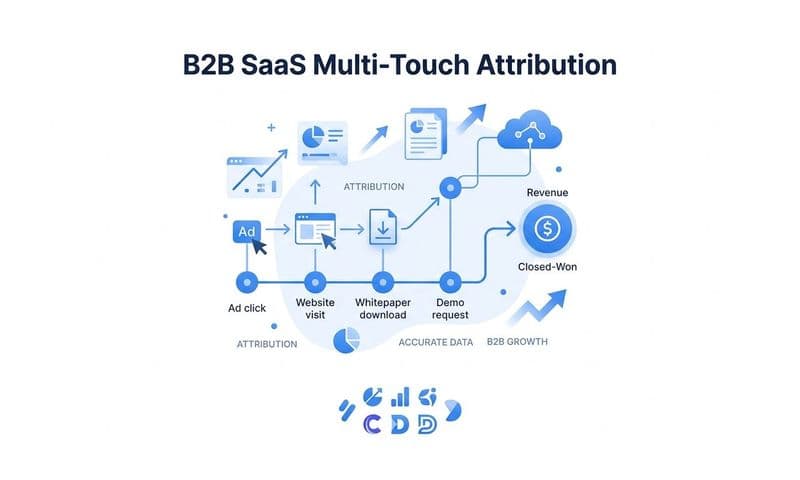
Full-stack attribution platforms integrate ad platforms, website analytics, CRM systems, email marketing tools, and revenue data into a unified view. You can track a customer from their first anonymous website visit through multiple ad interactions, email touches, and sales conversations all the way to closed revenue and lifetime value. This is what advanced conversion tracking setup enables at scale.
This level of visibility fundamentally changes how you optimize marketing. Instead of optimizing for conversions, you optimize for revenue. Instead of crediting the last click, you understand the full sequence of touchpoints that actually drive sales.
Cost factors at this level are more complex than simple monthly fees. Enterprise attribution platforms typically price based on several variables.
Data Volume: The number of events, conversions, and user sessions you track directly impacts pricing. A business tracking 10,000 conversions monthly pays less than one tracking 100,000. Most platforms tier pricing based on volume, with costs increasing as your tracking scale grows.
Number of Integrations: Each connected platform—whether it's Meta, Google, Salesforce, HubSpot, or your custom data warehouse—adds complexity and often cost. Enterprise plans typically include 10-20+ integrations, while mid-tier plans might limit you to 5-8 key platforms. Managing tracking setup for multiple channels requires robust integration capabilities.
Team Access and Seats: Enterprise solutions usually charge per user seat or offer tiered access levels. A solo marketer pays less than an agency team with 15 people needing dashboard access. Expect $50-200 per additional seat depending on the platform.
AI-powered features represent the cutting edge of attribution technology and justify premium pricing for businesses at scale. AI can analyze thousands of customer journeys to identify patterns humans would miss, recommend budget allocation changes based on predicted conversion likelihood, and automatically sync enriched conversion data back to ad platforms.
That last capability—conversion sync—is particularly valuable. When you send better conversion data back to Meta or Google, their algorithms optimize more effectively. You're not just getting better reporting; you're actively improving ad platform performance by feeding their AI better training data.
For a business spending $500,000 monthly on ads, even a 2% improvement in overall performance is worth $10,000 monthly. An enterprise attribution platform costing $1,000-2,000 monthly becomes an obvious investment when it drives that level of improvement.
The question at this level isn't whether to invest in comprehensive attribution. It's which platform provides the capabilities you need at a price point that makes sense for your scale.
Calculating Your Ideal Tracking Investment
Most marketing technology follows a rough benchmark: spend 1-3% of your ad budget on the tools and infrastructure needed to track and optimize that spend effectively.
This means if you're spending $10,000 monthly on ads, budgeting $100-300 monthly for attribution tools is reasonable. At $100,000 monthly ad spend, you should expect to invest $1,000-3,000 monthly in tracking infrastructure, implementation, and maintenance. Comparing conversion tracking platform cost across vendors helps you stay within this range.
But this benchmark is a starting point, not a hard rule. Several factors should push you toward the higher end of that range or even beyond it.
Number of Marketing Channels: If you're running ads on one platform, basic tracking suffices. If you're coordinating campaigns across Meta, Google, TikTok, LinkedIn, and Pinterest while also running email marketing and content campaigns, you need more sophisticated attribution. More channels mean more complexity, which justifies higher investment in tools that unify that data.
Sales Cycle Complexity: Direct-response e-commerce with immediate purchases needs simpler tracking than B2B SaaS with 90-day sales cycles involving multiple decision-makers. The longer and more complex your customer journey, the more valuable comprehensive attribution becomes. For software companies, advanced conversion tracking for SaaS companies addresses these unique challenges.
Average Order Value and Lifetime Value: If your average sale is worth $50, small attribution improvements matter less than if your average sale is worth $5,000. Higher-value transactions justify more investment in tracking accuracy because each optimization improvement has bigger financial impact.
Here's a decision framework based on monthly ad spend and complexity.
Under $5,000 Monthly Ad Spend: Stick with free native platform tracking and Google Tag Manager. Invest time in learning proper implementation rather than paying for tools you don't yet need. Focus budget on creative and testing rather than attribution infrastructure.
$5,000-25,000 Monthly Ad Spend: Consider mid-range attribution solutions, especially if you're running ads on 3+ platforms or seeing significant iOS tracking gaps. Budget $100-400 monthly for tools plus one-time implementation costs. The ROI threshold is whether better attribution can help you optimize even 2-3% of spend more effectively.
$25,000-100,000 Monthly Ad Spend: You need professional attribution infrastructure. Server-side tracking becomes essential. Budget $400-1,200 monthly for platforms that provide cross-channel attribution, multiple models, and integration with your CRM or analytics stack. At this spend level, tracking accuracy directly impacts profitability.
$100,000+ Monthly Ad Spend: Enterprise attribution with AI-powered optimization isn't optional—it's table stakes. Budget $1,000-3,000+ monthly depending on complexity. At this scale, even fractional improvements in attribution accuracy generate returns that dwarf platform costs.
Red flags that indicate your current tracking is costing you more than a proper solution would: you regularly see 20%+ discrepancies between platform reporting and actual revenue, your team spends hours weekly reconciling conversion data, you've paused campaigns that you later discovered were actually profitable, or you can't confidently answer which channels drive your best customers.
If any of those sound familiar, you're already paying the hidden costs of inadequate tracking. The question is whether you'll keep paying them or invest in a solution.
Making the Switch: Implementation Costs and Timeline
Implementation timelines vary dramatically based on your chosen solution and existing infrastructure. Basic pixel tracking with Google Tag Manager can be operational in a few hours. Enterprise attribution connecting to your CRM, data warehouse, and six ad platforms might take 2-4 weeks.
For mid-range attribution platforms with standard integrations, expect 3-7 days from signup to fully operational tracking. Day one involves connecting your ad accounts and installing tracking scripts. Days two through five cover testing conversions, configuring attribution models, and ensuring data accuracy. The final days focus on team training and dashboard setup. Following a comprehensive conversion tracking setup guide streamlines this process.
Server-side tracking implementation adds complexity. If you're using a managed solution that handles the technical infrastructure, setup might take 1-2 weeks. If you're building custom server-side tracking in-house, budget 3-6 weeks for development, testing, and quality assurance.
Internal versus outsourced implementation comes down to technical resources and opportunity cost. If you have developers available and they're not critical for other projects, internal implementation saves money but takes time. A developer earning $120,000 annually costs roughly $60 per hour. If implementation takes 30 hours, that's $1,800 in internal cost.
Outsourced implementation through agencies or consultants typically costs $2,000-10,000 depending on complexity. The premium buys you speed, expertise, and the assurance that someone who's done this dozens of times is handling your setup. For businesses where time-to-accurate-data matters, a professional conversion tracking setup service often makes sense.
Many attribution platforms include onboarding support in their pricing. This is worth asking about explicitly during vendor evaluation. Questions to ask include: What does your onboarding process look like? How much technical support do you provide during setup? Are there additional fees for implementation assistance? What happens if we encounter integration issues?
Watch for hidden fees that inflate total cost of ownership. Some platforms charge extra for premium support, additional data retention beyond 90 days, advanced features like AI recommendations, or API access for custom integrations. Always ask for total first-year cost including all likely add-ons, not just base monthly pricing.
Implementation isn't finished when tracking goes live. Budget time for the validation phase where you verify data accuracy, compare attribution platform numbers to your source of truth, and fine-tune conversion definitions. This typically takes another week of periodic checking and adjustment.
The most common implementation mistake is rushing to turn on all features simultaneously. Start with core conversion tracking, validate accuracy, then progressively enable advanced features like multi-touch attribution models or AI recommendations. This staged approach reduces complexity and makes troubleshooting easier if issues arise.
Putting It All Together
Conversion tracking setup costs range from $0 for basic platform pixels to several thousand dollars monthly for enterprise attribution infrastructure. The right investment depends entirely on your advertising scale, channel complexity, and how much inaccurate data is currently costing you.
For small advertisers spending under $5,000 monthly, free native tools combined with Google Tag Manager provide sufficient tracking without ongoing fees. Focus your budget on ads and creative rather than attribution infrastructure you don't yet need.
Mid-market advertisers spending $10,000-100,000 monthly should budget $200-1,000 monthly for attribution platforms that provide cross-channel visibility, server-side tracking, and multiple attribution models. At this scale, better data accuracy directly impacts optimization decisions worth thousands in improved performance.
Enterprise advertisers above $100,000 monthly ad spend need comprehensive attribution connecting ads, CRM, and revenue data. Budget $1,000-3,000+ monthly for platforms with AI-powered recommendations and conversion sync capabilities. The investment pays for itself through better optimization and faster decision-making.
The critical insight is this: accurate conversion tracking almost always costs less than inaccurate tracking. When you're making budget allocation decisions based on flawed data, you're burning money on underperforming campaigns and missing opportunities to scale winners. The "cost" of inadequate tracking is invisible but massive.
Start by honestly assessing your current tracking accuracy. If you see significant discrepancies between platforms, can't confidently identify your best-performing channels, or spend hours reconciling data, you're already paying for poor attribution—you're just not seeing it on an invoice.
Ready to elevate your marketing game with precision and confidence? Discover how Cometly's AI-driven recommendations can transform your ad strategy—Get your free demo today and start capturing every touchpoint to maximize your conversions.