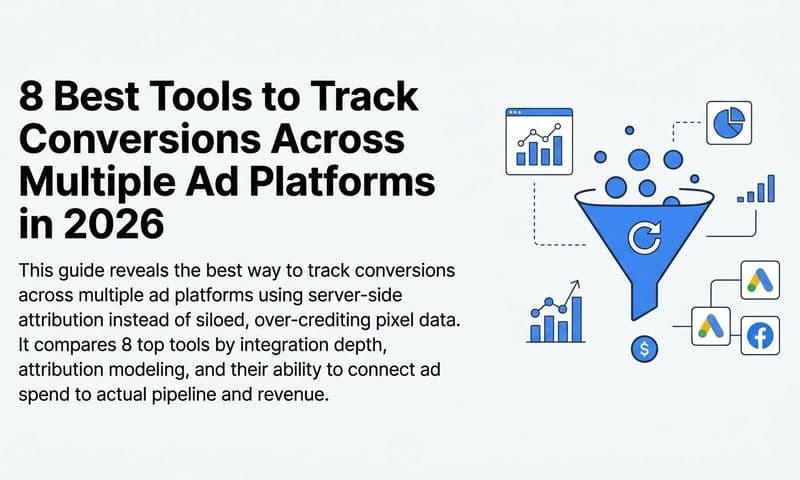

You run ads on Meta. Google. TikTok. Maybe LinkedIn and Pinterest too. Every platform tells you conversions are happening, but the numbers never quite add up. Your Meta dashboard shows 50 conversions while Google Analytics reports 42 and your CRM only recorded 38 actual sales. Which number is real? Where should you actually be spending more?
This is the problem basic conversion tracking creates. It tells you someone converted, but it does not tell you the whole story.
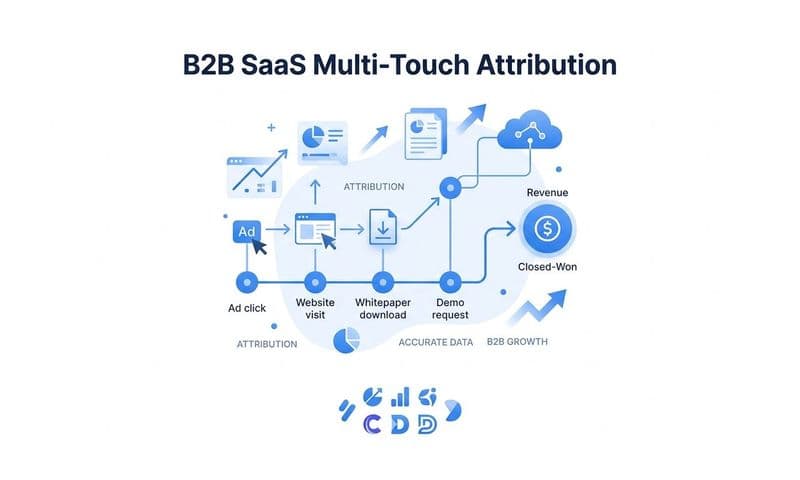
Advanced conversion tracking changes everything. Instead of fragmented data across disconnected platforms, you get a complete view of the customer journey. You see which ad someone clicked first, which retargeting campaign brought them back, and which email finally pushed them to purchase. You capture conversions that browser-based pixels miss entirely. You connect marketing activity to actual revenue in your CRM.
For marketers running multi-channel campaigns, this visibility is not optional anymore. Ad platforms like Meta and Google use conversion data to optimize their algorithms. Feed them incomplete data and they optimize toward incomplete results. Feed them accurate, enriched conversion data and they learn to find more customers like your best ones.
This guide walks you through building a conversion tracking system that captures every touchpoint across your marketing funnel. You will audit what you have now, define what you need to track, implement server-side tracking to overcome browser limitations, connect your CRM for complete attribution, sync conversion data back to ad platforms, and validate everything works correctly.
By the end, you will have a tracking infrastructure that shows you exactly which campaigns drive revenue, not just clicks. Whether you are scaling an ecommerce brand or generating B2B demos, these steps give you the foundation for confident budget decisions.
Step 1: Audit Your Current Tracking Infrastructure
Before you build advanced tracking, you need to know what you already have. Most marketing teams have accumulated tracking pixels, tags, and scripts over months or years. Some still work. Some conflict with each other. Some fire twice on the same page. Some never fired at all.
Start by mapping every tracking implementation currently live on your website. Open your site in Chrome, right-click, and select "Inspect" to view the source code. Look for Meta Pixel code, Google Analytics tags, Google Ads conversion tracking, TikTok Pixel, and any other platform-specific scripts. Document which pages they appear on and what events they are supposed to track.
Use a browser extension like Facebook Pixel Helper or Google Tag Assistant to see which pixels fire on each page. Load your homepage, product pages, checkout flow, and thank you page. Take screenshots of what fires where. You will often find pixels that should be tracking conversions but are not, or pixels firing multiple times creating duplicate conversion counts.
Next, trace your data flow from ad click to final conversion. When someone clicks your Meta ad, what happens? Does a click ID get captured in the URL? Does it pass through to your analytics platform? Does it make it into your CRM when someone fills out a form? Map this entire journey and identify where data gets lost.
Check your Google Analytics setup. Are goals configured correctly? Do they match the conversion events you are tracking in your ad platforms? Compare conversion counts in Google Analytics to what Meta and Google Ads report. Significant discrepancies indicate tracking problems.
Look for common issues that break attribution. Duplicate pixels often happen when someone installs a pixel manually and also through Google Tag Manager. This creates inflated conversion counts. Broken implementations occur when pixels are only on some pages in your conversion flow, missing critical steps. Conflicting scripts sometimes prevent each other from firing correctly.
Document everything in a spreadsheet. List each tracking pixel or tag, which pages it appears on, what events it tracks, and whether it is working correctly. Note any gaps where conversions happen but are not being tracked. Identify any duplicate tracking creating false positives.
Your success indicator here is simple: you should have a complete inventory showing exactly what is tracking what, where gaps exist, and which implementations need fixing. This audit becomes your roadmap for the advanced tracking you are about to build.
Step 2: Define Your Conversion Events and Attribution Model
Not all conversions are created equal. A newsletter signup is not worth the same as a $500 purchase. A demo request from a Fortune 500 company matters more than one from a solo freelancer. Advanced conversion tracking requires you to define exactly what actions matter and how much they are worth.
Start by listing every meaningful action someone can take on your site. Yes, include purchases and form submissions. But also think about micro-conversions that indicate buying intent. Someone who watches 75% of your product demo video is more valuable than someone who bounces after five seconds. Someone who adds three items to cart but does not check out is worth tracking differently than someone who just browsed.
For ecommerce brands, your conversion hierarchy might include: product page view, add to cart, initiate checkout, add payment info, and purchase. For B2B companies, consider: content download, email signup, pricing page view, demo request, and sales qualified lead. Each step represents increasing intent and value.
Assign monetary values to each conversion type. Purchases are easy because they have actual transaction values. For other conversions, calculate based on historical data. If 10% of demo requests turn into $5,000 customers, each demo request is worth approximately $500 in expected value. If 5% of email signups eventually purchase with an average order value of $200, each signup is worth $10.
These values are critical for accurate ROAS calculation. Without them, you are optimizing toward actions that might not actually drive revenue. An ad campaign generating 100 email signups at $2 each looks profitable until you realize those signups convert at half the rate of signups from organic search.
Now choose your attribution model. This determines how credit gets distributed across the touchpoints in a customer journey. Last-click attribution gives all credit to the final interaction before conversion. First-click credits the initial touchpoint. Linear spreads credit evenly across all touchpoints. Time-decay gives more weight to recent interactions.
Your attribution model should match your sales cycle. If customers typically convert on their first visit, last-click works fine. If they research for weeks and interact with multiple campaigns, multi-touch attribution gives you better insight. B2B companies with long sales cycles often benefit from position-based models that credit both first and last touch while acknowledging middle interactions.
Document your conversion event hierarchy in a spreadsheet. List each event name, what triggers it, its assigned value, and which platforms should track it. This becomes your source of truth when setting up tracking across different systems.
Your success indicator: a clear, documented conversion framework that everyone on your team understands. When someone asks "what counts as a conversion," you have a definitive answer with values attached.
Step 3: Implement Server-Side Tracking
Browser-based tracking is dying. iOS restrictions block tracking for users who opt out of app tracking. Firefox blocks third-party cookies by default. Chrome is phasing them out. Ad blockers prevent pixels from firing entirely. If you rely only on browser pixels, you are missing conversions.
Server-side tracking solves this by sending conversion data directly from your server to ad platforms and analytics tools. Instead of relying on a pixel in someone's browser, your server makes the API call. This bypasses browser restrictions, ad blockers, and privacy settings that prevent traditional tracking.
The implementation process varies depending on your tech stack, but the concept remains consistent. When someone converts on your site, your server captures that event and sends it to Meta Conversions API, Google Enhanced Conversions, TikTok Events API, and your analytics platform.
Start by setting up server-side event tracking for your most important conversions. If you use Shopify, WooCommerce, or another ecommerce platform, server-side tracking apps are available that handle the technical implementation. For custom sites, you will need to work with your development team to send events from your backend. Our server-side tracking setup guide covers the technical details.
The key is matching server-side events to browser-side events using unique identifiers. When someone clicks a Meta ad, Meta passes a click ID in the URL. Your site should capture this ID and store it. When that person later converts, your server sends the conversion event to Meta along with that click ID, allowing Meta to attribute the conversion correctly.
For Meta Conversions API, you will need to generate an access token from your Events Manager. Your server then sends POST requests to Meta's API endpoint containing event data: event name, event time, user data like email or phone (hashed for privacy), and the click ID or other identifier connecting this conversion to the ad interaction.
Google Enhanced Conversions works similarly. You configure enhanced conversions in your Google Ads account, then send conversion data from your server including hashed customer information that Google uses to match conversions to ad clicks.
Test your server-side implementation thoroughly. Use Meta's Test Events tool to verify events are being received correctly. Check Google Ads conversion tracking to confirm enhanced conversions are appearing. Compare server-side event counts to browser pixel counts. You should see server-side capturing more conversions, especially from iOS users and people using ad blockers.
Monitor for common issues. Events might fire with incorrect timestamps if your server time is not synced properly. User data might not hash correctly, preventing platforms from matching conversions. Click IDs might not persist through your checkout flow, breaking attribution.
Your success indicator: conversion events appearing in your analytics and ad platforms even when you test with browser tracking disabled or an ad blocker active. This confirms your server-side tracking is working independently of browser limitations.
Step 4: Connect Your CRM and Offline Conversions
The most valuable conversions often happen outside your website. A prospect fills out a form, gets nurtured by your sales team for three weeks, then closes as a $10,000 customer. If your tracking stops at the form submission, you are attributing that revenue to the wrong campaigns.
CRM integration solves this by tracking leads through your entire sales pipeline. You see which ad campaigns generate leads that actually close, not just leads that fill out forms. This transforms your optimization from "which ads get form fills" to "which ads drive revenue."
Start by ensuring unique identifiers pass from ad click through to CRM record. When someone clicks your Meta ad, Meta appends a click ID to your URL. Capture this ID and store it in a hidden form field. When they submit the form, this ID gets passed to your CRM along with their contact information.
Most modern CRMs support custom fields where you can store marketing attribution data. Create fields for source, medium, campaign, ad set, ad ID, and click IDs from each platform you run ads on. When a form submission creates a new CRM record, populate these fields with the attribution data you captured.
As leads move through your pipeline, your CRM tracks their status: marketing qualified lead, sales qualified lead, opportunity, closed won, closed lost. Each status change is a conversion event worth tracking. Configure your CRM to send these events back to your analytics platform and ad platforms.
For offline conversions that happen completely outside digital channels, set up manual or automated imports. If customers call your sales line after seeing an ad, train your team to ask how they heard about you and log that source in the CRM. If customers purchase in physical stores, connect your point-of-sale system to your CRM to capture those transactions. Learn more about offline conversion tracking for online ads.
Many ad platforms support offline conversion imports. Meta allows you to upload a CSV of offline conversions matched to users by email, phone, or click ID. Google Ads supports similar imports. This feeds your offline revenue data back to ad algorithms so they optimize toward actual business outcomes.
Set up automated syncing if possible. Tools exist that connect popular CRMs like Salesforce, HubSpot, and Pipedrive to ad platforms, automatically sending conversion events as leads progress through your pipeline. This eliminates manual uploads and ensures your data stays current.
Test the complete flow. Run a test ad campaign with a unique UTM parameter. Fill out the form yourself. Verify the UTM data appears in your CRM record. Move that test lead through your pipeline stages. Confirm each stage change triggers the appropriate conversion event in your analytics.
Your success indicator: seeing closed deals in your CRM attributed back to specific ad campaigns, ad sets, and even individual ads. When you can answer "which Meta ad drove our $50,000 enterprise customer," your CRM integration is working.
Step 5: Configure Conversion Sync to Ad Platforms
Ad platforms use machine learning to optimize toward conversions. But they can only optimize based on the data you feed them. If you only send basic conversion events, they optimize for basic results. Send enriched conversion data and they learn to find your most valuable customers.
Conversion sync means automatically sending detailed conversion data from your analytics or CRM back to your ad platforms. This goes beyond the basic pixel tracking you set up initially. You are now feeding platforms information about conversion quality, customer lifetime value, and conversions that happened days or weeks after the initial ad click.
For Meta, this means using Conversions API to send not just that a purchase happened, but the purchase value, the products bought, whether this is a new or returning customer, and any other data that indicates conversion quality. Meta's algorithm uses this enriched data to find more people likely to make similar high-value purchases.
Configure event matching quality in your Meta Events Manager. This shows how well your conversion events are being matched to ad interactions. High match quality means Meta can accurately attribute conversions and optimize effectively. Low match quality indicates data issues you need to fix. If you are experiencing issues, our guide on poor conversion tracking accuracy on Facebook can help.
For Google Ads, set up enhanced conversions and import offline conversion data. Enhanced conversions send hashed customer data with each conversion, helping Google match conversions that happen across devices or after cookie deletion. Offline conversion imports feed CRM data back to Google so campaigns optimize toward closed deals, not just leads.
The key is matching conversion events to platform-specific event types. Meta recognizes standard events like Purchase, Lead, AddToCart, and InitiateCheckout. Google has conversion actions for purchases, signups, and custom events. Map your conversion hierarchy to these standard events so platforms interpret your data correctly.
Set up value-based optimization where possible. Instead of just telling Meta that 10 conversions happened, tell them one conversion was worth $500, three were worth $100 each, and six were worth $50 each. Meta then optimizes to find more high-value converters, not just more converters.
Configure automated syncing so conversions flow continuously without manual intervention. If you are using a platform like Cometly, this happens automatically. Your conversion data feeds to ad platforms in real time, keeping algorithms updated with the latest performance information.
Monitor for data discrepancies. Compare conversion counts in your ad platforms to your source of truth analytics. Small differences are normal due to attribution windows and processing delays. Large discrepancies indicate sync issues you need to troubleshoot.
Your success indicator: ad platforms showing accurate conversion counts that match your analytics, with high event match quality scores and value data flowing through correctly. When your Meta dashboard shows the same revenue numbers as your Shopify backend, your sync is working.
Step 6: Validate and Test Your Complete Tracking Setup
You have built an advanced tracking system. Now you need to verify it actually works before you base budget decisions on the data it produces. Testing catches implementation errors, data flow breaks, and attribution gaps that would otherwise corrupt your analysis.
Start with end-to-end journey tests. Simulate real customer behavior across different devices and browsers. On your phone, click a test Meta ad. Browse your site. Add a product to cart. Switch to your laptop. Return to the site and complete the purchase. Check if your tracking system correctly attributes this cross-device conversion to the original Meta ad click.
Use UTM parameters to test attribution accuracy. Create a test campaign with unique UTM parameters: utm_source=test, utm_medium=validation, utm_campaign=tracking_test. Click this link. Convert. Verify these UTM values appear correctly in Google Analytics, your CRM, and any other systems that should capture them.
Test with browser restrictions active. Enable an ad blocker. Turn on iOS tracking restrictions. Use Firefox with enhanced privacy settings. Complete conversions under these conditions. Your server-side tracking should capture these conversions even when browser pixels fail.
Compare conversion counts across all platforms. Pull conversion data from Google Analytics, Meta Ads Manager, Google Ads, your CRM, and your server-side tracking system. The numbers will not match perfectly due to different attribution windows and methodologies, but they should be reasonably consistent. Investigate any major discrepancies.
Verify click IDs persist through your entire conversion flow. Click a Meta ad and check the URL for fbclid parameter. Navigate through your site. Add to cart. Start checkout. The click ID should persist in URLs or be stored in cookies throughout this journey. If it disappears, conversions will not attribute correctly.
Set up monitoring and alerts for tracking failures. Configure notifications if conversion volume drops suddenly, if server-side event sending fails, or if event match quality scores decline. Catching tracking breaks quickly prevents days or weeks of lost data. Learn how to fix conversion tracking errors when they occur.
Test edge cases that might break attribution. What happens if someone converts using a different email than they used to sign up? What if they clear cookies mid-journey? What if they use a VPN that changes their IP address? Your tracking should handle these scenarios gracefully.
Your success indicator: consistent, accurate data flowing through your complete tracking system with conversions attributed correctly across platforms and devices. When you can trace a single customer journey from first Meta ad click through multiple touchpoints to final CRM closed deal, your advanced tracking is working.
Putting It All Together
You now have a conversion tracking system that captures the complete customer journey. No more guessing which campaigns drive revenue. No more relying on incomplete browser pixel data. No more wondering why your ad platform numbers never match your actual sales.
Use this checklist to confirm your advanced tracking setup is complete: current tracking infrastructure audited with gaps identified and documented, conversion events defined with clear values assigned to each type, server-side tracking implemented and capturing events that browser pixels miss, CRM integrated with offline conversions flowing into your attribution data, conversion sync configured to feed enriched data back to ad platforms, and end-to-end testing completed with consistent data across all systems.
The real work starts now. With accurate attribution data, you can finally answer the questions that matter. Which campaigns generate customers who actually stick around? Which ad creatives drive high-value purchases versus bargain hunters? Which audiences convert fastest with the least nurturing required?
Start by analyzing campaign performance based on actual revenue, not just conversion counts. A campaign generating 50 conversions worth $50 each is less valuable than one generating 20 conversions worth $200 each. Your advanced tracking now shows you this distinction.
Reallocate budget based on true ROAS. If your Meta campaigns drive 3x ROAS when you factor in complete attribution including CRM conversions, while Google Search drives 2x ROAS, shift more budget to Meta. Your data now supports these decisions with confidence.
Use multi-touch attribution insights to optimize your funnel. If most customers interact with three touchpoints before converting, ensure your retargeting campaigns are aggressive enough to stay top of mind. If first-touch campaigns drive higher lifetime value customers than last-touch, invest more in prospecting.
Feed your insights back to creative and targeting decisions. If server-side data shows iOS users convert at higher values, create iOS-specific campaigns. If certain product categories drive repeat purchases while others do not, adjust your acquisition strategy accordingly.
Platforms like Cometly can help you manage this entire process from a single dashboard. Instead of logging into multiple platforms to piece together attribution data, you get a unified view of the complete customer journey. AI-powered recommendations show you exactly where to scale based on your multi-touch attribution data, which campaigns to pause, and which audiences to expand.
Ready to elevate your marketing game with precision and confidence? Discover how Cometly's AI-driven recommendations can transform your ad strategy. Get your free demo today and start capturing every touchpoint to maximize your conversions.