
Choosing the right conversion tracking software is one of the most consequential decisions a B2B SaaS marketing team makes. Without accurate conversion data, ad spend gets misattributed, pipeline forecasts drift from reality, and budget decisions get made on incomplete signals.
The challenge in 2026 is not a shortage of options. Browser privacy changes, cookie deprecation, and ad platform signal loss have reshaped what "accurate tracking" even means, and the market has responded with a wide range of tools built for very different use cases. Some are built for ecommerce. Some are infrastructure layers. Some are CRM-native. And a few are purpose-built for the B2B SaaS revenue model.
This comparison evaluates nine conversion tracking platforms on tracking accuracy, attribution depth, integrations, and fit for B2B SaaS teams. Tools are ranked starting with the strongest option for B2B SaaS marketers and moving through specialized alternatives for different use cases and team sizes.
1. Cometly
Best for: B2B SaaS teams that need to connect ad spend to pipeline and closed-won revenue.
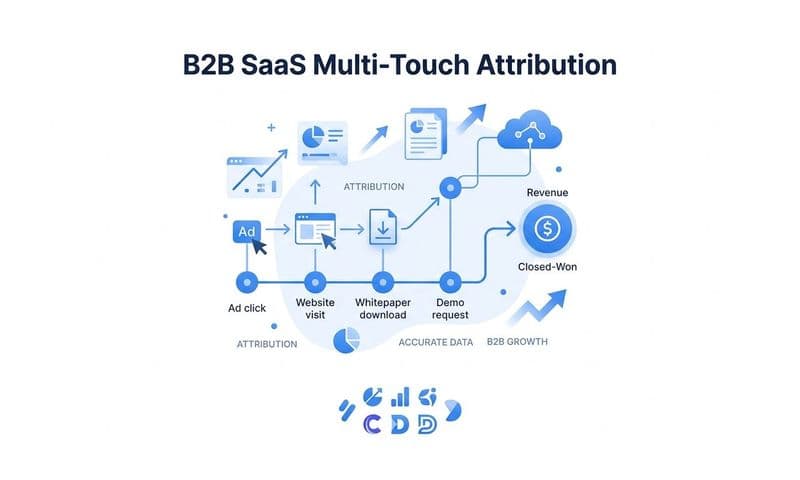
Cometly is a marketing attribution platform built specifically for B2B SaaS companies, connecting ad spend to pipeline and closed-won revenue through multi-touch attribution, server-side tracking, and Conversion API integrations.
 9 Best Attribution Platforms for Agencies in 2026
Where This Tool Shines
Most attribution tools stop at the web conversion. Cometly goes further by connecting your ad data directly to Stripe revenue and CRM pipeline, giving you a true picture of which campaigns are driving actual closed deals, not just form fills or trial signups.
Server-side conversion tracking and Conversion API integrations for Meta and Google mean your signal quality stays high even as browser-based tracking becomes less reliable. The AI ads manager surfaces recommendations based on which campaigns are generating real revenue, so optimization decisions are grounded in pipeline data rather than vanity metrics.
Key Features
Multi-Touch Attribution: Tracks every paid channel touchpoint across the full customer journey, from first ad click to closed-won deal.
Server-Side Tracking and Conversion API: Sends enriched, first-party conversion events directly to Meta and Google, improving signal accuracy and ad platform optimization.
Stripe and CRM Revenue Integration: Connects billing and pipeline data to ad performance, so you can see which campaigns are driving actual revenue.
AI Ads Manager: Provides campaign-level recommendations by identifying which ads and channels are producing the highest-quality pipeline.
Customer Journey Analytics: Full touchpoint visibility across every session and interaction, making it easy to understand how prospects move from awareness to conversion.
70+ Native Integrations: Connects with major ad platforms, CRMs, and analytics tools without requiring custom engineering.
Best For
B2B SaaS marketing teams, growth leaders, and agencies managing paid acquisition who need a single source of truth connecting ad spend to pipeline and revenue. Particularly strong for teams with multi-channel paid strategies and longer sales cycles where last-click attribution consistently underreports top-of-funnel influence.
Pricing
Pricing is available on request via cometly.com. Given the depth of revenue attribution and integrations offered, it is positioned as a professional-grade platform rather than a self-serve tool.
2. Google Analytics 4
Best for: Teams needing free, baseline web conversion tracking with native Google Ads integration.
Google Analytics 4 is Google's free web analytics platform with event-based conversion tracking and native Google Ads integration.
 11 Best Marketing Analytics Tools to Track and Optimize Campaign Performance in 2026
Where This Tool Shines
GA4 is the default starting point for most marketing teams, and for good reason. It is free, widely supported, and integrates directly with Google Ads for conversion import. The event-based data model gives you flexibility in defining what counts as a conversion across your site or product.
Enhanced conversions offer a form of server-side data enrichment that improves signal quality for Google Ads optimization. For teams with the technical resources, the BigQuery export opens up custom analysis and data warehousing options that go well beyond the native interface.
Key Features
Event-Based Conversion Tracking: Define any user interaction as a conversion event, from form submissions to trial activations.
Google Ads Conversion Import: Sync conversion events directly into Google Ads for campaign optimization without additional configuration.
Enhanced Conversions: Improves match rates by sending hashed first-party data to Google, partially offsetting cookie signal loss.
Exploration Reports: Funnel analysis and path exploration tools for understanding how users move toward conversion.
BigQuery Export: Raw event data export for teams that want to run custom attribution models or integrate with a data warehouse.
Best For
Budget-constrained teams, early-stage SaaS companies, or any team using Google Ads as a primary channel. GA4 works well as a foundational layer but will need to be supplemented for teams that need CRM integration, multi-channel attribution, or revenue-level reporting.
Pricing
Free for the standard version. Google Analytics 360, the enterprise tier, is a paid product with custom pricing.
3. HubSpot Marketing Hub
Best for: Inbound-focused B2B teams already running their CRM and sales process inside HubSpot.
HubSpot Marketing Hub is a CRM-native marketing platform that tracks contact-level attribution and ties marketing activity to deals and revenue within the HubSpot ecosystem.
 9 Best Ad Attribution Platforms Compared for B2B SaaS Teams in 2026
Where This Tool Shines
HubSpot's attribution strength comes from its CRM integration. Because contacts, deals, and marketing activity all live in the same system, you can trace a closed deal back to its original source without stitching together data from multiple platforms. This is a genuine advantage for teams where the CRM is the center of gravity for revenue reporting.
Attribution reports at the Professional and Enterprise tiers show which campaigns, channels, and assets influenced contacts and deals across multi-touch models. For teams that run inbound content programs alongside paid acquisition, this provides a unified view that standalone attribution tools often lack.
Key Features
Contact-Level Source Attribution: Every contact record captures the original source and subsequent touchpoints, tied directly to CRM data.
Multi-Touch Attribution Reports: Available on higher tiers, showing how different channels and assets contribute to pipeline and revenue.
Campaign Performance Reporting: Tracks performance across email, ads, landing pages, and social within a single dashboard.
Ad Tracking Integration: Connects Google, Meta, and LinkedIn ad performance to contact and deal records in the CRM.
Native HubSpot CRM and Sales Hub Integration: Attribution data flows directly into deal records without requiring third-party connectors.
Best For
B2B teams that are fully committed to the HubSpot ecosystem for CRM, sales, and marketing. Less suitable for teams using Salesforce or other CRMs, or for teams that need deep paid channel attribution outside the HubSpot ad network integrations.
Pricing
Marketing Hub Professional starts at $800 per month. A free tier is available with limited features. Attribution reporting requires the Professional tier or above.
4. Triple Whale
Best for: Shopify-native DTC ecommerce brands managing paid spend across Meta, Google, and TikTok.
Triple Whale is an attribution and analytics platform built for Shopify and DTC ecommerce brands, combining pixel tracking with post-purchase survey data.
 9 Best Conversion Tracking Software Tools Compared for 2026
Where This Tool Shines
Triple Whale's blended attribution approach is one of its most distinctive features. Rather than relying solely on pixel data, it combines click-based attribution with post-purchase survey responses to give brands a more complete picture of how customers discovered and decided to buy. This is particularly useful in environments where ad platform attribution is unreliable.
The ROAS dashboards are well-designed for ecommerce teams that need to quickly assess performance across Meta, Google, and TikTok without switching between ad platform interfaces. Cohort analysis and LTV reporting add a layer of customer-level insight that goes beyond campaign-level metrics.
Key Features
Blended Attribution: Combines pixel tracking with post-purchase survey data for a more accurate view of what influenced the purchase decision.
ROAS and Ad Performance Dashboards: Centralized view of return on ad spend across Meta, Google, and TikTok.
Post-Purchase Attribution Surveys: Asks customers directly how they heard about the brand, filling gaps left by pixel signal loss.
Cohort Analysis and LTV Reporting: Tracks customer lifetime value and retention patterns over time.
Shopify-Native Integration: Deep integration with Shopify order and customer data for accurate revenue attribution.
Best For
DTC ecommerce brands on Shopify with meaningful paid media budgets. Not suited for B2B SaaS teams with long sales cycles, CRM-driven pipelines, or subscription revenue models.
Pricing
Starts at approximately $129 per month, with pricing scaling based on store revenue. Custom plans available for larger brands.
5. Northbeam
Best for: High-spend ecommerce and DTC brands seeking predictive budget optimization alongside attribution.
Northbeam is a media mix modeling and multi-touch attribution platform designed for brands with significant paid media budgets seeking predictive spend optimization.
 9 Best Attribution Software with API Access in 2026
Where This Tool Shines
Northbeam differentiates itself by combining multi-touch attribution with media mix modeling, giving brands both a historical view of what drove conversions and a predictive view of how to allocate future spend. For brands managing large, complex media budgets across multiple channels, this combination is genuinely useful for strategic planning.
Predictive budget allocation recommendations are one of the more advanced features in this category. Rather than simply reporting on past performance, Northbeam uses its modeling to suggest how budget should be redistributed to maximize returns. This requires meaningful data volume to be reliable, which is why the platform is best suited for larger spenders.
Key Features
Media Mix Modeling: Statistical modeling of channel contribution that complements click-based attribution data.
Predictive Budget Allocation: Recommendations for redistributing ad spend based on modeled channel performance.
Cross-Channel Paid Media Attribution: Tracks attribution across multiple paid channels in a unified view.
Custom Attribution Windows: Configurable lookback windows to match different sales cycle lengths.
Ad Platform and Ecommerce Data Ingestion: Pulls data from major ad platforms and ecommerce systems for unified analysis.
Best For
Ecommerce and DTC brands with substantial paid media budgets who want to combine attribution with predictive modeling. The onboarding and setup complexity makes it less suitable for smaller teams or B2B SaaS companies with CRM-centric revenue models.
Pricing
Custom pricing. Northbeam is typically positioned for brands with larger ad budgets where the modeling capabilities provide clear ROI on the platform cost.
6. Rockerbox
Best for: Mid-market brands that need unified attribution across paid, organic, email, and offline channels.
Rockerbox is a unified marketing measurement platform that centralizes attribution data across paid, organic, email, and offline channels for mid-market brands.
 9 Best Conversion Tracking Software Tools Compared for 2026
Where This Tool Shines
Rockerbox's primary value is channel breadth. Where many attribution tools focus on paid digital, Rockerbox pulls in organic, email, direct mail, and other offline channels to give a more complete picture of what is driving conversions. For brands running integrated marketing programs across multiple channel types, this unified view reduces the risk of over-crediting paid channels.
De-duplication of conversion credit across channels is a practical feature that prevents the same conversion from being counted multiple times across different platform reports. This is a common problem when managing attribution across ad platforms that each claim credit for the same conversion.
Key Features
Unified Multi-Channel View: Centralizes attribution data from paid digital, organic, email, and direct mail in one place.
Configurable Attribution Models: Supports multiple multi-touch attribution models that can be adjusted based on business needs.
Conversion De-Duplication: Prevents double-counting of conversions across channels and platforms.
Marketing Mix Modeling: Adds statistical modeling capabilities for strategic channel planning.
CRM and Ad Platform Integrations: Connects with major ad networks and CRM systems for data ingestion and reporting.
Best For
Mid-market brands running integrated marketing programs across both digital and offline channels. Less specialized for B2B SaaS teams that need deep revenue attribution tied to CRM pipeline and subscription billing data.
Pricing
Custom pricing based on data volume and number of channels. Prospective customers should contact Rockerbox directly for a quote.
7. Segment (Twilio)
Best for: Engineering and data teams building custom attribution pipelines on a first-party data infrastructure.
Segment is a customer data platform that collects and routes event data across your stack, providing the infrastructure layer for conversion tracking and attribution pipelines.
Where This Tool Shines
Segment is not a conversion tracking tool in the traditional sense. It is the infrastructure that makes conversion tracking possible at scale. By centralizing event collection and routing data to wherever it needs to go, Segment eliminates the fragmentation that occurs when different teams implement tracking independently across different tools.
For product-led growth companies with complex event taxonomies, Segment's identity resolution capabilities are particularly valuable. It can stitch together anonymous and identified user sessions across devices and platforms, which is foundational for accurate attribution in SaaS environments where users often interact across multiple sessions before converting.
Key Features
Centralized Event Collection: Single tracking implementation that routes data to all downstream tools simultaneously.
300+ Integrations: Sends event data to ad platforms, analytics tools, CRMs, and data warehouses without custom engineering for each connection.
Identity Resolution: Stitches together anonymous and identified sessions across devices for more accurate user-level tracking.
Real-Time Event Streaming: Sends events to downstream tools in real time, enabling live campaign optimization.
Server-Side Event Tracking: Supports server-side implementations for improved data reliability and privacy compliance.
Best For
Engineering-led teams and data-mature organizations that want to build a clean, scalable first-party data foundation. Segment requires technical resources to implement well and is not a standalone attribution reporting tool. It works best as the data layer underneath other analytics and attribution platforms.
Pricing
Free tier available for smaller data volumes. Team plan starts at $120 per month. Enterprise pricing is custom and scales with event volume and feature requirements.
8. Ruler Analytics
Best for: B2B companies and agencies where phone calls and offline conversions are a significant part of the sales process.
Ruler Analytics is a B2B-focused attribution platform that connects offline conversions including calls and form fills back to the original marketing source and CRM revenue.
Where This Tool Shines
Ruler Analytics addresses a gap that most attribution tools ignore: offline conversions. When a prospect calls your sales team after seeing a paid ad, most platforms lose the thread entirely. Ruler tracks the full visitor journey and ties phone call conversions back to the originating marketing source, making it possible to attribute revenue from phone-heavy sales processes accurately.
The CRM integration means that when a deal closes in Salesforce or HubSpot, Ruler can trace that revenue back through the full touchpoint history to the original channel and campaign. This is a meaningful capability for B2B companies where sales cycles involve multiple offline interactions before a deal is signed.
Key Features
Call Tracking: Ties inbound phone calls to the specific marketing source and campaign that drove the visitor to call.
Form Submission Attribution: Tracks the full visitor journey before a form fill, not just the last-click source.
CRM Revenue Attribution: Connects closed deal revenue from CRM records back to the originating marketing channel.
Multi-Touch Attribution Models: Supports multiple attribution models for flexible reporting across the funnel.
CRM and Ad Platform Integrations: Connects with Salesforce, HubSpot, and major ad platforms for end-to-end attribution.
Best For
B2B companies and marketing agencies where phone calls represent a meaningful conversion path. Also well-suited for teams that run long nurture sequences where offline interactions occur frequently between initial contact and deal close.
Pricing
Starts at approximately $199 per month. Custom plans are available for larger teams or higher call volumes.
9. Wicked Reports
Best for: B2B teams running extended email nurture sequences with long sales cycles that exceed standard attribution windows.
Wicked Reports is a multi-touch attribution platform with long conversion windows, built for B2B teams running extended nurture sequences across email and paid channels.
Where This Tool Shines
Standard attribution windows of 7 or 30 days are often inadequate for B2B SaaS companies where prospects research, evaluate, and compare solutions over months before converting. Wicked Reports is built around the reality of long sales cycles, allowing attribution windows that match the actual length of your buying process rather than forcing your data into arbitrary platform defaults.
The email platform integrations are a core differentiator. Many attribution tools treat email as a black box, but Wicked Reports connects email engagement data to paid channel touchpoints, giving teams a fuller picture of how nurture sequences contribute to eventual conversion alongside paid retargeting and prospecting campaigns.
Key Features
Long Attribution Windows: Configurable lookback periods that extend well beyond standard 30-day windows to match B2B sales cycle lengths.
Email and Paid Channel Attribution: Connects email engagement touchpoints with paid ad interactions across the full buyer journey.
CRM and Email Platform Integrations: Syncs with CRM and email marketing platforms to pull in offline and nurture touchpoints.
Cohort and LTV Reporting: Tracks customer cohorts and lifetime value metrics for longer-term performance analysis.
ROI Reporting by Campaign and Channel: Breaks down return on investment at the campaign and channel level for budget allocation decisions.
Best For
B2B teams with sales cycles measured in months rather than days, particularly those running active email nurture programs alongside paid acquisition. The interface can have a learning curve, so it is better suited for teams with dedicated marketing operations resources than small teams looking for a quick setup.
Pricing
Custom pricing based on contact volume and data requirements. Prospective customers should contact Wicked Reports directly for a quote.
Which Conversion Tracking Tool Is Right for Your Team
Nine tools, very different use cases. The right choice depends almost entirely on your business model, your stack, and what you actually need to measure.
If you are a B2B SaaS team that needs to connect ad spend to pipeline and closed-won revenue, Cometly is the clear choice. It is the only platform on this list purpose-built for that specific problem, combining server-side tracking, Conversion API integrations, multi-touch attribution, and direct revenue data from Stripe and your CRM into a single source of truth.
For teams working with limited budgets or primarily running Google Ads, GA4 provides a solid baseline at no cost. It will not give you CRM-level revenue attribution, but it covers the fundamentals and integrates cleanly with the Google ecosystem.
HubSpot Marketing Hub is the natural choice for inbound-focused teams that are already running their CRM inside HubSpot. The attribution reporting is genuinely useful when your marketing and sales data all live in the same system.
Triple Whale and Northbeam are excellent tools for ecommerce and DTC brands, but they are not the right fit for B2B SaaS. If you are managing a Shopify store with significant paid media investment, Triple Whale's blended attribution approach is worth exploring. For larger ecommerce budgets that need predictive modeling, Northbeam adds a layer of strategic planning capability that most attribution tools do not offer.
Segment is best understood as infrastructure rather than a reporting tool. If your team has the engineering resources to build a clean first-party data layer, Segment makes every other tool on this list more reliable. Ruler Analytics fills an important gap for B2B teams where phone calls are a meaningful conversion path. And Wicked Reports is a strong option for teams whose sales cycles genuinely extend beyond the attribution windows that most platforms support.
For B2B SaaS teams serious about connecting every ad dollar to real revenue, Cometly offers a level of attribution depth that general-purpose tools cannot match. Get your free demo and see how Cometly can give your team a complete, accurate picture of what is actually driving pipeline and revenue.