If you are running paid ads and relying on platform-reported data to make budget decisions, you are likely working with incomplete information. Browser privacy changes, iOS updates, and cookie restrictions have made native ad platform tracking less reliable than ever. Conversion tracking software fills that gap by giving you a verified, first-party view of what is actually driving leads, pipeline, and revenue.
But not every tool is built the same. Some are designed for ecommerce clicks. Others are built for the full B2B SaaS customer journey, from first ad touch to closed-won deal. This list reviews nine of the best conversion tracking software tools available in 2026, evaluated on tracking accuracy, attribution depth, ease of setup, and fit for B2B SaaS teams.
Whether you are a growth marketer, a paid media manager, or a marketing ops lead, you will find the right fit here.
1. Cometly
Best for: B2B SaaS teams that need full-funnel attribution from ad click to closed-won revenue.
Cometly is a marketing attribution and analytics platform built specifically for B2B SaaS companies that need to connect ad spend directly to pipeline and revenue.
 9 Best Attribution Platforms for Agencies in 2026
Where This Tool Shines
Most conversion tracking tools stop at the form fill. Cometly goes further, connecting your ad platforms, CRM, and Stripe data into a single source of truth that shows exactly which campaigns are driving closed-won deals, not just leads. That distinction matters enormously when you are making budget decisions based on downstream revenue impact.
The server-side tracking and Conversion API integrations with Meta and Google also address one of the biggest pain points in modern attribution: data loss from browser-level blocking. By sending enriched, first-party conversion events directly to ad platforms, Cometly helps improve targeting accuracy and ad platform optimization at the same time.
Key Features
Server-Side Conversion Tracking: Sends conversion events via Conversion API to Meta and Google, reducing data loss from browser restrictions and iOS privacy updates.
Multi-Touch Attribution Models: Supports multiple attribution model options so you can analyze performance from first touch, last touch, or any weighted model in between.
AI Ads Manager: Surfaces high-performing campaigns and provides scaling recommendations based on actual revenue data, not just clicks or impressions.
Stripe Revenue Integration: Connects ad spend directly to Stripe revenue data, so you can see which ads are generating actual paying customers.
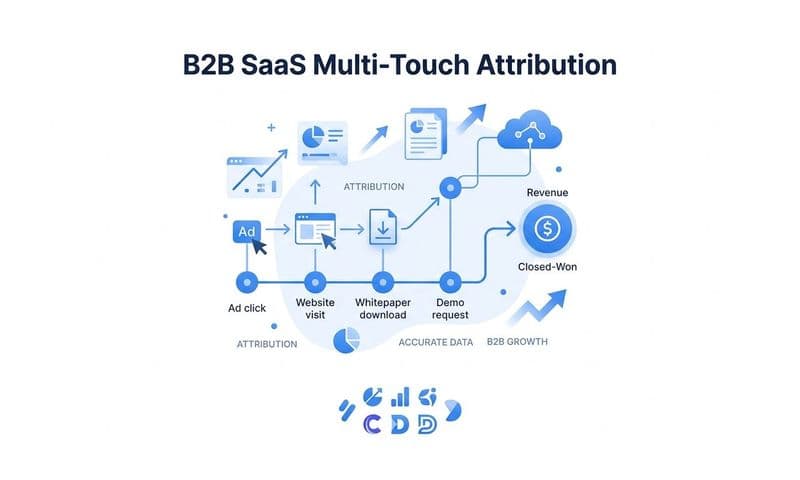
Customer Journey Analytics: Visualizes the full path from first ad interaction through pipeline stages to closed-won, giving marketing and sales a shared view of what is working.
70+ Native Integrations: Connects with major ad platforms, CRMs, and data tools without requiring custom engineering work.
Best For
Growth marketers and marketing ops leads at B2B SaaS companies who need attribution that goes beyond lead volume. Particularly strong for teams managing paid acquisition across multiple channels who want a single platform to analyze performance, justify budget, and feed better data back to ad platforms.
Pricing
Paid plans available. Visit cometly.com for current pricing details and plan options.
2. Google Tag Manager
Best for: Teams that need a flexible, free infrastructure layer for deploying and managing tracking tags.
Google Tag Manager is a free tag management system that allows marketing and development teams to deploy conversion events, pixels, and tracking scripts without editing site code directly.
 9 Best Server Side Tracking Solutions for Accurate Marketing Data in 2026
Where This Tool Shines
Google Tag Manager is not an attribution platform, but it is foundational infrastructure that almost every serious conversion tracking setup depends on. It gives non-technical marketers the ability to fire custom events, configure triggers, and test tracking implementations without waiting on a developer for every change.
The server-side container option is increasingly important for teams looking to move toward first-party data collection. It allows you to proxy tracking requests through your own domain, reducing the impact of browser-level blocking on your conversion data.
Key Features
Code-Free Tag Deployment: Deploy Google Ads, GA4, Meta Pixel, and hundreds of other tags without touching your site's source code.
Custom Triggers and Variables: Configure event tracking based on clicks, form submissions, scroll depth, or any custom condition.
Version Control and Debugging: Preview mode and version history make it easy to test changes before publishing and roll back if something breaks.
Server-Side Container: Route tracking requests through a server-side container for improved first-party data collection and reduced browser blocking impact.
Free to Use: Available at no cost with a Google account, making it accessible for teams of any size.
Best For
Any marketing or growth team that manages multiple tracking tags and wants a centralized, auditable system for deploying them. Essential infrastructure for teams running Google Ads, GA4, or Meta campaigns. Less useful as a standalone attribution solution.
Pricing
Free. The server-side container requires hosting costs, but the GTM platform itself has no licensing fee.
3. Triple Whale
Best for: DTC and ecommerce brands that need a unified ad performance dashboard with first-party pixel tracking.
Triple Whale is an ecommerce analytics and attribution platform designed for direct-to-consumer brands running ads across Meta, Google, TikTok, and Snapchat.
 9 Best Conversion Tracking Software Tools Reviewed for 2026
Where This Tool Shines
Triple Whale built its reputation by solving a specific problem for Shopify merchants: ad platform data does not match reality. Its first-party pixel captures conversion events directly and attributes them accurately across channels, giving DTC brands a cleaner view of which ads are actually driving purchases.
The creative analytics layer is a standout feature for teams investing heavily in ad creative. You can analyze performance at the individual ad level, identify winning creative patterns, and make faster decisions about what to scale or cut.
Key Features
First-Party Pixel: Captures conversion data directly from your store, reducing attribution gaps caused by browser blocking or iOS restrictions.
Unified Ad Dashboard: Aggregates performance data from Meta, Google, TikTok, and Snapchat into a single view for cross-channel comparison.
Creative Analytics: Breaks down performance by individual ad creative to identify what is resonating and what is not.
Cohort Analysis and LTV Reporting: Tracks customer cohorts over time to understand long-term value by acquisition source.
Shopify-Native Integration: Built around Shopify's data model, making setup straightforward for Shopify merchants.
Best For
Ecommerce and DTC brands on Shopify managing significant ad spend across multiple social and search platforms. Less suited for B2B SaaS teams, as the platform is purpose-built around product purchase attribution rather than lead generation or pipeline tracking.
Pricing
Starts at approximately $129/month. Pricing scales with store revenue, so costs increase as your business grows.
4. Northbeam
Best for: High-spend DTC and ecommerce advertisers that need machine learning-powered attribution and predictive budget modeling.
Northbeam is a machine learning-powered attribution and media mix modeling platform built for brands managing large advertising budgets across multiple channels.
 9 Best Ad Campaign Attribution Platforms to Track Your Marketing ROI in 2026
Where This Tool Shines
Northbeam differentiates itself through its machine learning approach to attribution. Rather than applying static rule-based models, it uses ML to weight touchpoints based on actual contribution to conversion, which tends to produce more accurate results for complex, multi-channel buyer journeys.
The media mix modeling capability is particularly valuable for brands that want to go beyond last-click or even multi-touch attribution and understand the broader relationship between channel spend and revenue outcomes over time.
Key Features
ML-Powered Multi-Touch Attribution: Uses machine learning to assign conversion credit across touchpoints based on actual influence rather than fixed rules.
Media Mix Modeling: Provides channel-level budget recommendations based on historical spend and revenue patterns.
Cross-Channel Performance Dashboard: Consolidates ad performance data across all major platforms for unified analysis.
Custom Attribution Windows: Configure lookback windows to match your actual buyer journey length.
Incrementality Testing: Measure the true incremental lift of your campaigns beyond what attribution models alone can tell you.
Best For
High-spend ecommerce and DTC advertisers with complex multi-channel strategies who need predictive budget optimization beyond standard attribution models. Enterprise pricing makes it less accessible for smaller teams.
Pricing
Enterprise pricing. Contact Northbeam directly for a custom quote based on your ad spend and data volume.
5. HubSpot Marketing Hub
Best for: B2B teams already operating within the HubSpot ecosystem who want native conversion tracking tied to CRM deals.
HubSpot Marketing Hub is HubSpot's marketing platform, which includes built-in conversion tracking connected directly to its CRM for contact-level attribution.
 9 Best Ad Attribution Platforms Compared for B2B SaaS Teams in 2026
Where This Tool Shines
The biggest advantage HubSpot offers for conversion tracking is its native CRM connection. When a lead converts, you can trace that contact through the entire pipeline and connect marketing touchpoints to deal outcomes without any custom integration work. For teams already running sales in HubSpot, this eliminates a significant data gap.
The attribution reporting available at Professional and Enterprise tiers covers email, paid ads, and organic channels, giving inbound-focused B2B teams a reasonable view of what is driving pipeline. That said, it is not as deep or flexible as dedicated attribution platforms.
Key Features
Contact-Level Conversion Tracking: Ties individual conversion events to CRM contacts and associates them with deals and pipeline stages.
Campaign Attribution Reporting: Tracks performance across email, paid ads, and organic sources within the HubSpot interface.
Form and Landing Page Analytics: Measures conversion rates on HubSpot-hosted forms and landing pages natively.
Revenue Attribution Reporting: Available on Professional and Enterprise tiers, connecting marketing activities to closed revenue.
Native HubSpot Ecosystem Integration: Works seamlessly with HubSpot CRM, Sales Hub, and Service Hub without additional configuration.
Best For
B2B marketing teams that are already deeply invested in the HubSpot ecosystem and want conversion tracking without adding another tool to their stack. Less suitable as a standalone attribution solution for teams not using HubSpot CRM.
Pricing
Marketing Hub Starter from $20/month. Professional and Enterprise tiers, which include revenue attribution reporting, are available at significantly higher price points.
6. Segment
Best for: Engineering-supported teams that want full control over their event data layer and downstream routing.
Segment is a customer data platform (CDP) that collects conversion events from your website, app, and server and routes them to any downstream analytics, ad, or CRM tool.
 9 Best Conversion Tracking Alternatives to Pixels in 2026
Where This Tool Shines
Segment is not a conversion tracking tool in the traditional sense. It is the data infrastructure layer that makes conversion tracking more reliable and flexible across your entire stack. By standardizing how events are collected and giving you control over where that data flows, Segment reduces the fragmentation that comes from managing dozens of individual pixels and integrations.
For teams with engineering resources, Segment enables a level of data control that no plug-and-play tool can match. You define your event schema once, and every downstream tool receives clean, consistent data.
Key Features
Centralized Event Collection: Captures conversion events from web, mobile, and server sources through a single SDK and API.
300+ Destination Integrations: Routes data to analytics platforms, ad networks, CRMs, and data warehouses without custom engineering for each connection.
Identity Resolution: Stitches together user behavior across devices and sessions for a unified view of each customer's journey.
Data Governance and Schema Enforcement: Maintains consistent event naming and structure across your entire data pipeline.
Real-Time Event Streaming: Sends conversion events to ad platforms and analytics tools in real time for faster optimization cycles.
Best For
Data-mature SaaS and tech companies with dedicated engineering resources who want a flexible, scalable data layer underneath their attribution and analytics tools. Requires meaningful technical investment to implement well.
Pricing
Free tier available for low-volume use. Paid plans start at approximately $120/month, with costs scaling based on monthly tracked users.
7. CallRail
Best for: Businesses where inbound phone calls are a meaningful conversion type and need campaign-level call attribution.
CallRail is a call tracking and lead intelligence platform that attributes inbound phone calls and form submissions to the specific marketing campaigns that drove them.
 9 Best Conversion Tracking Software Tools Reviewed for 2026
Where This Tool Shines
For businesses where a significant portion of conversions happen over the phone, standard pixel-based tracking leaves a major blind spot. CallRail closes that gap by assigning dynamic tracking numbers to campaigns, so every inbound call can be traced back to the ad, keyword, or channel that drove it.
The conversation intelligence features add another layer of value. AI-powered call transcription and lead scoring mean you are not just counting calls but understanding their quality, which helps marketing teams make smarter decisions about which campaigns are generating real buyers versus low-intent inquiries.
Key Features
Dynamic Number Insertion: Automatically swaps phone numbers based on traffic source, enabling campaign-level attribution for every inbound call.
Call Recording and Transcription: Records and transcribes calls automatically, with AI-powered lead scoring to assess call quality.
Form Tracking: Captures form submissions alongside call data for a unified view of all inbound lead activity.
CRM and Ad Platform Integrations: Connects with Google Ads, Meta, and major CRM platforms to pass call conversion data where it is needed.
Conversation Intelligence: AI analyzes call content to identify keywords, outcomes, and lead quality signals at scale.
Best For
Service businesses, agencies, and B2B companies where inbound calls represent a meaningful share of conversions. Particularly strong for teams running local or regional paid campaigns where phone inquiries are a primary lead type.
Pricing
Starts at $45/month for the Call Tracking plan. Higher tiers include additional conversation intelligence and analytics features.
8. Rockerbox
Best for: Mid-market brands managing spend across many channels that need deduplicated attribution and data warehouse integration.
Rockerbox is a unified marketing measurement platform that combines multi-touch attribution with marketing mix modeling for brands operating at scale across multiple channels.
Where This Tool Shines
Rockerbox addresses a problem that becomes more acute as your channel mix grows: every ad platform overclaims credit for conversions, making it impossible to understand true performance without a deduplicated view. Rockerbox normalizes conversion data across channels and applies consistent attribution logic so you are comparing apples to apples.
The data warehouse integration is a meaningful differentiator for data-mature teams. Being able to push attribution data directly into Snowflake, BigQuery, or Redshift means analysts can blend it with other business data for deeper, more customized reporting.
Key Features
Deduplicated Conversion Reporting: Removes cross-channel double-counting so you get an accurate picture of total conversions without inflation from overlapping attribution windows.
Rule-Based and Data-Driven Attribution: Supports both standard rule-based models and more sophisticated data-driven approaches depending on your needs.
Marketing Mix Modeling: Provides channel-level budget optimization recommendations based on historical spend and outcome data.
Data Warehouse Integration: Pushes attribution data to Snowflake, BigQuery, and Redshift for custom analysis and reporting.
Custom Attribution Model Builder: Allows teams to configure attribution logic that reflects their specific buyer journey and business model.
Best For
Mid-market brands and growth teams managing meaningful spend across five or more channels who need a clean, deduplicated view of performance and the ability to run custom analysis in their own data environment.
Pricing
Custom pricing based on ad spend and data volume. Contact Rockerbox directly for a quote tailored to your situation.
9. Wicked Reports
Best for: B2B marketers and agencies with extended sales cycles that need long-window, multi-touch attribution.
Wicked Reports is a conversion attribution platform built around long-window tracking, making it well-suited for buyers who take weeks or months to convert.
Where This Tool Shines
Most attribution tools default to 7 or 28-day windows, which simply does not reflect reality for B2B marketers or direct response advertisers with longer nurture cycles. Wicked Reports was built with extended attribution windows as a core feature, not an afterthought, allowing you to accurately credit touchpoints that occurred weeks or months before a conversion.
The CRM and email platform integrations are particularly useful for teams running multi-channel nurture sequences. By connecting ad data with email engagement and CRM deal stages, Wicked Reports builds a fuller picture of what is actually influencing buyers over time.
Key Features
Long-Window Attribution Tracking: Tracks and credits touchpoints across extended buyer journeys, well beyond the standard 7 or 28-day windows used by most platforms.
CRM and Email Platform Integrations: Connects with major CRM and email tools to incorporate offline and email touchpoints into attribution analysis.
Cohort-Based ROI Reporting: Groups customers by acquisition cohort to analyze long-term return on ad spend over meaningful time horizons.
Multiple Attribution Models: Supports first-click, last-click, and multi-touch attribution models for flexible analysis.
Ad Network Integrations: Connects directly with major ad platforms to pull spend data and match it against CRM-tracked conversions.
Best For
B2B marketers, agencies, and direct response advertisers with sales cycles longer than a few weeks. Strong fit for teams running email-heavy nurture campaigns where email engagement is a meaningful touchpoint in the buyer journey.
Pricing
Pricing is based on the number of tracked contacts. Contact Wicked Reports directly for current plan details and pricing tiers.
Which Tool Is Right for Your Team
The right conversion tracking software depends almost entirely on what you are trying to measure and how your buyers actually convert. Here is a quick match guide to help you decide.
If you are a B2B SaaS team that needs to connect ad spend to pipeline and closed-won revenue, Cometly is the strongest fit. It is the only tool on this list built specifically for that use case, with server-side tracking, CRM integration, Stripe revenue data, and an AI ads manager all in one platform.
If you are an ecommerce or DTC brand, Triple Whale offers the most accessible and Shopify-native experience, while Northbeam is worth exploring if you are managing enterprise-level spend and want ML-powered attribution and media mix modeling.
If your conversions happen over the phone, CallRail fills a gap that no pixel-based tool can address. It is a natural complement to any of the other platforms on this list rather than a replacement.
If you need data infrastructure rather than a front-end analytics tool, Google Tag Manager and Segment are foundational choices, though they require more technical investment to implement effectively.
For HubSpot-native teams, Marketing Hub provides solid conversion tracking without adding another vendor, as long as you are already committed to the HubSpot ecosystem. And for teams with long sales cycles and email-heavy nurture sequences, Wicked Reports offers attribution window flexibility that most platforms simply do not support.
If you are ready to move beyond platform-reported data and get a verified view of what is actually driving revenue, Get your free demo of Cometly and see how full-funnel attribution works in practice.