Enterprise marketing teams don't have the luxury of guessing. When campaigns span dozens of channels, regions, and platforms simultaneously, and budgets run into six or seven figures monthly, a gap in your conversion data isn't just an inconvenience. It's a direct hit to revenue. The challenge isn't collecting clicks. It's connecting those clicks to pipeline, closed deals, and actual business outcomes across long, complex buying journeys.
The right conversion tracking solution gives your team a single source of truth: clear, accurate data showing which campaigns, ads, and touchpoints actually drive revenue. Below, we've evaluated the top platforms built for enterprise-scale complexity, looking at cross-platform accuracy, server-side tracking, multi-touch attribution depth, CRM integration, scalability, and privacy readiness.
1. Cometly
Best for: Enterprises needing AI-powered attribution with server-side tracking and cross-platform conversion sync.
Cometly is an AI-powered marketing attribution platform that connects every touchpoint in the customer journey to actual revenue, then feeds enriched conversion data back to ad platforms for smarter optimization.
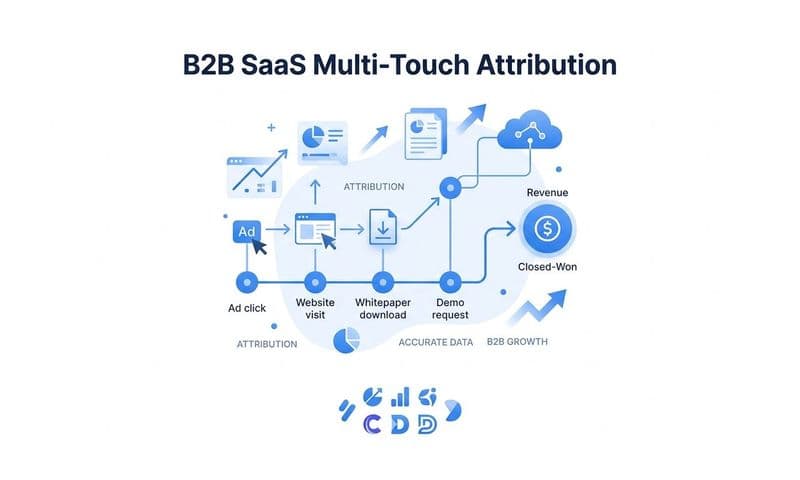
 9 Best Marketing Attribution Platforms to Compare in 2026
Where This Tool Shines
Cometly's server-side tracking is built specifically to address the accuracy problems that plague browser-based pixels in a post-iOS, cookie-restricted world. Instead of relying on fragile client-side scripts, it captures conversion events directly from your server, giving you reliable data even when browsers block or limit tracking.
What sets Cometly apart for enterprise teams is Conversion Sync: the ability to send enriched, first-party conversion data back to Meta, Google, TikTok, and other ad platforms. This doesn't just improve your reporting. It feeds better signals to ad platform algorithms, which improves targeting, bidding, and campaign performance over time. Pair that with AI-powered budget recommendations and natural-language reporting via AI Chat, and you have a platform that doesn't just show you data but helps you act on it.
Key Features
Server-Side Tracking: Captures conversion events at the server level, maintaining data accuracy despite browser privacy restrictions and ad blockers.
Multi-Touch Attribution: Tracks every paid and organic touchpoint across the full customer journey, giving credit where it's actually due.
Conversion Sync: Sends enriched, conversion-ready events back to Meta, Google, TikTok, and more to improve ad platform algorithm performance.
AI-Powered Recommendations: Surfaces budget allocation suggestions and campaign scaling opportunities based on real attribution data.
AI Chat: Lets you query your marketing data in plain language, making reporting faster and more accessible for the whole team.
Best For
Cometly is a strong fit for B2B SaaS companies, DTC brands, and digital agencies managing significant paid media budgets across multiple platforms. It's particularly valuable for teams frustrated by platform-reported numbers that don't match CRM reality, and for those looking to improve ad platform performance through better first-party data.
Pricing
Custom enterprise pricing is available on request. Contact the Cometly team directly for a tailored quote based on your data volume and platform needs.
2. Adobe Analytics
Best for: Large enterprises already invested in the Adobe ecosystem needing advanced segmentation and real-time analytics.
Adobe Analytics is an enterprise-grade web and app analytics platform offering deep segmentation, real-time processing, and tight integration across the Adobe Experience Cloud.
 9 Best AI Marketing Analytics Tools in 2026
Where This Tool Shines
Adobe Analytics is built for organizations that need granular control over how they segment and analyze data. The Analysis Workspace environment gives analysts a drag-and-drop interface for building custom reports without relying on developers, and the platform's unlimited variable support means you can track virtually any dimension of user behavior.
For enterprises already running Adobe Target, Adobe Campaign, or a CDP built on Adobe's infrastructure, the integration story is compelling. Cross-device identity stitching via Experience Cloud ID allows teams to stitch together fragmented user journeys across devices and sessions, which is critical for accurate conversion attribution in complex B2C environments.
Key Features
Advanced Segmentation: Unlimited breakdowns and custom variables give analysts precise control over how they slice conversion data.
Real-Time Processing: Data is available in near real-time with built-in anomaly detection to flag unusual conversion patterns.
Cross-Device Identity Stitching: Experience Cloud ID unifies user journeys across devices and sessions for more accurate attribution.
Adobe Ecosystem Integration: Deep connections with Adobe Target, Campaign, and CDP enable closed-loop marketing measurement.
Analysis Workspace: A drag-and-drop reporting environment that lets teams build custom dashboards without writing code.
Best For
Adobe Analytics is best suited for large enterprises with dedicated analytics teams and existing Adobe Experience Cloud investments. It's particularly strong for B2C companies with high-traffic digital properties where advanced segmentation and real-time data are priorities.
Pricing
Custom enterprise pricing; typically starts in the six-figure annual range. Budget accordingly for implementation and ongoing configuration resources.
3. Google Analytics 360
Best for: Enterprises running large-scale campaigns within the Google Marketing Platform ecosystem.
Google Analytics 360 is the enterprise tier of Google Analytics, offering unsampled reporting, higher data limits, BigQuery export, and native integration across the Google Marketing Platform.
 9 Best Enterprise Attribution Software Options in 2026
Where This Tool Shines
The core advantage of GA360 is its native integration with Google Ads, Display and Video 360, and Search Ads 360. For enterprises running significant spend across Google's ecosystem, having attribution data flow seamlessly between these platforms without custom connectors saves significant time and reduces data discrepancies.
The BigQuery export is a major differentiator for data-mature organizations. It allows teams to pipe raw, hit-level data into their own warehouse for custom modeling, blending with CRM data, or feeding downstream BI tools. Combined with unsampled reporting, GA360 gives enterprise analysts the raw data access they need to build sophisticated attribution models.
Key Features
Unsampled Reports: Full data access without sampling ensures enterprise-scale reporting remains accurate across high-traffic properties.
BigQuery Export: Raw hit-level data exports enable custom attribution modeling and integration with data warehouse environments.
Google Ecosystem Integration: Native connections with Google Ads, DV360, and Search Ads 360 streamline cross-platform measurement.
Advanced Attribution Modeling: Data-driven attribution and model comparison tools built into the Google Marketing Platform.
SLAs and Dedicated Support: Enterprise-grade service agreements and dedicated support resources included.
Best For
GA360 is the natural choice for enterprises heavily invested in Google's advertising ecosystem. It's particularly strong for organizations with in-house data engineering teams who can leverage BigQuery exports for custom analysis.
Pricing
Starts at approximately $50,000 per year, with pricing varying based on data volume and usage. Contact Google's sales team for a specific quote.
4. HubSpot Marketing Hub Enterprise
Best for: B2B enterprises wanting closed-loop conversion tracking tied directly to CRM revenue.
HubSpot Marketing Hub Enterprise is an all-in-one marketing platform with native CRM integration, enabling full-funnel conversion tracking from first touch through to closed revenue.
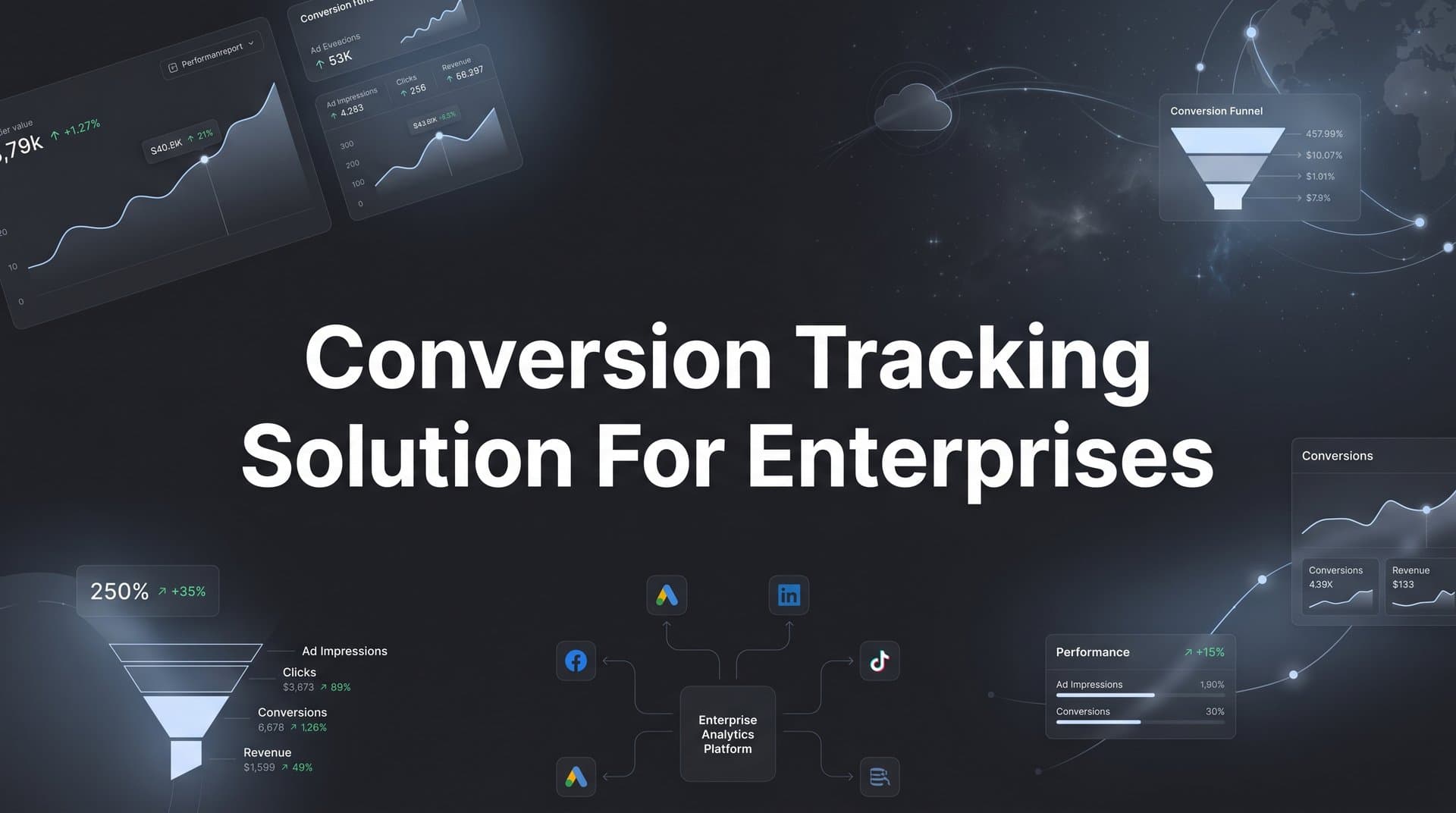
 9 Best Conversion Tracking Solutions for Enterprises in 2026
Where This Tool Shines
HubSpot's biggest strength for conversion tracking is the native CRM connection. Because marketing data and deal data live in the same platform, you can see exactly which campaigns influenced pipeline and which ones contributed to closed revenue without building complex integrations or relying on manual data exports.
For B2B teams with longer sales cycles, the multi-touch revenue attribution reporting is particularly valuable. You can assign revenue credit across touchpoints using different attribution models and see which content, campaigns, and channels are actually moving deals forward, not just generating top-of-funnel activity.
Key Features
Native CRM Integration: Marketing and deal data live together, enabling true closed-loop conversion tracking without third-party connectors.
Multi-Touch Revenue Attribution: Distributes revenue credit across touchpoints using multiple attribution model options.
Custom Event Tracking: Behavioral event triggers allow teams to define and track specific conversion actions across the buyer journey.
Campaign ROI Reporting: Campaign-level dashboards tie marketing spend directly to deal revenue and pipeline generated.
Adaptive Testing: Built-in A/B and multivariate testing tools help optimize conversion rates across landing pages and emails.
Best For
HubSpot Marketing Hub Enterprise is ideal for B2B companies already using HubSpot CRM, or those willing to migrate. It works especially well for teams with moderate technical resources who want robust attribution without heavy data engineering overhead.
Pricing
Starts at $3,600 per month for Marketing Hub Enterprise. Additional costs may apply depending on contact volume and add-ons.
5. Ruler Analytics
Best for: Lead generation enterprises connecting anonymous website visitors to CRM revenue.
Ruler Analytics is a revenue attribution platform that bridges the gap between anonymous website sessions and actual CRM revenue, giving lead-gen focused teams closed-loop visibility into what's driving pipeline.
 8 Best Attribution Tools with Onboarding Support in 2026
Where This Tool Shines
Ruler Analytics solves a problem that many B2B marketing teams struggle with: a visitor converts on your website, but by the time they become a customer, the original source data has been lost or overwritten. Ruler tracks visitors across multiple sessions and devices, then matches that journey to CRM revenue when a deal closes.
The built-in call tracking and form tracking make it particularly useful for businesses where offline or semi-offline conversions are common. You get a complete picture of how digital touchpoints lead to phone calls, form submissions, and ultimately closed revenue, without stitching together separate tools.
Key Features
Visitor-Level Tracking: Ties anonymous website sessions to eventual CRM revenue by tracking users across multiple visits and touchpoints.
Multi-Touch Attribution Models: Supports several attribution model options so teams can compare how credit is distributed across channels.
Call and Form Tracking: Built-in offline conversion tracking captures phone and form-based conversions alongside digital events.
CRM Integration: Connects with Salesforce, HubSpot, and other major CRMs to pull revenue data back into attribution reporting.
Revenue-Weighted Channel Insights: Marketing mix reporting shows channel performance weighted by actual revenue, not just lead volume.
Best For
Ruler Analytics is a strong fit for B2B and professional services companies with lead-generation-focused funnels, particularly those where phone and form conversions are significant and CRM revenue data is the primary success metric.
Pricing
Starts at approximately $400 per month, with enterprise plans available for larger teams and higher data volumes. Contact Ruler for custom pricing.
6. Segment (Twilio)
Best for: Enterprises needing a flexible data infrastructure layer to collect, govern, and route conversion events at scale.
Segment is a customer data platform that acts as a universal tracking layer, collecting conversion events from any source and routing them to hundreds of downstream tools, warehouses, and marketing platforms.
 8 Best Attribution-Focused Platforms vs Segment: Which Approach Fits Your Marketing Stack in 2026
Where This Tool Shines
Segment isn't an attribution tool in the traditional sense. It's the data infrastructure that makes attribution possible at scale. Instead of implementing separate tracking snippets for every analytics tool, ad platform, and CRM your team uses, Segment lets you collect events once and route them anywhere. This dramatically reduces implementation overhead and ensures data consistency across your entire stack.
For enterprises managing complex tech stacks with multiple analytics tools, ad platforms, and data warehouses, Segment's Protocols feature adds governance and schema enforcement. This means your conversion event data stays clean, consistent, and trustworthy as it flows across systems, which is foundational for any serious attribution program.
Key Features
Single Collection API: Collect conversion events once and route them to any downstream tool without redundant tracking implementations.
400+ Integrations: Pre-built connections with analytics platforms, ad networks, CRMs, and data warehouses.
Identity Resolution: Unifies user profiles across devices and sessions for a coherent view of the customer journey.
Protocols (Data Governance): Schema enforcement and data quality monitoring keep conversion event data clean and consistent.
Real-Time Event Streaming: Events are processed and routed in real time, with replay capabilities for backfilling historical data.
Best For
Segment is best for data-mature enterprises with engineering resources who want a flexible, scalable data layer beneath their attribution stack. It's often used alongside dedicated attribution tools rather than as a standalone solution.
Pricing
Free tier available; Team plan starts at $120 per month; Business plan is custom pricing based on monthly tracked users and data volume.
7. Northbeam
Best for: DTC and ecommerce brands spending heavily on paid media who need independent, first-party attribution.
Northbeam is an attribution and media mix platform that combines multi-touch attribution with statistical modeling, giving ecommerce and DTC brands a channel-independent view of what's actually driving purchases.
Where This Tool Shines
Northbeam's core value proposition is independence from ad platform reporting. Rather than relying on Meta or Google to tell you how well Meta and Google are performing, Northbeam uses first-party pixel data to build its own view of conversion paths. This is particularly valuable for DTC brands where ad platform attribution is notoriously inflated due to overlapping attribution windows.
The blended approach, combining multi-touch attribution with media mix modeling (MMM), gives brands both the granular campaign-level insights and the broader channel-level perspective they need for strategic budget decisions. Creative-level analytics add another layer, helping teams understand which ad creatives are actually driving conversions rather than just clicks.
Key Features
Blended MTA and MMM: Combines multi-touch attribution with media mix modeling for both tactical and strategic decision-making.
First-Party Pixel Tracking: Independent of ad platform reporting, reducing bias and over-attribution in conversion data.
Creative-Level Analytics: Attribution data broken down to the individual ad creative, helping teams optimize content as well as spend.
Budget Optimization Recommendations: Cross-channel suggestions for reallocating spend based on actual attributed performance.
Attribution Window Customization: Flexible window settings and model comparisons allow teams to match attribution logic to their buying cycle.
Best For
Northbeam is purpose-built for DTC ecommerce brands and performance marketing teams with significant paid social and paid search budgets. It's most effective for teams that have outgrown platform-native reporting and need a more objective view of channel performance.
Pricing
Custom pricing based on ad spend and data volume. Contact Northbeam directly for a quote tailored to your scale.
8. AppsFlyer
Best for: Mobile-first enterprises needing accurate app install attribution, fraud prevention, and iOS privacy compliance.
AppsFlyer is the leading mobile attribution and marketing analytics platform, providing deep app conversion tracking, fraud detection, and full support for SKAdNetwork and Privacy Sandbox across iOS and Android.
Where This Tool Shines
AppsFlyer has built its reputation on solving the hardest problems in mobile attribution. As iOS App Tracking Transparency reshaped the mobile measurement landscape, AppsFlyer invested heavily in SKAdNetwork support and privacy-preserving measurement methodologies. For enterprises with mobile apps as a core conversion surface, this depth of mobile-specific expertise is difficult to match.
The Protect360 fraud detection engine adds a layer of confidence that the conversions you're measuring are real. Mobile install fraud remains a significant problem in performance marketing, and having a dedicated fraud prevention layer built into your attribution platform ensures your optimization decisions are based on genuine user activity.
Key Features
Mobile Attribution: App install and in-app event attribution across all major ad networks with granular campaign-level breakdowns.
Protect360 Fraud Detection: A dedicated fraud prevention engine that identifies and filters invalid installs and events in real time.
SKAdNetwork and Privacy Sandbox Support: Purpose-built measurement solutions for iOS and Android privacy frameworks.
Deep Linking: Deferred and standard deep linking for seamless user experiences that also support attribution accuracy.
Incrementality Testing: Built-in tools for measuring the true incremental lift of campaigns beyond last-click attribution.
Best For
AppsFlyer is the go-to choice for enterprises where mobile app conversions are central to the business, including gaming companies, fintech platforms, on-demand services, and any brand with a significant mobile user acquisition program.
Pricing
Free tier available for up to 12,000 conversions per month. Enterprise pricing is custom based on conversion volume and feature requirements.
9. Dreamdata
Best for: B2B SaaS companies needing account-level attribution across complex, multi-stakeholder buying journeys.
Dreamdata is a B2B revenue attribution platform that maps account-level buying journeys across all touchpoints, connecting marketing and sales activity to pipeline and closed revenue with a level of specificity built for complex B2B environments.
Where This Tool Shines
Most attribution tools are built around individual user journeys. Dreamdata is built around accounts, which is how B2B buying actually works. When five people from the same company are researching your product across different channels over six months, Dreamdata ties all of those touchpoints together at the account level so you can see the full picture of how that deal was influenced and won.
The content attribution capability is a standout feature for B2B marketers. Knowing which blog posts, case studies, or webinars influenced pipeline is notoriously difficult to measure. Dreamdata surfaces this by connecting content interactions to CRM stages and deal outcomes, giving content and demand gen teams data they can actually use to prioritize their efforts.
Key Features
Account-Based Attribution: Groups touchpoints by account rather than individual user, reflecting how B2B buying committees actually research and decide.
Automatic Data Collection: Pulls data from CRM, ad platforms, website, and marketing automation without heavy manual configuration.
Content Attribution: Shows which content assets influence pipeline stages and deal closure, giving teams actionable content performance data.
Multi-Model Comparison: Supports linear, U-shaped, time-decay, and custom attribution models so teams can evaluate performance from multiple perspectives.
Deep CRM and Ad Platform Integration: Native connections with Salesforce, HubSpot, LinkedIn Ads, and Google Ads for comprehensive data collection.
Best For
Dreamdata is purpose-built for B2B SaaS companies and technology businesses with long sales cycles, multiple stakeholders in the buying process, and a need to connect marketing activity to pipeline and revenue at the account level.
Pricing
Free tier available; paid plans start at approximately $999 per month; enterprise pricing is custom based on data volume and team size.
Choosing the Right Conversion Tracking Partner
Every tool on this list solves a real problem. The question is which problem matches yours most closely.
If you're running multi-channel paid campaigns and need accurate attribution tied to real revenue, with the added benefit of feeding better data back to ad platforms, Cometly is built for exactly that. Its server-side tracking, conversion sync, and AI-powered recommendations make it a strong choice for both B2B and DTC enterprises that are serious about getting the most from their ad spend.
For enterprises already embedded in the Adobe or Google ecosystems, Adobe Analytics and Google Analytics 360 offer deep integration and enterprise-grade infrastructure that's hard to replicate elsewhere. HubSpot Marketing Hub Enterprise and Dreamdata are the standout choices for B2B teams where CRM-connected, account-level attribution is the priority. Northbeam and Ruler Analytics serve specific use cases well: DTC paid media and B2B lead generation, respectively. Segment is the right choice when you need a scalable data infrastructure layer rather than an out-of-the-box attribution solution. And for mobile-first enterprises, AppsFlyer remains the category leader.
The right decision comes down to three questions: Where do your most important conversions happen? How complex is your buying journey? And how much of your current attribution data do you actually trust?
If the honest answer to that last question gives you pause, it's worth starting with a platform that prioritizes data accuracy at its core. Server-side tracking, first-party data collection, and conversion sync are no longer optional for enterprises that want to compete effectively in a privacy-first world.
Ready to stop guessing and start scaling with confidence? Get your free demo of Cometly and see how AI-driven attribution can transform the way your team measures, optimizes, and grows.