Direct-to-consumer brands live and die by their data. When you own the customer relationship end to end, you also own the responsibility of understanding every touchpoint, every channel, and every dollar spent on acquiring and retaining customers. But most analytics tools were built for enterprises or generic e-commerce, not for the specific challenges D2C brands face: multi-platform ad spend, fragmented attribution, rising customer acquisition costs, and the pressure to prove ROI fast.
The right D2C brand analytics software connects your ad platforms, your storefront, and your customer data into a single, actionable view. It tells you not just what happened, but why, and what to do next.
This list covers the best tools available in 2026, evaluated on attribution accuracy, ease of use, integrations, and how well they serve D2C growth teams. Whether you are scaling paid social, optimizing your media mix, or trying to understand your true customer acquisition cost, there is a tool here for you.
See also: 20 Ways Marketing Attribution Software Can Improve Your Digital Marketing Efforts and Marketing Analytics Techniques to Boost Your Strategy.
1. Cometly
Best for: D2C brands running cross-platform paid campaigns who need accurate attribution and AI-driven optimization.
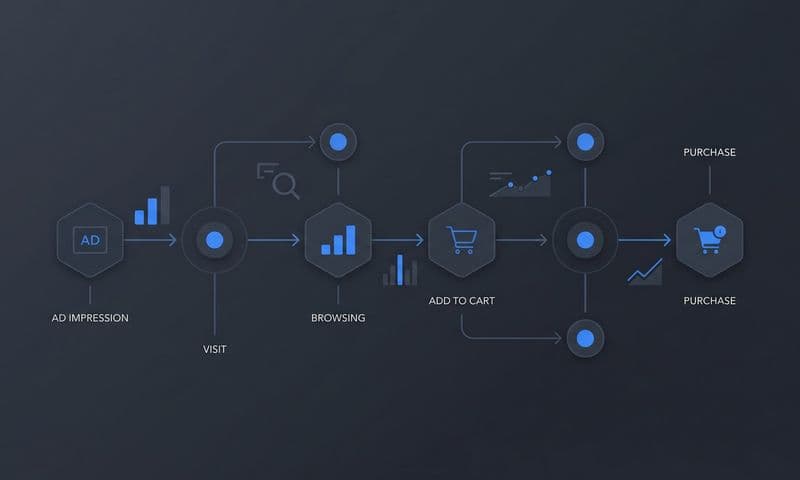
Cometly is an AI-powered marketing attribution platform that tracks every customer touchpoint from ad click to conversion, with server-side tracking, multi-touch attribution, and conversion sync back to your ad platforms.
 9 Best Marketing Attribution Platforms to Compare in 2026
Where This Tool Shines
For D2C brands running campaigns across Meta, Google, and TikTok simultaneously, the core challenge is knowing which channels actually drove the sale. Cometly solves this by capturing the full customer journey and connecting every touchpoint to revenue, giving you a clear picture of what is working instead of relying on conflicting reports from each ad platform.
What sets Cometly apart is its combination of server-side tracking and Conversion Sync. Server-side tracking addresses the data loss caused by iOS restrictions and ad blockers, while Conversion Sync feeds enriched, accurate conversion data back to Meta, Google, and other platforms. This means the ad platform algorithms get better data, which improves targeting and optimization over time.
Key Features
Multi-Touch Attribution: Tracks every touchpoint across Meta, Google, TikTok, and more, giving credit where it is actually due rather than defaulting to last-click.
Server-Side Tracking: Captures conversion data that browser-based pixels miss, reducing data loss from iOS restrictions and ad blockers.
AI Ads Manager: Surfaces optimization recommendations based on your actual performance data, so you know which campaigns to scale and which to cut.
Conversion Sync: Sends enriched conversion events back to ad platforms, improving the quality of data their algorithms use for targeting and bidding.
AI Chat: Lets your team query campaign data conversationally, making it faster to get answers without digging through dashboards manually.
Best For
Cometly is the strongest fit for D2C growth teams and marketing agencies managing significant paid media budgets across multiple channels. It is especially valuable for brands frustrated by the gap between platform-reported ROAS and actual revenue, and for teams that want AI-driven recommendations rather than just raw data.
Pricing
Pricing is available on request. Contact the Cometly sales team for a quote tailored to your ad spend and team size.
2. Triple Whale
Best for: Shopify-native D2C brands wanting a consolidated metrics dashboard with creative analytics.
Triple Whale is a D2C-focused analytics platform built natively for Shopify brands, offering a consolidated summary dashboard, pixel-based attribution, and creative analytics.
 9 Best D2C Brand Analytics Software Tools in 2026
Where This Tool Shines
Triple Whale has become one of the most recognized names in D2C analytics, largely because it was designed with Shopify brands in mind from the start. The Summary dashboard pulls together revenue, ad spend, ROAS, and customer metrics into a single view that is easy to read at a glance, which is exactly what busy D2C operators need.
Creative analytics is a standout feature. If you are running a high volume of ad creatives across Meta and TikTok, Triple Whale makes it straightforward to see which specific assets are driving performance, helping creative teams prioritize what to produce next.
Key Features
Shopify-Native Integration: Connects directly to Shopify for real-time revenue data without complex setup.
Summary Dashboard: Consolidates key D2C metrics including ad spend, revenue, ROAS, and blended CAC in one view.
Creative Analytics: Breaks down ad performance by individual creative asset, helping teams identify top-performing content.
Moby AI Assistant: Allows teams to ask data questions in natural language and get quick answers.
Cohort Analysis and LTV Tracking: Tracks customer lifetime value and cohort behavior to inform retention strategy.
Best For
Triple Whale is best suited for Shopify-based D2C brands at the growth stage, particularly those investing heavily in paid social and creative testing. Teams that want a clean, consolidated view without deep technical setup will find it approachable and fast to deploy.
Pricing
Starts at approximately $129/month and scales based on store revenue. Larger brands should evaluate total cost as pricing can increase significantly at higher revenue tiers.
3. Northbeam
Best for: Scaling D2C brands with complex, multi-channel media strategies and significant ad budgets.
Northbeam is an advanced multi-touch attribution and media mix modeling platform built for D2C brands that need to understand true channel contribution across a sophisticated media mix.
 9 Best Cross Platform Tracking Solutions for Marketers in 2026
Where This Tool Shines
Northbeam goes deeper than most attribution tools by combining click-based multi-touch attribution with media mix modeling. This matters for brands that are spending across paid social, paid search, influencer, and direct mail simultaneously, where understanding the true incremental value of each channel requires more than just tracking clicks.
The machine learning layer in Northbeam's attribution model is designed to handle the complexity of modern D2C media plans. Rather than applying a fixed attribution rule, it uses data patterns to assign credit in a way that better reflects actual customer behavior across touchpoints.
Key Features
Machine Learning Attribution: Uses ML to assign credit across touchpoints rather than relying on fixed rules like last-click or linear.
Media Mix Modeling: Provides channel contribution analysis that goes beyond click-based data to account for broader media influence.
Cross-Channel Reporting: Covers paid, organic, and direct channels in a unified reporting view.
Custom Attribution Model Builder: Allows brands to configure attribution logic to match their specific business model.
Incrementality Testing Support: Helps brands measure the true incremental lift of their ad spend rather than just attributed conversions.
Best For
Northbeam is positioned for mid-to-upper market D2C brands with substantial ad budgets and multi-channel complexity. It is a strong choice for teams that have outgrown simpler attribution tools and need more sophisticated modeling to guide media allocation decisions.
Pricing
Custom pricing based on ad spend. Best suited for brands with meaningful monthly media budgets; contact Northbeam directly for a quote.
4. Rockerbox
Best for: Data-mature D2C teams that want flexible attribution modeling and raw data access for BI integration.
Rockerbox is a marketing data platform that centralizes attribution data from all channels and lets D2C teams compare attribution models side by side with full access to raw data.
 9 Best D2C Brand Analytics Software Tools in 2026
Where This Tool Shines
Rockerbox takes a different approach from many attribution tools by positioning itself as a marketing data layer rather than just a reporting dashboard. It pulls data from every channel into a single, normalized view and then lets teams apply multiple attribution models to that same data set. This side-by-side comparison is genuinely useful for teams that want to understand how different models tell different stories about the same customer journey.
The raw data export capability is a significant differentiator for D2C brands with in-house data teams or analysts. Rather than being locked into a vendor's dashboards, you can pipe Rockerbox data into your own BI tools and build custom reporting on top of it.
Key Features
Unified Marketing Data Layer: Centralizes attribution data from all paid and organic channels into one normalized source.
Side-by-Side Attribution Comparison: Lets teams view multiple attribution models simultaneously to understand how credit allocation differs.
Raw Data Exports: Provides access to underlying data for integration with BI tools like Looker, Tableau, or custom dashboards.
View-Through and Cross-Device Attribution: Captures impression-level and cross-device touchpoints beyond just clicks.
Pre-Built Ad Platform Integrations: Connects to major platforms including Meta, Google, TikTok, and Pinterest out of the box.
Best For
Rockerbox works best for D2C brands with data-savvy marketing teams or in-house analysts who want flexibility in how they analyze and visualize attribution data. It is a strong fit for brands that have outgrown single-model attribution but want to maintain control over their data pipeline.
Pricing
Custom pricing; contact Rockerbox directly for a quote based on your channel volume and data needs.
5. Elevar
Best for: D2C brands on Shopify that need to fix tracking accuracy before tackling attribution modeling.
Elevar is a tracking accuracy platform specializing in server-side event tracking, Conversion API integrations, and data quality for D2C brands on Shopify.
 9 Best Conversion Tracking Tools for Ecommerce in 2026
Where This Tool Shines
Elevar solves a specific and foundational problem: if your tracking data is inaccurate, every attribution model built on top of it will be wrong. Rather than competing with attribution platforms, Elevar focuses on making sure the event data flowing into those platforms is as complete and accurate as possible. This is especially critical for Shopify brands dealing with data loss from iOS restrictions, ad blockers, and browser cookie limitations.
The Meta Conversion API and Google server-side setup capabilities are particularly valuable. Many D2C brands still rely heavily on browser-based pixels that miss a meaningful portion of conversions. Elevar bridges that gap, which ultimately means better data for both your attribution tool and the ad platform algorithms you depend on.
Key Features
Server-Side Tracking for Shopify: Implements server-side event tracking to capture conversions that browser pixels miss.
Meta CAPI and Google Server-Side Setup: Configures Conversion API integrations for Meta and server-side tagging for Google without requiring custom engineering.
Data Layer Management: Ensures accurate, consistent event data is structured correctly before it reaches any downstream tool.
Reduced Data Loss: Addresses data gaps caused by ad blockers, iOS restrictions, and browser-based tracking limitations.
Works Alongside Attribution Tools: Functions as a tracking foundation that improves the quality of data feeding into your existing attribution platform.
Best For
Elevar is ideal for Shopify-based D2C brands that suspect their tracking data is incomplete or inaccurate. It is often used as a complement to a dedicated attribution platform rather than a standalone analytics solution.
Pricing
Starts at approximately $50/month for basic plans, with higher tiers for additional tracking volume and features.
6. Klaviyo Analytics
Best for: D2C brands where email and SMS are primary revenue drivers and owned channel performance needs clear measurement.
Klaviyo Analytics is revenue analytics built directly into the Klaviyo email and SMS platform, connecting owned channel performance to D2C revenue outcomes.
 9 Best D2C Brand Analytics Software Tools in 2026
Where This Tool Shines
For D2C brands that have invested heavily in building an email and SMS list, Klaviyo Analytics provides the clearest picture of what those owned channels are actually generating. The attribution is channel-specific rather than cross-channel, which means it is most valuable when you want to understand the revenue contribution of your flows, campaigns, and segments in isolation.
The predictive analytics capabilities add meaningful depth. Klaviyo uses purchase history and behavioral data to estimate customer LTV and churn risk, which helps retention-focused teams prioritize who to target and how. For brands where repeat purchase rate is a key growth lever, this kind of forward-looking data is genuinely useful.
Key Features
Revenue Attribution for Email and SMS: Connects specific campaigns and flows directly to revenue generated, with configurable attribution windows.
Customer Segment Performance: Reports on how different customer segments behave and convert across owned channels.
Flow and Campaign Analytics: Tracks open rates, click rates, and conversion rates with revenue outcomes attached.
Predictive LTV and Churn Risk: Uses machine learning to forecast customer lifetime value and identify at-risk customers.
Shopify and D2C Platform Integrations: Connects natively to Shopify and other major D2C platforms for accurate revenue data.
Best For
Klaviyo Analytics is the natural fit for D2C brands already on the Klaviyo platform where email and SMS drive a significant share of revenue. It works best as a complement to a broader multi-channel attribution tool rather than as a standalone solution for understanding total marketing performance.
Pricing
Included with a Klaviyo subscription; email plans start at approximately $20/month and scale based on contact list size.
7. Glew.io
Best for: Multi-SKU D2C brands that need to connect marketing performance to product-level profitability.
Glew.io is an e-commerce analytics platform that combines marketing performance data with product-level and customer-level profitability insights for D2C brands.
Where This Tool Shines
Most analytics tools focus on marketing performance in isolation, but Glew.io takes a broader view by connecting channel spend to actual product margins and customer profitability. For D2C brands selling across multiple SKUs, knowing that a campaign drove revenue is only half the picture. Knowing whether that revenue came from high-margin products or loss leaders is what actually informs smart scaling decisions.
The combination of customer LTV, cohort analysis, and inventory data alongside marketing channel reporting makes Glew.io particularly useful for brands where operations and marketing need to stay aligned. It bridges the gap between the marketing dashboard and the financial reality of running a product business.
Key Features
Product Performance and Margin Analytics: Tracks revenue, units sold, and margin by product alongside marketing spend data.
Customer LTV and Cohort Analysis: Measures lifetime value by acquisition source and cohort to understand which channels bring the most valuable customers.
Channel-Level Marketing Reporting: Provides performance data across paid and organic channels in a unified view.
Inventory and Operations Data: Incorporates inventory and operational metrics alongside marketing performance for a more complete business picture.
Pre-Built D2C Dashboards: Offers ready-made dashboards for common D2C KPIs, reducing setup time for growing teams.
Best For
Glew.io is best for D2C brands with diverse product catalogs where margin and profitability vary significantly by SKU. It is a strong choice when the marketing team and operations or finance team need to work from the same data set.
Pricing
Starts at approximately $79/month for the Glew Starter plan, with higher tiers available for additional data sources and features.
8. Polar Analytics
Best for: Lean D2C teams that need fast, no-code reporting without relying on data engineers.
Polar Analytics is a no-code D2C analytics platform that aggregates data from Shopify, ad platforms, and other sources into pre-built dashboards without requiring engineering resources.
Where This Tool Shines
Polar Analytics addresses a real pain point for growing D2C brands: the gap between wanting clean, consolidated data and having the technical resources to build it. Most small-to-mid-size D2C teams do not have a data engineer on staff, yet they still need to pull together Shopify data, Meta spend, Google performance, and TikTok results into something coherent. Polar Analytics handles that aggregation layer without requiring SQL, custom connectors, or engineering time.
The industry benchmarking feature adds useful context that most analytics tools skip. Knowing your ROAS or CAC in isolation is less useful than knowing how it compares to brands at a similar scale in your category.
Key Features
No-Code Data Aggregation: Pulls data from Shopify, Meta, Google, TikTok, and other sources without any technical setup.
Pre-Built D2C Dashboards: Offers ready-made views for key metrics including CAC, ROAS, LTV, and revenue by channel.
Industry Benchmarking: Provides performance benchmarks so teams can contextualize their metrics against industry norms.
Multi-Source Connectivity: Connects all major D2C data sources in one place, reducing the need for manual data consolidation.
Designed for Non-Technical Teams: Built specifically for marketers and operators who need data access without engineering support.
Best For
Polar Analytics is ideal for lean D2C teams at the growth stage that need consolidated reporting quickly and do not have dedicated data resources. It is a strong fit for brands that are outgrowing spreadsheets but are not yet ready for enterprise-level data infrastructure.
Pricing
Starts at approximately $300/month, scaling based on the number of data sources and usage volume.
9. Google Analytics 4
Best for: D2C brands that need a free baseline for website and conversion tracking, especially those running Google Ads.
Google Analytics 4 is a free event-based analytics platform from Google that provides baseline website and conversion tracking with native Google Ads integration.
Where This Tool Shines
GA4's primary strength is its cost and its native connection to the Google ecosystem. For D2C brands running Google Ads, the ability to push conversion data directly from GA4 into Google Ads without a third-party tool is a meaningful convenience. The event-based data model is also more flexible than the session-based approach of its predecessor, allowing teams to track a wider range of user interactions across their storefront.
That said, GA4 works best as a baseline or supplementary tool for scaling D2C brands rather than a primary attribution solution. It does not handle cross-channel attribution well, has limited visibility into paid social performance, and can become complex to configure correctly for e-commerce use cases. For brands serious about understanding true marketing ROI, GA4 is a starting point rather than a destination. For more context, see Cometly's GA4 alternative overview.
Key Features
Free to Use: No cost for standard accounts, making it accessible for brands at any stage.
Event-Based Tracking: Flexible data model that allows custom event tracking across any user interaction on your site.
Native Google Ads Integration: Pushes conversion data directly to Google Ads for bidding and optimization without additional setup.
Exploration Reports: Custom analysis tools for building ad hoc reports and funnel visualizations.
Cross-Device Reporting: Uses Google signals to stitch together user journeys across devices for signed-in Google users.
Best For
GA4 is most useful for early-stage D2C brands that need free baseline tracking, and for any brand running Google Ads that wants seamless conversion syncing within the Google ecosystem. It is best paired with a dedicated attribution platform for cross-channel visibility.
Pricing
Free for standard use. GA4 360, the enterprise version with additional data limits and SLA guarantees, is custom priced.
Which D2C Analytics Tool Is Right for You
Choosing the right D2C brand analytics software depends on where your biggest data gaps are. If paid media attribution and AI-driven optimization are your priority, Cometly is the strongest choice, especially for brands running cross-platform campaigns on Meta, Google, and TikTok. If you are a Shopify-native brand wanting a consolidated dashboard, Triple Whale is a strong runner-up. For brands with complex media mixes and larger budgets, Northbeam and Rockerbox offer deeper modeling capabilities.
For teams focused on data quality and tracking accuracy, Elevar solves a specific and critical problem at the foundation level. Klaviyo Analytics is the natural choice if owned channels like email and SMS drive a significant share of your revenue. Glew.io stands out when product and margin analytics matter as much as marketing performance. Polar Analytics is ideal for lean teams that need fast, no-code reporting. And GA4 remains a useful free baseline, though it works best when paired with a dedicated attribution platform.
The bottom line: D2C brands that invest in accurate, connected analytics data make faster decisions, waste less ad spend, and scale more confidently. Start by identifying your biggest blind spot, whether that is attribution accuracy, channel performance, or customer lifetime value, and choose the tool that solves that problem first.
Explore how marketing attribution software can improve your digital marketing efforts or learn more about data analytics in marketing to sharpen your strategy.
Ready to see exactly which ads and channels are driving your D2C revenue? Get your free demo and start capturing every touchpoint to maximize your conversions.