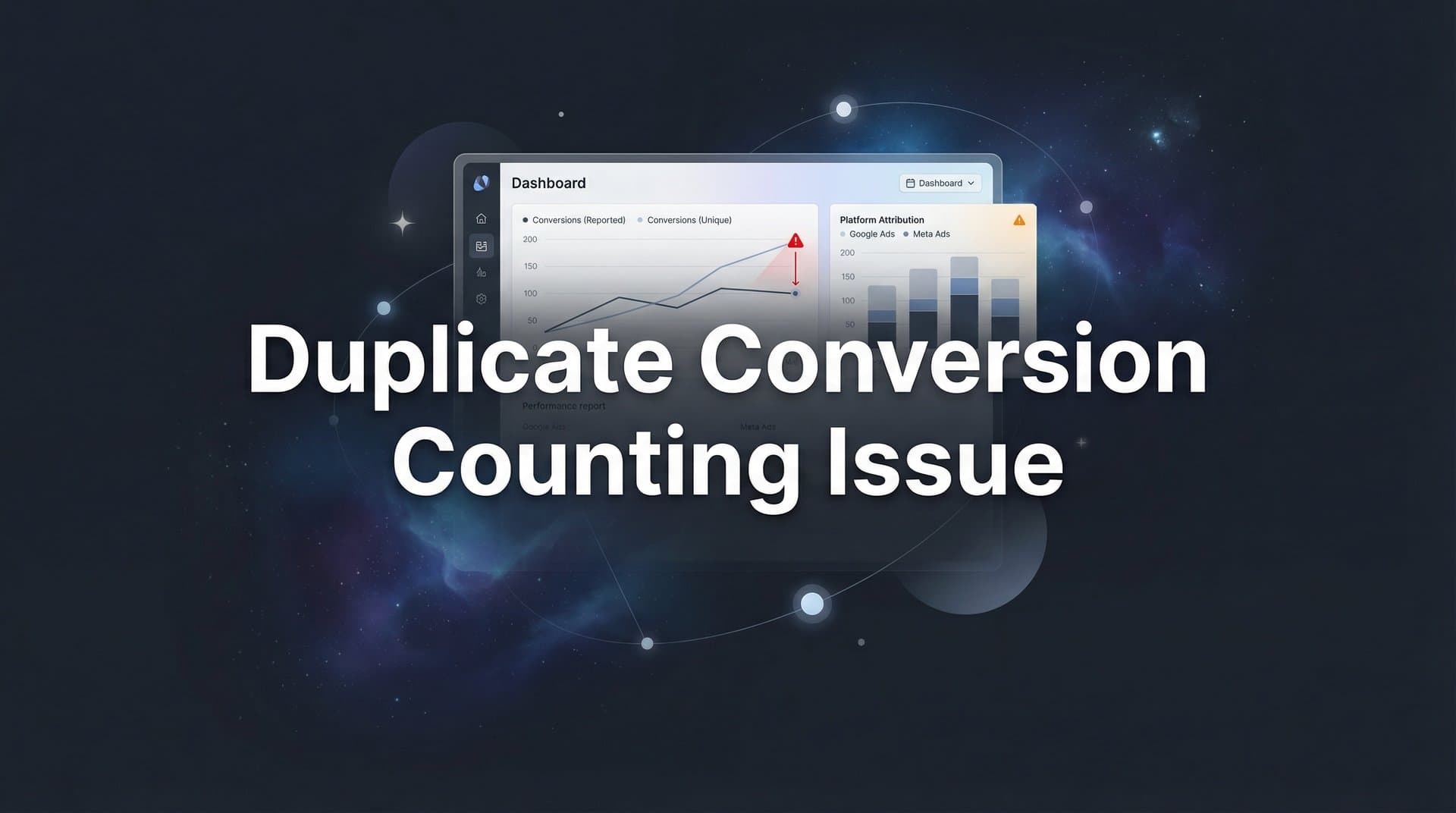
You've been scaling your ad campaigns, watching those conversion numbers climb, and feeling confident about your marketing performance. Then you dig into your actual sales data and realize something's off. Your ad platforms report 150 conversions this month, but your CRM shows only 98 actual purchases. That sinking feeling? You're dealing with duplicate conversion counting—one of the most insidious data quality issues that quietly sabotages marketing decisions.
When the same conversion gets counted two, three, or even five times across your tracking systems, you're not just looking at inflated numbers. You're making budget allocation decisions based on fiction. That campaign you thought was crushing it? Maybe it's just firing multiple pixels on every purchase. The channel you almost cut? It might actually be your best performer, hidden beneath layers of tracking noise.
Duplicate conversions create a cascade of problems: misattributed revenue, wasted ad spend on underperforming campaigns, and optimization algorithms fed bad data that compound poor decisions. The worst part? Most marketers don't realize they have this problem until they've already burned through significant budget.
This guide gives you a systematic process to identify where duplicates originate, implement deduplication logic that actually works, and establish ongoing monitoring so the problem never returns. By the end, you'll have clean conversion data you can trust—the foundation for every confident scaling decision you make.
Step 1: Audit Your Current Conversion Tracking Setup
Before you can fix duplicate conversions, you need to see exactly what's firing on your site. Think of this as creating a map of your tracking infrastructure—you're documenting every piece of code that could potentially count a conversion.
Start by listing every ad platform and analytics tool you use: Google Ads, Meta Ads, TikTok, LinkedIn, Google Analytics, and any third-party attribution platforms. For each one, identify where the tracking code lives. Is it hardcoded directly in your site's HTML? Deployed through Google Tag Manager? Installed via a WordPress plugin or Shopify app?
Open your website's source code on a conversion page—typically your thank-you page, order confirmation page, or lead form success page. Use your browser's "View Page Source" option and search for common tracking patterns: "gtag", "fbq", "ttq", "lintrk". Document every instance you find. Many marketers discover they have the same pixel installed twice: once directly in the theme code and again through a tag manager. That's duplicate conversion territory right there.
Next, log into Google Tag Manager if you use it. Review every tag configured to fire on conversion events. Check the trigger conditions carefully. A tag set to fire on "All Pages" that includes conversion tracking will fire repeatedly as users navigate, potentially counting the same conversion multiple times if they revisit the confirmation page.
Create a simple spreadsheet with columns for: Platform, Tracking Code Type (pixel, tag, API), Installation Method, and Trigger Conditions. This becomes your tracking inventory. For each platform, note whether it's using browser-side tracking (pixels), server-side tracking (API), or both.
Pay special attention to overlap points. If you have both the Meta Pixel and Meta Conversions API sending purchase events, do they use the same event_id for deduplication? If you're running Google Ads conversion tracking alongside Google Analytics goals, are you potentially double-counting the same user action?
The goal here isn't to remove everything—it's to understand your current architecture completely. Draw a simple diagram showing how data flows from your website to each platform. Where does tracking happen? When does it fire? What event names are used? This visual map reveals redundancies that are invisible when you're just clicking around dashboards.
Most duplicate conversion issues stem from tracking that evolved organically over time. A developer added a pixel, then a marketer added it again through GTM, then an agency added their own tracking layer. Nobody removed the old implementations. Your audit exposes these layers.
Step 2: Identify the Source of Duplicate Conversions
Now that you know what's installed, it's time to find where the duplicates actually occur. This detective work separates symptoms from root causes.
Start with a data comparison exercise. Pull conversion counts from each ad platform for the same date range—let's say the last 30 days. Then pull your actual business data: completed orders from your e-commerce platform, qualified leads from your CRM, or booked appointments from your scheduling system. Create a simple table comparing these numbers.
If you're evaluating vendors, our WooCommerce UGC ad generator breakdown can help.
If Google Ads reports 200 conversions but you only have 150 actual orders, you've got a 33% inflation rate. That's significant. If Meta reports 180 conversions for the same period, and TikTok reports 120, but you still only have 150 real orders, multiple platforms are overcounting—or they're all counting the same conversions.
We break down the leading options in our WooCommerce Meta ad tool guide.
The most common culprit? Page refreshes on thank-you pages. Here's how it happens: A customer completes a purchase, lands on your confirmation page where your conversion pixel fires. They refresh the page to print their receipt or double-check their order details. The pixel fires again. Same conversion, counted twice. If your tracking doesn't include deduplication logic, this scenario multiplies across hundreds of orders.
Another frequent source: multiple pixels firing for the same event. Open your browser's developer tools (F12 in most browsers), go to the Network tab, and complete a test conversion on your site. Watch the network requests as your confirmation page loads. You're looking for multiple requests to the same ad platform. If you see "facebook.com/tr" fire three times with purchase events, you've found your duplicate.
Check for tracking code conflicts. If you have conversion tracking both hardcoded in your site template and deployed through Google Tag Manager, both will fire. This is surprisingly common, especially on sites that have changed developers or agencies over time. Search your site's theme files or page templates for tracking code, then compare against what's in GTM. Understanding fixing broken conversion tracking principles helps you identify these conflicts systematically.
Browser extensions and third-party scripts can also trigger duplicate events. Some analytics tools, heat mapping software, or A/B testing platforms inadvertently fire conversion events when they shouldn't. Temporarily disable browser extensions and test again to rule this out.
Use browser developer tools to monitor exactly what fires and when. Set up a test conversion path: add an item to cart, proceed to checkout, complete the purchase. Watch the Console and Network tabs throughout. Document every tracking event that fires, the order they fire in, and whether any fire multiple times.
Look for timing issues too. If your conversion tracking fires before your payment processor confirms the transaction, you might count attempted purchases that fail. Then if the user tries again successfully, you count it twice—once for the failed attempt, once for the success.
Platform-specific attribution windows can create the appearance of duplicates even when tracking is clean. If a user clicks your ad, converts, then clicks another ad from the same platform within the conversion window attribution period and converts again (or revisits organically), some platforms might count both as conversions from their ads. This isn't a technical duplicate, but it inflates platform-reported performance versus actual business results.
Step 3: Implement Deduplication Logic in Your Tracking
Once you know where duplicates originate, it's time to implement systematic deduplication. The core principle: every conversion needs a unique identifier that tracking systems can recognize and use to filter out repeats.
The most reliable approach is adding transaction IDs or order IDs to every conversion event. When a user completes a purchase, your e-commerce system generates a unique order number—something like "ORD-2026-12847". Pass this order ID to every tracking pixel and conversion API call associated with that purchase. Platforms like Meta and Google can then recognize if they receive multiple events with the same transaction ID and count it only once.
Here's what this looks like in practice for Meta Pixel. Instead of a basic purchase event like this:
Basic tracking (prone to duplicates): Your pixel fires with just the purchase value and currency. If the page reloads or the pixel fires twice, Meta counts two conversions.
Deduplicated tracking: Your pixel fires with the purchase value, currency, AND a unique event_id parameter set to your order number. If the pixel fires multiple times with the same event_id, Meta automatically deduplicates and counts it once.
For Google Tag Manager users, implement one-time trigger conditions using cookies or session storage. Create a custom HTML tag that sets a cookie or session storage variable when a conversion occurs. Then configure your conversion tags to only fire if that cookie or variable doesn't exist. After firing, the tag sets the variable, preventing subsequent fires during the same session.
This approach works well for lead generation conversions where you don't have order IDs. When someone submits a contact form, your GTM tag checks: "Has this browser already fired this conversion in this session?" If yes, don't fire again. If no, fire the conversion and mark it as complete.
Set appropriate conversion windows in your tracking configuration. If you're tracking newsletter signups, you probably want to count one conversion per user per day at most—someone shouldn't generate multiple "signup" conversions by refreshing the confirmation page. Configure your tracking to respect these logical boundaries.
For e-commerce, ensure your conversion tracking fires only after payment confirmation, not on checkout initiation. This prevents counting abandoned carts as conversions and eliminates the scenario where failed payments followed by successful retry attempts create duplicates. Following best practices for tracking conversions accurately ensures your data reflects actual business outcomes.
Test your deduplication logic thoroughly before deploying to production. Set up a test environment or use your site's staging version. Complete multiple test conversions, intentionally refresh confirmation pages, and verify that your tracking systems count each transaction only once despite multiple pixel fires.
Document your deduplication approach clearly. Create a simple reference doc that explains: what unique identifiers you're using (order IDs, event IDs, session-based cookies), where they're implemented (which tags, which platforms), and how to verify they're working. This documentation becomes critical when team members change or when you need to troubleshoot issues months later.
Step 4: Configure Platform-Specific Deduplication Settings
Each ad platform has its own deduplication features and requirements. Configuring these correctly ensures your deduplication logic actually works in practice.
Start with Meta Events Manager. If you're using both the Meta Pixel (browser-side) and Conversions API (server-side), deduplication is critical. Meta will receive purchase events from both sources for the same transaction. Navigate to Events Manager, select your pixel, and verify that your Conversions API events include the event_id parameter. This parameter must match between pixel and API events for the same conversion.
The event_id should be your order number or a hash of the order number plus timestamp. When Meta receives a pixel event with event_id "ORD-2026-12847" and a Conversions API event with the same event_id within a short time window, it recognizes these as the same conversion and counts it once. Without matching event_ids, Meta counts both.
For Google Ads, navigate to your conversion actions settings. Each conversion action has a "Count" setting with two options: "Every" or "One". For most e-commerce conversions, select "One" to count only one conversion per ad click, even if the conversion tracking code fires multiple times. This prevents page refreshes from inflating your numbers.
However, there are scenarios where "Every" makes sense. If you're tracking phone calls and a customer might legitimately call multiple times after clicking your ad, you'd want to count every call. Choose based on your business model and what constitutes a valuable conversion.
If you're running both browser-side and server-side tracking for Google Ads (using gtag.js and Google Ads API), ensure you're using the same conversion label and sending the same order IDs. Google's deduplication works by matching the order ID (transaction_id parameter) across different tracking methods. For detailed implementation steps, review the enhanced conversions Google Ads setup process.
For platforms like TikTok, LinkedIn, and others, review their event deduplication documentation. Most modern ad platforms support deduplication through unique event identifiers, but the parameter names and implementation details vary. TikTok uses event_id similar to Meta. LinkedIn supports deduplication through conversion tracking tags.
Configure your server-side tracking to send events with the same identifiers your browser-side tracking uses. This consistency is what enables platforms to recognize and deduplicate across tracking methods. If your pixel sends "order_id" but your server event sends "transaction_id" with different values, deduplication fails.
Test each platform's deduplication by deliberately sending duplicate events with the same identifier. Most platforms provide testing tools or sandbox environments. Send two purchase events with identical event_ids and verify that the platform dashboard shows only one conversion. If you see two, your deduplication configuration needs adjustment.
Step 5: Establish Server-Side Tracking as Your Source of Truth
Browser-based tracking has inherent limitations that make duplicates more likely. Server-side tracking offers a more controlled, reliable foundation for conversion data.
Here's why server-side tracking prevents duplicates more effectively: It fires from your backend systems after a transaction is confirmed in your database, not when a webpage loads. A customer can refresh your thank-you page ten times, but your server only sends one conversion event because it's triggered by the actual order creation, not page views.
Server-side tracking also bypasses browser-related issues that cause duplicates. Ad blockers can't interfere with it. Browser extensions don't affect it. Users clearing cookies or switching devices mid-funnel doesn't break the tracking chain. Your server knows definitively when a conversion happened because it's connected to your actual business data.
To implement server-side tracking, start by identifying your authoritative data source—typically your CRM, order management system, or payment processor. This is where real conversions live. When a new order is created, a lead is qualified, or a subscription begins, your system should trigger a server-side event to your ad platforms. Understanding what is Conversion API provides the foundation for this implementation.
For e-commerce on platforms like Shopify, WooCommerce, or custom builds, set up webhooks or API integrations that fire when orders reach "completed" status. This ensures you're only tracking confirmed purchases, not pending payments that might fail. The server-side event includes your unique order ID, customer information, purchase value, and any other relevant data.
Connect your server-side tracking to Meta Conversions API, Google Ads API, TikTok Events API, and other platforms you use. These APIs accept conversion events directly from your server with rich data: customer email (hashed for privacy), phone number (hashed), IP address, user agent, and most importantly, that unique transaction identifier that enables deduplication. Our Conversion API setup guide walks through the technical implementation details.
The key advantage: your server-side tracking can validate conversions against your actual backend data before sending events. If a payment fails, no event fires. If a customer requests a refund, you can send a corresponding event to adjust the conversion data. This level of control is impossible with browser-only tracking.
You don't have to abandon browser-side tracking entirely. Many marketers use a hybrid approach: browser-side tracking for speed and server-side for accuracy. The browser pixel fires immediately when someone completes checkout, providing quick feedback to ad platform algorithms. Then your server confirms the conversion with a server-side event containing the same event_id. Platforms deduplicate these, counting only one conversion while benefiting from both the speed of browser tracking and the accuracy of server validation.
Configure your server-side tracking to be your source of truth for reporting and decision-making. When you're analyzing campaign performance, trust the server-side numbers over browser-side numbers. Your server knows exactly what happened in your business—browsers can only guess based on page loads and user behavior.
Step 6: Create an Ongoing Monitoring System
Fixing duplicate conversions once isn't enough. Tracking configurations drift over time as you add new campaigns, update your website, or integrate new tools. Ongoing monitoring catches issues before they corrupt your data for weeks.
Build a weekly reconciliation process comparing ad platform conversions to actual business results. Every Monday morning, pull conversion counts from each ad platform for the previous week. Compare these numbers to your actual orders, leads, or whatever constitutes a conversion for your business. Calculate the discrepancy percentage for each platform.
Industry best practice suggests maintaining discrepancies below 5-10%. Some variance is normal due to attribution window differences, canceled orders, or legitimate tracking delays. But if Google Ads suddenly reports 30% more conversions than your CRM shows, something broke. Your weekly check catches this immediately instead of discovering it months later. Understanding conversion sync issues ad platforms commonly face helps you diagnose problems faster.
Set up automated alerts where possible. Many attribution platforms and analytics tools can notify you when conversion counts deviate significantly from expected ranges. Configure alerts for when platform-reported conversions exceed your actual business data by more than 15%, or when conversion rates change dramatically without corresponding campaign changes.
Document your entire tracking setup in a living document that your team maintains. Include: what tracking codes are installed and where, what deduplication logic is implemented, what unique identifiers are used, how to verify tracking is working correctly, and who to contact when issues arise. This documentation prevents the "nobody knows how this works" situation when team members change.
Schedule quarterly audits even when everything seems fine. Every three months, repeat the comprehensive audit from Step 1: review all installed tracking codes, verify deduplication is working, test conversion flows, and confirm your monitoring systems are catching issues. Tracking configurations change as websites get updated, new features launch, or marketing tools get added. Quarterly audits catch drift before it becomes a crisis. Addressing fixing conversion tracking gaps should be part of this regular maintenance cycle.
Create a testing protocol for any website changes. Before deploying updates to checkout flows, confirmation pages, or thank-you pages, test that conversion tracking still fires correctly and deduplication still works. Many duplicate conversion issues appear immediately after website updates that inadvertently break or duplicate tracking code.
Train your team on the importance of clean conversion data. Make sure marketers, developers, and anyone who touches your website understands that duplicate conversions aren't just a technical annoyance—they directly impact budget decisions and campaign performance. When everyone understands why this matters, they're more likely to flag potential issues before they affect your data.
Putting It All Together
Duplicate conversion counting undermines every marketing decision you make. When your data shows inflated performance, you allocate budget to campaigns that don't actually drive results. You scale the wrong channels. You miss opportunities on platforms that truly convert because their numbers look weak compared to artificially inflated competitors.
The fix requires both immediate action and ongoing discipline. Start with a comprehensive audit of your tracking setup—map every pixel, tag, and API integration. Identify where duplicates originate by comparing platform data to your actual business results. Implement deduplication logic using unique transaction identifiers that platforms can recognize. Configure platform-specific deduplication settings so your logic actually works in practice. Establish server-side tracking as your authoritative source of truth, validated against real backend data. Then create monitoring systems that catch issues before they corrupt weeks of data.
Your quick action checklist: Map all tracking codes across your site. Compare ad platform conversion counts to CRM data and calculate discrepancy rates. Add unique transaction IDs to all conversion events. Configure deduplication settings in Meta Events Manager, Google Ads, and other platforms. Implement server-side tracking validated against your order or CRM system. Set up weekly reconciliation comparing platform data to business results.
Clean conversion data isn't a luxury—it's the foundation for confident marketing decisions. When you know exactly which campaigns drive real revenue, you can scale with certainty instead of guessing based on inflated metrics.
Ready to elevate your marketing game with precision and confidence? Discover how Cometly's AI-driven recommendations can transform your ad strategy—Get your free demo today and start capturing every touchpoint to maximize your conversions.