You check Facebook Ads Manager on Monday morning and see 50 conversions from your weekend campaign. Feeling optimistic, you pull up your CRM to see which leads came through. You count 30 actual sales. Your stomach drops. Where did the other 20 conversions go? Did Facebook lie to you? Did your tracking break? Are you wasting thousands on phantom conversions?
This scenario plays out in marketing departments every single day. The data gap between what Facebook reports and what actually lands in your bank account isn't a technical glitch or a conspiracy. It's a fundamental challenge that every advertiser now faces in the post-privacy era of digital marketing.
Since iOS 14.5 rolled out App Tracking Transparency in 2021, Facebook ads accuracy has become increasingly unreliable. The platform that once gave you crystal-clear conversion data now operates partially blind, filling in gaps with statistical modeling and educated guesses. Understanding why this happens—and more importantly, how to work around it—is the difference between confidently scaling campaigns and burning budget on phantom results.
The Gap Between Facebook's Numbers and Your Bank Account
Facebook's tracking system was built for a different era. The pixel—that snippet of code you install on your website—works by dropping a cookie in your visitor's browser. When someone clicks your ad and later converts, the pixel fires and tells Facebook: "Hey, this person just completed a purchase." Simple, elegant, and for years, remarkably accurate.
But here's the problem: that entire system depends on browser-based tracking. And browsers have become increasingly hostile to tracking technologies. When someone blocks cookies, uses private browsing, or opts out of tracking through iOS settings, the pixel goes dark. Facebook never sees the conversion happen, even though your customer just handed you their credit card.
To compensate for this blind spot, Facebook uses statistical modeling. Think of it like this: if Facebook can track 60% of conversions directly, it estimates the remaining 40% based on patterns from similar users and campaigns. These modeled conversions appear in your Ads Manager dashboard alongside actual tracked conversions, often without clear distinction.
The modeling isn't inherently bad—it's Facebook's attempt to give you a complete picture. But it introduces variance. Sometimes the model overestimates. Sometimes it underestimates. And the accuracy varies wildly depending on your audience demographics, industry, and how privacy-conscious your customers are.
Then there's the 72-hour reporting delay. Facebook doesn't finalize conversion numbers immediately. The platform waits three days to account for delayed conversions and to run its statistical models. What you see on Monday morning might change by Thursday afternoon. This makes real-time optimization feel like navigating with a map that updates three days after you've already taken the wrong turn.
The attribution window adds another layer of complexity. Facebook's default setting credits a conversion to an ad if the person clicked within seven days or viewed within one day before converting. But what if your sales cycle takes 14 days? Or 30 days? Or three months? Facebook's data won't capture the full picture of which ads actually influenced the sale. Understanding Facebook ads attribution is essential for interpreting these numbers correctly.
This is why your Facebook numbers don't match your bank account. The platform is working with incomplete data, filling gaps with statistical estimates, and using attribution rules that might not reflect your actual customer journey. The question isn't whether Facebook is lying—it's whether you're making budget decisions based on an incomplete and sometimes inaccurate picture of reality.
Privacy Changes That Disrupted Everything
April 2021 marked a turning point for digital advertising. Apple's iOS 14.5 update introduced App Tracking Transparency, requiring apps to ask users for permission before tracking their activity across other apps and websites. The result? Most users said no. Roughly 75% of iOS users globally opted out of tracking when given the choice.
For Facebook, this was catastrophic. The platform suddenly lost visibility into a massive chunk of its user base's behavior. When an iOS user who opted out of tracking clicks your Facebook ad and later converts on your website, Facebook often can't connect those dots. The conversion happens in a privacy-protected bubble that Facebook's tracking can't penetrate. Marketers have had to develop entirely new post iOS14 Facebook advertising strategies to adapt.
The impact varies by audience. If you're targeting a premium demographic that skews heavily toward iPhone users—think high-income professionals or younger consumers—you're likely experiencing significantly worse tracking accuracy than someone targeting Android-heavy audiences. Some advertisers report that 40-50% of their conversions now happen in this tracking blind spot.
Browser-side restrictions compound the problem. Safari's Intelligent Tracking Prevention has been limiting cookie lifespans since 2017, and it gets more aggressive with each update. Firefox blocks third-party cookies by default. Chrome is phasing them out gradually. Even users who don't actively block tracking are increasingly protected by their browsers' default settings.
Ad blockers add another layer of invisibility. Roughly 30% of internet users worldwide run ad blocking software. These tools don't just hide ads—they block tracking pixels too. When someone with an ad blocker converts on your site, your Facebook pixel never fires. Facebook has no idea the conversion happened.
Aggregated Event Measurement changed how conversion data flows from websites back to Facebook. Instead of sending granular, user-level data, the system now batches conversion information and strips out identifying details to protect privacy. You can track up to eight conversion events per domain, but you must prioritize which ones matter most. This forces tough choices: do you track newsletter signups or demo requests? Add-to-cart events or purchases?
The granularity you once had—seeing exactly which ad creative drove which specific user to convert—is largely gone. You're now working with aggregated, delayed, and often incomplete data. This isn't a temporary inconvenience. This is the new normal, and it's only going to get more restrictive as privacy regulations expand globally.
Common Accuracy Issues Marketers Face Daily
Over-attribution is perhaps the most dangerous accuracy problem because it feels good. Facebook claims credit for 50 conversions, you celebrate the campaign's success, and you scale budget accordingly. But when you dig into your backend data, you discover that many of those "conversions" came from people who were already customers, clicked your ad by accident, or would have converted anyway through organic search.
This happens because Facebook uses a last-click attribution model by default. If someone sees your ad, clicks it, then converts within the attribution window, Facebook takes full credit—even if that person had already visited your site five times through Google search, read your blog posts, and was ready to buy before they ever saw your ad. The conversion was going to happen regardless. The ad didn't drive it; it just happened to be the last touchpoint before purchase. These Facebook ads attribution issues plague advertisers across every industry.
Under-reporting creates the opposite problem. Your CRM shows 100 new customers this month, but Facebook only reports 60 conversions. You panic, thinking your tracking is broken or your campaigns aren't working. In reality, those conversions are happening—Facebook just can't see them because of the privacy restrictions we discussed earlier.
This is particularly painful when you're running profitable campaigns but the data suggests otherwise. You might pause or reduce budget on ads that are actually driving results, simply because Facebook's incomplete tracking makes them look like underperformers. You're making decisions based on a distorted view of reality. Many marketers struggle because they can't track Facebook conversions properly with standard pixel-based methods.
Cross-device journeys create blind spots that Facebook's tracking struggles to bridge. Someone sees your ad on their iPhone during their morning commute, researches your product on their work laptop during lunch, and finally converts on their home desktop that evening. To Facebook, these look like three different people—especially if they're not logged into Facebook on all three devices.
The platform attempts to stitch these journeys together using device fingerprinting and login data, but it's far from perfect. Studies suggest that 40-60% of customer journeys involve multiple devices. If Facebook can't connect those dots, it either misses the conversion entirely or attributes it to the wrong touchpoint.
View-through attribution adds another layer of confusion. Facebook counts a view-through conversion when someone sees your ad but doesn't click, then later converts within a one-day window. The challenge? That person might have seen 20 other ads from different brands during that same period. They might have been actively searching for solutions on Google. They might have received an email from your sales team. Facebook claims credit for the conversion based purely on ad exposure, even though correlation doesn't equal causation.
Attribution window mismatches create systematic under-reporting for businesses with longer sales cycles. If your average customer takes 21 days to convert but Facebook's attribution window is set to 7 days, you're missing two-thirds of your actual conversions. The ads are working—Facebook just stops watching before the conversion happens. Understanding these Facebook ads reporting discrepancies is the first step toward solving them.
Server-Side Tracking: A More Reliable Data Foundation
Server-side tracking fundamentally changes where conversion data comes from. Instead of relying on a browser-based pixel that can be blocked, deleted, or restricted, server-side tracking sends conversion events directly from your server to Facebook's servers. The data never touches the user's browser, which means ad blockers and privacy settings can't interfere with it.
Think of it like this: the traditional pixel is like trying to track someone by putting a GPS tracker on their phone—they can find it and turn it off. Server-side tracking is like recording when they swipe their credit card at your store—it happens on your infrastructure, where they can't interfere with the data collection.
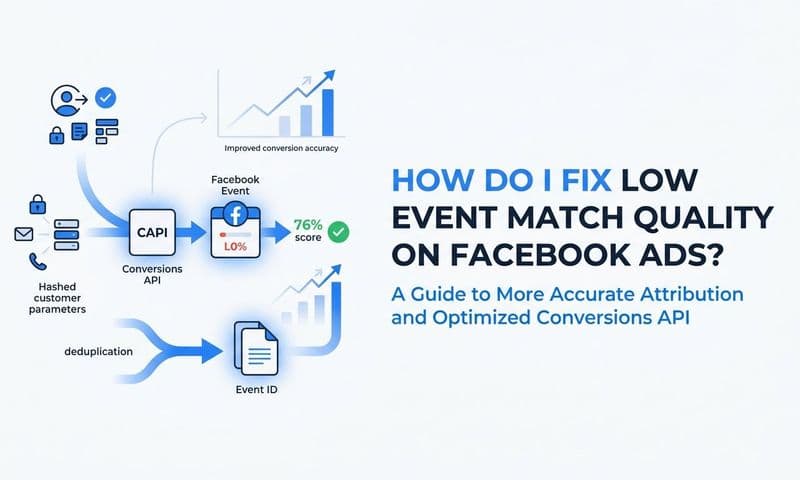
Facebook's Conversions API is the technical implementation of server-side tracking. When someone converts on your website, your server sends an event directly to Facebook containing information about the conversion: what they purchased, how much they spent, and crucially, data that helps Facebook match the conversion back to the person who clicked your ad. This matching happens using hashed email addresses, phone numbers, or Facebook click IDs—identifiers that are more persistent than browser cookies. Learning how to sync conversion data to Facebook Ads through the Conversions API is now essential for accurate reporting.
The beauty of this approach is redundancy. You can run both the pixel and the Conversions API simultaneously. The pixel captures conversions it can see, the Conversions API captures everything that happens on your server, and Facebook deduplicates the data to avoid counting the same conversion twice. This dual approach significantly improves data completeness.
Server-side tracking isn't a magic bullet though. It requires technical implementation—you need access to your server environment and the ability to send events when conversions happen. For businesses running on platforms like Shopify, this is relatively straightforward with built-in integrations. For custom-built websites, it requires developer resources and ongoing maintenance.
The Conversions API also doesn't solve attribution challenges. It tells Facebook that a conversion happened, but it doesn't automatically solve the problem of determining which ad actually influenced that conversion. If someone interacted with multiple ads across different channels before converting, you still need attribution logic to decide how to credit those touchpoints.
Privacy considerations remain important even with server-side tracking. You're still collecting and sharing customer data with Facebook—you're just doing it from your server instead of from the customer's browser. You need proper consent mechanisms, clear privacy policies, and compliance with regulations like GDPR and CCPA. Server-side tracking is more reliable, but it's not a privacy workaround.
The setup considerations are worth understanding before diving in. You'll need to configure event matching to help Facebook connect server-side events back to the people who clicked your ads. You'll need to implement event deduplication to prevent double-counting when both pixel and Conversions API fire for the same conversion. And you'll need to test thoroughly to ensure data is flowing correctly and matching rates are acceptable. For a deeper dive, explore our guide on conversion sync for Facebook Ads.
Building a Trustworthy Attribution System
Facebook's data tells you what happened within Facebook's walled garden. Your CRM tells you who became a customer and how much revenue they generated. Your email platform knows who engaged with your nurture sequences. Google Analytics shows the full website journey. The problem? None of these systems talk to each other by default, leaving you with fragmented data and incomplete stories.
Connecting your ad platforms with your CRM and revenue data creates a unified view of campaign performance. When Facebook reports 50 conversions, you can immediately see which of those 50 became paying customers, how much revenue they generated, and whether they're still active three months later. This connection transforms Facebook's conversion data from a vanity metric into an actual business intelligence tool.
The technical implementation varies by platform, but the concept is consistent: when a conversion happens in your CRM, you send that information back to your attribution system along with the original marketing source. This creates a closed loop where you can see not just that someone converted, but that they came from Facebook, became a $5,000 customer, and are now a loyal repeat buyer. Understanding why marketing data accuracy matters for ROI helps justify the investment in proper tracking infrastructure.
Multi-touch attribution provides the context that Facebook's last-click model misses. Instead of giving 100% credit to the last ad someone clicked, multi-touch attribution distributes credit across all the touchpoints that influenced the conversion. That blog post they read three weeks ago? It gets credit. The retargeting ad they saw but didn't click? It gets credit. The email they opened before returning to purchase? It gets credit too.
This approach reveals patterns that single-platform reporting can't show. You might discover that Facebook ads rarely drive immediate conversions, but they're incredibly effective at introducing new prospects who later convert through email or organic search. In a last-click model, Facebook looks like an underperformer. In a multi-touch model, it's revealed as a crucial top-of-funnel channel that deserves continued investment.
First-party data becomes your single source of truth. Instead of asking "what does Facebook say?" or "what does Google say?", you ask "what does our data say?" Your attribution system becomes the referee that reconciles conflicting reports from different platforms and provides the definitive answer about campaign performance.
This is particularly valuable when platforms disagree. Facebook might claim 100 conversions while Google Analytics shows 75. Your attribution system, connected to your actual revenue data, might reveal that the true number is 85—and more importantly, it can show you exactly which conversions each platform missed and why. This granular visibility helps you make informed decisions about where tracking needs improvement. Implementing marketing data accuracy improvement methods systematically will close these gaps over time.
The competitive advantage compounds over time. While your competitors are making budget decisions based on Facebook's incomplete data, you're optimizing based on actual revenue impact. You know which campaigns drive customers who stick around. You know which audiences generate the highest lifetime value. You know which creative angles resonate with people who actually buy, not just people who click.
This intelligence lets you scale with confidence. When you find a campaign that Facebook says drove 50 conversions and your attribution system confirms generated $25,000 in revenue from high-quality customers, you can increase budget aggressively. When Facebook reports strong conversion numbers but your attribution system shows those conversions are low-quality leads that never close, you can pause without second-guessing yourself.
Practical Steps to Improve Your Facebook Ads Data Quality
Start with a tracking audit. Open your website in an incognito browser window and complete a test conversion. Check if the Facebook pixel fires correctly. Verify that the conversion appears in Ads Manager within a few hours. Test from different devices and browsers. Use Facebook's Pixel Helper browser extension to identify tracking errors in real time. Many advertisers discover their pixel has been broken for weeks without realizing it.
Check for duplicate pixels—a surprisingly common issue. If you've worked with multiple agencies or developers, you might have several versions of the pixel code installed on your site. This causes double-counting and inflates your conversion numbers. Use your browser's developer tools to inspect the page source and confirm only one pixel is firing. Our comprehensive guide on how to improve Facebook ads tracking walks through this audit process step by step.
Implement UTM parameters consistently across every campaign. These tracking codes append to your URLs and help you identify traffic sources in Google Analytics and your CRM. Use a consistent naming convention: utm_source=facebook, utm_medium=paid-social, utm_campaign=your-campaign-name. This discipline creates a reliable paper trail from ad click to conversion, independent of Facebook's tracking.
Create a spreadsheet template for UTM parameters and share it with everyone who creates campaigns. Inconsistent naming—where one person uses "Facebook" and another uses "fb"—fragments your data and makes analysis painful. A marketing campaign tracking spreadsheet can standardize this process across your team. Standardization seems tedious but pays dividends when you're analyzing performance across hundreds of campaigns.
Establish a regular data reconciliation process. Every Monday morning, pull conversion data from Facebook, Google Analytics, and your CRM. Put the numbers side by side in a spreadsheet. Calculate the variance. If Facebook reports 100 conversions but your CRM only shows 70, document the 30% discrepancy and investigate the gap. Over time, you'll identify patterns in where and why the numbers diverge.
This reconciliation process also builds institutional knowledge. You'll learn that Facebook typically over-reports by 15-20% for your business, or that weekend conversions are often under-reported because of delayed pixel firing. These insights help you interpret Facebook's data more accurately and make better real-time decisions.
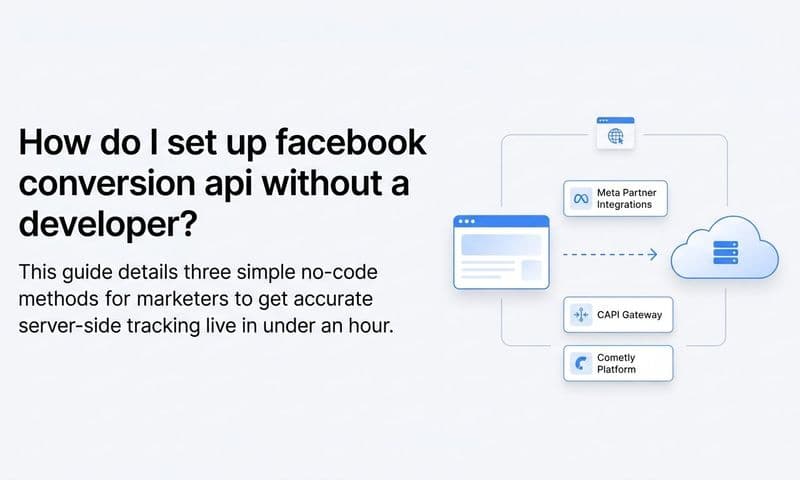
Configure your Conversions API if you haven't already. This is the single highest-impact improvement you can make to Facebook ads accuracy. Work with your developer or platform provider to implement server-side tracking. Test thoroughly to ensure events are being sent correctly and that event matching is working. Monitor your Events Manager dashboard to track what percentage of conversions are coming from the Conversions API versus the pixel.
Review your attribution settings regularly. Facebook's default attribution window might not match your actual sales cycle. If you're in B2B with a 30-day average sales cycle, consider extending the attribution window to 28 days. If you're in e-commerce with impulse purchases, a 7-day window might be appropriate. The right setting depends on your business model, not Facebook's defaults. Proper Facebook ads measurement requires aligning these settings with your actual customer journey.
Document everything. Create a tracking documentation file that explains what events you're tracking, how UTM parameters are structured, what attribution windows you're using, and what known discrepancies exist between platforms. When someone new joins your team or you need to troubleshoot an issue six months from now, this documentation becomes invaluable.
Moving Forward with Better Data
Perfect Facebook ads accuracy isn't coming back. The privacy changes are permanent. The tracking limitations are here to stay. Browser restrictions will only get tighter. Waiting for Facebook to "fix" the data problem is waiting for something that won't happen.
But significantly better accuracy is absolutely within reach. The marketers who thrive in this environment aren't the ones with the biggest budgets or the flashiest creative. They're the ones who invested in tracking infrastructure that connects the dots from ad click to actual revenue. They're the ones who stopped trusting any single platform's reporting and built their own source of truth.
This infrastructure becomes your competitive advantage. While competitors make budget decisions based on Facebook's incomplete data, you're optimizing based on actual customer value. While they're guessing which campaigns work, you know with confidence. While they're scaling cautiously because the numbers don't add up, you're scaling aggressively because your data tells the complete story. Learning how to scale Facebook ads effectively requires this foundation of accurate data.
The investment required isn't trivial. Implementing server-side tracking takes technical resources. Building a proper attribution system requires tools and ongoing maintenance. Creating a data reconciliation process demands discipline and time. But the alternative—making million-dollar budget decisions based on data you know is 30% inaccurate—is far more expensive.
Start with the highest-impact improvements. Get the Conversions API implemented. Establish a weekly data reconciliation routine. Standardize your UTM parameters. These three changes alone will dramatically improve your data quality and decision-making confidence. The more sophisticated attribution and multi-touch modeling can come later, once you've built the foundation.
The future of Facebook advertising belongs to marketers who understand that the platform's reported numbers are a starting point, not the final answer. The numbers Facebook shows you are valuable directional indicators, but they need to be validated against your actual business results. The gap between what Facebook reports and what lands in your bank account isn't something to ignore or accept—it's something to measure, understand, and ultimately bridge with better tracking infrastructure.
Ready to elevate your marketing game with precision and confidence? Discover how Cometly's AI-driven recommendations can transform your ad strategy—Get your free demo today and start capturing every touchpoint to maximize your conversions.