You check Facebook Ads Manager and see 50 conversions from yesterday's campaigns. Great news, right? But here's the problem: you have no idea what actually led to those conversions. Was it the awareness video ad they saw three days ago? The retargeting carousel they clicked yesterday? Or the dynamic product ad that sealed the deal? Without understanding the complete Facebook conversion path, you're essentially flying blind—making budget decisions based on incomplete data.
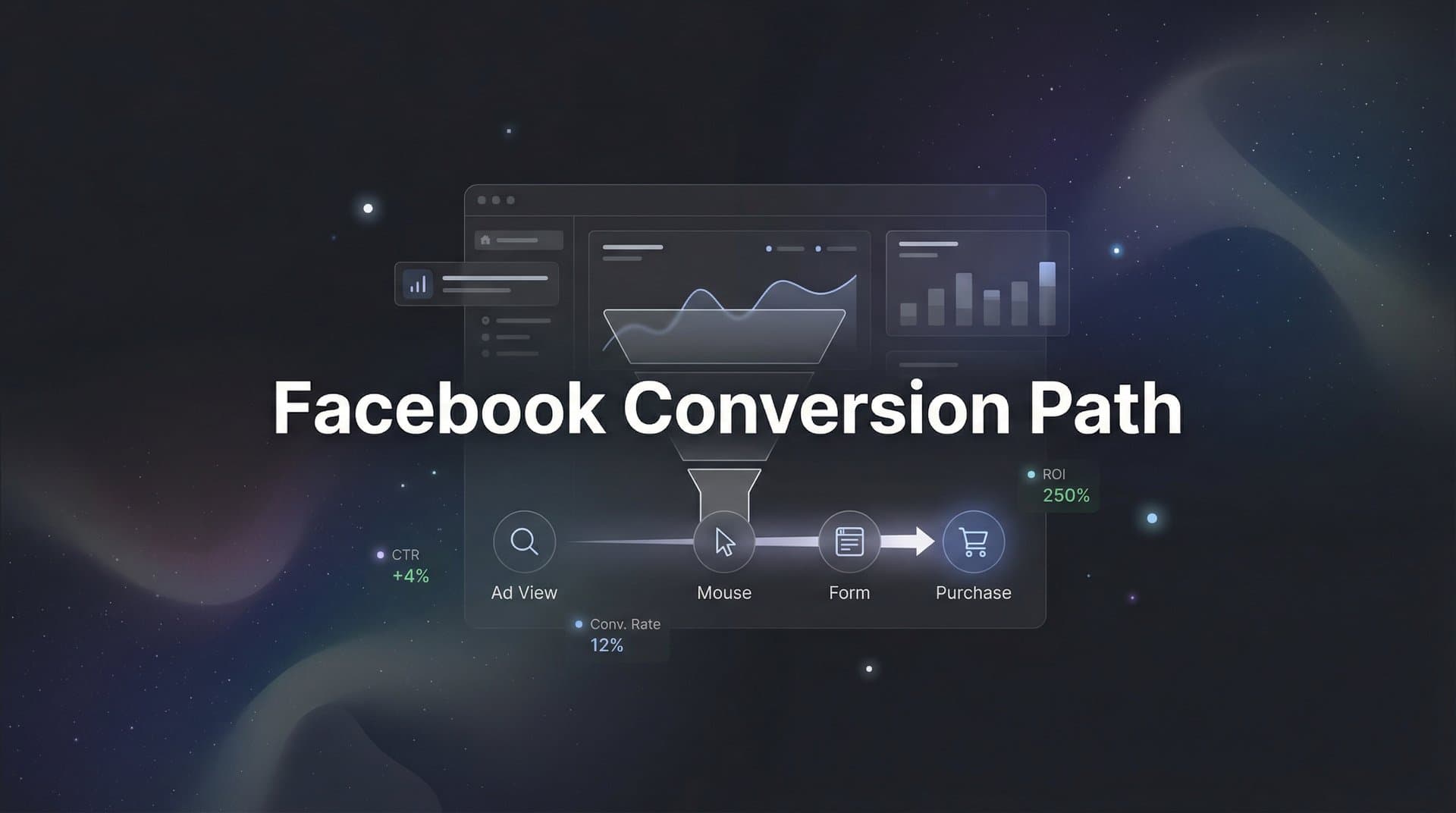
A Facebook conversion path is the complete sequence of touchpoints a user takes from their first exposure to your ad all the way to the final conversion event. It's the story of how a stranger becomes a customer, told through ad impressions, clicks, video views, and interactions across days or even weeks. Understanding this path isn't just interesting—it's essential for knowing where to allocate your budget and which campaigns actually drive results.
The challenge? Facebook's native reporting only shows you part of the story. Between iOS privacy changes, attribution window limitations, and cross-device behavior, significant pieces of the customer journey remain invisible. This article will explain how Facebook conversion paths actually work, why the data you're seeing is incomplete, and how to capture the full picture so you can make smarter optimization decisions.
The Anatomy of a Multi-Touch Customer Journey on Facebook
Think of a Facebook conversion path as a breadcrumb trail showing every meaningful interaction someone has with your ads before they convert. Each breadcrumb represents a touchpoint—an ad impression, a click, a video view, or any other engagement that moves them closer to taking action.
At its core, a conversion path is simply the chronological sequence of ad interactions that precede a conversion event. But here's where it gets interesting: these paths are rarely linear. A typical journey might start with someone scrolling through their feed, seeing your awareness video ad, scrolling past it, then seeing it again two days later and watching 15 seconds. Three days after that, they click a carousel ad showcasing your products. A week later, they see a retargeting ad with a special offer and finally convert.
That's five touchpoints across multiple campaigns, ad sets, and creative formats—all contributing to a single conversion. Yet most reporting systems will only credit the last click, completely ignoring the awareness video that introduced your brand and the carousel ad that built consideration.
Understanding path components helps you see the bigger picture. Awareness ads at the top of the funnel introduce your brand to cold audiences. These rarely drive immediate conversions, but they plant the seed. Consideration touchpoints—like engagement with your content, clicks to learn more, or video views—build familiarity and trust. Finally, conversion-focused touchpoints like retargeting ads with offers or dynamic product ads capitalize on that built-up interest.
The time dimension matters too. Some conversion paths compress into a few hours—someone sees an ad, clicks, and buys immediately. But many paths, especially for higher-consideration purchases or B2B products, stretch across weeks. A SaaS company might see conversion paths that span 30 days or more, with a dozen touchpoints along the way.
This is why understanding the full conversion path transforms how you evaluate campaign performance. That awareness campaign showing zero conversions in Facebook's reporting? It might actually be initiating the majority of your high-value conversion paths. Without seeing the complete journey, you'd never know. Implementing Facebook multi-touch attribution reveals these hidden contributions that last-click models completely miss.
Why Facebook's Native Reporting Misses the Full Picture
Facebook Ads Manager gives you conversion data, but it's telling you an incomplete story. The platform's default attribution model uses last-click logic within a specific time window—currently 7 days for clicks and 1 day for views. This means Facebook only credits conversions that happen within seven days of someone clicking your ad, or within one day of someone simply seeing it.
Here's the problem with that approach: it completely ignores everything that happened before the last click. If someone saw your awareness video three weeks ago, engaged with a carousel ad two weeks ago, clicked a collection ad last week, and finally converted yesterday after clicking a retargeting ad—Facebook only credits that final retargeting ad. The earlier touchpoints that built awareness and consideration? They're invisible in standard reporting.
The attribution window limitations create even bigger blind spots. Before iOS 14.5, Facebook used a 28-day click and 7-day view window, giving you visibility into longer conversion paths. Now, with the shortened windows, conversions that happen eight days after an ad click simply don't get attributed at all. For businesses with longer sales cycles, this means a significant portion of conversions appear to come from "nowhere" in your Facebook reporting.
Then there's the iOS privacy impact. Apple's App Tracking Transparency framework requires apps to ask users for permission to track their activity across other apps and websites. When users decline (which many do), Facebook loses the ability to track what happens outside its own ecosystem. Understanding post-iOS14 Facebook advertising strategies is essential for navigating these new limitations.
Picture this scenario: someone sees your Facebook ad on their iPhone, clicks through to your website, browses around, then closes the browser. Two days later, they're on their laptop, remember your brand, Google your company name, click your website, and convert. Facebook has no way to connect those dots. The ad click on mobile and the conversion on desktop appear as completely separate events—if the conversion appears in Facebook's reporting at all.
Aggregated Event Measurement adds another layer of complexity. Facebook limits how many conversion events you can track per domain, forcing you to prioritize which actions matter most. This means you might not even be capturing all the micro-conversions that make up a complete customer journey—newsletter signups, content downloads, product page views—because you've hit your event limit.
The result? Facebook's native reporting shows you a fraction of the actual conversion path. You're making budget decisions based on incomplete data, crediting campaigns that happened to get the last click while starving the awareness campaigns that actually initiated the journey. These Facebook Ads reporting discrepancies can lead to seriously misallocated budgets if you don't address them.
Mapping Conversion Paths Across Your Marketing Stack
To see the complete conversion path, you need to connect the dots across your entire marketing ecosystem. Facebook data alone won't cut it—you need to bring together information from your ad platforms, website analytics, and CRM to build a unified view of the customer journey.
Start by thinking about where conversion data actually lives. Facebook knows about ad interactions—impressions, clicks, video views. Your website analytics (like Google Analytics) knows about on-site behavior—pages visited, time spent, actions taken. Your CRM knows about leads, opportunities, and closed deals. Each system holds a piece of the puzzle, but none of them see the whole picture.
This is where server-side tracking becomes essential. Unlike browser-based tracking that relies on cookies and pixels (which privacy features increasingly block), server-side tracking captures conversion events directly from your server and sends them to Facebook via the Conversions API. When someone converts on your website, your server fires the conversion event to Facebook, including enriched data about the customer and their journey. Proper Facebook Conversion API setup is the foundation of reliable server-side tracking.
The advantage? Server-side tracking isn't affected by ad blockers, browser privacy settings, or iOS restrictions. It captures conversions that browser-only tracking would miss entirely. More importantly, you can enrich these conversion events with data from your CRM—like deal value, customer lifetime value, or whether this was a qualified lead—giving Facebook's algorithm better information to optimize toward high-value conversions.
But capturing the conversion is only half the battle. To understand the full path, you need multi-touch attribution modeling. This means looking at every touchpoint that contributed to a conversion and assigning appropriate credit based on the role each interaction played.
Different attribution models tell different stories. First-touch attribution credits the initial ad that introduced someone to your brand. Last-touch credits the final interaction before conversion. Linear attribution spreads credit evenly across all touchpoints. Time-decay gives more credit to touchpoints closer to the conversion. Understanding which Facebook Ads attribution model works best for your business is crucial for accurate analysis.
The key is connecting these touchpoints across platforms. When you can track that someone first clicked a Facebook ad, then came back via Google search, then returned directly to convert—you're seeing the real conversion path. This cross-platform visibility shows you how your marketing channels work together, not just how they perform in isolation.
Modern attribution platforms accomplish this by creating a unified customer identifier. They track individual users across devices and channels, stitching together all their interactions into a single customer journey. When that person finally converts, you can see every touchpoint that influenced the decision—the Facebook awareness ad, the Google search, the email click, the retargeting ad—all in chronological order with proper attribution credit.
This complete view transforms how you evaluate campaign performance. Suddenly, that awareness campaign that showed zero conversions in Facebook's reporting reveals itself as the initiator of 40% of your conversion paths. The retargeting campaign that appeared to be your top performer is actually just capturing demand that other campaigns created. Comprehensive conversion path analysis reveals these hidden dynamics that surface-level metrics completely obscure.
Turning Path Insights Into Smarter Budget Decisions
Once you can see complete conversion paths, the next step is using those insights to optimize your budget allocation. This is where understanding attribution moves from interesting data to actual revenue impact.
Start by identifying which campaigns initiate high-value conversion paths. Look at your top-converting customers and trace their journeys backward. Which campaigns did they first interact with? You'll often discover that awareness campaigns targeting cold audiences are responsible for starting the majority of valuable customer journeys—even though they show minimal direct conversions in Facebook's reporting.
This insight should fundamentally change your budget strategy. Instead of cutting budget from awareness campaigns because they don't show immediate conversions, you recognize them as essential path initiators. These campaigns are planting seeds that retargeting campaigns later harvest. Starve the awareness budget, and your retargeting campaigns will eventually run out of qualified prospects to convert.
The next step is reallocating budget based on touchpoint contribution rather than last-click credit. If your multi-touch attribution data shows that video awareness campaigns contribute to 50% of conversion paths but only receive 20% of budget, that's a clear optimization opportunity. Similarly, if a particular ad creative appears repeatedly in high-value conversion paths, it deserves more budget—even if it's not the ad that gets the final click.
Here's where it gets really powerful: feeding enriched conversion data back to Facebook improves how the platform's algorithm optimizes your campaigns. Facebook's machine learning uses conversion data to identify patterns in who converts and when. Learning how to sync conversion data to Facebook Ads properly ensures the algorithm has the complete picture it needs to optimize effectively.
When you send server-side conversion events through the Conversions API, you can include custom parameters that browser-based tracking can't capture. Customer lifetime value, purchase frequency, lead quality scores, offline conversions—all of this enriches Facebook's understanding of what a valuable conversion looks like. The algorithm then optimizes toward finding more people who match those high-value patterns.
This creates a virtuous cycle. Better conversion path data leads to smarter budget decisions. Smarter budget decisions lead to more conversions. More (and better) conversion data fed back to Facebook leads to improved algorithmic optimization. Improved optimization leads to better campaign performance. Better performance generates more conversion data. The cycle compounds over time.
The key is moving away from surface-level metrics like cost per click or even cost per conversion, and instead optimizing for cost per high-value customer. When you can see which campaigns initiate conversion paths that lead to customers with high lifetime value, you can confidently invest more in those campaigns—even if their immediate conversion numbers don't look impressive. This approach to Facebook Ads optimization with data separates sophisticated advertisers from those flying blind.
Common Conversion Path Blind Spots and How to Fix Them
Even with solid attribution tracking in place, certain conversion path scenarios remain notoriously difficult to capture. Understanding these blind spots helps you interpret your data more accurately and implement solutions to fill the gaps.
Cross-device tracking represents one of the biggest challenges. Someone sees your Facebook ad on their phone during their morning commute, clicks through to browse your product, but doesn't convert because they're on a small screen. Later that evening, they're on their laptop, remember your brand, type your URL directly, and complete the purchase. Without cross-device tracking, these appear as two completely separate users—the mobile click gets no conversion credit, and the desktop conversion appears to come from direct traffic.
The solution requires creating a persistent user identifier that follows someone across devices. This typically happens when users log in to an account, allowing you to connect their mobile and desktop sessions. For e-commerce, encouraging account creation before checkout helps bridge this gap. For B2B, gated content that requires email registration creates the connection point. Implementing proper cross-device conversion tracking solutions is essential for seeing the complete customer journey.
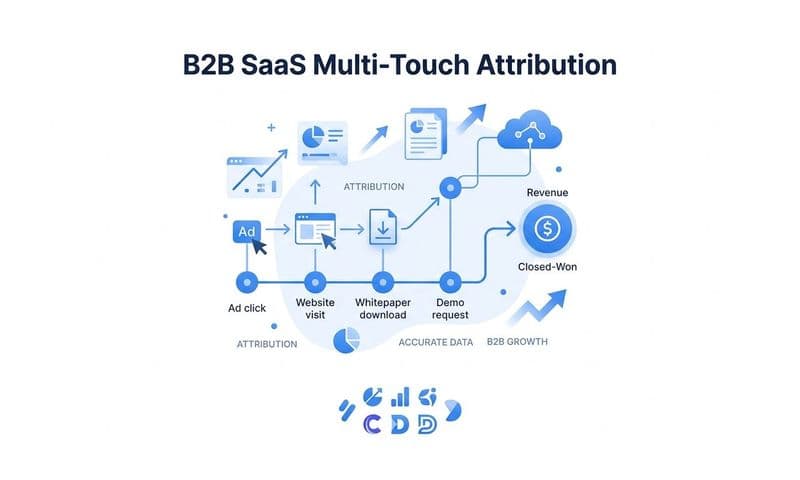
Long sales cycles create another significant blind spot. Facebook's 7-day click attribution window works fine for impulse purchases, but completely fails for considered purchases or B2B sales that take weeks or months. A software company might see someone click an ad in January, download a whitepaper, attend a webinar in February, request a demo in March, and finally convert in April. Facebook's attribution window expired long before the conversion happened.
Addressing this requires extending your attribution tracking beyond Facebook's native windows. By implementing server-side tracking and connecting it to your CRM, you can capture the full timeline regardless of how long it takes. When someone finally converts, you can look back at their complete interaction history and properly credit the Facebook ad that initiated the journey months earlier.
Offline conversions present a unique challenge. Someone might click your Facebook ad, visit your retail location, and make a purchase. Or they might see your ad, call your sales team, and close a deal over the phone. These conversions are completely invisible to browser-based tracking because they happen outside the digital ecosystem.
The fix involves connecting your offline conversion data back to Facebook through the Offline Conversions API. When someone makes an in-store purchase, you match their email or phone number from your point-of-sale system to their Facebook profile, then send that conversion event back to Facebook. Similarly, when a sales rep closes a deal, the CRM can fire a conversion event to Facebook, crediting the ad that generated the initial lead.
CRM events as path endpoints solve a related problem. For B2B companies, the real conversion isn't a form submission—it's a closed deal with actual revenue. But if you're only tracking website conversions, you're missing the most important part of the path. Someone might fill out a lead form (which Facebook sees), but that lead could be unqualified and never convert to revenue. Or it could turn into a six-figure deal.
By integrating your CRM with your attribution tracking, you can track the complete path from ad click to lead to opportunity to closed deal. This lets you optimize Facebook campaigns not just for lead volume, but for leads that actually turn into revenue. You can even feed deal values back to Facebook, allowing the algorithm to optimize toward high-value customers rather than just any conversion. If you're struggling with these issues, you're not alone—many advertisers can't track Facebook conversions properly without the right infrastructure in place.
Putting It All Together: Building a Complete Attribution System
Creating a complete view of your Facebook conversion paths requires connecting several key components into a unified attribution system. Let's break down what you actually need.
First, implement server-side tracking through Facebook's Conversions API. This captures conversion events that browser-based tracking misses and provides more reliable data in the face of privacy restrictions. Your server sends conversion events directly to Facebook, including enriched data from your CRM or backend systems. Achieving accurate Facebook conversion tracking starts with this foundational infrastructure.
Second, connect your marketing data across platforms. Your attribution system needs to pull in data from Facebook, Google, your website analytics, email marketing, and any other channels you use. This cross-platform visibility reveals how channels work together to drive conversions, not just how they perform in isolation.
Third, implement multi-touch attribution modeling that assigns appropriate credit to each touchpoint in the conversion path. This moves you beyond last-click attribution to understand which campaigns initiate valuable customer journeys, which build consideration, and which close the deal.
Fourth, integrate your CRM to track the complete customer lifecycle. This connects ad clicks to leads to opportunities to closed deals, letting you optimize for revenue rather than just conversions. It also enables offline conversion tracking and enriched event data that improves Facebook's algorithmic optimization.
The connection between better data and improved ad platform performance cannot be overstated. When you feed Facebook complete, accurate conversion data—including offline conversions, CRM events, and customer value metrics—the platform's machine learning gets dramatically better at finding and converting your ideal customers. Better data in means better results out.
Start by auditing your current tracking setup. What conversion events are you capturing? What's falling through the cracks? Where do you have visibility gaps in your customer journey? Identify the biggest blind spots first—whether that's cross-device tracking, long sales cycles, or offline conversions—and prioritize solutions that address your specific challenges. For enterprise teams, enterprise conversion path analytics tools provide the scale and sophistication needed to handle complex multi-touch journeys.
The investment in proper attribution infrastructure pays dividends that compound over time. You make smarter budget decisions. Your campaigns perform better. Your conversion data improves. Facebook's algorithm optimizes more effectively. The cycle continues, with each iteration improving your overall marketing performance.
Your Path to Better Attribution Starts Now
Understanding your Facebook conversion path transforms how you optimize campaigns. Instead of making decisions based on incomplete last-click data, you see the complete customer journey—every touchpoint that contributes to conversions, across devices and platforms, throughout the entire sales cycle. This visibility moves you from guesswork to data-driven decisions that actually improve ROI.
The marketers who win aren't the ones with the biggest budgets—they're the ones with the best data. When you can see which awareness campaigns initiate high-value conversion paths, which touchpoints build consideration, and which interactions close the deal, you allocate budget based on actual contribution rather than arbitrary last-click credit. You feed enriched conversion data back to Facebook, improving algorithmic optimization. You create a virtuous cycle where better data drives better results.
The gap between what Facebook's native reporting shows you and what's actually happening in your customer journeys represents both a challenge and an opportunity. Every blind spot in your attribution is a chance to gain competitive advantage by seeing what others miss. Every conversion path you capture completely is another data point improving your optimization decisions.
Ready to elevate your marketing game with precision and confidence? Discover how Cometly's AI-driven recommendations can transform your ad strategy—Get your free demo today and start capturing every touchpoint to maximize your conversions.