

Google Analytics 4 was built for web analysts, not advertisers. If you are running paid campaigns across Meta, Google, LinkedIn, or TikTok and trying to connect ad spend to actual pipeline and revenue, GA4 leaves significant gaps. It struggles with cross-channel attribution, lacks server-side tracking depth, and was not designed to answer the questions advertisers care most about: which campaigns drive revenue, which touchpoints convert, and where to scale budget.
The tools in this list were built with advertisers in mind. Whether you need multi-touch attribution, server-side conversion tracking, or a unified view of your customer journey, each option here solves a specific limitation that GA4 cannot. We evaluated these tools based on attribution depth, ad platform integrations, ease of implementation, and how well they connect marketing activity to business outcomes like pipeline and closed revenue.
1. Cometly
Best for: B2B SaaS marketing teams connecting ad spend to pipeline and closed revenue
Cometly is a marketing attribution and analytics platform built specifically for B2B SaaS companies that need to see exactly which campaigns, channels, and touchpoints drive real revenue.
 9 Best Attribution Platforms for Agencies in 2026
Where This Tool Shines
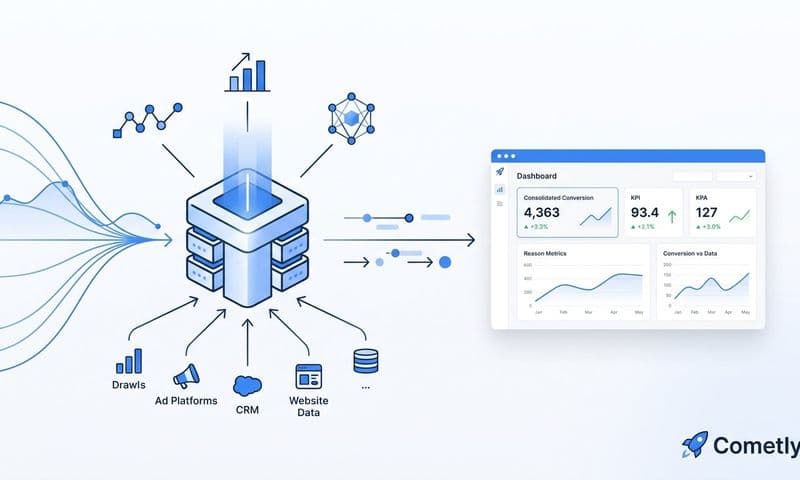
Most analytics tools stop at the click or the lead. Cometly goes further, connecting your ad platforms, CRM, and website data into a single source of truth that traces every deal back to its origin. You can see which Meta campaign influenced a prospect six weeks before they converted, or which LinkedIn ad contributed to a deal that closed last quarter.
The server-side conversion tracking and Conversion API integration are particularly valuable in a world of increasing signal loss. By sending enriched, conversion-ready events back to Meta, Google, and other platforms, Cometly helps your ad platform algorithms optimize on the data that actually matters rather than the incomplete signals that browser-based tracking provides.
Key Features
Multi-Touch Attribution Models: Compare first-touch, last-touch, linear, and data-driven attribution side by side to understand how credit is distributed across your funnel.
Server-Side Conversion Tracking: Bypass browser limitations and iOS restrictions by sending events server-side, reducing data loss and improving signal quality for ad platform optimization.
Pipeline and Revenue Attribution: Connect closed-won deals directly to the campaigns and touchpoints that influenced them, so budget decisions are grounded in revenue data rather than vanity metrics.
AI Ads Manager: Get AI-driven recommendations on which campaigns and creatives to scale, pause, or reallocate budget toward, based on actual performance patterns.
Customer Journey Analytics: Visualize the complete path from first ad click to conversion, including every touchpoint in between across all channels.
70+ Native Integrations: Connect Stripe, HubSpot, Salesforce, and all major ad platforms without custom engineering work.
Best For
Cometly is the right fit for B2B SaaS marketing teams and growth leaders who run paid campaigns across multiple channels and need to prove ROI at the revenue level. If your sales cycle is longer than a few days and you need to connect marketing activity to pipeline, this is the tool built for that problem.
Pricing
Contact Cometly for pricing. The platform is built for B2B SaaS marketing teams and is positioned as an enterprise-grade attribution solution.
2. Mixpanel
Best for: Product-led growth teams tracking user behavior, funnels, and retention
Mixpanel is an event-based product analytics platform with strong funnel analysis, cohort reporting, and retention tracking built for SaaS teams.
 9 Best Google Analytics Alternatives for Advertisers in 2026
Where This Tool Shines
Mixpanel excels at answering behavioral questions about what users do inside your product. Its event-based architecture means you can track any action a user takes and then slice that data by cohort, segment, or time period to understand engagement and retention patterns.
For teams running product-led growth motions, Mixpanel provides the funnel visibility needed to identify where users drop off and which segments convert from free to paid. It is less focused on paid media attribution and more on what happens after the click.
Key Features
Event-Based Tracking: Capture granular user actions and build custom funnels and reports around any event combination.
Cohort Analysis: Group users by behavior or acquisition date to track how different segments engage and retain over time.
Retention Reporting: Visualize how well your product retains users across different segments and time windows.
A/B Testing Support: Run and analyze experiments to understand the impact of product changes on user behavior.
CRM and Marketing Integrations: Connect Mixpanel data with your existing marketing stack for a more complete view of the user lifecycle.
Best For
Mixpanel is best suited for SaaS product teams and growth marketers who want to understand in-product behavior, funnel drop-off, and retention. It is not a paid media attribution tool, but it complements one well when you need visibility into what happens after acquisition.
Pricing
Free tier available for smaller teams; paid plans scale with data volume. Check mixpanel.com for current pricing tiers.
3. Heap
Best for: UX and conversion teams who need retroactive behavioral analysis without re-tagging
Heap is a behavioral analytics platform that automatically captures all user interactions, allowing teams to define events and funnels retroactively without any manual tagging.
 9 Best Google Analytics Alternatives for Advertisers in 2026
Where This Tool Shines
Heap's defining advantage is its retroactive capture model. Instead of requiring you to tag events before they happen, Heap records everything automatically from the moment it is installed. That means you can go back and define a funnel or analyze a user behavior pattern that you did not think to track six months ago.
Now part of the Contentsquare platform, Heap also offers session replay and heatmaps, making it a strong choice for teams that want to combine quantitative funnel data with qualitative UX insights. It is more focused on on-site behavior than paid media attribution.
Key Features
Automatic Retroactive Event Capture: Every user interaction is recorded automatically, so you never lose historical data due to missing tags.
Session Replay and Heatmaps: Understand exactly how users navigate your site or app with visual playback and interaction maps.
Funnel and Journey Analysis: Build conversion funnels and user journey maps from captured behavioral data without additional instrumentation.
CRM and Marketing Platform Integrations: Connect Heap data with your existing tools to enrich user profiles and segment analysis.
Contentsquare Integration: Access the broader Contentsquare suite for enterprise-grade digital experience analytics.
Best For
Heap works best for product and UX teams at SaaS companies who want to analyze on-site behavior without constant developer involvement. It is a strong complement to an attribution platform but is not a replacement for one.
Pricing
Free trial available; contact Heap for paid plan pricing. Pricing varies based on data volume and feature requirements.
4. Amplitude
Best for: Mid-market and enterprise SaaS teams needing advanced segmentation and experimentation
Amplitude is an enterprise-grade product analytics platform with advanced segmentation, funnel visualization, and built-in experimentation features.
 9 Best Google Analytics Alternatives for Advertisers in 2026
Where This Tool Shines
Amplitude is built for teams that need to go deep on behavioral data. Its segmentation capabilities are among the most sophisticated in the product analytics category, allowing you to define complex user groups based on any combination of events, properties, and time windows.
The built-in experimentation features make it a strong choice for teams running frequent A/B tests who want to connect experiment results directly to retention and revenue metrics. Like Mixpanel, it is primarily a product analytics tool rather than a paid ad attribution platform.
Key Features
Advanced Behavioral Segmentation: Create highly specific user cohorts based on any event sequence, property, or behavioral pattern.
Funnel and Retention Analysis: Drill down into conversion funnels and retention curves to identify exactly where users disengage.
Built-In Experimentation: Design, run, and analyze A/B tests natively within the platform without a separate testing tool.
Data Governance Controls: Role-based access and data management features designed for larger teams with compliance requirements.
Free Starter Plan: Smaller teams can access core analytics features without a paid commitment.
Best For
Amplitude fits mid-market and enterprise SaaS companies with dedicated data or analytics teams who need sophisticated product analytics and experimentation at scale. It is not a primary tool for paid media attribution but pairs well with one.
Pricing
Free Starter plan available; Plus and Growth plans at higher tiers. Contact Amplitude for enterprise pricing details.
5. Triple Whale
Best for: Ecommerce and DTC brands tracking blended ROAS across Meta, Google, and TikTok
Triple Whale is a first-party attribution and analytics platform built for ecommerce brands that need a unified view of ad performance across all major paid channels.
 9 Best Google Analytics Alternatives for Advertisers in 2026
Where This Tool Shines
Triple Whale was designed from the ground up for Shopify brands running performance campaigns across Meta, Google, TikTok, and Pinterest. Its first-party pixel captures post-click and post-view attribution data independently of ad platform reporting, giving advertisers a more accurate picture of what is actually driving purchases.
The blended ROAS dashboard is particularly useful for DTC brands that run campaigns across multiple channels simultaneously and need a single number that reflects true business performance rather than each platform's self-reported results.
Key Features
First-Party Attribution Pixel: Capture post-click and post-view data independently of ad platform reporting for a more accurate attribution picture.
Blended ROAS Dashboard: See a unified view of ad spend and return across all connected platforms in one place.
Creative Analytics: Analyze ad-level performance to understand which creatives are driving results and which are burning budget.
Cohort-Based LTV Reporting: Track customer lifetime value and payback periods by acquisition cohort to inform budget allocation.
Shopify Integration: Deep native integration with Shopify makes setup straightforward for ecommerce brands.
Best For
Triple Whale is an excellent fit for DTC and ecommerce brands on Shopify. It is less relevant for B2B SaaS companies with longer sales cycles and CRM-dependent revenue attribution needs.
Pricing
Starts around $129/month depending on revenue tier. Verify current pricing at triplewhale.com as tiers may change.
6. Northbeam
Best for: Performance marketers who need ML-powered attribution and incrementality analysis
Northbeam is a machine learning-powered attribution platform with media mix modeling capabilities designed for advertisers managing significant budgets across multiple channels.
 9 Best Attribution Software with API Access in 2026
Where This Tool Shines
Northbeam goes beyond pixel-based attribution by applying machine learning to understand the true incremental contribution of each channel. This is particularly valuable for advertisers who want to understand diminishing returns and identify where additional budget will actually move the needle versus where it will be wasted.
Its media mix modeling capabilities provide a channel-level view of contribution that accounts for factors traditional attribution models miss, making it a strong choice for performance teams that have exhausted simpler attribution solutions and need more analytical depth.
Key Features
ML-Based Multi-Touch Attribution: Machine learning models distribute credit across touchpoints more accurately than rule-based attribution approaches.
Media Mix Modeling: Understand the incremental contribution of each channel and identify where budget allocation should shift.
Channel Contribution Insights: See how each paid and organic channel contributes to overall performance, including diminishing return signals.
Cross-Channel Reporting: Unified view of paid, organic, and direct traffic contributions in a single dashboard.
Enterprise Onboarding: Dedicated onboarding support for complex, high-volume advertising environments.
Best For
Northbeam is best suited for enterprise and high-growth performance marketing teams with substantial ad budgets who need incrementality analysis beyond what standard attribution tools provide.
Pricing
Enterprise pricing model; contact Northbeam directly for a custom quote based on your ad spend and data volume.
7. Rockerbox
Best for: Mid-market growth teams running both digital and offline marketing campaigns
Rockerbox is a marketing measurement platform that combines multi-touch attribution with marketing mix modeling, covering paid, organic, and offline channels in a unified view.
 9 Best Advanced Attribution Modeling Software Tools in 2026
Where This Tool Shines
Rockerbox stands out for its ability to bring offline and online channels into the same attribution framework. For teams that run a mix of digital paid media, events, direct mail, or podcast advertising, having all of those channels represented in one platform makes budget allocation decisions significantly more informed.
Its combination of multi-touch attribution and marketing mix modeling gives marketers both the granular channel-level view and the macro-level budget optimization perspective, which is a combination that most single-methodology tools cannot provide.
Key Features
Multi-Touch Attribution Across Channels: Track and attribute conversions across digital and offline touchpoints in a single platform.
Marketing Mix Modeling: Use statistical modeling to understand channel contribution and optimize budget allocation at the portfolio level.
Unified Channel Dashboard: See all paid, organic, and offline channel performance in one consolidated reporting view.
CRM and Ad Platform Integrations: Connect your existing marketing and sales tools to enrich attribution data with pipeline and revenue context.
Mid-Market Focus: Built for growth teams that need enterprise-grade measurement without enterprise-level complexity.
Best For
Rockerbox is a strong fit for mid-market marketing teams running multichannel campaigns that include both digital and offline components and need a unified measurement framework to guide budget decisions.
Pricing
Contact Rockerbox for pricing. The platform targets mid-market to enterprise marketing teams.
8. Plausible Analytics
Best for: Teams that want a clean, privacy-first GA4 replacement for traffic and content analytics
Plausible Analytics is a lightweight, cookieless web analytics tool that provides straightforward traffic insights without data sampling, personal data collection, or complex configuration.
Where This Tool Shines
Plausible does one thing extremely well: it gives you accurate, unsampled traffic data in a dashboard that anyone on your team can read in under a minute. There are no complex event configurations, no consent banners required, and no data sent to Google servers.
For content teams, SEO-focused marketers, or any team that simply wants to know where their traffic comes from and which pages perform best without the overhead of GA4, Plausible is a refreshingly simple solution. It is not an ad attribution tool, but it is a strong lightweight alternative for teams where GA4 is overkill.
Key Features
Cookieless Tracking: Measures traffic without cookies or personal data collection, making consent banners unnecessary.
No Data Sampling: Every pageview is counted accurately regardless of traffic volume, unlike GA4 which samples at scale.
Simple Dashboard: Core traffic metrics presented in a clean, fast-loading interface accessible to non-analysts.
GDPR-Compliant by Design: Built from the ground up to meet European privacy regulations without additional configuration.
Open-Source with Self-Hosting Option: Teams that want complete infrastructure control can self-host the open-source codebase.
Best For
Plausible is ideal for content marketers, SEO teams, and small to mid-sized businesses that want accurate, privacy-friendly traffic analytics without the complexity of GA4. It is not a replacement for a full attribution platform.
Pricing
Starts at $9/month for up to 10,000 monthly pageviews, with pricing scaling based on traffic volume. Check plausible.io for current plans.
9. Matomo
Best for: Organizations that need full data ownership and GA4-comparable features on their own infrastructure
Matomo is an open-source analytics platform offering complete data ownership through self-hosted or cloud deployment, with feature parity close to GA4 including goals, funnels, and ecommerce tracking.
Where This Tool Shines
Matomo's core value proposition is control. Your data stays on your servers, nothing is shared with third parties, and you are not subject to Google's data policies or product changes. For organizations that have been burned by GA4's forced migration or need to keep analytics data within specific infrastructure boundaries, that level of control is meaningful.
Beyond data ownership, Matomo offers a familiar analytics feature set that GA4 users will recognize, including goals, conversion funnels, and ecommerce tracking, without the steep learning curve that GA4's redesigned interface introduced. Add-ons for heatmaps and session recordings extend its capabilities further.
Key Features
Full Data Ownership: Self-host on your own servers or use Matomo's cloud, with no data ever sent to third parties.
Goals, Funnels, and Ecommerce Tracking: Familiar GA4-comparable features without GA4's complexity or data sharing requirements.
No Data Sampling: Access complete, unsampled data at any traffic volume on both self-hosted and cloud plans.
Heatmaps and Session Recordings: Available as add-ons for teams that want qualitative UX data alongside quantitative analytics.
Extensive Plugin Ecosystem: Extend Matomo's functionality through a large library of community and official plugins.
Best For
Matomo is the right choice for organizations that need GA4-level analytics features with complete data sovereignty. It requires technical resources for self-hosted setup and maintenance, making it a better fit for teams with developer support available.
Pricing
Free for self-hosted deployment; cloud plans start at approximately $23/month. Verify current pricing at matomo.org as plans may change.
Which Tool Is Right for Your Advertising Goals
The honest answer is that no single tool on this list is a universal replacement for GA4, because GA4 was never the right tool for advertisers to begin with. Each option here solves a specific problem better than GA4 does.
If you are a B2B SaaS marketing team that needs to connect paid campaigns to pipeline and closed revenue, Cometly is the only tool on this list built specifically for that use case. It handles multi-touch attribution, server-side tracking, CRM integration, and revenue attribution in one platform, which is the combination that B2B advertisers actually need.
If you are an ecommerce or DTC brand focused on ROAS across Meta, Google, and TikTok, Triple Whale or Northbeam will serve you better. If you need product analytics and funnel visibility for a product-led growth motion, Mixpanel or Amplitude are the right starting points. If you run complex multichannel campaigns that include offline channels, Rockerbox brings those together in one measurement framework.
For teams that simply want clean, accurate traffic data without GA4's complexity, Plausible offers the simplest path forward. And for organizations that need full data ownership with GA4-comparable features, Matomo provides that control without sacrificing analytical depth.
GA4 is a starting point, not a complete advertiser solution. The tools above fill the gaps it leaves, and the right choice depends entirely on where those gaps are most painful for your team.
If paid media attribution tied to real revenue is your priority, start with Cometly. Get your free demo and see exactly which campaigns, channels, and touchpoints are driving your pipeline.